What Can Fashion Resale Marketplace Data Scraping UK Reveal Across 6 Major Resale Platforms?
Introduction
The UK resale fashion market is becoming increasingly data-driven as shoppers compare prices, brands, conditions, and availability across multiple digital marketplaces. Fashion Resale Marketplace Scraping helps businesses structure these changing marketplace signals into usable datasets for pricing, product research, and competitive analysis.
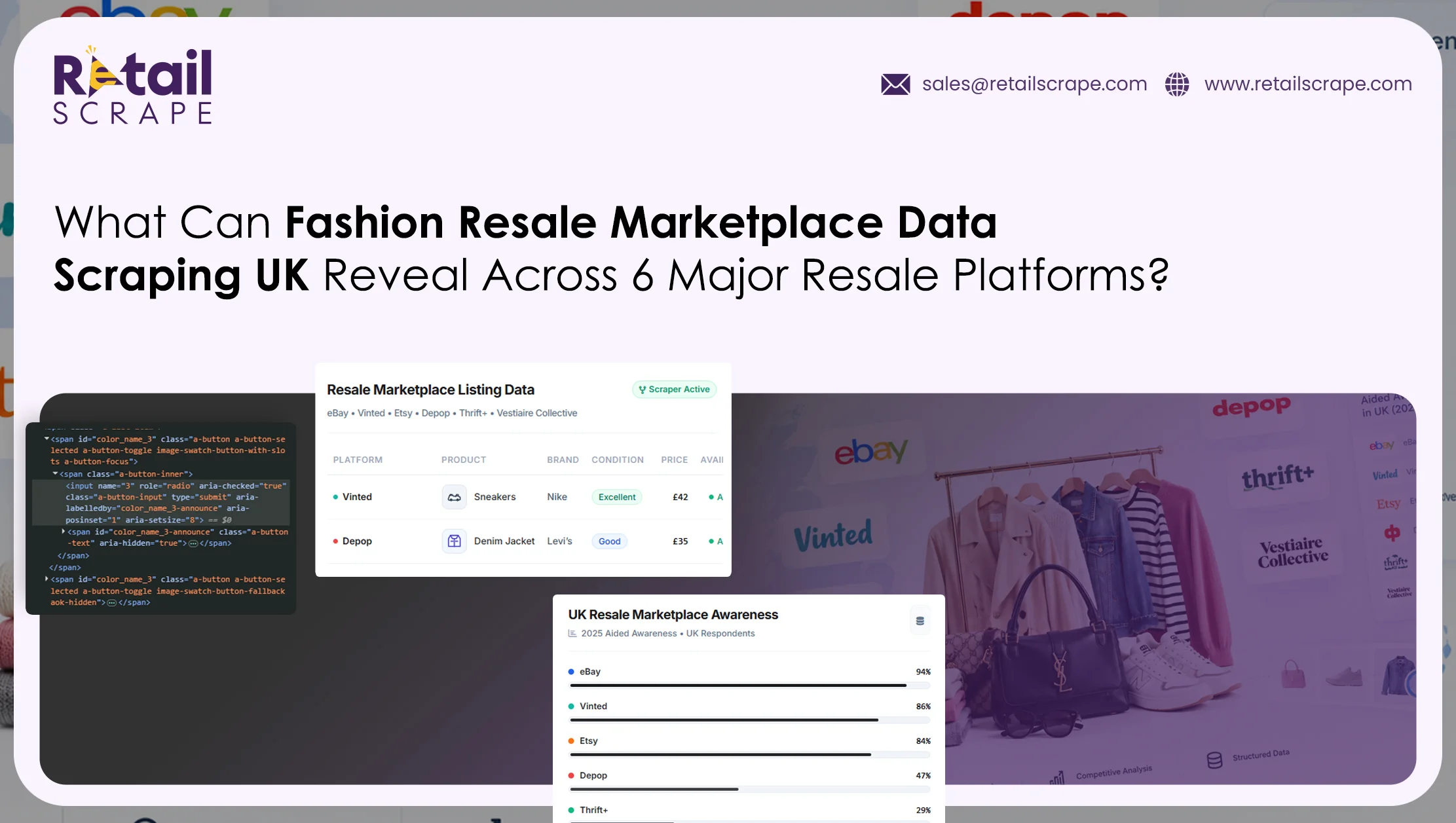
A six-platform dataset can consolidate listings from eBay, Vinted, Etsy, Depop, Thrift+, and Vestiaire Collective. With Fashion Resale Marketplace Data Scraping UK, brands can analyze these marketplaces alongside 2025 aided awareness figures: 94% for eBay, 86% for Vinted, 84% for Etsy, 47% for Depop, 29% for Thrift+, and 22% for Vestiaire Collective among surveyed UK respondents.
For fashion-tech startups, this marketplace coverage can support product benchmarking, seller analysis, category tracking, and pricing intelligence. By combining Web Scraping Services with structured extraction workflows, businesses can monitor differences between marketplaces while identifying recurring demand patterns and opportunities across the UK resale ecosystem.
Hidden Price Signals Shaping Competitive Fashion Resale Marketplace Strategies
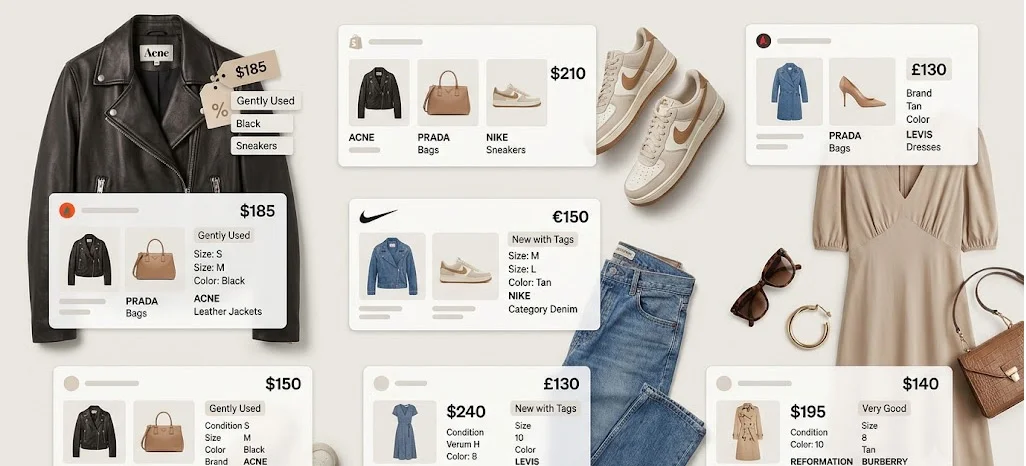
Fashion businesses comparing resale platforms need more than isolated product prices. Fashion Product Data Scraping can organize brand names, categories, product conditions, sizes, colors, and listing prices into a standardized dataset. This allows analysts to compare similar products across Vinted, Depop, eBay, Vestiaire Collective, Grailed, and Preloved without relying on manual searches.
Structured collection also makes it easier to separate premium products from ordinary listings and identify price variations associated with brand reputation, condition, or product type. Pricing analysis becomes more useful when products are grouped according to comparable attributes. With Fashion Resale Marketplace Price Scraping included within the workflow, businesses can examine asking prices for similar garments, footwear, accessories, and luxury items across different platforms.
Historical records can then show whether particular categories experience repeated price changes, unusually high premiums, or substantial differences between marketplaces. This information can support competitor benchmarking and help teams understand how sellers position comparable inventory.
Several practical indicators can be extracted and organized for recurring analysis:
- Brand-level asking prices
- Category-specific pricing ranges
- Condition-based price differences
- Size and variant information
- Seller and listing attributes
- Platform-level price variations
| Data Category | Analysis Purpose |
|---|---|
| Product details | Standardize comparable listings |
| Asking price | Examine marketplace pricing |
| Condition | Separate resale value levels |
| Brand | Compare positioning |
A consistent pricing dataset can also support dashboard development, reporting, and historical benchmarking. Instead of reviewing individual listings repeatedly, analysts can work with structured records that reveal recurring differences across marketplaces. This creates a practical foundation for monitoring competitive positioning, evaluating resale-value patterns, and identifying categories that require closer pricing attention as marketplace conditions change.
Fresh Inventory Clues Revealing Fast-Moving Fashion Categories Across Platforms
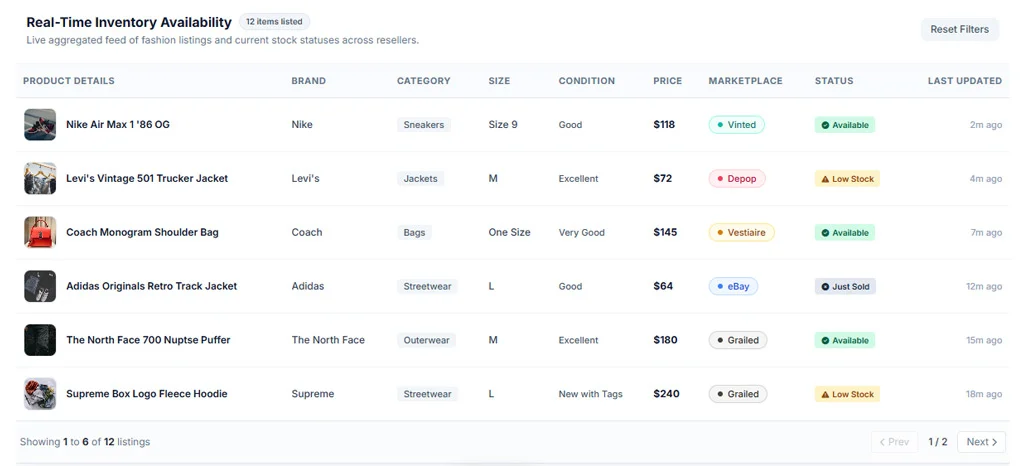
Resale inventory changes quickly as sellers add products and buyers purchase desirable items. Scrape Fashion Resale Marketplace Data workflows can capture listing status, product names, brands, categories, sizes, conditions, seller details, and prices in a structured format.
When these attributes are collected consistently, businesses can evaluate how much comparable inventory is visible across different marketplaces and determine which categories have deeper or thinner supply. Availability becomes particularly relevant for popular brands, limited products, seasonal apparel, and frequently searched sizes.
By incorporating Real-Time Fashion Product Availability into monitoring workflows, analysts can observe changes in active listings and identify categories where products become unavailable quickly. Repeated collection can create a historical inventory trail, helping teams understand whether supply fluctuations are temporary, seasonal, or associated with changing marketplace demand.
Businesses can use inventory datasets to examine several operational signals:
- Active listing volumes
- Product availability by size
- Brand-level inventory counts
- Category-level supply changes
- Condition distribution
- Seller activity patterns
| Inventory Signal | Potential Application |
|---|---|
| Active listings | Measure visible supply |
| Size availability | Identify inventory gaps |
| Brand frequency | Track marketplace presence |
| Listing status | Monitor supply changes |
Combining these indicators provides greater context than simply counting products. A category with many listings may still have limited availability for particular sizes, brands, or conditions. Likewise, a smaller listing pool can indicate concentrated supply rather than weak market activity. Regularly structured collection allows analysts to compare these variations across platforms and periods, supporting inventory research, category planning, and more informed interpretation of resale-market movement.
Emerging Cross-Platform Patterns Reshaping UK Fashion Resale Market Intelligence
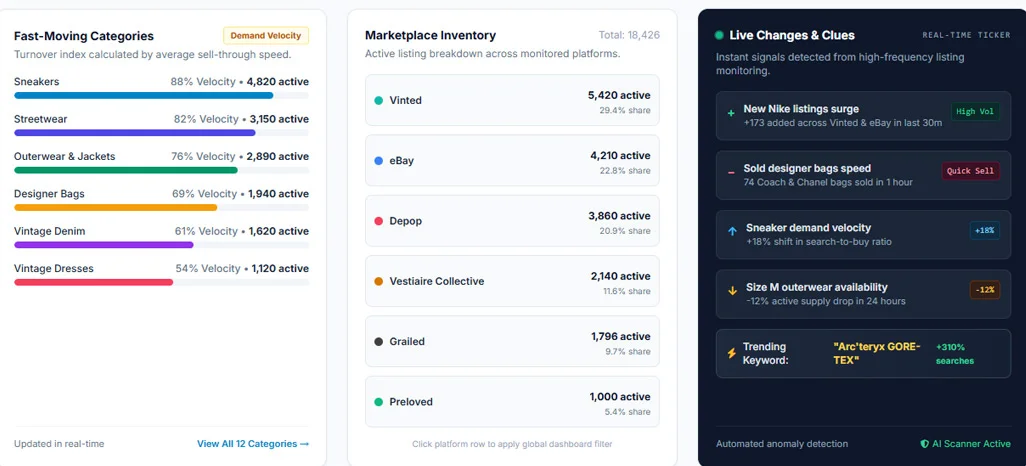
Different resale marketplaces attract different seller communities, product categories, and consumer segments. Multi Marketplace Fashion Data Scraping can bring information from several platforms into a consistent structure, allowing businesses to compare product volumes, brands, conditions, prices, and listing activity using common fields.
This reduces the complexity created by different marketplace layouts and makes cross-platform analysis more practical for fashion-tech teams. Price movement is another important signal when studying marketplace dynamics. Through Real-Time Fashion Price Monitoring, businesses can repeatedly capture comparable asking prices and identify changes across selected brands or categories.
Tracking these records over time can highlight seasonal movements, recurring discounts, premium pricing, and differences between mainstream and luxury resale segments. Historical datasets also provide useful context when current listings appear significantly different from earlier marketplace observations.
A cross-platform analysis can focus on indicators such as:
- Brand-level pricing differences
- Category listing volumes
- Product condition patterns
- Historical price movements
- Marketplace-specific inventory
- Seasonal listing changes
| Comparison Area | Business Insight |
|---|---|
| Brand pricing | Compare positioning |
| Category volume | Examine supply concentration |
| Product condition | Assess resale differences |
| Historical records | Track market movement |
These datasets can help businesses interpret why similar products may appear at different prices or availability levels across platforms. Instead of viewing each marketplace independently, analysts can compare recurring patterns and identify where differences are most visible. This broader perspective supports competitor research, category analysis, pricing studies, and resale-market reporting while keeping the underlying information organized for repeated evaluation.
How Retail Scrape Can Help You?
We can support fashion resale data projects by collecting marketplace information according to defined brands, categories, locations, product attributes, and pricing requirements. Fashion Resale Marketplace Data Scraping UK workflows can transform fragmented listings into structured datasets that are easier to analyze, compare, and integrate with business intelligence systems.
Key capabilities can include:
- Multi-platform product data collection
- Structured listing and pricing datasets
- Brand and category-level extraction
- Historical data organization
- Availability and inventory tracking
- Customized data delivery formats
The collected information can be prepared for dashboards, competitor research, pricing analysis, category monitoring, and internal market intelligence workflows. Where appropriate, Fashion API Data can also be incorporated into existing analytical environments, helping teams connect marketplace information with their current technology stack.
For UK-focused requirements, we can organize marketplace records into consistent formats covering product details, seller information, conditions, pricing, availability, and category attributes. This structured approach can reduce manual research while giving fashion-tech teams a repeatable way to evaluate marketplace activity across multiple resale platforms.
Conclusion
For fashion-tech businesses, Fashion Resale Marketplace Data Scraping UK can convert fragmented marketplace listings into structured information for pricing comparisons, inventory research, brand analysis, and competitive intelligence. Consistent datasets can make it easier to examine differences across six major resale platforms and identify recurring patterns within categories and product segments.
With UK Fashion Marketplace Scraping, businesses can organize marketplace information into practical datasets for dashboards, market research, and competitive analysis. Contact Retail Scrape to discuss your fashion resale data requirements and build a structured collection workflow aligned with your business objectives.