
How to Build a Wayfair Price Tracker to Compare 500+ Furniture Prices and Track Changes Over Time?
Introduction
Furniture prices can shift frequently because of promotions, seasonal campaigns, inventory levels, and product updates. Building a reliable Wayfair Price Tracker helps businesses monitor hundreds of listings, capture price movements, and organize product information without depending on repetitive manual checks. It also creates a structured foundation for long-term furniture market analysis.
A practical tracker can monitor 500+ products across selected furniture categories while recording prices, availability, ratings, and product attributes at scheduled intervals. With Wayfair Furniture Price Tracker workflows, teams can compare current values against previous records and identify meaningful changes across sofas, beds, tables, chairs, and home décor products.
The process starts with product discovery, data collection, normalization, historical storage, and automated comparison. How to Build a Wayfair Price Tracker effectively requires a workflow that handles changing product pages, duplicate records, timestamps, and scalable data storage while producing clear insights for pricing decisions, purchasing analysis, and competitive monitoring.
Smart Foundations for Building Scalable Furniture Price Tracking Workflows
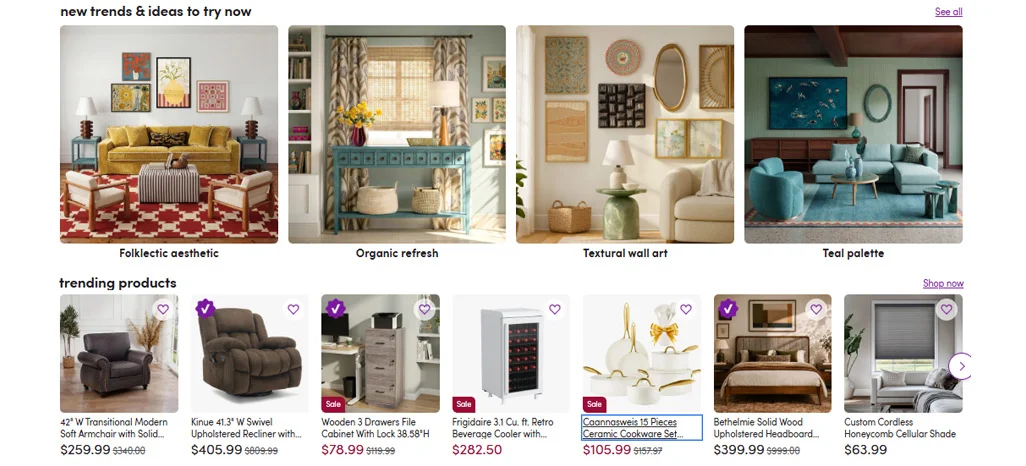
The first stage involves defining the furniture categories, products, URLs, and attributes that need regular monitoring. A structured Wayfair Furniture Price Tracker can organize hundreds of listings according to product type, brand, price range, availability, and other relevant fields. Establishing these requirements early helps maintain consistency when new products are added or existing listings change.
The collection process should capture information at predefined intervals so that every observation can be compared with earlier records. A Wayfair Price History Tracker can retain previous prices alongside timestamps, discounts, and availability information. This creates a chronological record that helps identify whether a price movement is temporary, promotional, or part of a longer pricing pattern.
Before collecting data at scale, businesses should also establish validation rules. These rules can identify missing prices, duplicate URLs, incomplete product attributes, and inconsistent formats. A reliable workflow should also distinguish between a genuine price adjustment and changes caused by product variations, shipping conditions, or promotional displays.
Useful foundation steps include:
- Define target furniture categories and product groups.
- Establish consistent fields for every product record.
- Set suitable collection intervals for recurring monitoring.
- Validate product identifiers before storing new records.
- Maintain timestamps for every captured observation.
| Tracking Component | Primary Purpose |
|---|---|
| Product URL | Identifies the listing |
| Product Name | Supports product matching |
| Price | Records the listed amount |
| Availability | Provides inventory context |
| Timestamp | Establishes collection history |
Using Wayfair Furniture Price Monitoring as part of the overall workflow allows businesses to structure recurring observations around specific products and categories. This foundation makes subsequent comparison and historical analysis more consistent.
Seamless Data Collection Across Hundreds of Furniture Product Listings
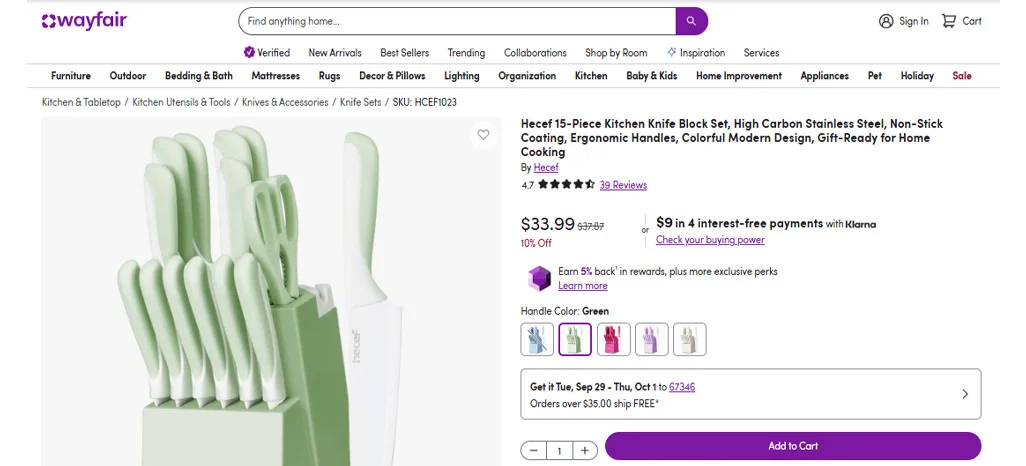
Once the product scope is established, the next stage focuses on collecting comparable information from every selected listing. Wayfair Data Scraping can gather product names, prices, discounts, ratings, availability, categories, URLs, and other relevant attributes. Keeping these fields standardized allows records from different collection periods to be evaluated without unnecessary formatting conflicts.
Price comparison becomes more meaningful when every observation contains a reliable timestamp and product identifier. Track Wayfair Price Changes workflows can compare current observations with earlier records to identify increases, reductions, promotional periods, and repeated pricing movements. This also helps businesses separate isolated fluctuations from changes that continue across several collection cycles.
For a portfolio containing 500 or more products, recurring collections should be organized through scheduled workflows rather than relying on manual checks. Automated Wayfair Price Tracking can support regular data collection and comparison, helping teams reduce repetitive work while maintaining a consistent monitoring schedule. Validation rules can further flag missing values or unexpected changes.
A scalable collection process can include the following activities:
- Create product lists based on selected furniture categories.
- Capture standardized fields during each collection cycle.
- Record timestamps alongside every price observation.
- Validate newly collected records before storage.
- Compare current and previous values systematically.
| Data Field | Comparison Purpose |
|---|---|
| Product Identifier | Matches recurring records |
| Current Price | Shows latest pricing |
| Previous Price | Provides comparison baseline |
| Discount | Indicates promotional activity |
| Collection Time | Establishes change timing |
Consistent collection also makes it easier to analyze category-level movements and identify products experiencing frequent price adjustments. Maintaining standardized records ensures that pricing comparisons remain useful even when the monitored inventory expands.
Strategic Historical Data Management for Long-Term Furniture Pricing Analysis
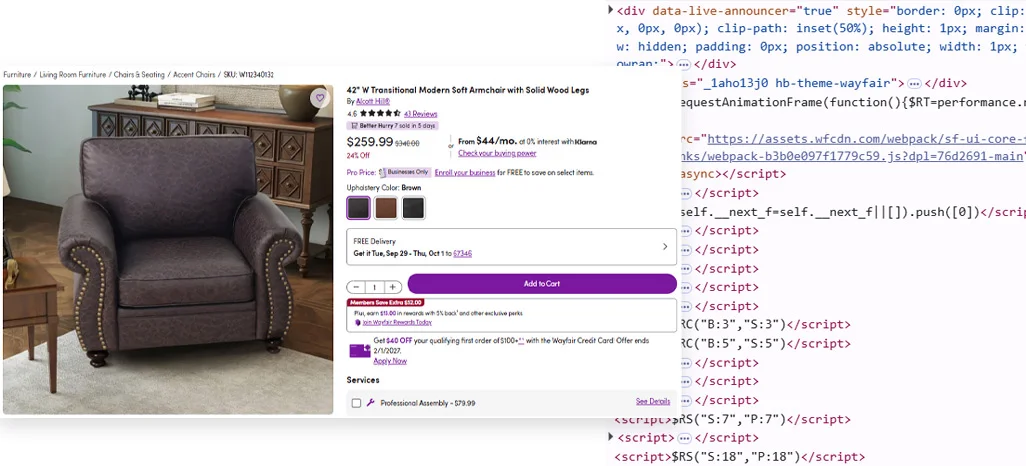
The final stage centers on organizing collected observations so they remain useful beyond a single price check. Wayfair API Data Scraping can support structured collection workflows where appropriate access methods are available, allowing product information to move into databases or analytical systems. Each record should preserve its product identifier, captured value, timestamp, and relevant attributes.
Historical storage is particularly important when businesses want to understand recurring pricing behavior. Wayfair Product Price History provides a structured basis for comparing earlier and current observations, measuring price differences, and identifying periods of promotional activity. Retaining previous records instead of overwriting them allows analysts to examine longer-term movements across furniture categories.
A strong database structure should account for product updates, discontinued listings, changed attributes, and duplicate observations. Records can be organized using unique product identifiers and collection timestamps, while validation processes can flag unexpected changes. This approach helps preserve historical accuracy as the number of monitored products increases.
Important historical management practices include:
- Assign unique identifiers to monitored products.
- Store each observation with its collection timestamp.
- Preserve previous values instead of replacing them.
- Validate records before adding them to historical storage.
- Separate product attributes from changing pricing fields.
| Historical Element | Analytical Role |
|---|---|
| Product ID | Connects recurring observations |
| Previous Price | Establishes historical baseline |
| Current Price | Represents latest observation |
| Timestamp | Shows when changes occurred |
| Product Status | Adds listing context |
Effective Storing Historical Wayfair Price Data practices help businesses maintain organized records for trend analysis, category research, promotional comparisons, and long-term pricing studies. A carefully structured historical database also makes future reporting and dashboard development easier.
How Retail Scrape Can Help You?
We can support businesses looking at How to Build a Wayfair Price Tracker by providing structured extraction workflows designed for recurring product and pricing collection. Instead of relying on manual checks, businesses can organize targeted product lists, define required attributes, schedule collection activities, and prepare records for comparison across hundreds of furniture listings.
Key capabilities can include:
- Configure product categories and target listings for recurring collections.
- Capture essential product attributes alongside pricing information.
- Organize extracted records into consistent, analysis-ready structures.
- Support scheduled collection workflows for repeated monitoring.
- Identify changes between current and previously collected records.
- Prepare collected information for dashboards, reports, or analytical workflows.
A structured workflow can also simplify Wayfair Product Datasets preparation by keeping product-level records consistent and easier to analyze. Retail Scrape can help businesses maintain scalable collection processes, reduce repetitive monitoring work, and transform recurring product observations into useful historical pricing information for furniture research and competitive analysis.
Conclusion
A well-planned tracker can turn recurring furniture price observations into a structured source for comparison and historical analysis. How to Build a Wayfair Price Tracker depends on consistent product identification, scheduled collection, accurate timestamps, reliable storage, and systematic change detection. These components help businesses examine pricing patterns across 500+ furniture listings without relying entirely on manual checks.
Maintaining Collecting Wayfair Product and Price Data workflows can further support category research, promotion analysis, and purchasing decisions by keeping product information organized over time. Contact Retail Scrape today to build a structured furniture price tracking workflow tailored to your data collection and monitoring requirements.