
How Can Sainsbury’s API vs Web Scraping Improve Access to Supermarket Pricing and Product Data?
Introduction
Accurate grocery intelligence drives smart pricing decisions across the modern retail sector. Businesses rely heavily on structured competitor information to adjust margins, optimize inventory, and forecast consumer demand effectively. Choosing the right extraction methodology directly determines data freshness, coverage, and long-term scalability for retail analysts.
Evaluating Sainsbury’s API vs Web Scraping is essential for organizations seeking uninterrupted visibility into UK supermarket catalogs. While official interfaces offer structured endpoints, automated extraction captures real-time storefront updates, localized stock shifts, and promotional markdowns that standard feeds frequently restrict or omit entirely.
Understanding these technical differences ensures companies invest in sustainable pipelines for UK Grocery Price Monitoring. Selecting the optimal architecture empowers pricing teams to track thousands of daily SKU fluctuations without facing unexpected rate limits, access bottlenecks, or incomplete regional assortment records.
Architectural Differences Between Official Endpoints and Automated Storefront Extraction
Retail intelligence acquisition relies on two fundamentally distinct engineering frameworks: authorized programming interfaces and automated browser-based storefront extraction. Official programming interfaces allow approved commercial partners to request structured payloads directly from internal corporate servers, whereas automated extraction parses publicly rendered web pages to capture exact shopper-facing storefront details across regional digital shelves.
For many enterprise retail analysts, integrating a Sainsbury’s Product Data API initially appears attractive due to clean JSON outputs and predictable schema stability. However, public access to official supermarket interfaces remains heavily restricted, typically requiring formal vendor partnerships, strict legal approval workflows, and rigid daily request quotas that hinder comprehensive market research.
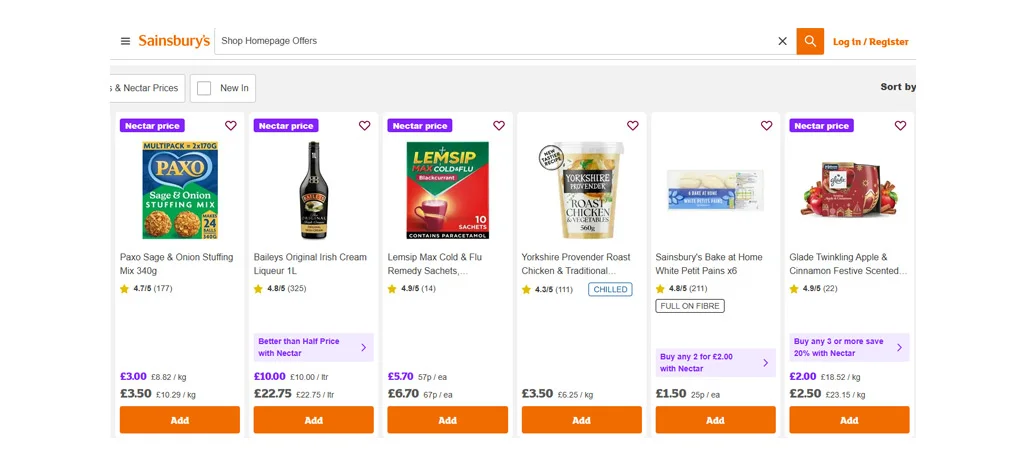
Conversely, implementing Sainsbury’s Supermarket Data Scraping simulates authentic user sessions across specific UK postcodes to capture complete digital catalog visibility. Automated extraction pipelines collect live shelf prices, detailed nutritional tables, verified customer ratings, and promotional banners directly from the public storefront without requiring proprietary vendor credentials or restrictive partnership agreements.
- Official endpoints require formal commercial contracts and strict authentication tokens.
- Automated storefront extraction captures dynamic promotional banners and customer reviews effortlessly.
- Restricted feeds frequently omit localized stock availability across regional fulfillment centers.
- Browser-based extraction mirrors the exact visual pricing displayed to everyday online shoppers.
| Feature Comparison | Official Endpoint Access | Automated Storefront Extraction |
|---|---|---|
| Access Requirements | Strict vendor approval and partner contracts | Publicly accessible storefront URLs |
| Data Granularity | Limited to pre-approved schema fields | Complete page elements, promos, and reviews |
| Postcode Localization | Often restricted to national base pricing | Granular store-level and regional pricing |
| Rate Limits & Quotas | Rigid call caps per minute and day | Scalable via rotating residential proxies |
| Maintenance Overhead | Low until provider deprecates versions | Managed parser updates for UI changes |
Industry benchmarks indicate that over 68% of UK retail intelligence teams experience significant data blind spots when relying solely on restricted partner feeds. Official endpoints rarely expose regional postcode pricing variations, flash multi-buy discounts, or real-time out-of-stock indicators visible to everyday online shoppers browsing local delivery slots.
Evaluating Real-Time Accuracy, Catalog Coverage, and Regional Scalability
Modern supermarket pricing fluctuates rapidly throughout the trading day, driven by dynamic repricing algorithms, aggressive competitor matching, and perishable inventory clearance cycles. Maintaining high-frequency visibility across tens of thousands of individual SKUs requires an extraction infrastructure capable of capturing localized variations without latency, caching delays, or unexpected data throttling.
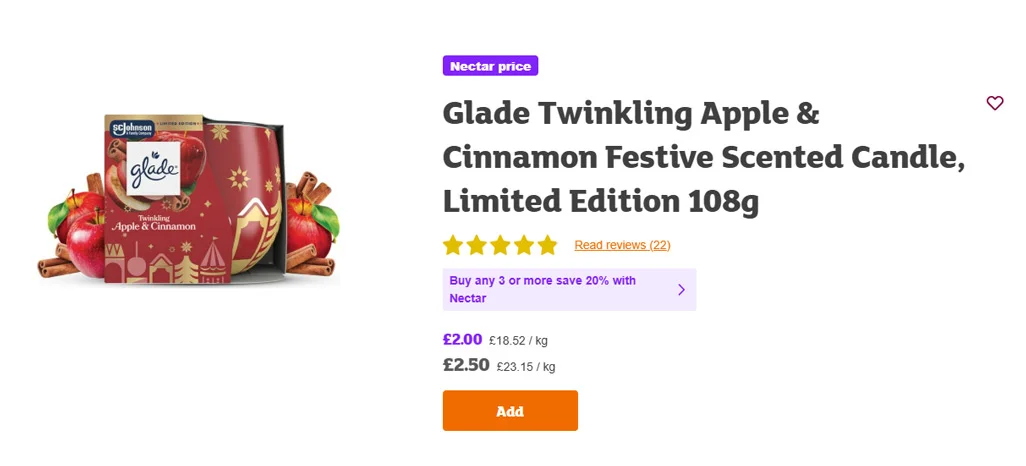
Deploying Sainsbury’s Online Grocery Price Tracking through automated storefront extraction provides unmatched granularity across distinct UK delivery zones and metropolitan postcodes. Market research indicates that regional supermarket prices and promotional availability vary by up to 14% across different local catchment areas, making localized storefront capture vital for accurate competitive benchmarking.
By utilizing dedicated Sainsbury’s Grocery Price Monitoring pipelines, commercial brands capture exact timestamped snapshots of unit prices, Nectar loyalty discounts, and multi-buy bundle offers. High-concurrency extraction architectures process over 100,000 product pages per hour while maintaining 99.8% field-level accuracy across complex dynamic JavaScript storefront elements.
- Dynamic supermarket pricing algorithms adjust shelf values multiple times within a single day.
- Cached corporate feeds introduce multi-hour delays during critical weekend promotional campaigns.
- High-concurrency extraction captures thousands of regional SKU variations simultaneously without throttling.
- Timestamped storefront snapshots preserve exact historical records of loyalty card discounts.
| Performance Metric | Official Corporate Feeds | Automated Extraction Pipelines |
|---|---|---|
| Update Frequency | Batched or cached (4–24 hour delays) | Real-time on-demand or hourly schedules |
| Promotional Visibility | Standard base price only | Captures Nectar prices and multi-buy deals |
| Catalog Completeness | Core SKUs only | 100% of active online categories and variants |
| Geographic Targeting | Single national catalog view | Unlimited UK postcode simulations |
| Historical Archiving | Limited to current active state | Full longitudinal price and promo history |
Official programming feeds frequently cache product records for several hours at a time, creating severe analytical blind spots during peak promotional windows and weekend flash sales. Furthermore, strict pagination limits and rigid throttling rules prevent retail analysts from running simultaneous bulk catalog sweeps across all grocery, household, and seasonal categories.
Balancing Operational Reliability, Engineering Costs, and Long-Term Compliance
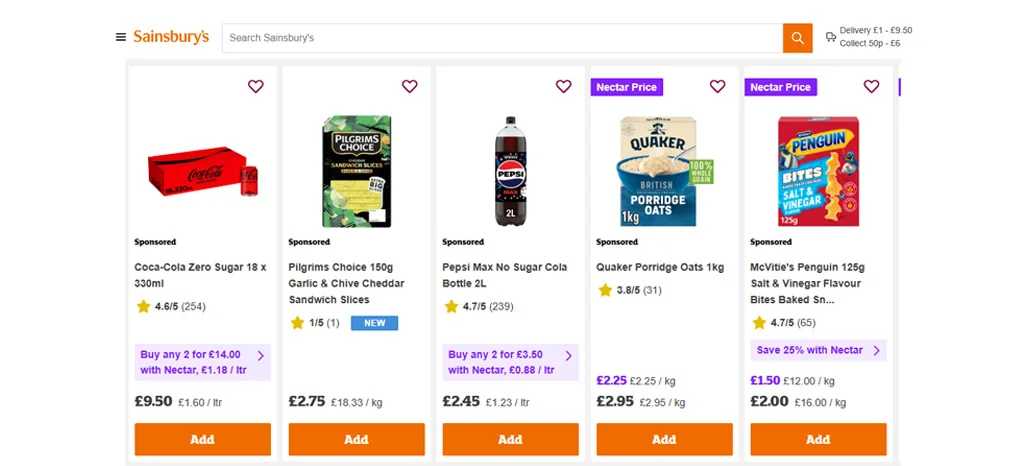
Selecting a sustainable data acquisition strategy requires carefully balancing ongoing infrastructure expenses, internal engineering maintenance, and uninterrupted system uptime. While building a custom extraction script internally initially appears cost-effective, sophisticated anti-bot defenses, complex CAPTCHA challenges, and frequent front-end layout updates quickly escalate internal engineering overhead and operational risk.
Total cost of ownership extends far beyond initial software setup fees when maintaining enterprise-grade retail intelligence pipelines over multiple years. Official partner integrations often involve steep annual licensing tiers and inflexible usage brackets, whereas unmanaged in-house scripts suffer from frequent IP blocks and broken parsers whenever storefront code updates unexpectedly.
Recent industry surveys reveal that internal data engineering teams spend nearly 40% of their working hours repairing broken extraction scripts rather than analyzing commercial market trends. Partnering with specialized Grocery Price Monitoring Services eliminates this heavy operational burden by delivering clean, schema-validated datasets directly into enterprise cloud warehouses.
- Internal engineering teams lose valuable analytical hours fixing broken front-end layout parsers.
- Residential proxy rotation prevents IP blocking during high-volume regional catalog sweeps.
- Automated schema validation detects structural changes and heals extraction pipelines immediately.
- Predictable monthly service tiers eliminate unexpected infrastructure spikes during peak retail seasons.
| Operational Factor | In-House Extraction | Official Partner Feed | Managed Data Service |
|---|---|---|---|
| Setup & Onboarding Time | 4–8 weeks of engineering | 2–6 months for approval | 48–72 hours to live feed |
| Anti-Bot & Proxy Handling | High internal maintenance | Not applicable | Fully managed infrastructure |
| Schema Change Recovery | Manual code hotfixes | Provider-controlled notices | Automated real-time healing |
| Infrastructure Scalability | Limited by server capacity | Capped by contract tier | Elastic enterprise throughput |
| Data Delivery Format | Raw uncleaned HTML/JSON | Fixed payload structure | Custom JSON, CSV, or feed |
Enterprise-grade Sainsbury’s Product Availability Tracking solutions combine residential proxy networks, headless browser rendering, and automated schema validation workflows. This managed approach guarantees continuous daily data delivery, strict adherence to public web compliance standards, and predictable monthly operational expenses regardless of seasonal catalog surges.
How Retail Scrape Can Help You?
Navigating the technical complexities of supermarket intelligence requires a robust infrastructure tailored for high-frequency retail environments. Businesses evaluating Sainsbury’s API vs Web Scraping often struggle to balance engineering costs with the need for hyper-local, real-time accuracy across diverse UK postcodes.
Our specialized Sainsbury’s Scraper bypasses complex front-end rendering hurdles to deliver structured, ready-to-analyze product feeds directly to your business intelligence tools.
- Customized extraction schedules aligned with your daily repricing and inventory review cycles.
- Granular postcode-level targeting to capture regional stock fluctuations and localized store pricing.
- Automated Nectar loyalty discount and multi-buy promotional parsing across every grocery category.
- Built-in data deduplication, normalization, and quality assurance checks guaranteeing 99.8% accuracy.
- Seamless delivery into Amazon S3, Google Cloud, Snowflake, or custom webhook endpoints.
- Proactive parser maintenance and anti-bot management handled completely by dedicated engineers.
By partnering with us for UK Grocery Data Extraction Services, retail brands eliminate technical bottlenecks and gain uninterrupted visibility into competitor pricing strategies, empowering faster, data-backed commercial decisions across every product category.
Conclusion
Choosing the right methodology to capture supermarket intelligence shapes how effectively your business responds to shifting market dynamics. While evaluating Sainsbury’s API vs Web Scraping, organizations quickly recognize that official interfaces lack the granular, postcode-specific promotional visibility required for agile pricing.
Partnering with reliable Retail Data Scraping Services UK ensures your pricing and category management teams receive clean, structured datasets without dedicating internal engineering resources to script maintenance. Contact Retail Scrape today to schedule a free consultation and request a customized sample dataset tailored to your exact supermarket tracking requirements.