
How Does Black Friday & Cyber Monday Competitor Price Tracking 2026 Reveal Real Discount Trends?
Introduction
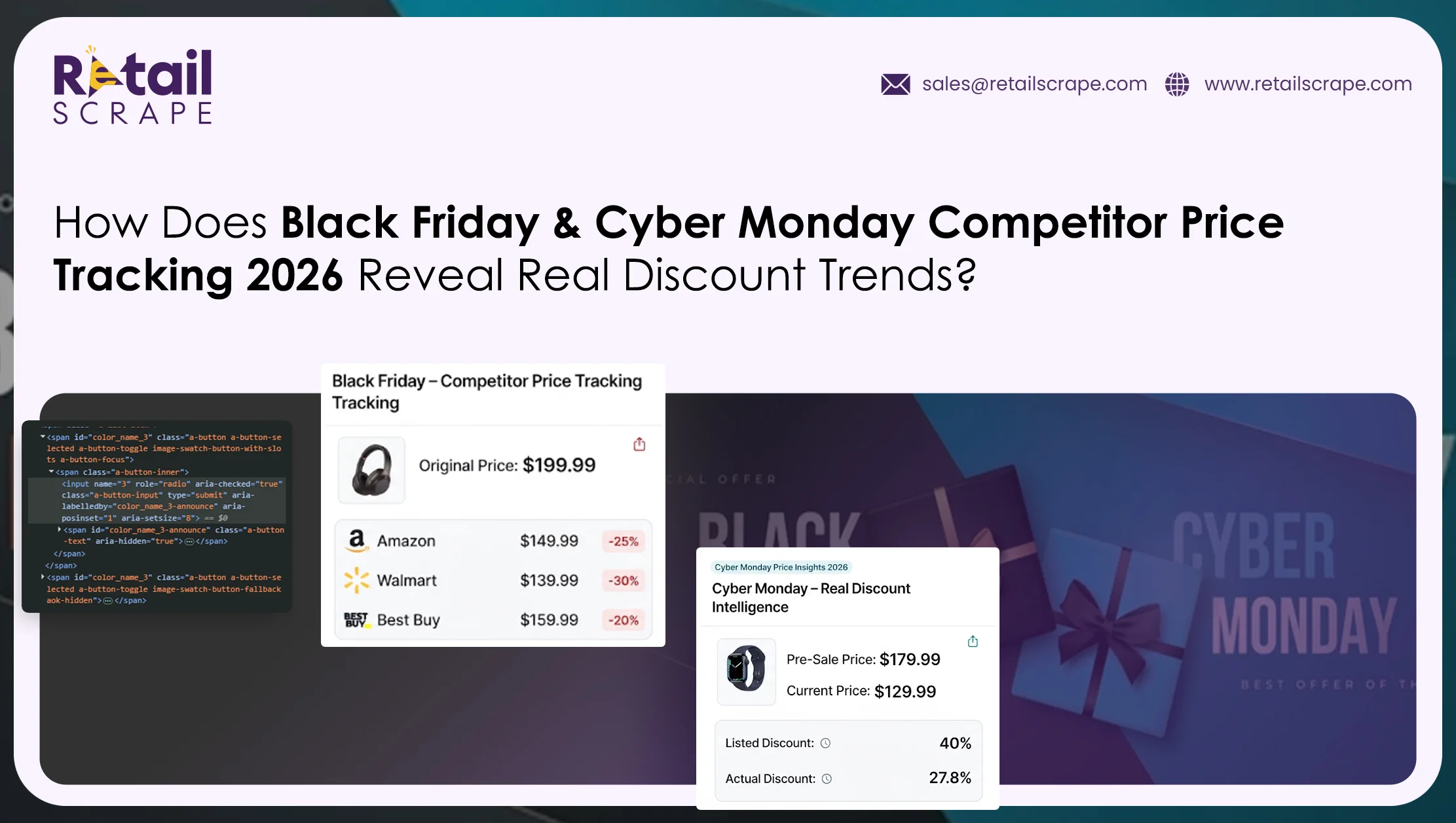
The holiday shopping weekend has evolved into a rapid-fire battleground where static pricing fails within minutes. Retailers frequently inflate base prices weeks before November to simulate massive markdowns. Understanding true market shifts requires Black Friday & Cyber Monday Competitor Price Tracking 2026 to separate genuine promotions from clever psychological illusions.
Modern consumers compare deals across dozens of tabs before committing to a purchase. Relying on guesswork leaves businesses vulnerable to sudden flash sales and eroded profit margins. Implementing Black Friday Price Tracking gives brands immediate visibility into rival pricing tactics, stock depletion rates, and real-time promotional adjustments throughout the peak shopping rush.
Without accurate data, merchants often slash prices unnecessarily or miss crucial opportunities to capture high-intent buyers. Effective Retail Price Monitoring empowers e-commerce teams to decode historical pricing patterns, anticipate competitor moves, and execute profitable responses during the busiest retail window of the year.
Exposing Fake Markdowns and Pre-Holiday Price Inflation Tactics
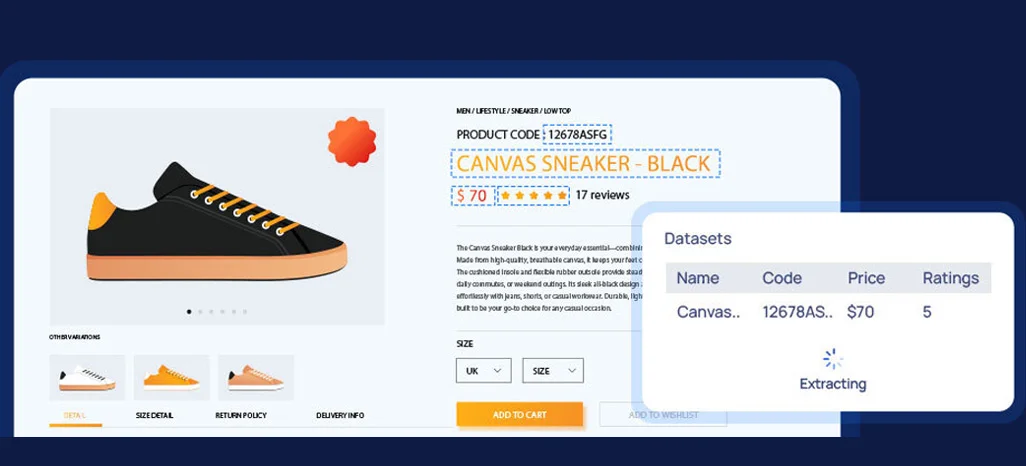
Many online stores artificially raise their list prices in October so their November discounts look far steeper than they actually are. Industry audits show that roughly 38% of advertised holiday deals feature reference prices that were inflated less than thirty days prior. By leveraging Retail Price Intelligence and Competitor Analysis, brands can compare long-term baseline pricing against advertised holiday markdowns to uncover what shoppers are truly paying across major marketplaces.
When a competitor advertises a massive "50% off" banner, historical price logs often reveal the actual discount is closer to 12% compared to their third-quarter average. Executing Black Friday Competitor Price Monitoring Strategies allows you to benchmark your real net prices against these inflated anchor prices. Instead of panicking and matching a phantom discount, your team can highlight genuine value and transparent pricing in your promotional ad copy.
Consumer trust erodes rapidly when shoppers notice manipulated anchor pricing through browser extensions and AI comparison tools. Recent consumer surveys indicate that 44% of Black Friday shoppers now use AI tools to verify price histories before checking out, leading to immediate cart abandonment when fake markdowns are exposed.
- Baseline Price Auditing: Track 90-day historical price averages prior to November to verify whether rival promotional markdowns represent genuine savings or artificial pre-holiday markups.
- Margin Protection Guardrails: Establish automated minimum advertised price thresholds so your store never sacrifices healthy profit margins chasing phantom competitor discounts.
- Transparent Value Messaging: Emphasize verified net price comparisons and authentic seasonal savings in your storefront banners to win over skeptical bargain hunters.
| Pricing Tactic | Advertised Discount | True Discount vs. Q3 Avg | Consumer Conversion Impact |
|---|---|---|---|
| Inflated Anchor Pricing | 50% Off | 11% Off | High initial clicks, high cart abandonment |
| Genuine Flash Markdown | 30% Off | 30% Off | Strong repeat trust and steady conversion |
| Bundled Value Add | 25% Off + Free Gift | 22% Off | Higher average order value (AOV) |
| Tiered Cart Threshold | Up to 40% Off | 18% Off | Boosts multi-item basket sizes |
Tracking these pricing discrepancies prevents destructive race-to-the-bottom price wars. Data reveals that retailers who maintain authentic baseline pricing while selectively matching verified competitor drops retain up to 19% higher gross margins across the Cyber Five weekend.
Tracking Hourly Flash Sales and Stock-Driven Price Shifts
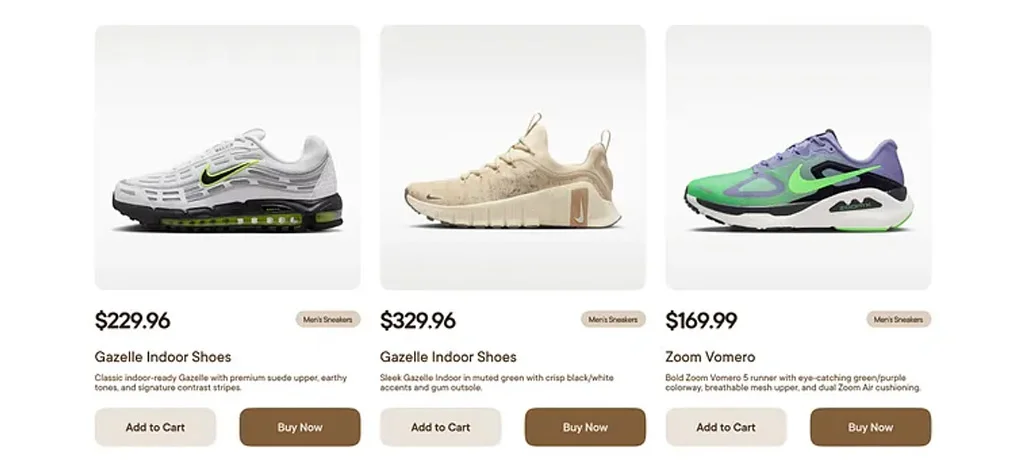
Holiday pricing is no longer set once on Friday morning and left untouched until Tuesday afternoon. Top marketplaces update product prices every 15 to 45 minutes based on real-time inventory velocity and rival stockouts. Utilizing professional Competitor Price Monitoring Services ensures your commercial team captures these rapid micro-fluctuations before they silently drain your seasonal market share.
Statistics from recent peak seasons indicate that over 64% of electronics and apparel SKUs experience at least four distinct price changes between Thanksgiving evening and Monday night. Furthermore, when a major competitor runs out of stock on a flagship item, surviving sellers typically raise their prices by 8% to 14% within two hours. Integrating Ecommerce Competitor Discount Tracking lets you spot rival stockouts immediately so you can raise prices and capture extra margin rather than unnecessarily discounting scarce inventory.
Real-time inventory intelligence also protects your advertising budget from wasted ad spend on out-of-stock battlegrounds. When rival sellers deplete their warehouse stock on top-performing items, shifting your paid search bids toward those exact product categories maximizes conversion efficiency while preserving unit profitability across the busiest shopping hours.
- High-Frequency Price Polling: Capture rapid 15-minute price adjustments during peak Thanksgiving, Black Friday, and Cyber Monday traffic surges to stay aligned with market shifts.
- Competitor Stockout Detection: Monitor rival inventory availability badges in real time to identify immediate opportunities for upward price adjustments on high-demand items.
- Dynamic Repricing Triggers: Automatically synchronize your storefront pricing rules with verified competitor stock depletion rather than relying on manual spreadsheet updates.
| Time Window (BFCM Weekend) | Avg. Price Changes Per SKU | Primary Pricing Trigger | Optimal Merchant Response |
|---|---|---|---|
| Thursday Night (6 PM – 12 AM) | 2.4 changes | Early-access VIP doorbusters | Match core loss-leaders selectively |
| Black Friday Peak (8 AM – 6 PM) | 4.8 changes | Direct rival algorithm matching | Automate floor-price guardrails |
| Saturday – Sunday Lull | 1.9 changes | Inventory rebalancing & restocks | Pause aggressive markdowns on low stock |
| Cyber Monday Surge (9 AM – 9 PM) | 5.2 changes | Final clearance & cart-abandonment | Deploy targeted promo codes |
Monitoring live stock status alongside hourly price changes transforms raw market numbers into highly profitable commercial timing.
Decoding Category-Specific Discount Depth Across Cyber Week Trends
Different product categories follow vastly different promotional curves between Black Friday and Cyber Monday across global digital storefronts. While consumer electronics see their steepest cuts on Friday morning, fashion, beauty, and software subscriptions peak in discount depth on Monday afternoon. Deploying Automated Price Data Scraping enables merchandising teams to map these distinct category trajectories with granular SKU-level accuracy.
Recent e-commerce benchmarks reveal that average discounts in consumer tech hover around 24% on Friday before tapering to 19% on Monday. Conversely, apparel and home goods escalate from an average 28% markdown on Friday to 37% during Cyber Monday Discount Monitoring 2026 windows as retailers aggressively clear seasonal inventory. Relying on Black Friday Price Monitoring alone leaves substantial Monday revenue on the table if your promotional calendar peaks too early in the weekend.
Aligning your promotional budget with verified category curves ensures you deploy your deepest discounts exactly when buyer intent peaks. Merchandising leaders who segment their promotional calendars by vertical consistently outperform competitors who apply uniform sitewide markdowns across all five days of Cyber Week.
- Vertical Discount Mapping: Analyze category-specific markdown curves separately for electronics, apparel, beauty, and home goods to time your deepest promotional cuts accurately.
- Multi-Day Budget Allocation: Reserve dedicated promotional margin for Monday clearance surges in fashion and lifestyle verticals rather than exhausting discounts on Friday.
- Cross-Channel Deal Benchmarking: Compare marketplace promo codes, bundle discounts, and free-shipping thresholds across competing domains to craft superior customer offers.
| Product Category | Avg. Black Friday Discount | Avg. Cyber Monday Discount | Peak Promotional Window |
|---|---|---|---|
| Consumer Electronics | 24.5% | 19.2% | Friday 6:00 AM – 2:00 PM |
| Apparel & Footwear | 28.0% | 37.4% | Monday 10:00 AM – 8:00 PM |
| Beauty & Personal Care | 22.1% | 31.0% | Sunday Evening – Monday Night |
| Home & Kitchen Appliances | 26.8% | 29.5% | Friday Afternoon & Monday Morning |
Granular category visibility empowers brands to capture maximum wallet share while protecting net contribution margins across every vertical.
How Retail Scrape Can Help You?
Navigating rapid holiday price fluctuations manually is impossible when thousands of competing SKUs change every hour. By integrating Black Friday & Cyber Monday Competitor Price Tracking 2026 into your commercial workflow, we deliver clean, structured, and real-time market intelligence straight to your analytics dashboard.
Our custom scraping infrastructure bypasses anti-bot barriers and geo-restrictions to capture exact variant prices, shipping fees, and stock availability across global marketplaces.
- Real-Time Competitor Dashboards: Track live rival price adjustments, coupon codes, and bundle offers across major marketplaces in one unified view.
- Historical Baseline Logs: Audit pre-holiday price hikes from September and October to verify whether rival discounts are genuine or artificially inflated.
- Instant Stockout Alerts: Receive immediate notifications when competitors run out of top-selling products so you can adjust margins upward.
- SKU-Level Variant Matching: Automatically match identical products across rival domains using UPC, EAN, MPN, or attribute-based algorithms.
- Custom Frequency Scheduling: Configure extraction intervals down to every 15 minutes during peak flash-sale windows without data bottlenecks.
- Seamless API & ERP Integration: Feed structured JSON or CSV pricing datasets directly into your internal repricing engines and BI tools.
With tailored Dynamic Pricing Monitoring built for high-volume retail, your team eliminates manual spreadsheet tracking and protects profit margins throughout the entire holiday season.
Conclusion
Winning the holiday sales rush requires looking past flashy promotional banners to understand the real mechanics driving market behavior. When businesses rely on Black Friday & Cyber Monday Competitor Price Tracking 2026, they gain the clarity needed to spot inflated reference prices, capitalize on competitor stockouts, and time their promotions for maximum profitability.
Equipping your merchandising team with accurate Cyber Monday Discount Monitoring 2026 ensures every markdown decision is grounded in verified market reality rather than guesswork. Ready to outsmart rival pricing strategies and maximize your holiday profit margins? Contact Retail Scrape today to schedule a free demo and launch your custom holiday price tracking pipeline.