.gif)


How Can Kroger Grocery Data Scraping Track Grocery Products, Pricing Changes and Store Inventory?
Introduction
Retailers operating in the modern food sector face razor-thin margins and rapid price fluctuations across thousands of neighborhood stores. Implementing Kroger Grocery Data Scraping allows brands and analysts to capture granular shelf intelligence automatically. By transforming raw storefront pages into structured datasets, businesses gain immediate visibility into dynamic retail shifts without manual store audits.
Every regional market exhibits unique promotional cycles, fuel-point discounts, and local stock shortages that heavily influence consumer purchasing behavior. Reliable Kroger Price Monitoring helps revenue teams detect localized markdowns and competitor price matching before market share erodes. Automated data pipelines ensure pricing analysts work with accurate, hourly refreshed retail figures rather than outdated weekly summaries.
Furthermore, capturing detailed product attributes from nutritional labels to multi-buy promotions empowers CPG manufacturers to verify retail compliance nationwide. When organizations unify catalog details with regional shelf availability, supply chain planners can prevent costly out-of-stock scenarios and optimize distribution across every Kroger banner store.
Tracking Comprehensive Supermarket Catalog Details and Digital Attributes
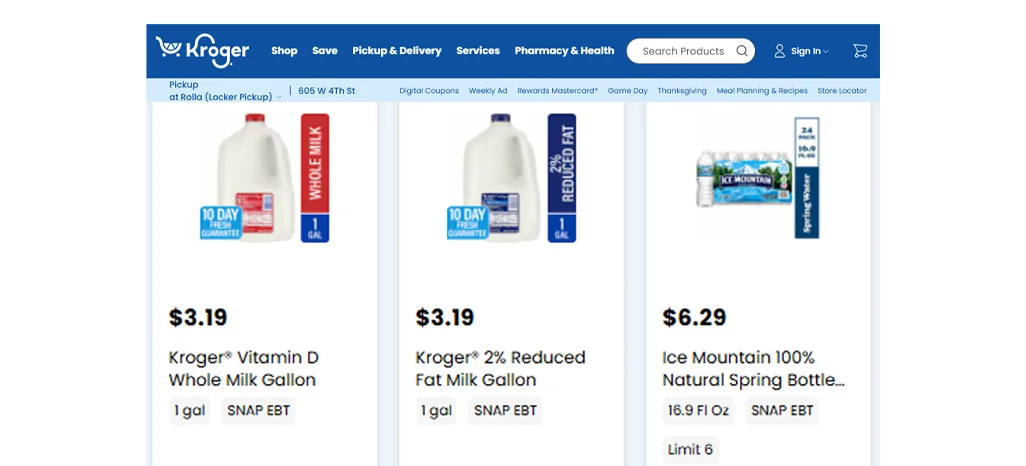
Modern supermarket assortments encompass tens of thousands of distinct items spanning fresh produce, private-label staples, and national consumer packaged goods across regional divisions. Executing systematic Grocery Product Data Extraction within daily analytics workflows enables merchandising teams to monitor packaging updates, ingredient modifications, and promotional badge placements across digital storefronts.
Rather than relying on fragmented vendor reports, automated crawlers parse structured HTML and JSON payloads directly from store-specific web portals to maintain a unified master catalog. To achieve enterprise-grade accuracy across thousands of regional branches, data engineering teams often integrate a dedicated Kroger Product Data API alongside custom parsing pipelines.
This architectural combination ensures seamless data ingestion even when front-end storefront layouts undergo unexpected seasonal redesigns or dynamic script updates. Industry benchmarks indicate that CPG brands utilizing automated catalog tracking reduce listing discrepancies by 42% while accelerating promotional launch audits by over 65% compared to manual field checks.
- Standardized Taxonomy Mapping: Automatically align brand hierarchies, product categories, and pack sizes across disparate regional divisions.
- Promotional Compliance Verification: Audit digital shelf placements, featured banner ads, and multi-buy coupon badges in real time.
- Ingredient & Allergen Monitoring: Detects subtle formulation updates or packaging claims immediately after manufacturer rollouts.
| Product Data Attribute | Extraction Frequency | Primary Business Use Case | Accuracy Benchmark |
|---|---|---|---|
| UPC & SKU Identifiers | Daily | Master catalog synchronization & assortment gap analysis | 99.8% |
| Nutritional & Dietary Tags | Weekly | Ingredient compliance & health-trend categorization | 99.4% |
| Digital Coupon & Promo Badges | Hourly | Trade promotion verification & discount elasticity modeling | 99.1% |
| Customer Ratings & Reviews | Bi-weekly | Sentiment analysis & private-label benchmarking | 98.9% |
By continuously running Kroger SKU Data Scraping in the background, analysts capture exact UPC codes, weight variations, and digital coupon eligibility across more than 2,700 retail locations. These structured records empower category managers to benchmark private-label penetration against national brands with complete precision.
Capturing Hyper-Local Retail Pricing Shifts and Promotional Cycles
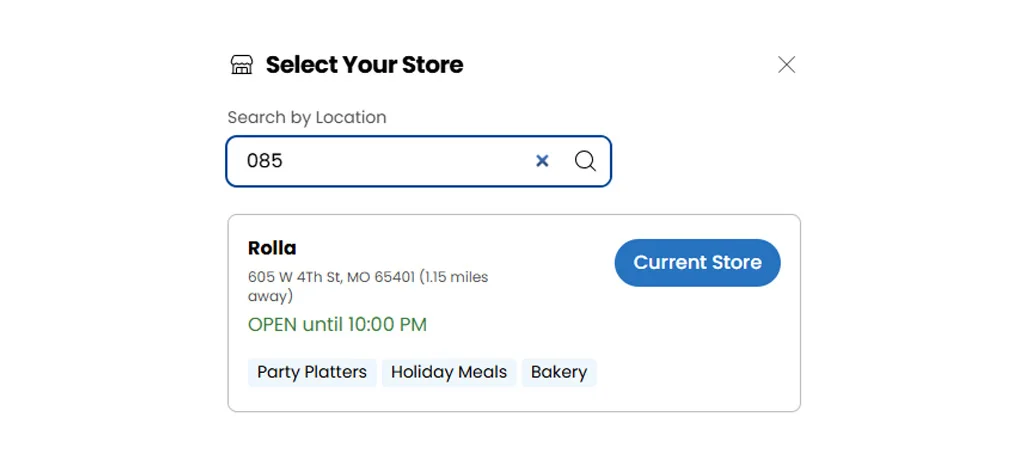
Supermarket pricing is rarely uniform across zip codes because regional supply costs, local competition, and neighborhood demographics drive continuous shelf adjustments. Deploying Store Level Price Tracking across priority metropolitan markets reveals how identical items fluctuate between urban flagship locations and suburban stores within the same state. By simulating local store selection via zip code parameters, automated pipelines record regular shelf prices, loyalty card discounts, and clearance markdowns simultaneously.
In addition to recording base shelf figures, monitoring Kroger Product Availability alongside promotional discounts prevents revenue analysts from misinterpreting temporary clearance dips. When an item approaches local expiration or seasonal phase-out, sharp markdowns often coincide with dwindling shelf counts rather than aggressive competitor price wars.
Recent retail analytics studies show that hyper-local price intelligence boosts gross margin optimization by 3.5% to 5.2% for competing grocers and CPG suppliers. Through automated Kroger Pricing Data Extraction pipelines, enterprise pricing engines process millions of regional price points daily to uncover mid-week flash sales and localized inflation spikes. Revenue teams leverage these granular insights to calibrate dynamic pricing rules and protect trade promotion budgets.
- Zip-Code Level Price Benchmarking: Compare identical basket costs across neighboring retail competitors within a five-mile radius.
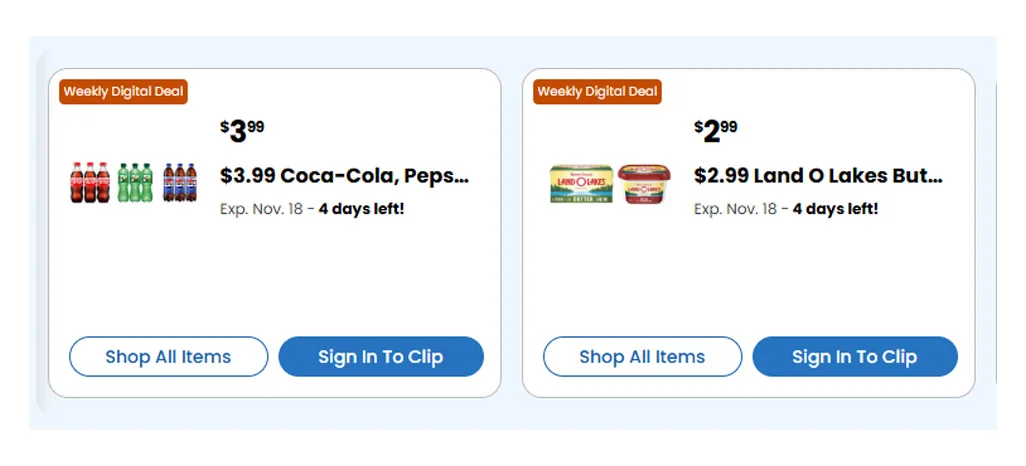
- Loyalty & Digital Coupon Tracking: Separate standard everyday shelf prices from members-only promotional discounts and fuel-point offers.
- Historical Price Elasticity Modeling: Measure how regional unit velocity responds to temporary price reductions over multi-quarter cycles.
| Pricing Metric Tracked | Regional Variance Rate | Update Cadence | Strategic Impact |
|---|---|---|---|
| Base Shelf Price | 12% – 18% across states | Every 6 hours | Regional price elasticity & MSRP compliance |
| Loyalty Card Discount | 20% – 35% discount depth | Every 2 hours | Competitive promotional response & margin defense |
| Clearance & Manager Specials | Highly localized by store | Hourly | Distressed inventory detection & demand forecasting |
| Multi-Buy Bundle Offers | Varies by regional division | Daily | Basket-size optimization & trade spend ROI |
Consistently capturing hyper-local shelf rates ensures commercial leaders react to regional market shifts within hours rather than waiting weeks for syndicated POS reports.
Monitoring Real-Time Neighborhood Store Inventory and Fulfillment Levels
Out-of-stock shelves directly translate into immediate lost revenue and diminished shopper loyalty, especially within high-velocity food and beverage categories. Implementing automated Kroger Inventory Tracking within supply chain control towers allows operations managers to observe stock depletion rates across curbside pickup, home delivery, and in-store fulfillment channels.
When high-demand items drop below safety thresholds in specific zip codes, replenishment teams receive immediate alerts to reroute shipments before shelves empty completely. A resilient Kroger Scraper queries store-level fulfillment endpoints around the clock to distinguish between items physically sitting on the aisle shelf and those restricted to regional warehouse delivery.
This granular channel visibility prevents logistics teams from over-allocating stock to locations that already possess sufficient backroom reserves. Data-driven brands utilizing real-time stock feeds cut lost sales from stockouts by up to 28% and improve on-shelf availability scores across key distribution centers. By pairing live fulfillment signals with automated replenishment workflows, retail suppliers maximize shelf presence and safeguard customer retention across every neighborhood branch.
- Omnichannel Stock Differentiation: Separate in-store aisle availability from curbside pickup and scheduled delivery fulfillment windows.
- Early Out-of-Stock Alerting: Trigger automated supply chain notifications the moment regional stock indicators shift to low availability.
- Competitor Stockout Capture: Identify localized supply shortages among rival brands to redirect digital ad spend and capture market share.
| Inventory Status Signal | Detection Latency | Fulfillment Channel Scope | Automated Supply Chain Action |
|---|---|---|---|
| In-Stock High Availability | Under 15 minutes | In-Store & Curbside Pickup | Standard replenishment scheduling |
| Low Stock Warning Threshold | Under 15 minutes | Local Store Aisles | Priority warehouse allocation and safety stock alert |
| Temporarily Out of Stock | Real-time | Regional Delivery & Pickup | Root-cause audit and competitor demand capture |
| Store-Specific Discontinuation | Daily | Division-Wide Assortment | Planogram review and broker intervention |
Through continuous Grocery Store Inventory Tracking across thousands of retail zip codes, logistics analysts correlate localized stockouts with regional weather events, holiday surges, and supplier disruptions. Supply planners use these predictive patterns to pre-position safety stock ahead of peak seasonal demand.
How Retail Scrape Can Help You?
Building resilient data pipelines for complex retail portals requires overcoming anti-bot defenses, geo-location routing, and frequent front-end layout updates. Our enterprise infrastructure handles the technical heavy lifting behind Kroger Grocery Data Scraping, delivering clean, structured feeds directly into your cloud warehouse or BI dashboard without maintenance overhead.
- Automated Geo-Location Routing: Capture hyper-local shelf data across thousands of specific zip codes and individual store IDs effortlessly.
- Enterprise Anti-Bot Bypass: Maintain uninterrupted data collection using rotating residential proxies and headless browser rendering.
- Custom Schema Delivery: Receive normalized datasets formatted in JSON, CSV, or Parquet via direct API or cloud bucket integration.
- High-Frequency Scheduling: Configure hourly, daily, or real-time extraction intervals tailored to volatile grocery categories.
- Automated Quality Assurance: Eliminate missing fields and duplicate records through multi-stage validation checks before delivery.
- Scalable Cloud Infrastructure: Expand from tracking hundreds of core items to millions of regional records without server bottlenecks.
By partnering with our engineering team, retail analysts eliminate pipeline downtime and focus entirely on strategic decision-making. Utilizing our managed Kroger Product Data Scraping service ensures your organization receives reliable, audit-ready shelf intelligence at scale.
Conclusion
Navigating the fast-paced grocery landscape requires granular visibility into every price change, promotional campaign, and regional stock fluctuation. Adopting Kroger Grocery Data Scraping equips enterprise brands and competing retailers with the real-time intelligence needed to protect margins and optimize distribution, while consistent Kroger Inventory Tracking prevents costly out-of-stock events across critical neighborhood markets.
Transforming raw storefront data into actionable commercial strategy no longer demands massive internal engineering teams or fragile scripts. By combining automated Store Level Price Tracking with reliable catalog and stock feeds, your business can respond to market shifts with precision, contact Retail Scrape today to launch your custom grocery data pipeline and turn live shelf insights into measurable revenue growth.