.gif)


How Does BigBasket Grocery API Simplify Tracking of Product Prices, Offers and Stock Availability?
Introduction
Online grocery retail moves at breakneck speed, with thousands of SKUs shifting in price and stock every hour. Manual tracking across multiple pin codes quickly overwhelms pricing teams. Implementing BigBasket Price Monitoring gives brands and retailers an automated edge, capturing hyper-local catalog shifts without human intervention or spreadsheet delays.
Modern e-commerce competitors adjust discounts dynamically based on regional demand, warehouse stock, and competitor markdowns. Relying on outdated weekly audits leaves revenue on the table. By deploying automated BigBasket Grocery API pipelines, businesses convert messy storefront pages into structured, real-time intelligence ready for immediate commercial action.
From tracking sudden flash sales to flagging regional out-of-stock alerts, programmatic data collection removes guesswork from category management. Enterprise teams gain reliable visibility into competitor promotions, unit pricing, and delivery slot dynamics—turning raw marketplace activity into decisive margin protection and sharper assortment planning across every target city.
Streamlining Hyper-Local Product Rate Tracking Across Regional Storefronts
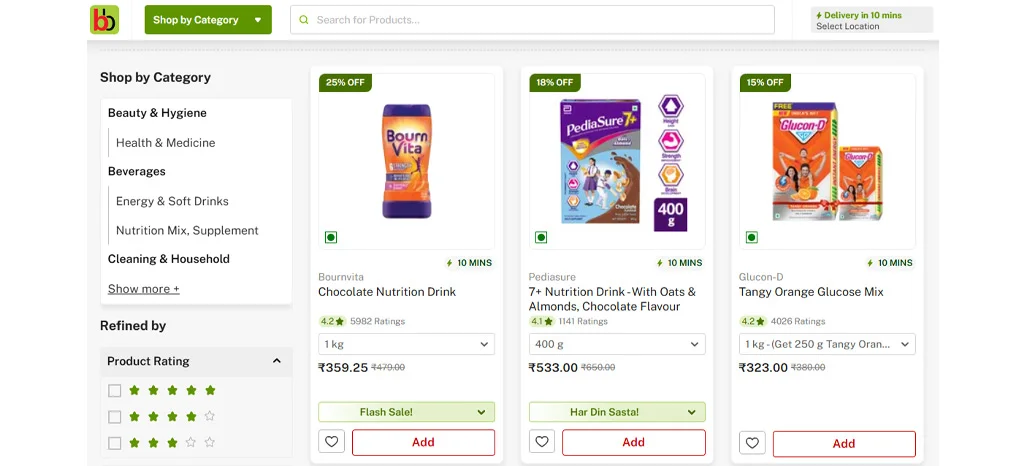
Online grocery pricing varies significantly across Indian neighborhoods because fulfillment hubs adjust rates based on local demand, dark-store capacity, and regional competitor activity. When brands conduct systematic BigBasket Price Comparison across metro and tier-2 pin codes, they uncover exact regional price gaps instead of relying on national averages that hide margin erosion.
Industry benchmarks show that dynamic repricing in quick-commerce occurs up to 4 to 6 times daily on high-velocity staples such as cooking oils, dairy, and packaged grains. Feeding structured Supermarket Price Comparison Data directly into internal BI dashboards allows commercial analysts to benchmark unit economics, flag unauthorized dealer undercutting, and protect brand equity across every territory.
| Pricing Metric | Manual Audit Workflow | Automated API Workflow | Operational Impact |
|---|---|---|---|
| Update Frequency | Weekly or bi-weekly | Hourly / real-time triggers | 95% faster reaction to price drops |
| Pin Code Coverage | 2–3 metro hubs | 30+ tier-1 & tier-2 cities | Complete hyper-local price parity |
| Data Accuracy | ~82% (manual copy errors) | 99.8% validated JSON | Zero SKU mismatch or currency errors |
| Margin Leakage Detection | 5–7 days delayed | Under 15 minutes | Immediate MAP violation alerts |
- Granular Unit Economics: Compare cost-per-gram and multi-pack value ratios across rival SKUs to maintain competitive shelf positioning.
- Pin-Code Rate Mapping: Track city-specific MRP markdowns across Bengaluru, Mumbai, Delhi, Ahmedabad, and emerging tier-2 zones simultaneously.
- MAP Compliance Alerts: Detect unauthorized discounting by third-party sellers before channel conflicts escalate across distributor networks.
Running automated BigBasket Product Data Extraction at scheduled intervals captures base MRP, net selling price, and regional tax splits in clean JSON formats. Category teams replace error-prone manual spreadsheet checks with verified marketplace evidence, enabling confident pricing adjustments within minutes of a competitor move.
Automating Real-Time Promotional Deal and Offer Discovery Workflows
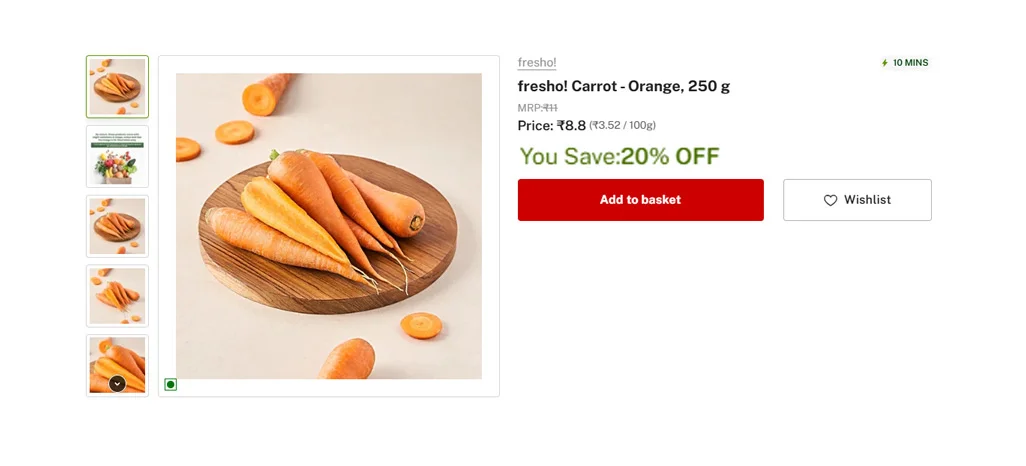
Promotional mechanics in digital grocery marketplaces extend well beyond standard strikethrough discounts on individual product pages. Platforms routinely layer bank cashbacks, cart-value thresholds, BOGO bundles, and loyalty tier pricing that substantially alter the final checkout cost. Integrating a dedicated BigBasket Product Data API exposes the true effective price shoppers pay after promotional deductions.
Retail analytics across major Indian e-grocery categories indicate that over 38% of total SKU volume moves during active promotional windows or weekend flash campaigns. Executing continuous Grocery Discount Monitoring ensures brand managers know immediately when a competing brand launches a category-wide markdown or bundles complementary staples to capture larger basket shares.
| Promotion Type | Key Data Fields Captured | Strategic Value for Brands |
|---|---|---|
| Percentage Markdowns | Original MRP, sale price, discount % | Tracks baseline price erosion over time |
| Bundle & Combo Deals | Freebie SKU ID, combo threshold, net value | Reveals cross-selling tactics by rivals |
| Membership Exclusives | Standard price vs. loyalty tier price | Measures true price competitiveness |
| Bank & Wallet Cashbacks | Minimum cart spend, max cashback cap | Captures hidden checkout-level incentives |
- Loyalty Tier Benchmarking: Separate standard storefront rates from member-exclusive discounts to measure true competitive price gaps.
- Combo & Freebie Detection: Identify when competitors pair slow-moving inventory with high-velocity essentials during festival sales.
- Campaign Velocity Tracking: Measure how long rival promotions stay active and correlate discount depth with stock depletion rates.
When commercial teams combine daily offer feeds with BigBasket Product Data Scraping, they build historical promotional calendars for every rival brand in their category. Analysts can evaluate which discount depths genuinely drive conversion velocity, avoid margin-destroying price wars, and time trade promotions for maximum return on ad spend.
Simplifying Continuous Dark-Store Inventory and Stock Availability Checks
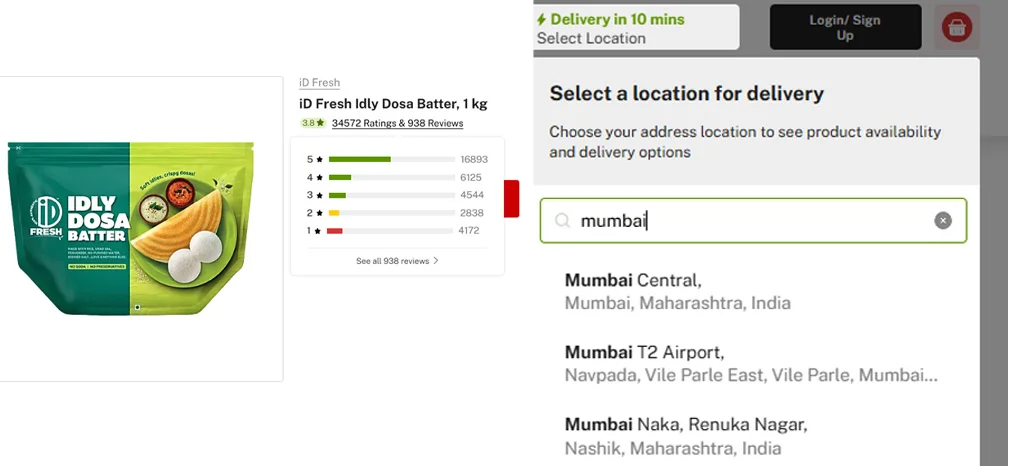
Nothing erodes customer loyalty faster than unavailable daily essentials, yet competitor stockouts also create immediate revenue capture opportunities for prepared brands. Deploying continuous BigBasket Data Scraping empowers supply chain and commercial teams to track SKU availability at the dark-store and pin-code level throughout every trading hour.
E-grocery industry studies show that out-of-stock rates average 8% to 12% during peak weekend demand, costing consumer brands up to 4% in lost annual category revenue. Pairing automated Grocery Product Availability Tracking with real-time alert rules helps suppliers replenish fast-moving SKUs before digital shelf visibility drops—or boost paid search bids when competing items run dry.
| Availability Signal | Refresh Cadence | Downstream Business Action |
|---|---|---|
| In-Stock / Low-Stock Flag | Every 30 minutes | Trigger urgent distributor replenishment |
| Regional Out-of-Stock | Real-time pin-code ping | Shift ad spend to capture competitor demand |
| Delivery Slot Latency | Every 2 hours | Benchmark dark-store fulfillment capacity |
| New SKU Assortment | Daily catalog diff | Spot rival private-label launches early |
- Dark-Store Stock Alerts: Receive instant notifications when top-selling SKUs hit low-inventory thresholds in high-volume residential zones.
- Competitor Stockout Conquesting: Reallocate performance marketing budgets toward pin codes where rival products go out of stock.
- Fulfillment Slot Monitoring: Track express delivery availability and slot delays across neighborhoods to gauge regional supply bottlenecks.
Establishing seamless BigBasket API Integration pushes these live inventory signals directly into ERP, Snowflake, or Power BI environments without manual file uploads. Operations managers shift from reactive firefighting to proactive warehouse allocation, keeping top-performing products buyable across every high-demand neighborhood.
How Retail Scrape Can Help You?
Scaling e-grocery intelligence across dozens of cities requires resilient infrastructure that adapts to frequent storefront updates without breaking your data pipelines. We deliver enterprise-grade BigBasket Grocery API pipelines tailored for FMCG brands, market research firms, and quick-commerce aggregators seeking clean, analytics-ready datasets on demand.
- Hyper-Local Pin-Code Coverage: Capture accurate catalog pricing, regional assortments, and dark-store stock levels across major Indian metros and emerging tier-2 cities simultaneously.
- High-Frequency Scheduled Delivery: Receive automated data feeds hourly, daily, or at custom intervals via REST endpoints, Amazon S3, Google Cloud Storage, or webhooks.
- Anti-Blocking & Proxy Management: Eliminate CAPTCHAs, IP bans, and geo-routing failures through managed residential proxy rotation and automated browser rendering.
- Clean, Normalized Schemas: Get deduplicated, schema-validated JSON and CSV outputs with standardized brand names, pack weights, and category hierarchies ready for immediate BI ingestion.
- Custom Field & Alert Configuration: Track exact SKU lists, private-label benchmarks, seller ratings, and instant threshold alerts whenever competitor prices or stock statuses shift.
- Dedicated Engineering Support: Rely on proactive parser maintenance and SLA-backed uptime guarantees so your analytics teams focus on insights rather than script repairs.
Whether you monitor five hundred core staples or fifty thousand regional SKUs, our managed BigBasket Grocery Scraper scales effortlessly alongside your commercial intelligence roadmap.
Conclusion
Winning in India’s hyper-competitive online grocery market demands speed, localized visibility, and reliable data pipelines. By replacing fragile manual audits with a scalable BigBasket Grocery API, retail and FMCG teams gain real-time clarity into regional price shifts, promotional mechanics, and dark-store inventory gaps. With continuous Grocery Product Availability Tracking, your commercial teams can prevent costly stockouts, protect brand margins, and respond to competitor markdowns before market share slips away.
Building resilient data extraction infrastructure in-house drains engineering bandwidth and stalls strategic decision-making. Partnering with Retail Scrape simplifies BigBasket API Integration, delivering clean, structured catalog intelligence directly into your existing analytics stack on your exact schedule.