.gif)


How Does Costco Pricing Strategy Balance Product Trends, Bulk Deals and Exclusive Member Savings?
Introduction
Retailers across the globe frequently struggle to maintain competitive prices while protecting profit margins against inflation. Yet one warehouse giant consistently defies traditional retail markups by capping profit margins on brand-name goods and private-label staples, creating an ecosystem built on extreme customer loyalty and high-volume turnover.
Understanding the mechanics behind the Costco Pricing Strategy requires looking closely at membership fees, limited SKU counts, and massive wholesale purchasing power. By focusing on roughly 4,000 high-demand items instead of tens of thousands, the company negotiates deep supplier discounts that everyday supermarkets simply cannot match.
Executing detailed Costco Product Price Monitoring alongside thorough Costco Price Analysis reveals how dynamic inventory rotation keeps shoppers returning weekly. Seasonal "treasure hunt" items blend seamlessly with everyday bulk essentials, turning routine grocery runs into high-value shopping experiences that drive recurring annual membership renewals.
Understanding How Bulk Volume and Strict Markup Caps Drive Retail Profitability
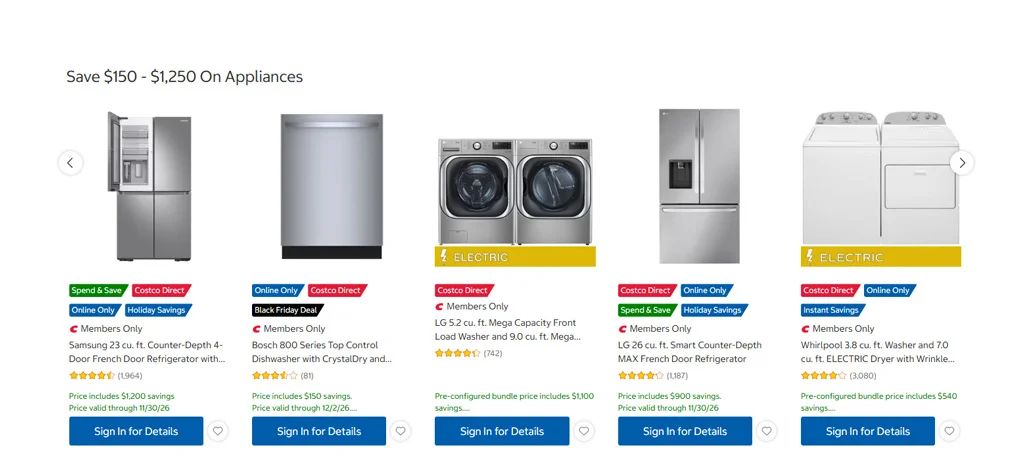
Traditional supermarkets rely on product markups ranging from 25% to 40% to generate net profits, whereas warehouse clubs strictly cap markups at 14% for national brands and 15% for private labels. Conducting a thorough Wholesale Price Comparison demonstrates how thin product margins act as a customer acquisition tool rather than the primary profit engine. In 2025, membership fees alone generated over $4.8 billion in high-margin revenue, accounting for more than 70% of total operating income.
Applying a structured Costco Bulk Pricing Strategy allows the warehouse retailer to move pallet-sized quantities directly from manufacturer to sales floor, eliminating costly storage and repackaging expenses. This operational efficiency ensures rapid inventory liquidation before supplier invoices even come due.
- Capped profit margins build immediate consumer trust without requiring constant promotional markdowns.
- Limited SKU selection concentrates buying power across fewer suppliers for superior volume discounts.
- Direct-to-floor pallet displays drastically reduce warehouse labor and shelf-restocking overhead costs.
| Pricing Metric | Warehouse Club Model | Traditional Supermarket Model |
|---|---|---|
| Average SKU Count | ~4,000 active items | 30,000 to 50,000 active items |
| Maximum Markup Cap | 14% (National) / 15% (Private) | 25% to 45% across categories |
| Primary Profit Driver | Annual Membership Fees (~93% renewal) | Direct Retail Product Margins |
| Inventory Turnover Rate | ~12.5 times per year | ~8.0 to 9.5 times per year |
Businesses performing Costco Product Price Tracking consistently notice that unit prices on household paper goods, organic pantry staples, and electronics undercut major competitors by 15% to 30%. By passing manufacturing efficiencies directly to shoppers, the warehouse model maintains a 93% annual membership renewal rate across North America.
Tracking Rotating Seasonal Merchandise and Limited Warehouse Inventory for Higher Demand
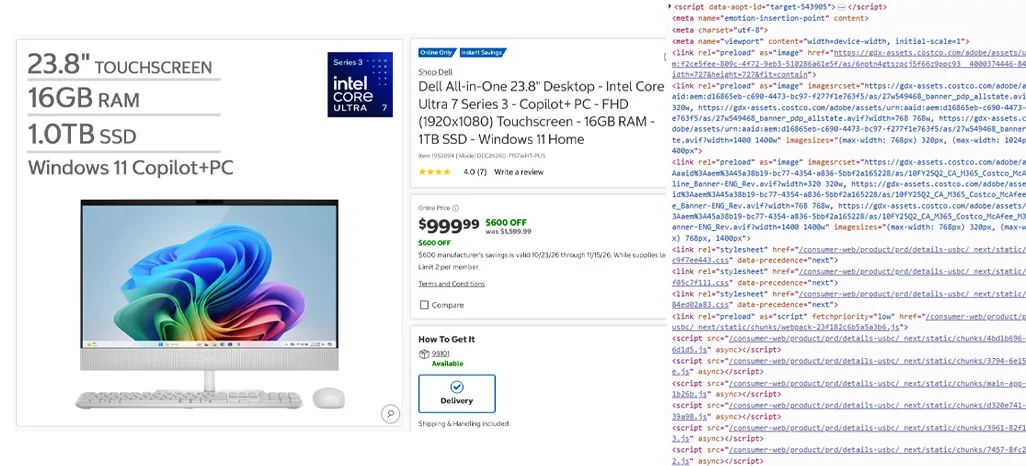
Beyond everyday staples, the warehouse giant dedicates roughly 25% of its floor space to rotating seasonal merchandise, luxury goods, and viral consumer items. Monitoring Costco Product Trends shows that limited-time availability creates psychological urgency, encouraging members to purchase high-ticket items immediately rather than waiting for future markdowns.
Integrating automated data feeds via a Costco Wholesale API enables retail analysts to observe how fast seasonal inventory sells out across regional warehouses. These real-time inventory signals help suppliers forecast production runs and align promotional calendars with peak warehouse foot traffic.
- Rotating treasure-hunt assortments encourage shoppers to browse every aisle during routine grocery visits.
- Subtle price-ending codes communicate clearance status and restock availability to observant warehouse members.
- High-margin seasonal items balance out the razor-thin profit caps placed on everyday household essentials.
| Product Category | Average Discount vs. Retail | Stock Rotation Cycle | Member Demand Impact |
|---|---|---|---|
| Private Label Staples | 20% – 28% lower unit cost | Year-round core stock | High repeat store traffic |
| Seasonal Apparel & Gear | 25% – 35% below MSRP | 6 to 8 weeks | Impulse basket expansion |
| Consumer Electronics | 10% – 18% below retail + warranty | Quarterly tech refresh | High average order value |
| Gourmet & Organic Foods | 18% – 25% lower unit cost | 4 to 6 weeks | Treasure hunt engagement |
Performing regular Costco Competitor Price Analysis highlights how price endings serve as silent signals to savvy shoppers across local markets. Prices ending in .99 represent standard warehouse pricing, while .97 indicates manager markdowns, and an asterisk (*) on the price tag signals that an item will not be restocked.
Analyzing How Exclusive Member Discounts and Bulk Packaging Sustain Customer Loyalty
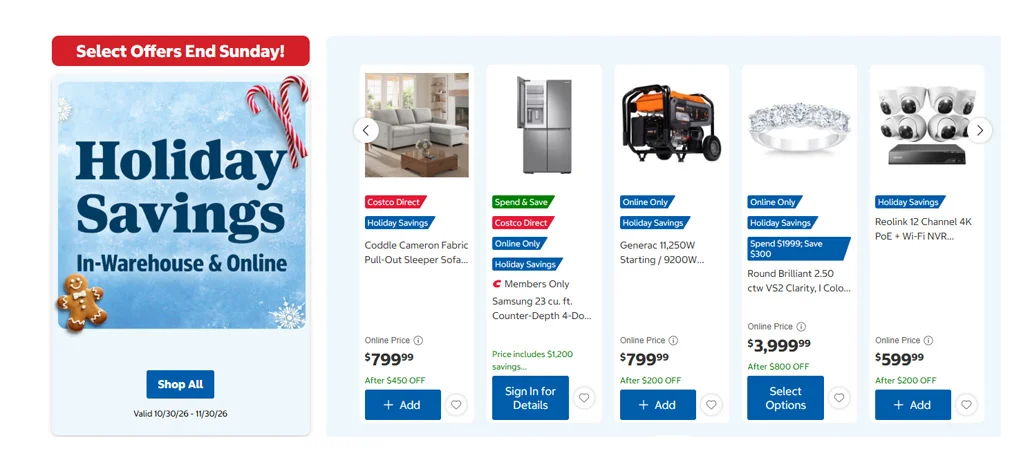
High-volume packaging reduces per-unit manufacturing, shipping, and shelf-stocking costs, passing immediate savings directly to paying members. Deploying a specialized Costco Scraper helps e-commerce teams capture real-time promotional pricing, instant manufacturer rebates, and regional stock variations across hundreds of warehouse locations.
According to recent retail benchmarks, the average member visits a warehouse 1.5 times per month and spends approximately $150 per trip. Executing comprehensive Costco Bulk Product Pricing and Discount Analysis proves that Executive Members generate nearly three-quarters of total warehouse revenue despite representing less than half of the member base.
- Multi-pack configurations lower per-unit packaging expenses while increasing average checkout basket sizes.
- Monthly instant savings booklets combine manufacturer-funded rebates with already low warehouse base prices.
- Tiered membership rewards incentivize higher annual spending through automatic cashback certificates.
| Membership Tier | Annual Fee | Cashback Reward | Share of Total Paid Members | Share of Total Sales Volume |
|---|---|---|---|---|
| Gold Star Member | $65 / year | None | ~53% | ~27% |
| Executive Member | $130 / year | 2% annual reward (up to $1,250) | ~47% | ~73% |
Through structured Costco Bulk Deals Analysis, brands can benchmark their promotional timing against warehouse clearance cycles and seasonal rebate events. This disciplined alignment of wholesale packaging and member-exclusive rewards keeps customer retention remarkably resilient even during periods of tight consumer discretionary spending.
How Retail Scrape Can Help You?
Navigating rapid price fluctuations across massive warehouse catalogs requires accurate, real-time retail intelligence rather than manual spreadsheet tracking. Integrating insights from the Costco Pricing Strategy into your own commercial planning becomes effortless when automated data extraction delivers clean, structured pricing feeds directly to your analytics team.
We provide:
- Track daily price adjustments, instant manufacturer rebates, and regional warehouse promotions across thousands of active product listings.
- Monitor private-label item performance alongside national brand benchmarks to identify optimal price-to-volume thresholds.
- Detect early inventory clearance signals and seasonal stock rotations before competitors adjust their promotional calendars.
- Benchmark unit-level bulk packaging costs against standard retail sizes to refine your own wholesale margin structures.
- Eliminate manual data collection errors with automated, scheduled web extraction pipelines tailored to your specific product categories.
- Access historical price movement logs to forecast seasonal demand spikes and optimize supplier contract negotiations.
By utilizing a comprehensive Costco Dataset delivered through us, brands and retailers gain reliable visibility into warehouse pricing mechanics without maintaining complex scraping infrastructure.
Conclusion
Building sustainable retail profitability does not require inflating unit markups when volume, operational efficiency, and customer trust work together in harmony. Studying the Costco Pricing Strategy demonstrates how disciplined SKU selection and transparent value propositions turn everyday shoppers into lifelong brand advocates.
When businesses apply structured Costco Price Analysis to their own assortment planning, they uncover clear opportunities to optimize packaging sizes and protect profit margins. Sustaining a competitive advantage in modern retail depends on turning accurate market data into decisive pricing actions before market conditions shift.
Whether you are a brand supplier negotiating wholesale terms or a retailer refining bulk discount tiers, we provide the exact pricing intelligence you need to win on value and margin. Connect with Retail Scrape today to request a custom sample dataset and elevate your retail pricing intelligence.