How Is Restaurant Menu Data Scraping Transforming Food Menu Analysis Across 16 Global Markets?
Introduction
Restaurant menus are becoming valuable sources of market intelligence as food businesses expand across regions and consumer preferences continue to shift. Structured menu information helps organizations evaluate prices, product availability, cuisine categories, portion sizes, promotions, and changing customer preferences across restaurants and markets.
With consistent Restaurant Menu Data Scraping, businesses can organize information from restaurant websites, delivery platforms, and online ordering channels into usable datasets. This supports regional comparisons while reducing the effort involved in manually reviewing thousands of menu listings. It also creates a stronger foundation for pricing research and food trend evaluation.
Across 16 global markets, structured menu intelligence can support decisions related to competitive positioning, pricing strategy, assortment planning, and market expansion. Businesses can compare restaurant offerings across locations, identify pricing variations, monitor menu changes, and evaluate category movements through standardized datasets. These insights make food menu analysis more consistent, scalable, and suitable for recurring business research.
Comparing Restaurant Menus Across Sixteen Global Markets
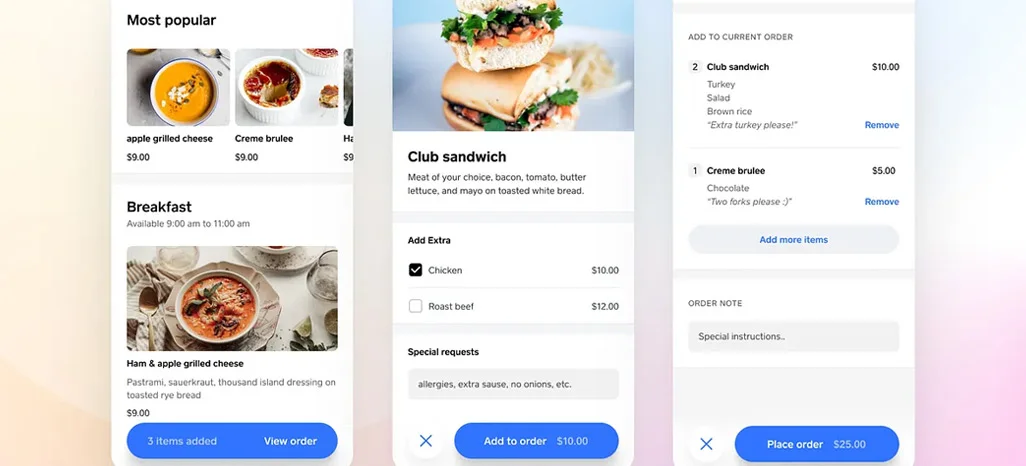
Restaurants operating across multiple countries often maintain different menus, prices, serving sizes, and availability depending on local demand. Collecting these details in a standardized structure allows analysts to compare restaurant offerings without repeatedly reviewing individual websites or ordering platforms. This creates a clearer view of how menus differ between regions and helps businesses organize large volumes of food-related information for recurring market research.
Pricing is one of the most important factors in international menu comparisons. Restaurant Menu Price Data Collection can organize item names, categories, prices, currencies, descriptions, and availability into consistent records. Analysts can then compare similar products across locations, identify regional pricing differences, and evaluate how menu costs change over time. This information is particularly useful for businesses studying customer preferences and market positioning.
Menu changes can also indicate shifts in demand, seasonal preferences, and promotional activity. Global Restaurant Menu Price Monitoring helps teams observe pricing movements, newly introduced dishes, discontinued products, and changing promotional offers across selected markets. Such information can support recurring analysis without requiring teams to manually inspect each restaurant source every time a menu changes.
| Comparison Area | Data Coverage | Analytical Purpose |
|---|---|---|
| Menu Assortment | Categories and Items | Product Comparison |
| Pricing | Item-Level Values | Regional Evaluation |
| Availability | Active Listings | Availability Assessment |
| Promotions | Offers and Discounts | Market Observation |
Businesses can use these structured observations to assess restaurant positioning across international markets. Restaurant Menu Price Data Scraping Worldwide can further support broad geographic research by creating comparable records from multiple countries and restaurant ecosystems. With standardized fields and recurring updates, analysts can evaluate market differences more efficiently and identify patterns that may influence pricing, assortment, and expansion decisions.
Key Benefits:
- Supports standardized international menu comparisons
- Helps identify regional pricing variations
- Tracks menu additions and removals
- Organizes information for recurring research
- Supports broader food-market trend analysis
Assessing Competitive Restaurant Positioning Through Structured Insights
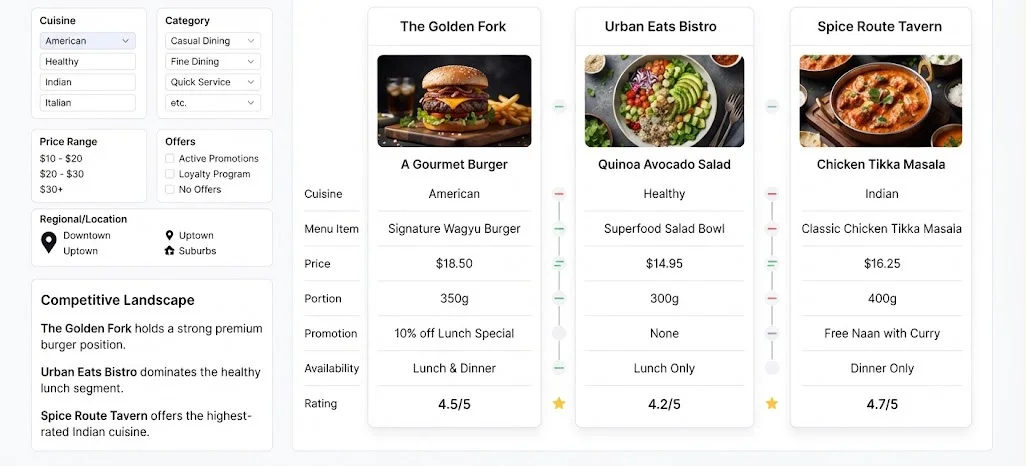
Understanding competitors requires more than reviewing individual menu prices. Restaurants also need visibility into product categories, item combinations, portion options, promotions, and availability across competing establishments. Structured datasets bring these elements together, allowing businesses to evaluate market positioning from multiple perspectives and compare restaurant offerings across locations with greater consistency and efficiency.
This creates a stronger foundation for understanding market conditions and evaluating opportunities within specific food categories. Restaurant Menu Data for Market Analysis provides organized information that can help businesses examine cuisine categories, pricing structures, product assortments, and regional differences. Analysts can compare similar menu items across competing restaurants while identifying areas where product variety or pricing differs significantly.
Competitive research becomes more useful when organizations can compare multiple restaurants using consistent fields. Restaurant Menu Data for Competitive Analysis can help teams evaluate competitors based on pricing, assortment, availability, descriptions, and promotional activity. Instead of relying on isolated observations, businesses can create structured comparisons that reveal recurring patterns across restaurants and geographical markets.
| Competitive Factor | Information Reviewed | Business Application |
|---|---|---|
| Product Mix | Categories and Items | Assortment Review |
| Price Position | Comparable Prices | Pricing Assessment |
| Availability | Active Products | Supply Evaluation |
| Promotions | Offers and Deals | Campaign Comparison |
Consistent benchmarking also helps businesses understand where their menus stand against direct competitors. Restaurant Menu Data for Competitor Benchmarking can support comparisons involving item prices, product variety, category coverage, and promotional strategies. These insights can guide menu planning and help teams identify areas requiring adjustment without depending entirely on manual competitor research.
Key Benefits:
- Supports structured competitor comparisons
- Identifies pricing differences across restaurants
- Highlights assortment and category gaps
- Helps evaluate promotional positioning
- Simplifies recurring competitive research
Developing Scalable Food Menu Intelligence For Global Analysis
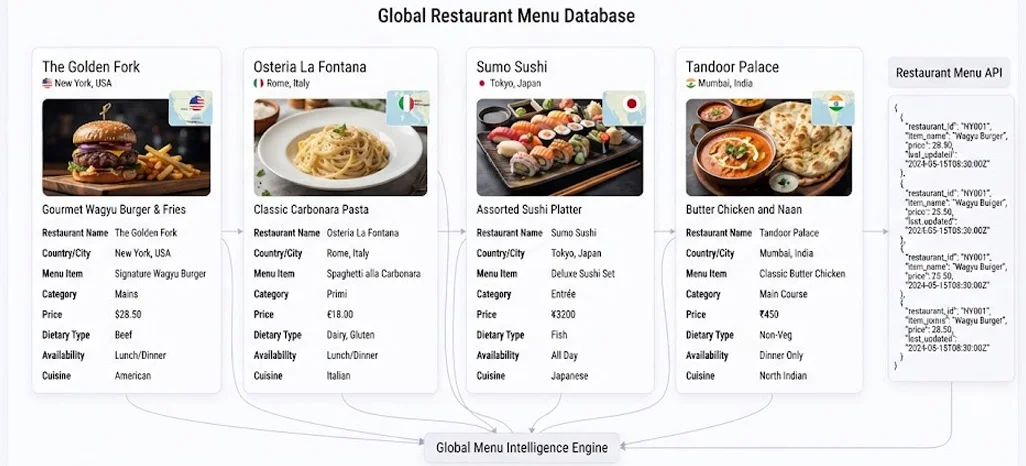
International food research becomes increasingly complex when businesses need to monitor thousands of restaurants, locations, and menu items. A scalable data structure can bring information from multiple sources into a consistent format, making it easier to review product names, descriptions, categories, prices, dietary information, availability, and restaurant details within broader analytical workflows.
Centralized information also reduces fragmented research and provides analysts with a more practical foundation for studying food markets across different countries. A Global Restaurant Menu Database can consolidate menu information from multiple restaurants and geographical locations into organized records. Businesses can use these datasets to compare market conditions, evaluate assortment changes, and identify recurring trends.
Automated access can make recurring analysis more efficient when menu information changes frequently. Restaurant Menu API for Global Markets can provide structured access to refreshed information for applications, dashboards, internal systems, and analytical workflows. This approach allows businesses to integrate menu information into existing processes rather than repeatedly collecting and restructuring data manually.
| Dataset Component | Typical Coverage | Analytical Role |
|---|---|---|
| Restaurant Records | Multiple Locations | Market Mapping |
| Menu Details | Item-Level Data | Product Analysis |
| Categories | Cuisine and Types | Assortment Evaluation |
| Updates | Scheduled Refreshes | Change Tracking |
Scalable datasets can also support broader food-market intelligence by connecting menu information with recurring analytical requirements. Restaurant Menu Prices and Availability Data Extraction can help businesses evaluate changes in product availability and pricing across selected markets. When structured consistently, these records can support trend analysis, regional comparisons, assortment planning, and long-term market research.
Key Benefits:
- Centralizes restaurant information
- Supports scalable international research
- Simplifies recurring menu analysis
- Enables structured data integration
- Helps track changing market conditions
- Supports long-term food intelligence workflows
How Retail Scrape Can Help You?
We support structured food intelligence by helping businesses collect and organize menu data from digital sources through a Restaurant Menu Scraper, enabling efficient analysis and informed decisions. With Restaurant Menu Data Scraping, teams can create datasets covering products, categories, prices, descriptions, availability, promotions, and restaurant locations.
Key capabilities include:
- Collecting structured restaurant menu information across multiple markets
- Tracking item-level pricing and availability changes
- Organizing menu categories for consistent comparison
- Supporting recurring data collection and scheduled updates
- Preparing datasets for business intelligence and analytical workflows
- Delivering information in practical formats for further processing
Businesses can also use Restaurant Menu Prices and Availability Data Extraction to evaluate changes across restaurants and locations. We can structure the collected information according to business requirements, making it suitable for recurring research, competitive studies, pricing analysis, and broader food-market intelligence programs.
Conclusion
This supports more consistent research while reducing dependence on fragmented manual analysis. Restaurant Menu Data Scraping provides a structured approach to evaluating restaurant offerings across diverse markets. By organizing menu details, prices, categories, and availability, businesses can compare regional differences and identify meaningful shifts in food-market behavior.
Structured datasets can also strengthen recurring pricing and competitive workflows by providing standardized information for business teams. Restaurant Menu Price Data Collection supports detailed comparisons across restaurants, regions, and menu categories, helping organizations evaluate pricing patterns and assortment changes more effectively. Contact Retail Scrape to build structured restaurant menu datasets for global food-market analysis.