
How Does Zepto and Instamart Multi-City Data Scraping Improve Regional Product and Price Analysis?
Introduction
Quick commerce in India operates on razor-thin delivery windows and hyperlocal dark-store inventories. Consumer brands and retail analysts face constant price fluctuations and regional stockouts across metropolitan zones. Relying on manual tracking across dozens of pin codes creates severe blind spots in competitive market intelligence.
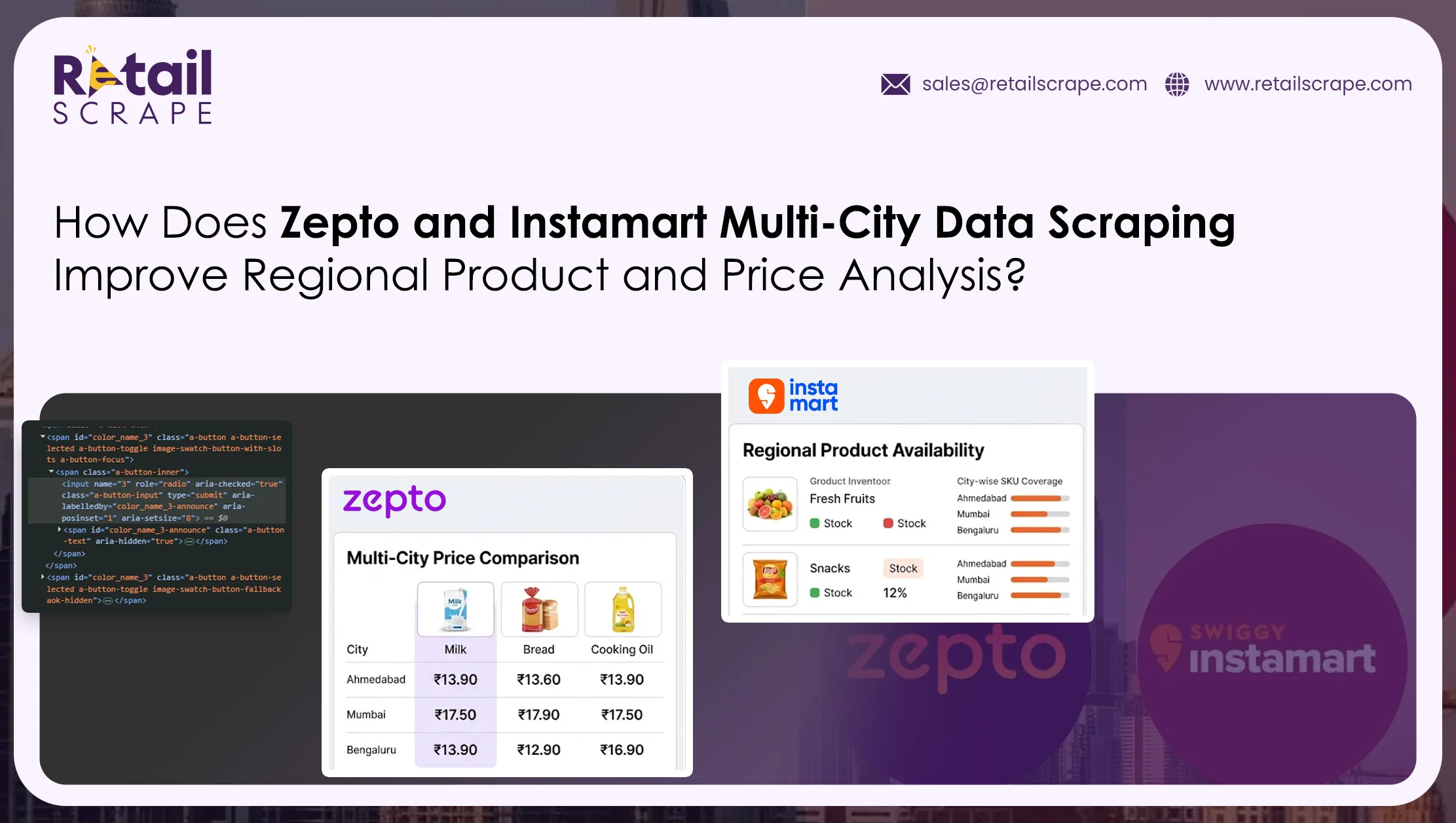
Implementing automated Zepto and Instamart Multi-City Data Scraping solves this visibility gap by capturing live storefront data at scale. Analysts can monitor real-time SKU pricing, promotional discounts, and localized product assortments across Tier-1 and Tier-2 cities simultaneously, turning fragmented regional data into structured intelligence.
By integrating Zepto Product Data Scraping into analytics pipelines, FMCG brands can compare dark-store performance directly against regional competitors. This granular visibility ensures accurate demand forecasting, dynamic pricing adjustments, and optimized supply chain allocation across high-velocity urban markets.
Analyzing Hyperlocal Pricing Disparities Across Indian Metropolitan Regions
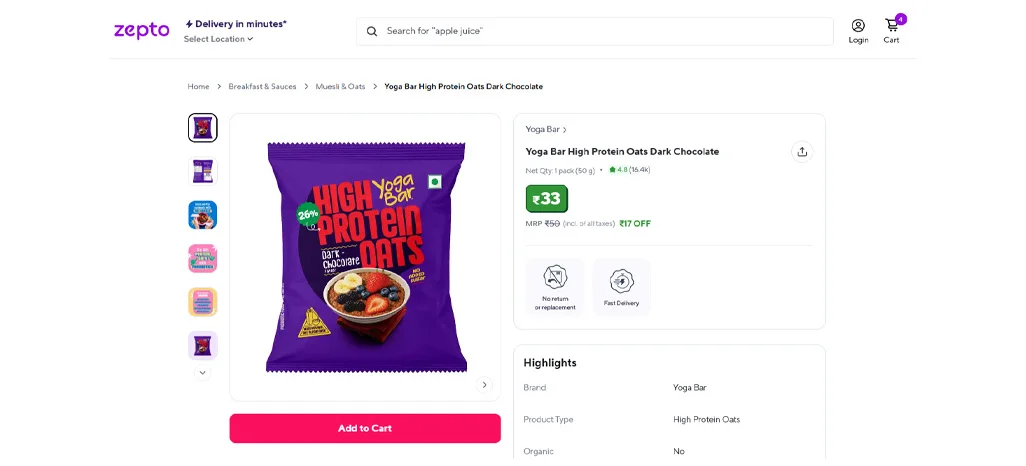
Quick commerce platforms dynamically adjust product prices based on localized shopper demand, dark-store inventory levels, and neighborhood purchasing power across urban clusters. A single dairy or beverage SKU frequently carries three distinct selling prices across Mumbai, Bengaluru, and Delhi NCR within the exact same hour, creating massive margin inconsistencies for national brands.
Standardizing these regional fluctuations requires systematic Swiggy Instamart Data Scraping to capture real-time promotional discounting patterns across thousands of delivery zones. Recent 2026 Indian quick commerce benchmarks indicate that hyperlocal promotional discounts fluctuate by 12% to 28% between Tier-1 metro hubs and emerging Tier-2 consumer markets during peak evening hours.
Combining localized storefront snapshots with continuous Zepto Price Monitoring enables revenue teams to enforce Minimum Advertised Price compliance across every active fulfillment center. Without automated regional tracking, brand managers often miscalculate net realizations and lose control over regional pricing integrity during high-volume festive sales.
- Pin-code level pricing extraction uncovers unauthorized seller discounting across regional hubs.
- Historical price logs reveal exact promotional windows used by competing consumer brands.
- Automated alerts flag sudden margin erosion caused by unmonitored dark-store markdowns.
| Metro City | Avg. Basket Size (INR) | Dynamic Discount Variance (%) | Peak Price Shift Window |
|---|---|---|---|
| Mumbai | ₹540 | 14.5% | 6:00 PM – 9:00 PM |
| Bengaluru | ₹585 | 18.2% | 7:00 PM – 10:00 PM |
| Delhi NCR | ₹510 | 16.0% | 5:30 PM – 8:30 PM |
| Hyderabad | ₹495 | 12.8% | 6:30 PM – 9:30 PM |
| Pune | ₹470 | 11.4% | 7:00 PM – 9:30 PM |
Ultimately, integrating structured Multi-City Grocery Price and Availability Monitoring into business intelligence dashboards empowers commercial leaders to align trade promotions with verified local demand.
Optimizing Regional Product Assortment and Dark-Store Stock Availability
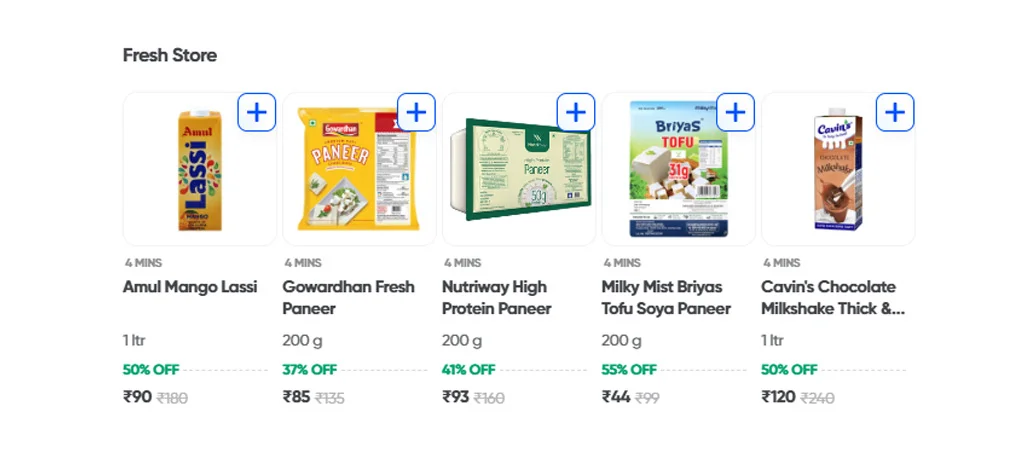
Product availability in ten-minute delivery ecosystems changes rapidly due to limited dark-store shelf capacity and unpredictable neighborhood ordering spikes. High-demand SKUs frequently go out of stock during evening rush windows, directly handing immediate market share to rival brands listed on the exact same digital storefront.
Deploying a scalable Instamart Product Data API allows supply chain analysts to detect regional stockouts across thousands of Indian pin codes the moment they happen. Industry data reveals that out-of-stock rates on quick commerce platforms average 15% during weekend surges, costing established FMCG brands up to 22% in lost regional impulse purchases.
Pairing live fulfillment feeds with Quick Commerce Product Availability Tracking helps logistics teams pinpoint which dark stores require priority inventory routing before stock levels hit zero. When regional managers correlate stock health with local search rankings, they prevent digital shelf invisibility and protect category conversion rates.
- Dark-store stock tracking identifies fulfillment centers requiring urgent replenishment dispatches.
- Regional assortment comparisons highlight missing pack sizes across specific metropolitan zones.
- Stockout duration metrics measure distributor responsiveness across Tier-1 and Tier-2 cities.
| Product Category | Metro Stockout Rate (%) | Tier-2 Stockout Rate (%) | Avg. Restock Turnaround |
|---|---|---|---|
| Fresh Dairy & Bakery | 18.4% | 22.1% | 4.5 Hours |
| Salty Snacks & Beverages | 14.2% | 17.8% | 6.0 Hours |
| Personal Care Essentials | 9.6% | 13.5% | 12.0 Hours |
| Ready-to-Eat Meals | 16.1% | 19.4% | 5.5 Hours |
Consequently, maintaining real-time visibility over regional inventory turns reactive supply chain firefighting into proactive warehouse allocation across every high-velocity urban cluster.
Benchmarking Competitor Promotional Campaigns and Regional Category Share
Understanding regional market share requires monitoring how competing brands position new launches, bundle offers, and sponsored placements across diverse Indian cities. Manual audits across a handful of pin codes fail to capture the rapid promotional velocity of challenger D2C brands competing for top-of-search visibility.
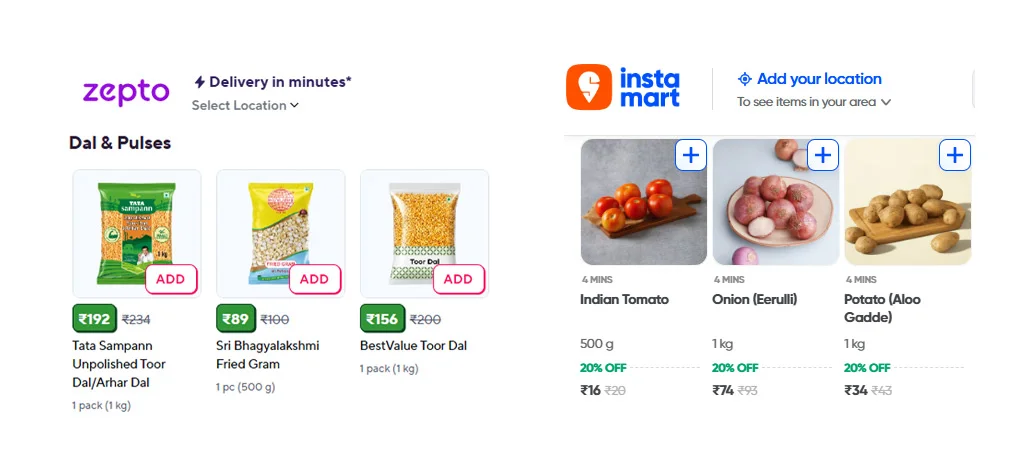
Executing continuous Zepto and Instamart Price Tracking provides enterprise category managers with a unified view of competitor discounting frequency and bundle strategies across regions. In 2026, regional challenger brands capture over 34% of impulse snacking and beverage searches on quick commerce apps by running targeted city-specific combo deals.
Feeding clean competitive datasets through a dedicated Grocery Product Data API India eliminates manual spreadsheet errors and accelerates executive decision-making across commercial teams. Analysts can benchmark competitor pricing elasticity across different neighborhoods and refine their own promotional calendars based on verified market behavior.
- Sponsored slot tracking measures competitor share of voice on high-intent category keywords.
- Bundle offer analysis uncovers cross-promotional tactics driving higher average order values.
- Regional launch monitoring alerts teams when rivals test new SKUs in specific cities.
| Metric Tracked | Manual Audit Capability | Automated Multi-City Extraction | Business Impact |
|---|---|---|---|
| Pin Codes Covered | 5 – 10 Zones | 1,500+ Pin Codes | Full national visibility |
| Refresh Frequency | Weekly | Every 15 Minutes | Real-time pricing agility |
| SKU Attribute Depth | Basic Price Only | MRP, Discount, Stock, Rank | Holistic shelf intelligence |
| Data Accuracy | ~82% (Human Error) | 99.4% Verified | Reliable BI reporting |
By connecting automated regional shelf intelligence directly to internal analytics pipelines, consumer brands optimize marketing spend and defend category leadership nationwide.
How Retail Scrape Can Help You?
Building an internal scraping infrastructure capable of bypassing geo-fencing and pin-code restrictions across multiple cities requires massive engineering overhead. We simplify enterprise data acquisition through managed Zepto and Instamart Multi-City Data Scraping pipelines tailored for high-frequency retail analytics.
Our automated extraction framework delivers clean, structured datasets directly to your cloud storage or analytics tools without maintenance delays.
- Granular pin-code level data extraction across all major Indian metropolitan and Tier-2 delivery hubs.
- Automated tracking of SKU-level MRP, selling prices, lightning deals, and bundled promotional offers.
- Real-time dark-store stock status monitoring to flag regional out-of-stock events before revenue drops.
- High-speed data delivery in JSON, CSV, or Parquet formats ready for immediate BI dashboard integration.
- Resilient geo-location rotation technology that accurately simulates local shopper coordinates without blocks.
- Custom extraction schedules ranging from hourly snapshots to daily regional market benchmarks.
Partnering with us empowers your analytics team to scale Multi-City Quick Commerce Data Scraping effortlessly while focusing entirely on strategic pricing and inventory decisions.
Conclusion
Navigating the fast-paced Indian quick commerce landscape requires granular visibility into every dark store and delivery zone. Integrating Zepto and Instamart Multi-City Data Scraping into your retail intelligence stack eliminates regional blind spots, while consistent Multi-City Grocery Price and Availability Monitoring ensures your products remain competitively priced and fully stocked during peak demand windows.
Enterprise brands that rely on real-time regional data consistently outperform competitors in margin protection and digital shelf share. By combining automated Zepto Price Monitoring with structured Grocery Product Data API India feeds, your team can turn hyperlocal market fluctuations into measurable revenue growth. Contact Retail Scrape today to schedule a custom demo and start streaming real-time quick commerce data across every target city in India.