


How Does Tesco vs ASDA vs Sainsbury’s Price Comparison Reveal the Cheapest Groceries Across the UK?
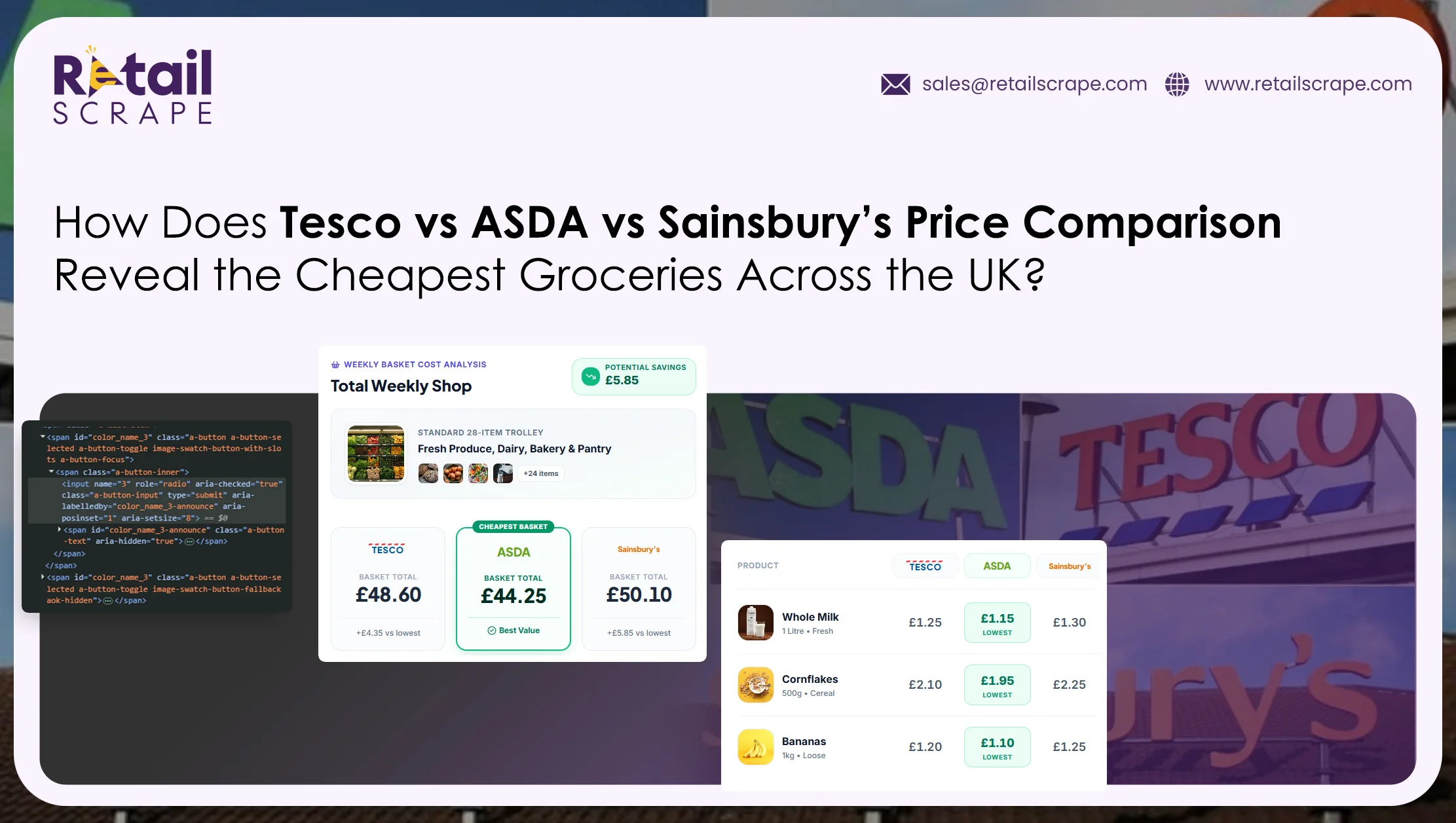
Introduction
Rising household budgets make a reliable UK Supermarket Price Comparison essential for British families trying to trim their weekly food bills without sacrificing quality. When retail inflation shifts shelf tags overnight, shoppers need clarity on where their pounds stretch furthest across standard aisles and loyalty schemes.
Understanding how loyalty cards alter final till receipts requires looking closely at a Tesco vs ASDA vs Sainsbury’s Price Comparison across everyday staples. While upfront promotional stickers grab attention, hidden markups on non-discounted items frequently wipe out perceived savings at the checkout counter.
Conducting a thorough UK Grocery Basket Price Comparison reveals major pricing gaps between regular shelf rates and member-only tiers. By examining real-world basket totals across Britain’s top three grocers, consumers and retail analysts alike can pinpoint true everyday value throughout 2026.
Standard Shelf Tags Versus Member Loyalty Scheme Discounts Across Britain
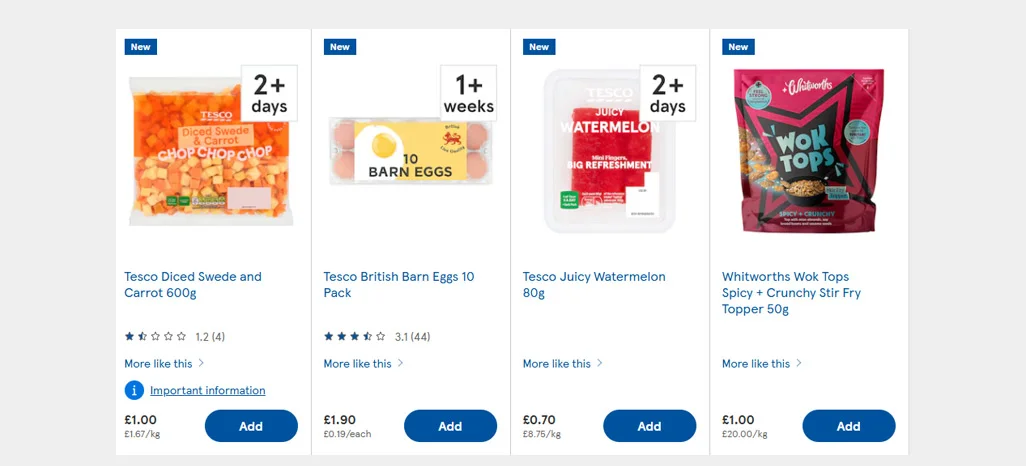
Evaluating modern British grocery retail requires looking far beyond the basic white paper labels hanging on physical store shelves. Conducting an in-depth Tesco ASDA Sainsbury’s Competitor Price Analysis reveals that standard shelf prices rarely reflect what card-carrying households actually pay at the register.
Throughout 2026, major chains have widened the gap between non-member rates and exclusive app-based rewards to lock in repeat footfall. Without scanning a registered loyalty card, everyday shoppers frequently face markups exceeding fifteen percent on identical household essentials.
Tracking these two-tier pricing models across thousands of product lines shows distinct strategic differences among Britain's top three grocers. Implementing continuous Supermarket Price Monitoring demonstrates that ASDA remains the most economical destination for uncarded buyers filling a mixed trolley of fresh produce and pantry goods. Meanwhile, Tesco and Sainsbury’s aggressively discount roughly thirty-eight percent of their total stock exclusively for Clubcard and Nectar holders.
- Non-member shoppers pay an average premium of 14.2% to 16.8% on branded goods at Tesco and Sainsbury’s.
- ASDA relies heavily on Rollback pricing and Cashpot rewards rather than restrictive dual-tier shelf labeling.
- Instant register deductions give Clubcard and Nectar users immediate relief compared to delayed voucher systems.
| Supermarket | Loyalty Scheme | Avg. Discount on Promo Items | Standard Basket Cost (40 Items) | Loyalty Basket Cost (40 Items) |
|---|---|---|---|---|
| ASDA | ASDA Rewards | 11.5% (Cashpot) | £78.40 | £75.90 |
| Tesco | Tesco Clubcard | 18.4% (Instant) | £86.20 | £74.15 |
| Sainsbury’s | Nectar Prices | 17.9% (Instant) | £87.50 | £74.85 |
Understanding how these pricing mechanics operate helps both budget-conscious families and commercial pricing teams anticipate weekly promotional cycles. When loyalty discounts fluctuate every Wednesday, retail analysts must separate temporary member markdowns from permanent base-price inflation to measure genuine market competitiveness.
Essential Weekly Shopping Basket Breakdown For Own-Label And Branded Goods
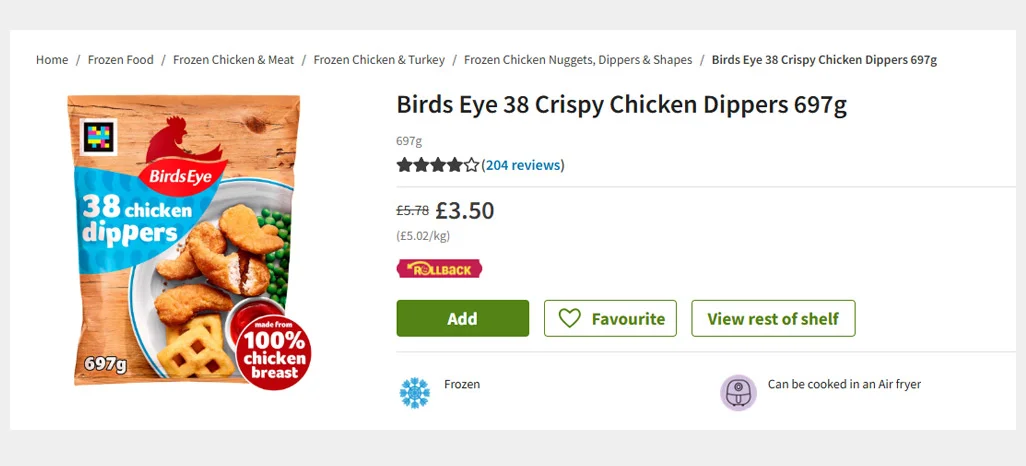
Separating budget own-label ranges from big-name household brands provides a much clearer picture of everyday affordability across British aisles. Performing a granular review of ASDA vs Tesco vs Sainsbury’s Weekly Shopping Prices across a standardized twenty-five-item essentials basket shows how entry-level staples remain tightly clustered within pennies.
Items such as semi-skimmed milk, white bread, chicken breast, mature cheddar, and dried pasta account for nearly fifty-five percent of total unit volume in 2026. Price-matching schemes against German discounters keep basic pantry lines remarkably consistent across all three chains.
Branded categories tell a far more volatile story as multinational manufacturers adjust wholesale rates and promotional funding. Utilizing Automated Grocery Price Tracking Across Supermarkets highlights how aggressive multi-buy offers on branded cereals, ground coffee, and household cleaning supplies shift the weekly winner.
- Own-label entry tiers keep essential dairy and bakery items within a thirty-five-pence variance across all three grocers.
- Fresh meat and poultry baskets consistently favor ASDA for uncarded and loyalty shoppers alike.
- Branded household goods experience the sharpest weekly price swings due to rotating promotional cycles.
| Product Category (Sample Basket) | ASDA Price | Tesco (Clubcard) | Sainsbury’s (Nectar) | Lowest Priced Retailer |
|---|---|---|---|---|
| Fresh Dairy & Eggs (6 items) | £11.20 | £10.95 | £11.10 | Tesco |
| Meat, Poultry & Fish (5 items) | £19.80 | £20.40 | £20.15 | ASDA |
| Bakery & Cupboard Staples (8 items) | £12.45 | £12.10 | £12.30 | Tesco |
| Fresh Fruit & Vegetables (6 items) | £9.60 | £9.85 | £9.50 | Sainsbury’s |
Balancing a weekly trolley between own-label staples and discounted branded treats remains the most effective strategy for lowering household expenditure. Retailers that monitor these category-level movements can pinpoint exactly where competitors subsidize loss-leaders to drive customer footfall.
Regional Store Format Variations And Online Grocery Delivery Fee Structures
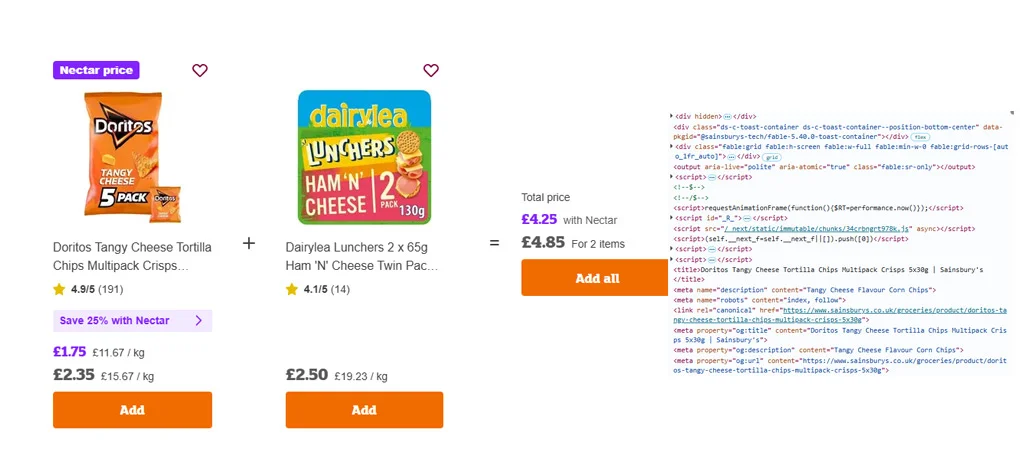
Determining true retail value requires factoring in store formats, regional postcodes, and digital fulfillment surcharges alongside item-level shelf prices. Identifying the Cheapest UK Supermarket for Groceries becomes significantly more complex when comparing out-of-town superstores against high-street convenience outlets.
Express and Local branches routinely carry an average price markup of 7.5% to 11% on identical items, even when shoppers scan their loyalty cards at the till. Urban commuters relying on smaller neighborhood stores often absorb substantial hidden premiums over a full month.
Leveraging Tesco Grocery Data Scraping enables analysts to observe how online flash promotions occasionally diverge from physical hypermarket shelf labels in real time. Sainsbury’s offers the lowest off-peak midweek delivery slots starting at £1.00, whereas Tesco enforces a stricter £50.00 minimum spend threshold to avoid a £5.00 small-basket surcharge.
- Convenience formats add up to eleven percent on everyday essentials compared to large suburban superstores.
- Midweek off-peak delivery slots cut online fulfillment costs by more than seventy percent versus Friday evenings.
- Click and Collect services remain free across all three retailers once orders exceed twenty-five pounds.
| Fulfillment Factor | ASDA Online | Tesco Online | Sainsbury’s Online |
|---|---|---|---|
| Minimum Basket Spend | £40.00 | £50.00 | £40.00 |
| Off-Peak Delivery Fee | £1.50 – £3.00 | £2.00 – £3.50 | £1.00 – £2.50 |
| Peak Delivery Fee | £5.50 – £7.00 | £6.00 – £7.00 | £5.50 – £7.00 |
| Click & Collect Fee | Free (over £25) | Free (over £25) | Free (over £25) |
Accounting for fulfillment fees, minimum spend rules, and convenience store markups ensures households and commercial analysts calculate true net basket costs accurately. Overlooking these operational charges can easily erase the savings gained from hunting down the lowest individual item prices.
How Retail Scrape Can Help You?
Winning market share in Britain’s fiercely competitive grocery sector demands real-time visibility into competitor pricing shifts across thousands of product lines. Conducting a manual Tesco vs ASDA vs Sainsbury’s Price Comparison is slow and prone to human error, whereas we deliver clean, structured datasets directly to your analytics pipeline.
Our enterprise web extraction solutions empower brands, FMCG manufacturers, and retail chains to benchmark every SKU effortlessly.
- Capture daily shelf and promotional price updates across major UK grocery portals in real time.
- Monitor loyalty tier discounts alongside standard retail pricing to measure true net promotional depth.
- Track regional postcode pricing variations across superstores, local convenience formats, and online fulfillment hubs.
- Analyze competitor stock availability and out-of-stock patterns to optimize your own supply chain allocation.
- Receive custom-formatted data feeds via API, JSON, or CSV ready for immediate BI dashboard integration.
- Benchmark private-label product positioning against national brands with automated SKU matching accuracy.
By integrating ASDA Data Scraping into your commercial intelligence workflow, your pricing team can react instantly to Rollback campaigns and seasonal markdowns. Partnering with us makes it simple to Collect Supermarket Product and Pricing Data UK at scale so you can protect profit margins and win price-conscious shoppers.
Conclusion
Navigating Britain’s evolving grocery landscape requires looking beyond surface-level shelf stickers to see how loyalty ecosystems shape actual checkout totals. Whether a household prefers everyday low prices or targeted member deals, a comprehensive Tesco vs ASDA vs Sainsbury’s Price Comparison proves that small per-item differences compound into hundreds of pounds saved annually.
Modern retail success belongs to organizations that turn raw market movements into decisive commercial strategy without operational delays. Performing a regular Tesco Supermarket Price Comparison alongside wider competitor benchmarks ensures your brand never gets caught off guard by sudden weekend markdowns or regional price adjustments. Contact Retail Scrape today to request a custom sample dataset and start outsmarting the competition!