


Transforming Portal Feeds With Real Estate Listing Data Aggregation India to Scale Client Listings

Introduction
The Indian proptech landscape has grown into one of the most fragmented yet opportunity-rich markets globally. With dozens of competing portals publishing millions of updated listings daily, real estate businesses struggle to consolidate relevant data into one coherent, actionable feed. The gap between raw portal output and business-ready intelligence has never been wider, pushing firms to seek smarter aggregation technologies.
Where once teams spent hours on manual compilation, automated aggregation pipelines now deliver consolidated feeds in minutes, restoring competitive speed and operational clarity. Real Estate Listing Data Aggregation India has emerged as the cornerstone strategy for proptech firms that want to unify scattered property data from portals like 99ACRES, Magicbricks, housing.com, and others into structured, decision-ready datasets. Even globally recognized platforms such as Zillow Property Data Scraping demonstrate how systematic data aggregation powers scalable listing intelligence.
By pulling synchronized data streams from these three dominant portals, firms can build unified listing repositories that support pricing benchmarking, inventory monitoring, and hyperlocal trend detection, all without the latency that manual workflows introduce. 99ACRES Magicbricks housing.com Data Aggregation represents the practical backbone of India-focused proptech intelligence strategies.
The Client
A fast-growing proptech platform headquartered in Bengaluru, operating across nine major Indian metro corridors, faced deepening operational inefficiencies tied to fragmented listing data. The company served thousands of property seekers, brokers, and developers simultaneously and had built a reputation for comprehensive property coverage. However, the growing volume and velocity of listings across Indian portals had begun to outpace their internal capacity to track, structure, and deliver relevant data to end users.
Their platform had been built on a partially automated internal crawler, which had grown increasingly unreliable with portal redesigns and anti-bot policy updates. The team began losing critical listing windows during high-demand cycles, particularly in the mid-segment residential category, where timely data was directly tied to transaction volumes. Property Listing Data Extraction API in India had been evaluated internally, but the team lacked the development bandwidth to build, maintain, and scale such infrastructure on their own.
Their operations team reached out after recognizing that a third-party Real Estate Data Scraping Service was needed to stabilize and professionalize their data supply chain. Rather than patching their legacy system, the client wanted a comprehensive overhaul that could consistently source data from India’s top portals, normalize it into structured formats, and deliver it via clean feeds to their product and analytics teams. Speed, reliability, and coverage depth were the three non-negotiable requirements heading into the engagement.
Key Challenges Faced by the Client

The client’s operational environment presented several deeply rooted data challenges that no single fix could address. Each issue compounded the others, creating a cycle of incomplete data, delayed insights, and missed market opportunities.
- Fragmented Portal Intelligence
The absence of a unified data layer across top Indian portals created persistent blind spots. Without Magicbricks API Data Scraping infrastructure in place, the client had no reliable mechanism to track listing movements, price revisions, or new inventory additions happening on a continuous basis. - Stale Listing Refresh Cycles
Manual and semi-automated crawlers refreshed data at weekly or even bi-weekly intervals, rendering the platform’s inventory feeds unreliable during active market phases. High-demand periods exposed this latency most severely, causing visible degradation in platform quality. - Cross-Portal Duplication Without Resolution
Property listings appearing across multiple portals contained inconsistent attributes, varying prices, mismatched locations, and conflicting inventory status flags. Without deduplication logic and normalized schemas, the same property would surface multiple times with conflicting data, confusing end users and reducing trust. - No Structured Pricing Benchmark Layer
The client had no mechanism to surface Property Price Comparison Data Across 99ACRES and Magicbricks at scale. Pricing insights for a given locality or property segment were derived through guesswork rather than structured cross-portal analysis, weakening the platform’s advisory credibility. - Inadequate Volume Scalability
As the client expanded into tier-2 metro corridors, the existing crawling infrastructure buckled under higher listing volumes. The lack of horizontal scalability meant that expanding coverage directly increased operational failure rates rather than improving outcomes. - Absence of Structured API Delivery
Business and analytics teams had no clean, structured data delivery mechanism to work with. Raw scraped data sat in inconsistent storage formats, requiring extensive pre-processing before it could power any product feature or analytical dashboard, a costly and repetitive overhead.
Key Solutions for Addressing Client Challenges
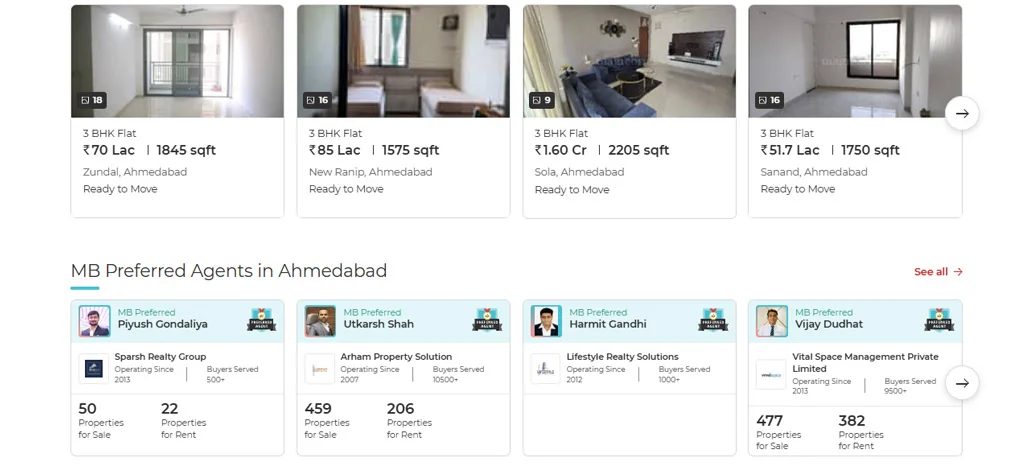
Each solution was engineered to address a specific operational failure while contributing to a broader, cohesive data infrastructure.
- Portal Fusion Engine
A centralized multi-source aggregation layer was constructed using 99ACRES Scraping API infrastructure to simultaneously collect structured data from India’s top listing portals. This engine normalized attributes across sources, resolved schema conflicts, and produced clean, unified listing records ready for downstream consumption. - Adaptive Crawl Scheduler
A dynamic crawl frequency model was deployed that adjusted data refresh intervals based on market activity signals. High-velocity corridors received more frequent refresh cycles while stable markets were served at lower frequencies, optimizing infrastructure usage while maintaining data freshness. - Duplicate Suppression Framework
A proprietary entity resolution module was introduced to detect and merge duplicate listings originating from different portal sources. Address normalization, price proximity scoring, and listing attribute fingerprinting worked in combination to produce clean, deduplicated inventory records. - Cross-Portal Pricing Intelligence Layer
Using Property Data Aggregation API architecture, a structured pricing comparison module was built that enabled locality-level and segment-level benchmarking across portals in real time. This empowered the client’s product teams to deliver credible pricing guidance to end users. - Tiered Coverage Expansion Module
A scalable corridor-by-corridor deployment model was introduced that allowed new geographic markets to be onboarded without engineering overhead. Each corridor received a configured crawl profile, deduplication ruleset, and schema map to ensure consistent data quality from day one. - Structured API Delivery Gateway
A clean, versioned data delivery API was built to push normalized listing data directly to the client’s product, analytics, and CRM teams in structured JSON feeds, eliminating the pre-processing overhead that had previously consumed significant engineering hours.
Key Insights Gained from Real Estate Listing Data Aggregation India
| Insight Area | What the Data Revealed |
|---|---|
| Locality-Level Listing Velocity | Identified which micro-markets experienced the highest new listing frequency week-on-week |
| Cross-Portal Price Variance Mapping | Surfaced systematic price discrepancies for the same property types across different portals |
| Segment-Specific Inventory Gaps | Highlighted underserved residential segments in tier-2 corridors with low digital coverage |
| Seasonal Listing Pattern Analysis | Revealed quarter-wise listing surge patterns tied to festive periods and policy announcements |
| Portal Dominance by Geography | Mapped which portals held dominant listing share by city and property category |
Benefits of Real Estate Listing Data Aggregation India From Retail Scrape
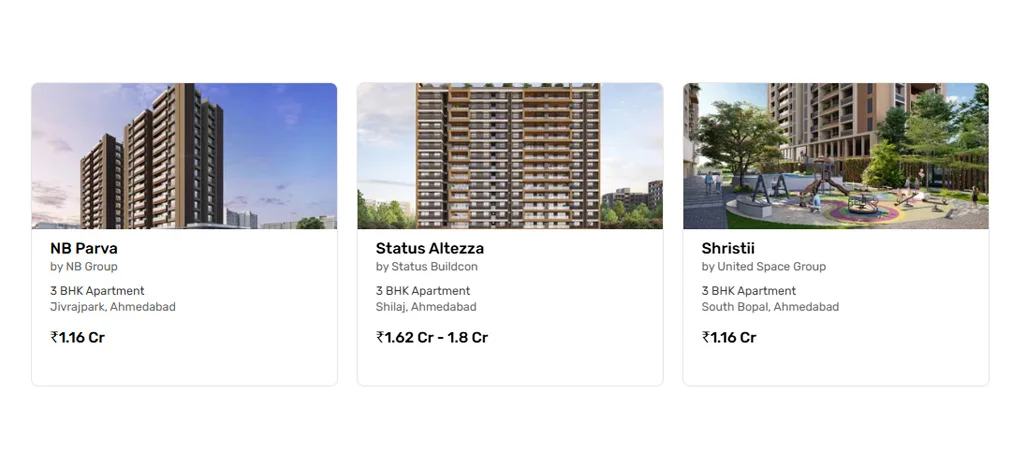
- Operational Precision
By deploying Real Estate Data Scraping India pipelines across all major portals, the client achieved consistent, normalized data delivery that eliminated manual overhead and reduced the time between market events and platform updates from days to hours. - Platform Credibility Uplift
99ACRES Property Data Scraping integration gave the client access to India’s largest residential listing repository, ensuring their platform always reflected current inventory and pricing rather than lagging snapshots.Real Estate Data Intelligence Services provided the analytical layer that converted raw listing data into structured business signals, from pricing benchmarks to demand-side insights, enabling the client’s teams to deliver more intelligent, evidence-backed recommendations to their users.
- Scalable Coverage Architecture
Using Magicbricks Property Data Extraction as a core data pillar, the client extended their platform coverage into new metro corridors without proportionate increases in infrastructure spend, validating a genuinely scalable model for geographic expansion. - Accelerated Product Development
Clean, structured API feeds eliminated the data pre-processing backlog that had previously delayed feature launches. Product teams could now build directly on live, structured listing data, compressing the development cycle for new platform capabilities.
Client’s Testimonial

Working with Retail Scrape to implement Real Estate Listing Data Aggregation India across our platform fundamentally changed how we operate. The structured data delivery, portal normalization, and housing.com Listing Data Scraping integration gave us the reliability and depth we had been missing for years. Our team now builds with confidence knowing the data underneath is accurate, current, and comprehensive.
– Head of Product & Data, Proptech Platform, Bengaluru
Conclusion
Scaling a proptech platform in India’s dynamic listing environment demands more than ambition, it requires a data infrastructure that can match the pace of market activity. Real Estate Listing Data Aggregation India is what separates platforms that react to the market from those that lead it.
Whether your priority is housing.com Listing Data Scraping for hyperlocal residential coverage or building cross-portal pricing benchmarks, our solutions are engineered to deliver reliable results at scale. We also support firms seeking comprehensive 99ACRES Magicbricks housing.com Data Aggregation to unify their data ecosystem across all major portals.
Contact Retail Scrape today to discuss how we can rebuild your property data foundation, reduce manual overhead, and power your platform with the depth of listing intelligence your clients deserve. Our team is ready to design a solution tailored to your portal coverage requirements, data refresh needs, and product delivery architecture, so your platform never falls behind the market again.