


How Does Swiggy API Support Smarter Restaurant Intelligence and Real-Time Food Price Monitoring?
Introduction
Rapid changes in food delivery demand require close monitoring of competitor menus, regional offers, and delivery fees. Manual tracking often misses frequent price updates across cloud kitchens and restaurants. Integrating the Swiggy API into automated data pipelines helps food aggregators organize platform listings into structured datasets for better market analysis and pricing decisions.
Implementing a Swiggy Food Delivery API allows enterprise analysts and restaurant operators to monitor live storefront changes effortlessly. Rather than relying on outdated spreadsheets, businesses capture real-time item availability, combo meal pricing, and promotional banners across multiple pin codes simultaneously.
Accessing structured Swiggy Restaurant Intelligence Data empowers brands to refine regional pricing tiers and protect profit margins. By aligning kitchen operations with verified market benchmarks, food businesses reduce revenue leakage, optimize menu engineering, and respond immediately to local competitor campaigns.
Real-Time Competitive Price Benchmarking Across Hyperlocal Delivery Zones
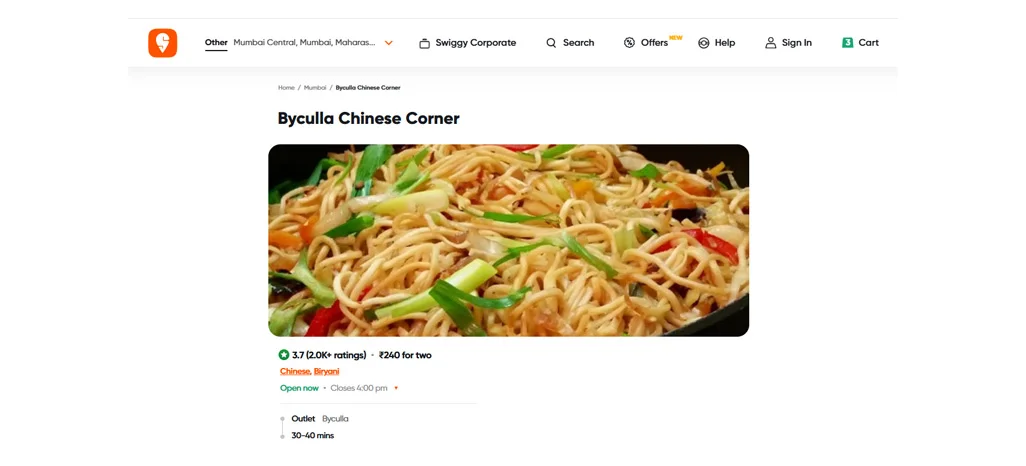
Online food delivery pricing fluctuates constantly based on peak dining hours, local demand surges, and promotional events. According to recent Indian food-tech industry benchmarks, over 68% of quick-service restaurants adjust dish prices or discount slabs at least twice weekly across metro pin codes. Without automated tracking, restaurant chains risk overpricing core items or missing margin opportunities on high-demand combos across competitive neighborhoods.
Deploying a reliable Swiggy Price Monitoring API India within your internal analytics framework equips revenue teams with continuous visibility into regional pricing strategies. Analysts can compare base item prices, packaging charges, and minimum order thresholds across competing outlets within a five-kilometer radius while eliminating manual auditing delays.
- Track hourly fluctuations in base dish rates across tier-1 and tier-2 metropolitan delivery zones.
- Compare promotional coupon thresholds, flat discounts, and buy-one-get-one offers across competing restaurant chains.
- Evaluate hidden packaging fees and minimum cart value requirements to calculate true consumer checkout costs.
| Pricing Metric | Manual Tracking | Automated Data Pipeline | Business Impact |
|---|---|---|---|
| Update Frequency | Weekly or Monthly | Real-Time (15-Min Intervals) | Immediate reaction to flash discounts |
| Pin Code Coverage | 5–10 Localities | 1,000+ Pan-India Zones | Comprehensive regional price parity |
| Discount Visibility | Surface-Level Offers | Full Coupon & BOGO Logic | Accurate net-price benchmarking |
| Data Accuracy | ~82% (Human Error) | 99.8% Structured JSON | Reliable financial forecasting |
Integrating a comprehensive Swiggy Restaurant Data API directly into enterprise pricing engines ensures that category managers evaluate net payable customer costs rather than static menu rates. When competitors launch aggressive weekend combos or slash delivery fees, automated alerts notify revenue teams immediately so they can calibrate dynamic pricing rules and safeguard contribution margins.
Granular Menu Engineering and SKU-Level Availability Monitoring Systems
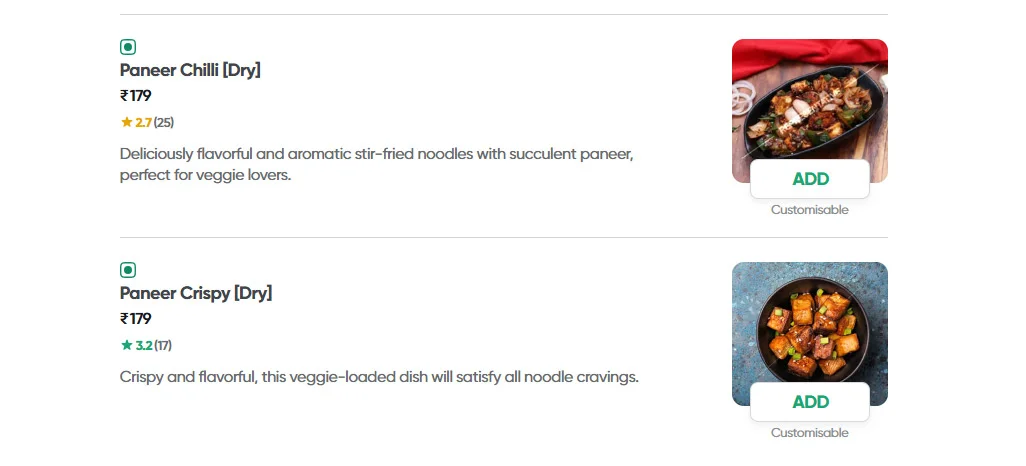
Menu optimization requires deep visibility into competitor dish assortments, portion variations, and add-on pricing structures across regional markets. Industry studies indicate that restaurants optimizing their digital menus using competitor SKU intelligence achieve a 14% to 19% increase in average order value. Tracking how rivals bundle beverages, sides, and seasonal specials reveals clear gaps in local culinary demand and seasonal buyer preferences.
Utilizing specialized Swiggy Menu Price Tracking across multi-city storefronts enables culinary and analytics teams to monitor every menu modification in real time. Businesses can detect when competitors introduce new bestseller tags, discontinue underperforming items, or adjust customization prices for toppings, sauces, and crust sizes during peak ordering windows.
- Identify trending regional cuisines and newly launched seasonal specials before they saturate local neighborhoods.
- Benchmark portion sizes, combo meal pairings, and add-on customization tiers to maximize average order values.
- Detect competitor item stockouts immediately to capture displaced customer demand through targeted promotional bids.
| Menu Intelligence Dimension | Extracted Data Fields | Strategic Application |
|---|---|---|
| Dish Assortment | Item Name, Category, Veg/Non-Veg Tag | Identify trending cuisines and menu gaps |
| Customization Tiers | Portion Sizes, Add-Ons, Combo Rules | Optimize upsell pricing and bundle margins |
| Stock & Availability | Out-of-Stock Timestamps, Kitchen Hours | Spot competitor supply chain bottlenecks |
| Merchandising Signals | Bestseller Badges, Must-Try Labels | Benchmark promotional placement effectiveness |
By connecting a scalable Swiggy Menu API to internal business intelligence dashboards, restaurant groups track item-level stockouts across rival outlets effortlessly. Furthermore, adopting a structured Swiggy API for Menu Data standardizes messy culinary descriptions into clean taxonomies, allowing data science teams to compare identical dishes across hundreds of competing brands without manual data cleaning.
Consumer Sentiment Analytics and Hyperlocal Delivery Logistics Intelligence
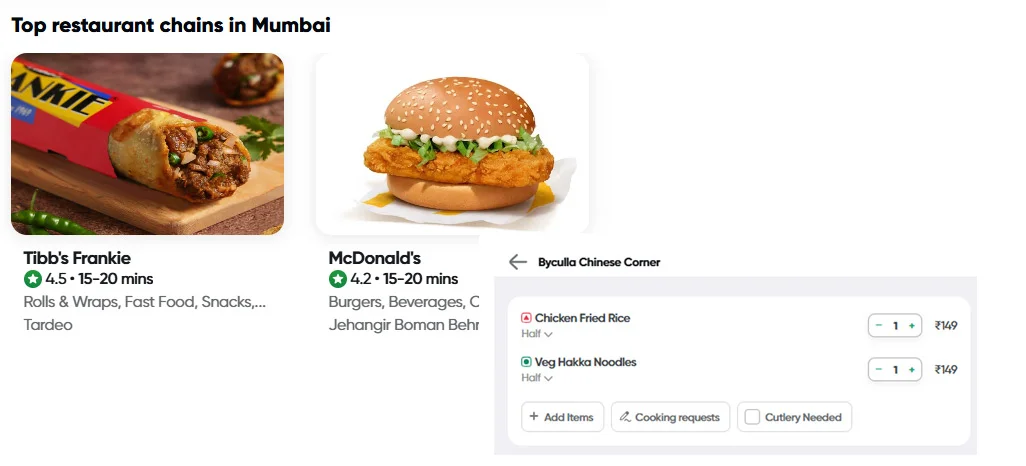
Pricing and menu variety only tell half the story because delivery speed and customer ratings ultimately dictate repeat order rates. Data from Indian food delivery ecosystems shows that a 0.3-star drop in outlet rating can reduce organic storefront clicks by nearly 22%. Monitoring delivery timelines, surge fees, and verified buyer reviews helps brands benchmark operational service levels against top-performing local kitchens.
Leveraging enterprise Swiggy Food Data Scraping methodologies transforms unstructured storefront feedback and logistics metrics into measurable operational KPIs. Operations teams can evaluate average preparation times, rain-surge fee triggers, and customer sentiment trends across specific neighborhoods to isolate bottlenecks before they damage brand reputation.
- Monitor real-time delivery time estimates across peak lunch and dinner rushes to benchmark kitchen dispatch speeds.
- Analyze outlet rating velocity and verified customer review themes covering packaging quality, taste, and portion sizes.
- Track distance-based delivery charges and weather surge multipliers to model accurate customer acquisition economics.
| Operational & Sentiment KPI | Monitored Parameters | Operational Advantage |
|---|---|---|
| Delivery ETA Windows | Estimated vs. Peak Hour Timings | Benchmark kitchen dispatch efficiency |
| Outlet Rating Velocity | Star Ratings, Total Review Counts | Track brand health across franchise units |
| Review Sentiment Themes | Packaging, Taste, Portion Feedback | Resolve recurring quality issues rapidly |
| Logistics & Surge Fees | Distance Charges, Peak Surcharges | Model true customer acquisition costs |
Streamlining these operational workflows through a dedicated Food Delivery Data API India allows multi-brand cloud kitchens to pinpoint underperforming franchise locations before ratings decline further. When delivery timelines spike in specific zones due to rider shortages, operations managers can adjust kitchen prep buffers or pause low-margin promotions to protect profitability.
How Retail Scrape Can Help You?
Enterprise food brands and market research firms need clean, uninterrupted data feeds to make confident commercial decisions. Implementing a reliable Swiggy API removes the technical burden of maintaining complex extraction infrastructure, proxy rotation, and anti-bot bypass mechanisms.
We deliver custom, enterprise-grade data pipelines tailored to your exact geographic and analytical requirements.
- Extract real-time dish prices, combo structures, and seasonal menu updates across thousands of hyperlocal pin codes.
- Monitor competitor discount campaigns, coupon thresholds, and dynamic delivery fees with automated hourly refreshes.
- Track restaurant ratings, review counts, and customer sentiment trends to benchmark franchise performance accurately.
- Receive clean, schema-validated datasets delivered directly via JSON, CSV, or automated cloud storage webhooks.
- Scale data collection effortlessly across tier-1, tier-2, and tier-3 cities without infrastructure downtime or rate limits.
- Identify competitor stockouts and peak-hour kitchen closures to capture immediate local market share.
Whether you are tracking five regional competitors or fifty thousand nationwide outlets, our custom Swiggy Scraper architecture adapts to your exact data schema. Partnering with us ensures seamless Swiggy API Integration into your existing BI tools, empowering your analysts to focus entirely on revenue growth.
Conclusion
Navigating India’s hyper-competitive food delivery landscape requires continuous, automated intelligence rather than periodic manual audits. Integrating a dedicated Swiggy API enables restaurant chains, FMCG brands, and market analysts to track dynamic pricing, menu shifts, and consumer sentiment in real time.
With clean Swiggy Restaurant Intelligence Data flowing directly into your analytics stack, your teams can eliminate pricing blind spots, optimize regional promotions, and protect profit margins across every delivery zone. Transforming raw marketplace listings into decisive commercial action starts with choosing a reliable data infrastructure partner.
By adopting a scalable Food Delivery Data API India capabilities, your organization gains the speed and accuracy required to outperform local competitors consistently. Contact Retail Scrape today to schedule a custom data consultation and request a tailored sample dataset for your target markets.