


What Do Instacart’s Early Days Reveal About Grocery Price Data Scraping for New Delivery Startups?
Introduction
Building a profitable on-demand delivery app requires more than fast drivers and a sleek user interface. During the formative stages of modern quick-commerce, founders quickly realized that inaccurate shelf prices destroyed unit economics and eroded customer trust almost immediately.
Understanding the Instacart Early Business Model shows how bootstrapping catalogs without official retail partnerships created massive operational friction. Manual price checks across regional supermarkets simply could not keep pace with weekly promotional flyers, regional tax variations, or sudden inventory stockouts.
Today, emerging platforms avoid these costly growing pains by automating market visibility from day one. Implementing Grocery Price Data Scraping enables lean startups to synchronize digital storefronts with physical aisle pricing, protect thin delivery margins, and scale confidently across competitive metropolitan zip codes.
Early Delivery Challenges Revealed Through Manual Supermarket Catalog Building
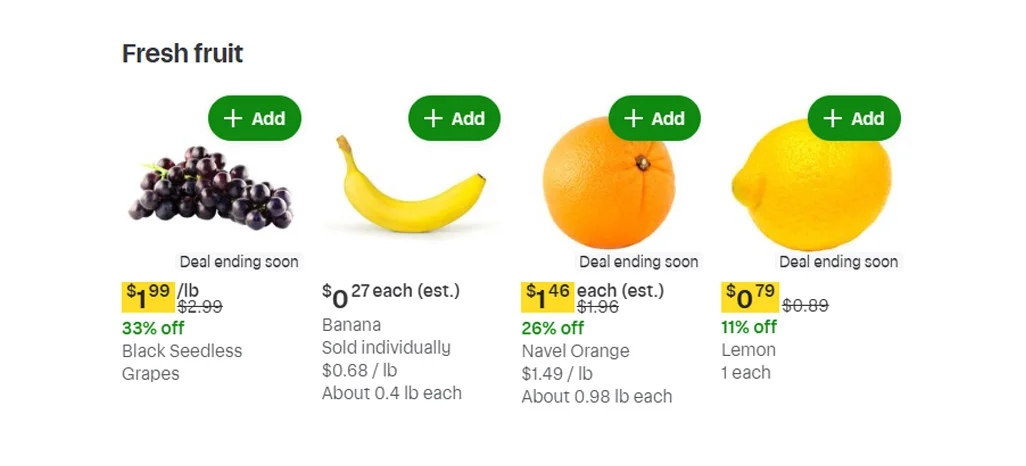
Launching a hyperlocal marketplace requires founders to appreciate the sheer volume of SKU fluctuations occurring daily inside neighborhood supermarkets. Studying the Instacart Grocery Delivery Model reveals that early operations relied heavily on manual receipt parsing and shopper-reported updates to build initial digital catalogs.
While scrappy, this approach introduced severe latency between in-store price hikes and app checkout totals, forcing the platform to absorb unexpected margin losses on every mispriced basket. Industry benchmarks indicate that traditional brick-and-mortar grocers adjust prices on 12% to 18% of their active inventory every week to match local competition and seasonal supply shifts.
For new entrants operating on razor-thin 3% to 5% net margins, even a 2% discrepancy between app listings and register receipts wipes out profitability. Deploying Grocery Delivery Price Intelligence solves this bottleneck by continuously monitoring regional supermarket flyers, store-specific web portals, and localized zip-code pricing tiers without manual intervention.
- Eliminate Manual Receipt Latency: Synchronize digital app listings directly with live store register values to prevent costly post-checkout reconciliation deficits.
- Capture Hyperlocal Tax Variations: Account for municipal beverage deposits, regional food taxes, and neighborhood surcharges automatically across every delivery zone.
- Track Weekly Promotional Cycles: Update digital aisles immediately whenever local grocers launch weekend circular discounts or temporary loyalty markdowns.
| Operational Metric | Manual Catalog Bootstrapping (Early Era) | Automated Price Monitoring (Modern Era) |
|---|---|---|
| Catalog Update Frequency | Weekly or post-checkout via shopper receipts | Real-time or scheduled hourly syncs |
| Average Price Discrepancy | 4.5% to 7.0% per order basket | Less than 0.5% across active SKUs |
| Margin Leakage Rate | High (absorbed by startup subsidies) | Minimal (protected via dynamic markups) |
| Zip-Code Localization | Limited to broad regional averages | Granular down to individual store branches |
Modern founders utilizing Grocery Price Data for Startups bypass the chaotic trial-and-error phase that plagued first-generation delivery apps and establish accurate unit economics before processing their first thousand orders.
Protecting Thin Order Margins Through Hyperlocal Competitor Benchmarking
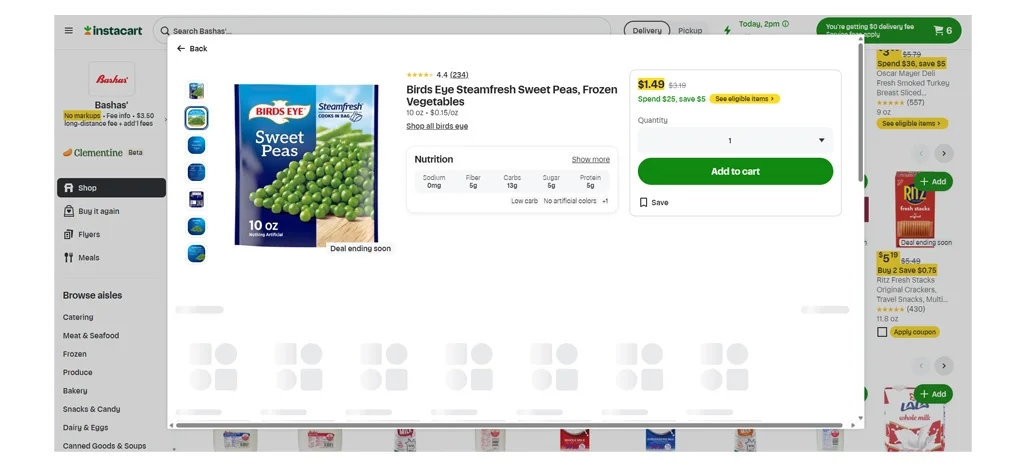
Once a delivery startup establishes an accurate baseline catalog, sustaining growth requires constant awareness of rival pricing strategies across neighboring zones. In dense urban markets, consumers routinely compare checkout totals across two or three apps before placing a weekly household order.
Relying on Online Grocery Business Intelligence allows operations teams to identify which staple items act as price-sensitive loss leaders versus high-margin basket builders. Recent e-commerce studies show that 68% of online grocery shoppers abandon their carts if delivery fees and item markups exceed local supermarket shelf prices by more than 10%.
Furthermore, regional chains frequently run localized flash discounts that vary wildly between neighborhoods separated by just five miles. Integrating a Grocery Product Data API directly into a startup's pricing engine ensures that app markups adjust automatically whenever nearby competitors drop prices on high-velocity staples.
- Optimize Staple Item Markups: Keep everyday essentials like milk, eggs, and bread competitively priced while recovering margins on specialty pantry goods.
- Reduce Checkout Cart Abandonment: Maintain transparent pricing parity with physical aisles so shoppers complete their orders without second-guessing total fees.
- Respond to Neighborhood Flash Sales: Adjust digital promotions within hours whenever rival delivery apps launch aggressive weekend discounts in specific zip codes.
| Pricing Strategy Component | Unmonitored Static Markup | Automated Competitor Benchmarking |
|---|---|---|
| Staple Item Pricing | Flat 15% markup across all categories | Dynamic 3% to 8% markup matching local rivals |
| Cart Abandonment Impact | High drop-off at final checkout screen | 22% higher checkout conversion rate |
| Promotional Parity | Misses store-level BOGO and weekly deals | Mirrors regional discounts within hours |
| Gross Margin Stability | Volatile due to uncompensated shelf hikes | Predictable across multi-store fulfillment |
Forward-thinking teams adopting Grocery Competitor Price Tracking for Startups transform pricing from a reactive guesswork exercise into a disciplined growth lever that balances customer acquisition costs with sustainable order profitability.
Scaling Multi-Store Operations Without Heavy Engineering Maintenance Overhead
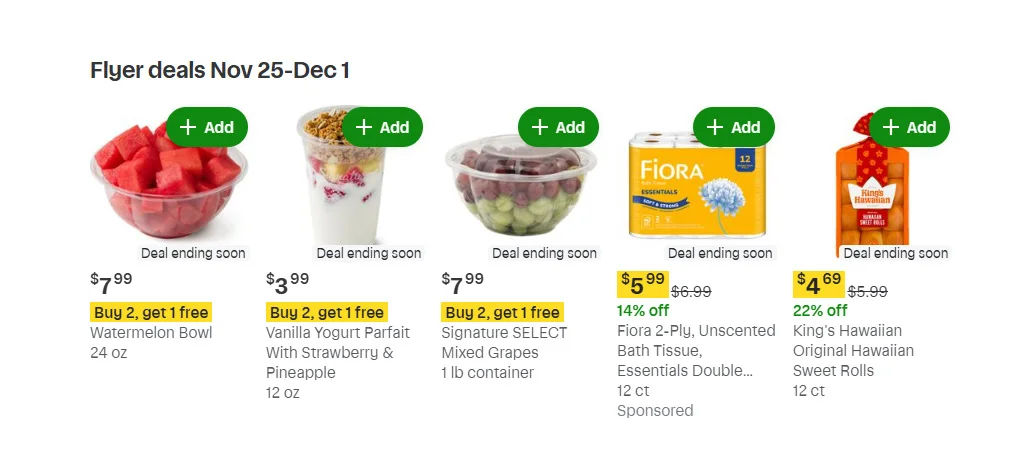
Expanding from a single pilot neighborhood to ten metropolitan zones quickly breaks spreadsheet-based catalog management and manual store audits. As order volume scales, maintaining accurate weight-based produce pricing, regional beverage deposits, and out-of-stock substitutions requires enterprise-grade infrastructure.
Utilizing Retail Price Intelligence for Grocery Delivery Companies empowers lean engineering teams to standardize messy, unstructured supermarket data into clean, actionable schemas ready for immediate app ingestion. Data engineering surveys reveal that internal developers at early-stage marketplaces spend up to 35% of their sprint capacity fixing broken web crawlers and cleaning duplicate product listings.
Outsourcing data extraction to specialized Grocery Scraper Services eliminates proxy blocks, anti-bot CAPTCHAs, and structural website changes that routinely cripple in-house scripts. Instead of maintaining fragile scraping pipelines, founders can focus engineering resources on checkout UX, driver routing algorithms, and customer retention programs.
- Accelerate Multi-City Launches: Onboard thousands of new supermarket SKUs across unfamiliar metropolitan markets in days rather than weeks of manual entry.
- Prevent In-Store Stockout Frustrations: Trigger proactive customer substitution prompts before personal shoppers ever walk through the physical store doors.
- Reclaim Core Engineering Hours: Free internal developers from constant crawler repairs so they can build customer-facing app features that drive retention.
| Scaling Challenge | In-House Manual Maintenance | Managed Data Extraction Infrastructure |
|---|---|---|
| Engineering Time Spent | 30% to 40% on scraper maintenance | Less than 5% on feed consumption |
| Multi-Region Expansion | 4 to 6 weeks per new metropolitan area | 48 to 72 hours for full zip-code onboarding |
| Stockout Detection | Delayed until shopper arrives at aisle | Proactive alerts trigger smart substitutions |
| Data Schema Consistency | Fragmented across different store websites | Unified JSON/CSV feeds normalized by UPC/GTIN |
High-growth platforms connecting a Grocery Pricing Intelligence API for Startups directly into inventory management systems achieve seamless multi-city expansion while keeping operational headcount lean.
How Retail Scrape Can Help You?
Building a resilient on-demand delivery platform demands clean, reliable market visibility from day one. By integrating automated Grocery Price Data Scraping into your core operational stack, we empower emerging delivery apps to eliminate catalog discrepancies, benchmark neighborhood competitors, and protect thin order margins without hiring massive data engineering teams.
We provide:
- Granular Zip-Code Coverage: Capture hyperlocal shelf prices, regional tax rules, and store-specific availability across thousands of supermarket branches nationwide.
- Real-Time Stockout Alerts: Receive automated inventory updates that trigger smart product substitutions before shoppers ever enter the store aisle.
- Normalized Product Schemas: Ingest clean, deduplicated catalog feeds mapped accurately by UPC, brand, weight, and package size for effortless database integration.
- Zero Infrastructure Maintenance: Bypass anti-bot blocks, proxy rotation headaches, and sudden retailer layout changes with fully managed extraction pipelines.
- Promotional and Flyer Tracking: Monitor weekly digital circulars, bundle discounts, and loyalty-member pricing tiers to maintain checkout parity.
- Flexible Delivery Formats: Access structured market feeds directly via REST APIs, webhooks, or scheduled cloud storage drops tailored to your tech stack.
Partnering with us gives your startup immediate access to Web Scraping Grocery Store Datasets so you can launch faster and scale profitably across every target market.
Conclusion
Scaling a modern delivery startup requires learning directly from the operational hurdles that shaped first-generation platforms. While early pioneers proved consumer demand for rapid doorstep fulfillment, their struggles with manual catalog updates highlight why Grocery Price Data Scraping is essential for protecting unit economics today.
Implementing Grocery Price Data for Startups turns real-time market transparency into a decisive competitive advantage across every neighborhood you serve. Ready to eliminate catalog discrepancies and benchmark local supermarkets effortlessly. Contact Retail Scrape today to request a custom sample dataset and accelerate your delivery platform's growth.