How Can Retail Price Monitoring Across Online & Offline Stores Enhance Real-Time Pricing Visibility?
Introduction
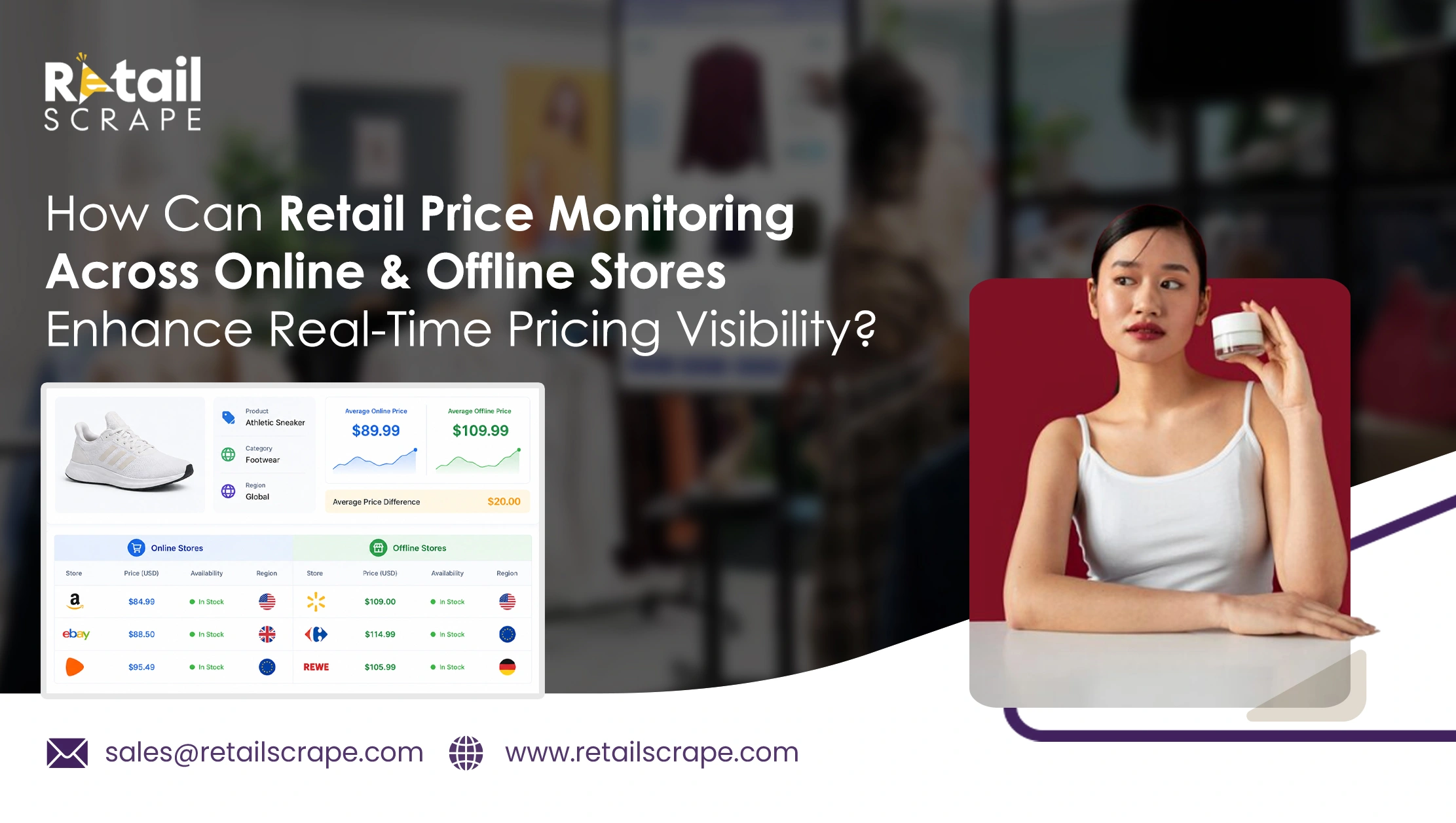
Retail pricing has become increasingly complex as consumers compare prices across physical outlets, eCommerce marketplaces, brand websites, and mobile shopping applications before making purchasing decisions. This growing need for transparency has made Retail Price Monitoring Across Online & Offline Stores a critical capability for modern retailers seeking to improve pricing visibility and operational efficiency.
As shopping behavior continues to shift between digital and physical channels, organizations require accurate data to understand how pricing strategies impact customer acquisition and retention. Industry reports indicate that more than 70% of shoppers compare prices across multiple channels before completing a purchase, making consistent pricing a significant factor in purchase decisions.
Advanced Retail Price Scraping Services help businesses gather structured pricing data from multiple channels, enabling informed decisions based on current market conditions. With growing competition and rapidly changing consumer expectations, businesses that establish robust pricing intelligence frameworks are better equipped to improve profitability, maintain customer trust, and respond proactively to evolving market dynamics.
Building Consistent Visibility Across Every Selling Touchpoint
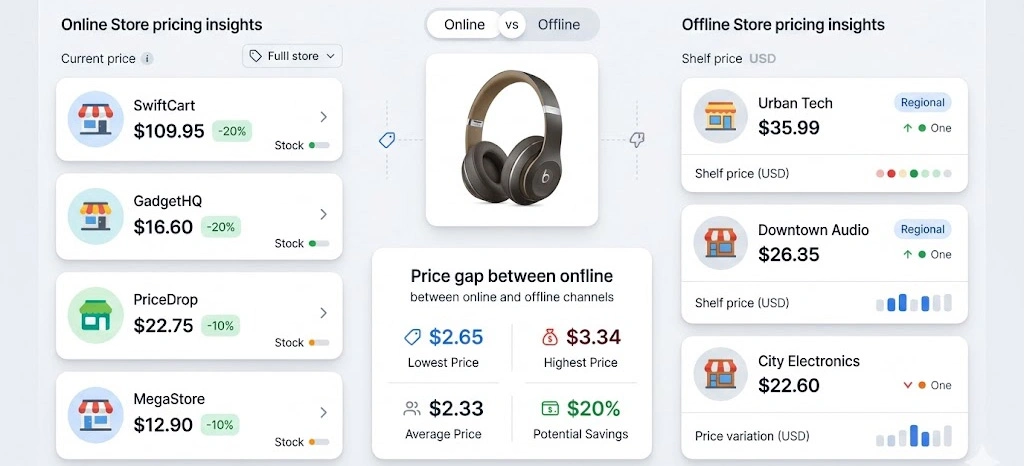
Retailers today operate across websites, mobile applications, marketplaces, and physical stores, making pricing consistency increasingly difficult to maintain. Customers frequently compare prices before making a purchase, and even minor discrepancies can negatively impact trust, conversions, and brand perception. To address this challenge, businesses require a structured approach to monitoring price movements across every channel where products are sold.
Industry studies show that more than 65% of consumers are likely to reconsider a purchase when they encounter different prices for the same product across channels. As a result, organizations are investing in Online and Offline Price Monitoring practices that provide greater transparency and help eliminate pricing mismatches before they affect customer experiences.
Businesses often rely on Retail Price Tracking to monitor product-level pricing updates and identify inconsistencies between locations, stores, and digital platforms. Additionally, implementing Retail Price Comparison enables organizations to evaluate product positioning across channels and identify opportunities for optimization.
Pricing Consistency Benefits:
| Challenge | Impact | Business Outcome |
|---|---|---|
| Channel pricing differences | Customer confusion | Improved transparency |
| Regional pricing gaps | Margin inconsistencies | Better control |
| Promotion mismatches | Lost sales opportunities | Faster corrections |
| Manual review processes | Delayed decisions | Greater efficiency |
| Market variability | Revenue risks | Improved visibility |
Key advantages include:
- Improved customer confidence
- Better channel alignment
- Faster issue identification
- Stronger pricing governance
- Enhanced revenue protection
By continuously monitoring pricing activity across every touchpoint, retailers can create a more reliable and transparent shopping experience while supporting long-term business growth.
Accelerating Market Response Through Continuous Data Insights
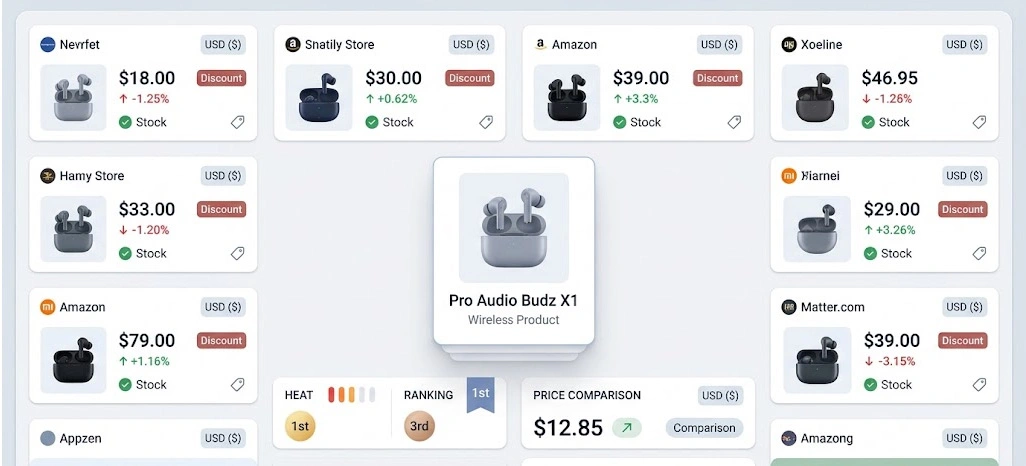
Retail markets change rapidly due to competitor promotions, seasonal campaigns, inventory fluctuations, and evolving consumer demand. Organizations that lack immediate access to pricing information often struggle to react effectively, creating missed opportunities and weakened market positioning.
Research indicates that companies using automated pricing intelligence systems can reduce reaction times to market changes by more than 40%. Faster responses allow businesses to adjust promotions, optimize pricing structures, and improve competitiveness without relying on outdated reports.
Many organizations implement Real-Time Retail Price Monitoring Solutions to gain immediate visibility into pricing movements occurring across the market. This approach enables decision-makers to identify opportunities and respond proactively rather than waiting for scheduled reviews.
Impact of Continuous Market Monitoring:
| Market Variable | Traditional Method | Automated Approach |
|---|---|---|
| Price changes | Slow detection | Immediate visibility |
| Competitor activity | Limited awareness | Faster response |
| Promotional campaigns | Reactive planning | Proactive execution |
| Inventory-driven pricing | Manual tracking | Automated insights |
| Demand fluctuations | Delayed decisions | Timely actions |
To strengthen market awareness, retailers frequently use Competitor Price Monitoring to evaluate pricing strategies adopted by rival brands and sellers. Access to accurate competitive intelligence allows organizations to improve positioning and adapt more effectively to market conditions.
Benefits of this approach include:
- Faster market adaptation
- Improved promotional planning
- Reduced pricing blind spots
- Better competitive positioning
- Enhanced operational responsiveness
Organizations that continuously monitor pricing dynamics can make informed adjustments that improve profitability while maintaining stronger relationships with value-conscious consumers.
Turning Pricing Data Into Sustainable Revenue Growth
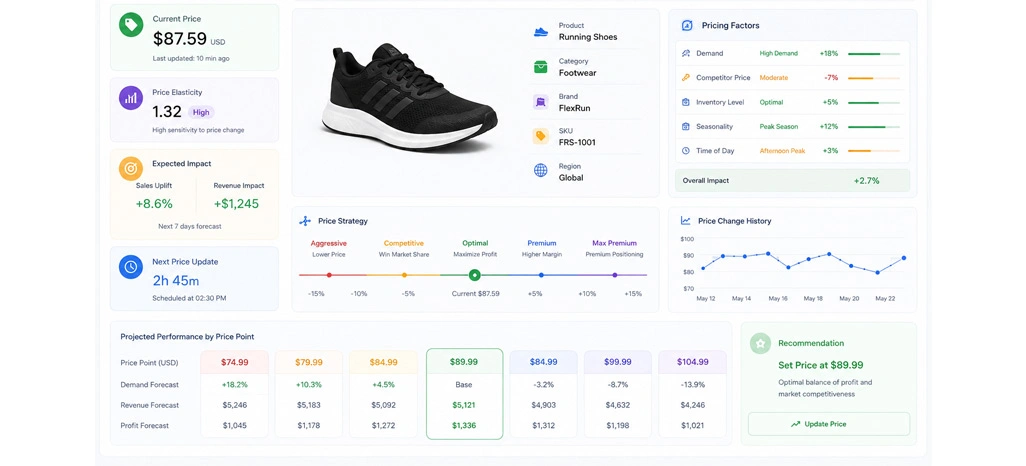
Pricing decisions have a direct impact on revenue, profitability, and customer acquisition. Retailers that depend on assumptions or outdated information often face challenges in maintaining healthy margins while remaining competitive. Data-driven pricing practices provide the visibility needed to balance profitability objectives with customer expectations.
Studies suggest that businesses utilizing advanced pricing intelligence programs can improve margins by up to 10% while simultaneously enhancing customer satisfaction. These improvements are achieved by analyzing pricing behavior, understanding demand patterns, and responding to market conditions with greater precision.
Many retailers adopt a Dynamic Pricing Strategy for Retail Stores to align prices with changing demand, inventory availability, seasonal trends, and competitive activities. This flexible approach helps maximize revenue opportunities while ensuring pricing remains relevant within the marketplace.
Revenue Optimization Framework:
| Business Goal | Required Insight | Expected Benefit |
|---|---|---|
| Margin improvement | Market pricing data | Increased profitability |
| Demand forecasting | Consumer trends | Better planning |
| Promotion optimization | Performance metrics | Higher returns |
| Inventory balancing | Stock visibility | Reduced waste |
| Revenue expansion | Pricing intelligence | Increased sales |
Organizations often incorporate Real-Time Retail Price Tracking to ensure decisions reflect current market realities rather than historical information. When combined with Retail Pricing Analytics, pricing teams can identify meaningful trends, evaluate performance, and refine pricing models with greater confidence.
Key outcomes include:
- Improved pricing accuracy
- Stronger margin management
- Better promotional effectiveness
- Increased revenue opportunities
- Smarter business planning
A structured pricing intelligence strategy allows retailers to transform data into actionable decisions that support sustainable growth, profitability, and long-term competitive success.
How Retail Scrape Can Help You?
Modern retail success depends on access to accurate pricing data and actionable market intelligence. Businesses seeking stronger visibility can benefit significantly from Retail Price Monitoring Across Online & Offline Stores, enabling them to track market dynamics, identify pricing inconsistencies, and improve decision-making across multiple channels.
Our capabilities include:
- Automated collection of pricing information from multiple sources
- Monitoring of product-level pricing trends
- Detection of promotional and discount activities
- Regional and channel-specific pricing analysis
- Market movement tracking and reporting
- Custom dashboards for strategic decision-making
By combining advanced technology with deep retail expertise, we help businesses establish stronger pricing frameworks and improve responsiveness to changing market conditions. Our solutions provide valuable Retail Price Intelligence that supports profitability, competitive positioning, and long-term growth initiatives.
Conclusion
Accurate pricing visibility has become a competitive necessity in today's retail landscape. Through Retail Price Monitoring Across Online & Offline Stores, businesses can identify pricing inconsistencies, respond faster to market changes, and improve customer trust while protecting margins.
Organizations that adopt structured monitoring programs supported by Omnichannel Price Monitoring can make more informed decisions, optimize promotional strategies, and strengthen profitability. Contact Retail Scrape today to build a smarter and more responsive retail intelligence framework.
Effortlessly managing intricacies with customized strategies.
Mitigating risks, navigating regulations, and cultivating trust.
Leveraging expertise from our internationally acclaimed team of developers
Reliable guidance and assistance for your business's advancement