


How Does Quick Commerce Price History Tracking Reveal Price Changes Across Blinkit, Zepto & Instamart?
Introduction
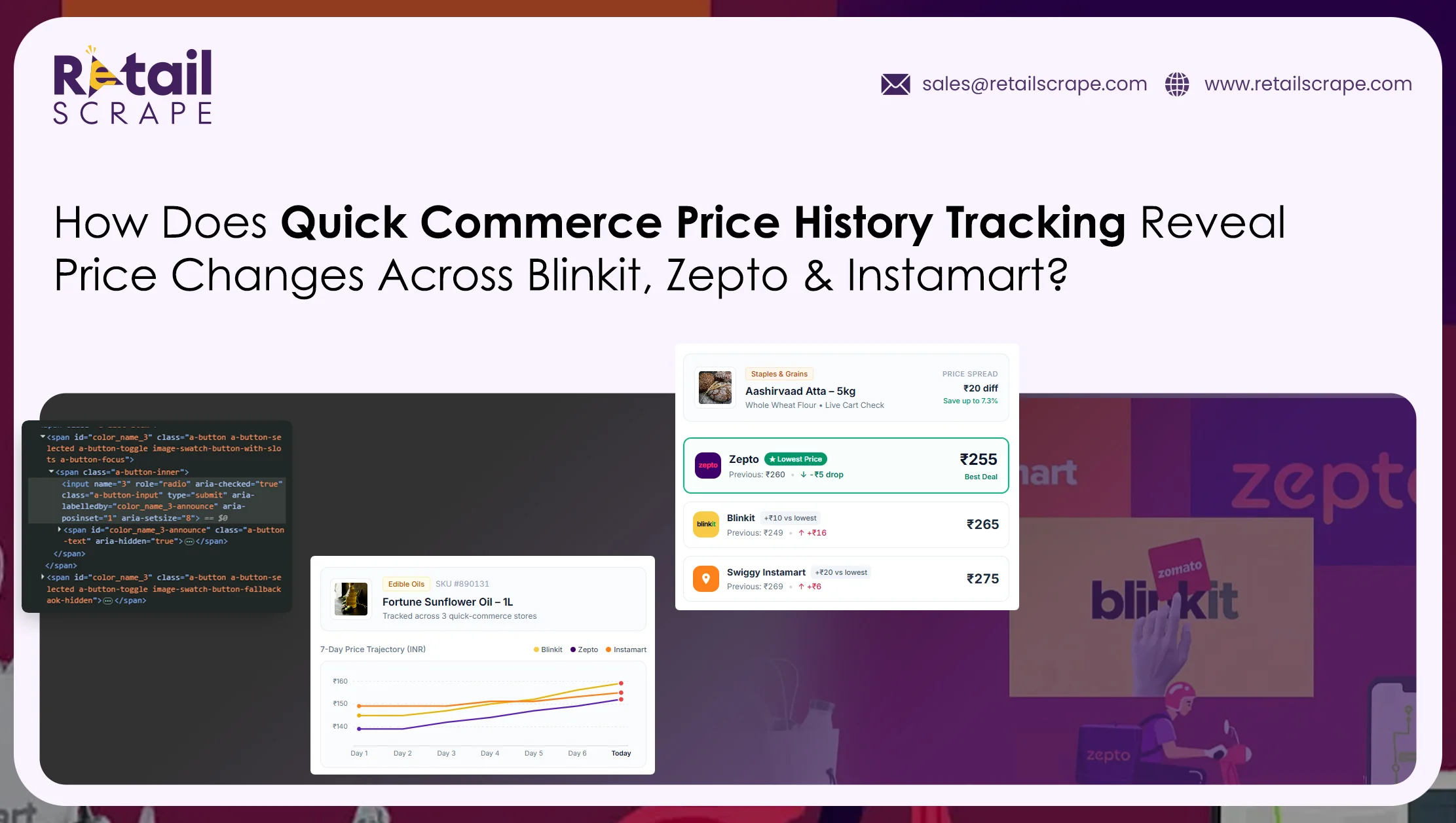
Dynamic pricing has transformed how urban consumers buy daily essentials across major Indian metro cities. Rapid delivery platforms adjust SKU rates multiple times a day based on hyperlocal demand, dark store inventory levels, and competitor discounting strategies. Understanding these rapid shifts requires structured monitoring rather than manual checking.
Implementing Quick Commerce Price History Tracking exposes hidden pricing cycles that standard app browsing misses. When shoppers or retail analysts track historical price logs, clear patterns emerge regarding weekend surges, late-night delivery markups, and flash promotional drops across leading delivery networks.
By combining Instamart Price Tracking with broader market logs, stakeholders gain complete visibility into unit economics and discount depth. Tracking SKU-level movements over weeks helps buyers optimize household budgets while enabling consumer brands to protect price parity across rival hyperlocal storefronts.
Understanding Daily Grocery Surge Patterns Across Delivery Apps
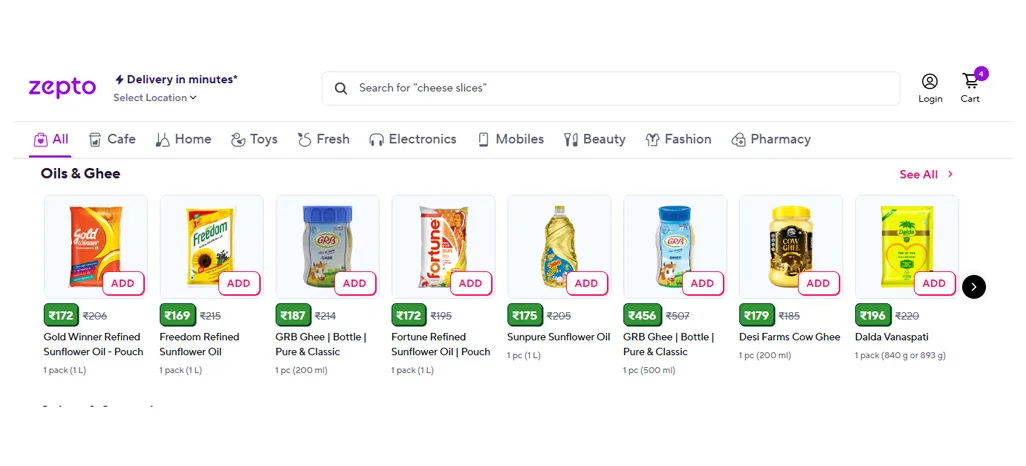
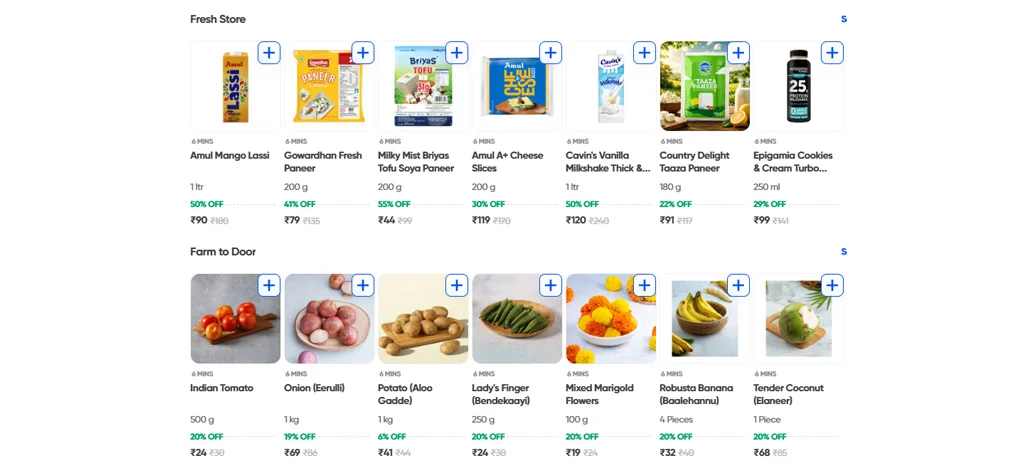
Quick commerce platforms rely on algorithmic pricing engines that respond immediately to localized supply and demand imbalances across urban neighborhoods. During peak evening rush hours or sudden weather disruptions, platforms frequently reduce promotional discounts or raise base handling fees to manage rider capacity. Relying on Grocery Price Monitoring India reveals that staple items like dairy, fresh produce, and cooking oils experience price adjustments up to four times within a single 24-hour cycle.
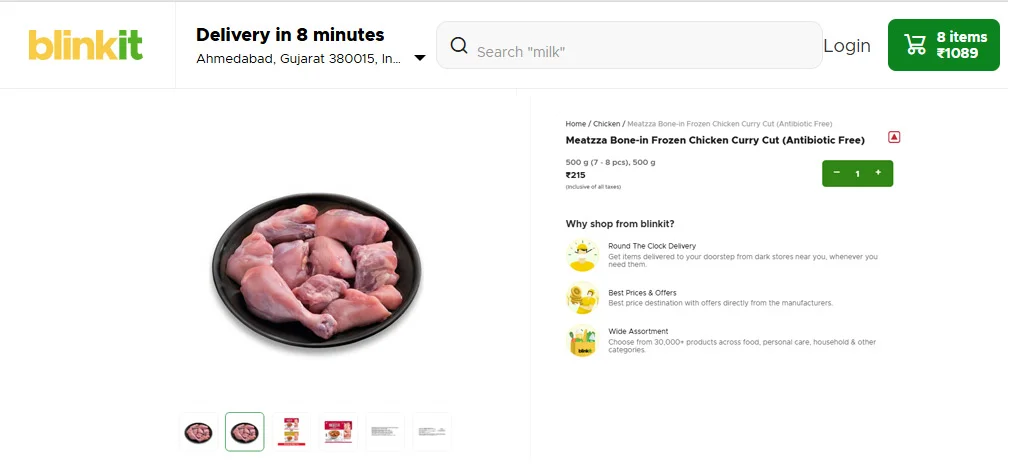
Historical data collected across major tier-1 hubs demonstrates distinct pricing behaviors among top rapid delivery operators operating in high-density zones. Analyzing Blinkit Price History logs frequently shows aggressive morning discounting on breakfast essentials followed by steady midday price normalization as dark store stock depletes. These automated shifts ensure high inventory turnover while protecting platform unit economics during periods of intense order volume.
Conversely, evaluating Zepto Price Tracking datasets indicates steep weekend markdowns on snacks and beverages paired with tighter discount caps on weekday household staples. These platform-specific pricing rhythms highlight how individual operators balance customer acquisition promotions against long-term contribution margins across competing pin codes.
- Morning breakfast staples often carry higher promotional markdowns between 6:00 AM and 9:00 AM.
- Evening rush hours trigger subtle reductions in discount depth alongside elevated handling charges.
- Weekend impulse categories receive deeper promotional visibility compared to routine midweek pantry refills.
| Product Category | Average Daily Price Variance | Peak Surge Window | Highest Discount Window |
|---|---|---|---|
| Fresh Dairy & Eggs | 4% – 8% | 7:00 PM – 10:00 PM | 6:00 AM – 9:00 AM |
| Cooking Oils & Ghee | 6% – 12% | 12:00 PM – 3:00 PM | 10:00 PM – 12:00 AM |
| Packaged Snacks | 10% – 18% | 5:00 PM – 8:00 PM | Friday – Sunday |
| Personal Care | 8% – 15% | 6:00 PM – 9:00 PM | Month-End Payday |
Monitoring these granular shifts allows retail analysts and savvy buyers to separate genuine promotional value from artificial MRP markups. Without historical baselines, temporary percentage discounts often mask recent base-price increases implemented earlier in the week.
Three Effective Methods for Checking Hyperlocal Grocery Deals
Executing a thorough Blinkit Zepto Instamart Price Comparison requires moving beyond manual app switching, which only captures static snapshots of a dynamic marketplace. Modern shoppers and enterprise retail teams rely on structured methodologies to capture accurate pricing trends across competing dark stores throughout the day.
The first method involves browser extensions and consumer price-alert trackers that log cart values over time for individual users. While accessible for household budgeting, these lightweight tools lack the multi-location coverage required to audit regional price variations across dozens of urban delivery zones simultaneously.
The second and third approaches leverage scheduled web crawlers and automated pipelines to record localized SKU availability and net payable prices. Integrating a dedicated Quick Commerce Price Tracking API directly into internal business intelligence dashboards allows enterprise teams to receive real-time alerts whenever rival platforms adjust pack pricing.
- Manual cart checks provide basic visibility for single pin codes but miss short-lived flash discounts.
- Automated browser alerts notify individual buyers when favorite household staples drop below target thresholds.
- Enterprise data feeds capture continuous SKU-level pricing across hundreds of dark stores without manual intervention.
| Tracking Method | Update Frequency | Pin-Code Scalability | Best Suited For |
|---|---|---|---|
| Manual App Logging | Once Daily | Single Location | Individual Household Shoppers |
| Browser Price Trackers | Every 4–6 Hours | 2–5 Locations | Frequent Online Buyers |
| Automated API Feeds | Every 15–30 Minutes | 500+ Dark Stores | FMCG Brands & Retail Analysts |
Consistent Daily Grocery Price Tracking Across Apps highlights how identical SKUs carry vastly different net prices depending on user loyalty tiers, minimum cart thresholds, and hyperlocal stock urgency. Automated tracking eliminates human error and captures flash sales that often last less than two hours.
Building Automated Systems for Hyperlocal Retail Price Intelligence
Scaling price monitoring across thousands of SKUs and hundreds of Indian pin codes requires specialized technical infrastructure built for high-frequency collection. Standard scraping scripts frequently fail due to dynamic geo-fencing, session-based pricing, and strict anti-bot defenses deployed by delivery apps. Purpose-built Quick Commerce Data Scraping solves these bottlenecks by simulating authentic localized user sessions across distinct delivery zones.
Deploying a Grocery Competitor Price Monitoring API India empowers FMCG manufacturers and retail aggregators to benchmark pack sizes, promotional mechanics, and out-of-stock frequencies in real time. Access to structured competitor feeds allows brand managers to detect regional price erosion early and coordinate targeted trade promotions with platform category teams.
Similarly, adopting a specialized Quick Commerce Price Tracker India structures raw HTML and JSON payloads into clean, queryable historical databases ready for immediate visualization. Clean data pipelines eliminate manual spreadsheet formatting and enable seamless integration with existing enterprise resource planning and pricing optimization software.
- Geo-fenced session simulation captures true hyperlocal pricing specific to individual neighborhood dark stores.
- Structured payload normalization converts complex app responses into standardized tables for rapid analysis.
- Automated scheduling ensures uninterrupted data collection during high-traffic festive sales and weekend surges.
| Data Metric Tracked | Strategic Business Application | Typical Refresh Interval |
|---|---|---|
| Listed Selling Price vs. MRP | Discount depth and margin erosion analysis | Every 30 Minutes |
| Dark Store Stock Status | Supply chain replenishment and demand forecasting | Every 15 Minutes |
| Delivery & Handling Fees | Total landed cost comparison across platforms | Every 60 Minutes |
| Promotional Banner Placement | Share-of-shelf and sponsored visibility tracking | Every 2 Hours |
When enterprises centralize these metrics, category managers can immediately identify unauthorized discounting by third-party sellers or adjust trade promotions to match competitor price drops before losing digital shelf share.
How Retail Scrape Can Help You?
Building an internal data pipeline capable of monitoring hyperlocal delivery apps across dozens of cities requires continuous maintenance and proxy management. By integrating Quick Commerce Price History Tracking solutions managed by us, businesses receive clean, structured pricing feeds without managing complex scraping infrastructure.
Our automated engines capture pin-code-level SKU fluctuations, promotional shifts, and stock availability across major Indian delivery networks with high accuracy.
- Delivery of structured historical pricing datasets across thousands of grocery and FMCG SKUs
- Automated pin-code rotation to capture true hyperlocal pricing across tier-1 and tier-2 cities
- Real-time stock availability and out-of-stock duration tracking for every dark store zone
- Clean JSON, CSV, and database-ready outputs tailored for seamless BI dashboard integration
- Continuous anti-bot bypass and proxy management ensuring uninterrupted daily data extraction
- Custom alert triggers when rival platforms alter discount percentages or base product rates
Partnering with an experienced data extraction provider turns fragmented market noise into actionable Quick Commerce Data Intelligence for sustainable revenue growth.
Conclusion
Rapid price adjustments across hyperlocal delivery platforms have made static pricing obsolete for both consumers and consumer brands. Adopting Quick Commerce Price History Tracking provides the historical context needed to distinguish genuine promotional savings from short-term algorithmic surges.
When organizations combine historical baselines with a Quick Commerce Price Tracker India, pricing teams gain the clarity required to optimize margins, defend market share, and time inventory replenishment effectively across dynamic urban markets.
Integrating a reliable Grocery Competitor Price Monitoring API India ensures your pricing strategy adapts instantaneously to competitor markdowns and regional demand shifts. Connect with Retail Scrape today to schedule a custom data consultation and start monitoring real-time quick commerce price movements across every target pin code.