Why Do Grocery Product Data Scraping Services India Matter for Price, Image and Pack Size Tracking?
Introduction
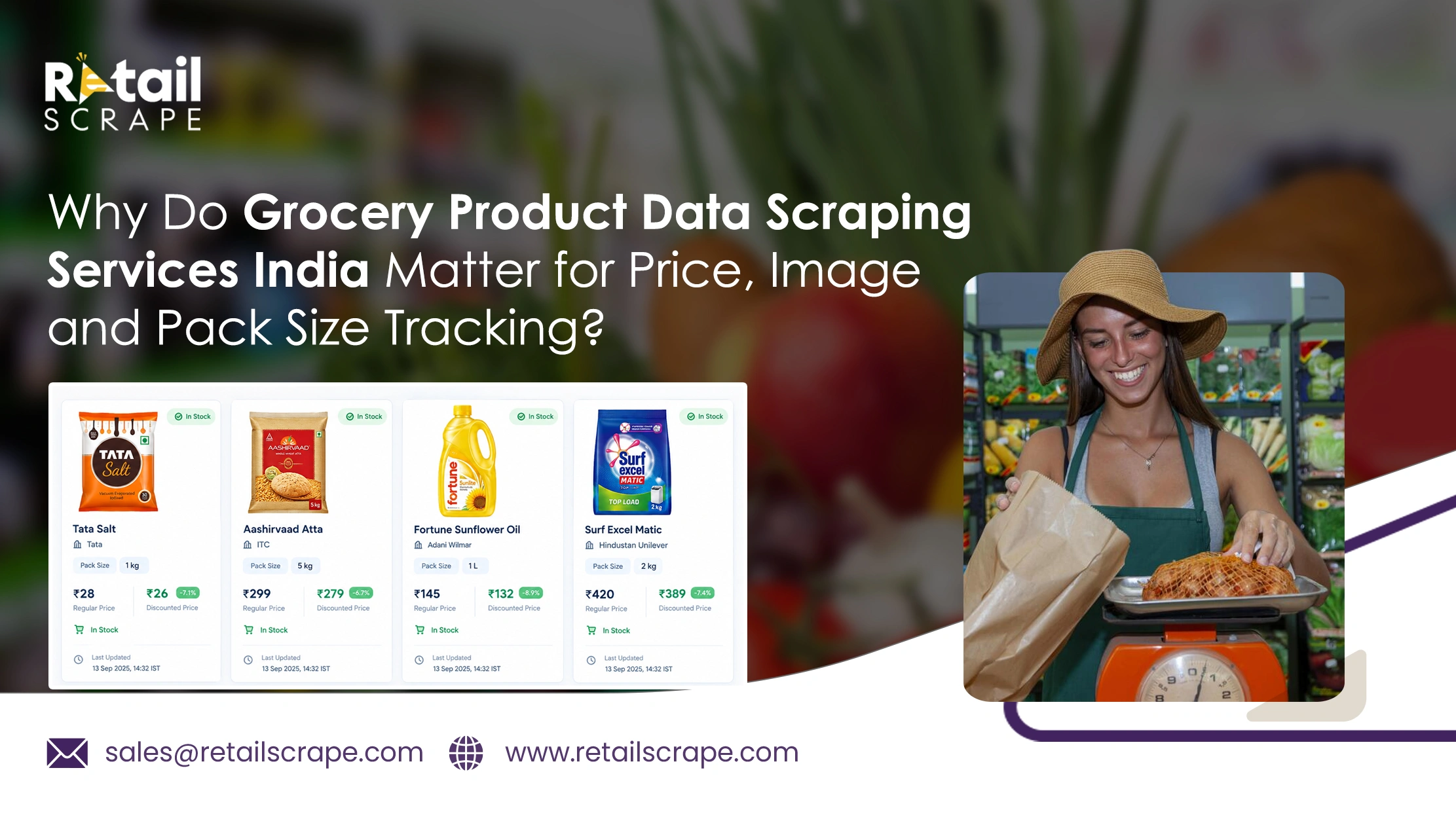
India's grocery market changes quickly as retailers adjust prices, introduce new pack sizes, update product images and modify availability. Tracking these changes manually can create inconsistent records and delayed decisions. Structured data collection gives businesses a clearer view of product-level changes across grocery stores, marketplaces and quick-commerce platforms.
Price alone does not provide a complete understanding of grocery competition. Images, pack sizes, brands, descriptions and availability also influence customer choices and purchasing decisions. Grocery Product Data Scraping Services help organize these changing product attributes into structured datasets that can support comparison, monitoring and market analysis.
Businesses can use these insights to identify pricing movements, detect packaging variations and maintain cleaner product records. Regular collection also helps teams compare product information across multiple sources without depending on repetitive manual checks. This creates a practical foundation for pricing strategies, assortment decisions, competitor analysis and broader grocery market intelligence.
Strategic Price Signals Shaping Grocery Competition Across Indian Retail Markets
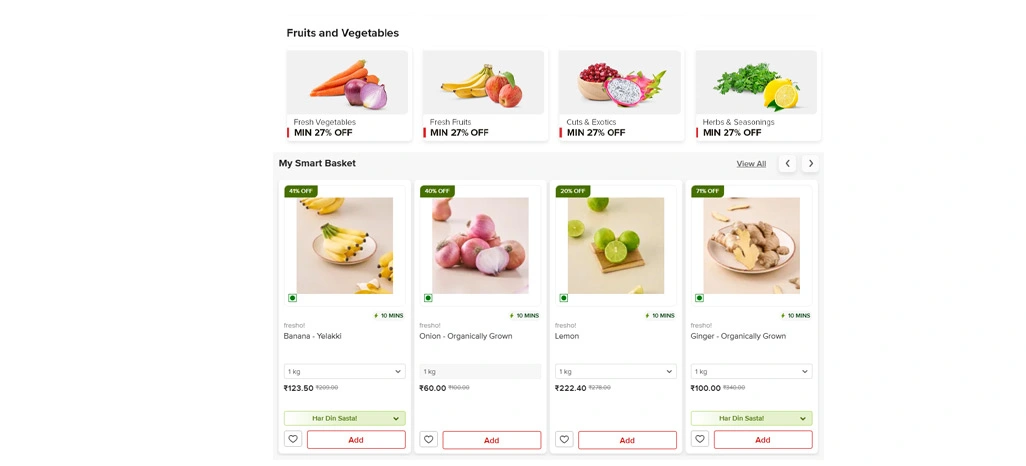
Grocery pricing can change frequently because retailers respond to supplier costs, promotions, regional demand, inventory levels and competitor activity. For businesses operating across several digital channels, manually recording these movements can quickly become difficult. The Price Monitoring Solution framework can support this process by structuring recurring observations and helping analysts identify meaningful movements rather than relying on isolated price checks.
Price monitoring becomes particularly useful when records include product names, brands, pack quantities, listed prices, promotional values and collection timestamps. These details provide context around every observed movement and make it easier to distinguish a temporary offer from a broader pricing adjustment. Businesses can compare similar products across multiple retailers and identify where differences are becoming significant. This information can support category reviews, pricing evaluations and competitive assessments.
Important monitoring areas include:
- Regular price comparison across selected retailers
- Identification of promotional price movements
- Historical tracking of product-level changes
- Comparison of regional pricing differences
- Recording timestamps for better trend analysis
A consistent collection process creates organized historical records that allow teams to compare product prices over different periods. A structured approach can also reduce repetitive research work while improving the consistency of internal reporting. Teams can review historical records to identify recurring patterns and unusual changes.
| Tracking Area | Sample Change | Primary Purpose |
|---|---|---|
| Product Prices | 11.8% | Competitive comparison |
| Promotional Offers | 8.4% | Promotion analysis |
| Brand Variations | 6.7% | Assortment evaluation |
| Availability | 9.2% | Stock monitoring |
These structured observations give pricing teams a clearer foundation for evaluating market conditions. When pricing information is collected consistently, businesses can make comparisons using comparable records rather than fragmented observations. This helps transform changing grocery prices into useful information for category planning, competitor assessment and ongoing commercial analysis.
Visual Clarity Revealing Product Image and Pack Size Variations
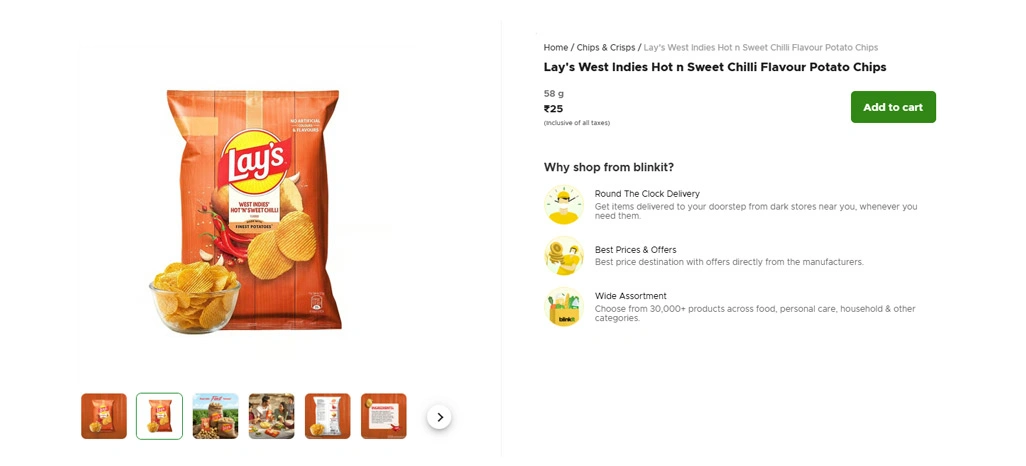
Product images and pack sizes are important catalog attributes because seemingly similar grocery listings may represent different quantities, packaging versions or product variants. Such differences can create confusion when businesses compare listings without reviewing all relevant product attributes together. Reliable Grocery Product Images Scraping Services can help capture visual listing information alongside other product fields for more detailed comparisons.
Pack-size information is equally important when evaluating product value. A lower listed price does not necessarily indicate a cheaper product if the quantity differs substantially. By maintaining quantity, unit and packaging information, businesses can perform more meaningful comparisons between similar products. Grocery Product Pack Size Data India can support this analysis by providing organized information about different quantities and product configurations across grocery channels.
Useful activities include:
- Comparing current and previous product images
- Identifying different package configurations
- Validating listed quantities against product records
- Separating similar products with different variants
- Reviewing packaging changes across retailers
Product images can also assist with identifying packaging changes, label updates and variant differences. When visual records are collected consistently, analysts can compare current and historical listings to identify changes that may otherwise be overlooked.
| Product Attribute | Sample Variation | Tracking Purpose |
|---|---|---|
| Product Images | 14.6% | Listing comparison |
| Pack Sizes | 10.9% | Quantity validation |
| Product Titles | 7.3% | Record matching |
| Descriptions | 6.1% | Content consistency |
Combining visual information with quantity and descriptive fields creates a more complete understanding of grocery listings. It helps teams reduce mismatches, improve catalog accuracy and evaluate product differences more carefully. This approach is especially useful when multiple retailers display similar products with different images, descriptions or quantities, making product-level comparison more dependable.
Smarter Data Foundations Connecting Grocery Products Across Retail Channels
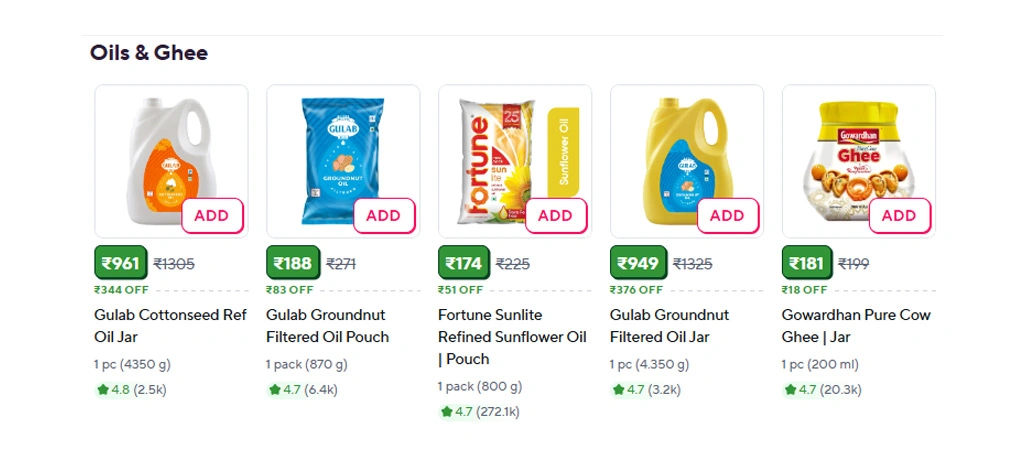
Grocery businesses often collect information from numerous retailers, marketplaces and quick-commerce platforms. Each source may use different product names, descriptions, image formats, category structures and availability labels. Without proper consolidation, duplicate or incomplete records can make analysis difficult. A structured Grocery Product Database Services India approach can organize product information into standardized records, making it easier for teams to compare and analyze large catalogs.
Price information becomes more valuable when it is connected with product identity, quantity, brand and availability. Grocery Product Price Tracking India can provide recurring price observations, while supporting attributes help explain why one listing differs from another. This prevents businesses from evaluating prices in isolation and provides stronger context for category-level and competitor-level analysis.
Relevant activities can include:
- Consolidating records from multiple grocery channels
- Standardizing product names and categories
- Identifying duplicate or incomplete listings
- Comparing product-level competitive information
- Maintaining structured historical records
Quick-commerce platforms add another layer of complexity because product availability and pricing can change rapidly by location and time. Grocery Price Intelligence can therefore become more useful when product-level information is collected, normalized and compared through consistent fields across different grocery sources.
| Data Element | Sample Coverage | Analytical Use |
|---|---|---|
| Product Records | 96.2% | Catalog analysis |
| Price Fields | 94.7% | Price comparison |
| Pack Information | 91.5% | Quantity analysis |
| Availability Fields | 89.8% | Stock evaluation |
Consistent consolidation helps teams work with comparable information across different sources. It can also improve reporting quality by reducing fragmented records and providing a common structure for analysis. When product information, pricing and availability are organized together, businesses can evaluate competitive movements more efficiently and identify patterns that may remain hidden within disconnected datasets.
How Retail Scrape Can Help You?
Retail businesses need dependable product information to evaluate pricing, assortment and marketplace changes without spending excessive time on manual collection. With Grocery Product Data Scraping Services India, relevant information can be gathered from grocery websites, marketplaces and quick-commerce platforms according to defined data fields and collection schedules.
Key capabilities can include:
- Automated collection from multiple grocery sources
- Structured extraction of product-level information
- Scheduled monitoring for recurring market changes
- Standardized records for easier comparison
- Flexible datasets for analytical and reporting workflows
- Validation processes for improving data consistency
The collected information can support pricing teams, category managers, retailers and market researchers working with large and frequently changing catalogs. Product attributes can be organized into structured datasets and prepared for dashboards, reports and analytical systems.
Businesses can also connect collected information with internal workflows for recurring analysis and reporting. Product Pricing and Availability Data can support decisions involving competitive pricing, assortment planning, stock visibility and product-level market evaluation. The resulting datasets can be prepared according to business requirements, selected sources and preferred collection schedules.
Conclusion
Grocery markets require continuous observation because prices, product presentation, pack sizes and availability can change across retailers and digital channels. Grocery Product Data Scraping Services India provides a structured approach for collecting these changing attributes and turning scattered grocery information into organized datasets. This supports more consistent comparison, monitoring and business analysis.
Accurate product information can also strengthen broader data workflows by bringing pricing and catalog details into a unified structure. Grocery Product Data API India can help businesses connect structured product information with internal platforms, dashboards and analytical systems for recurring use. Contact Retail Scrape today to build a reliable grocery data collection solution for your business.