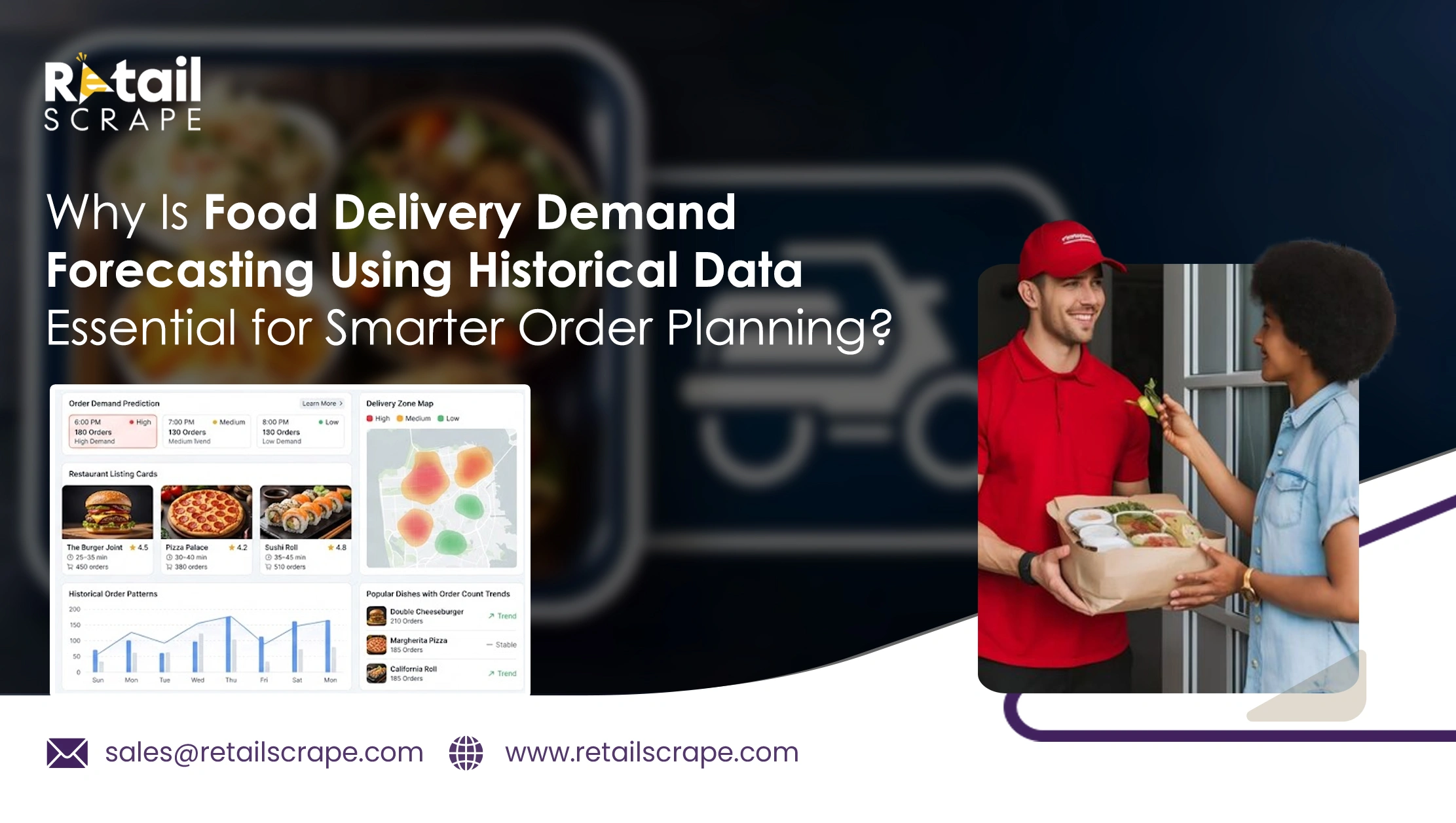
Why Is Food Delivery Demand Forecasting Using Historical Data Essential for Smarter Order Planning?
Introduction
Food delivery businesses operate in an environment where customer demand can shift rapidly based on weather, local events, promotions, holidays, meal periods, and changing consumer preferences. Food Delivery Demand Forecasting Using Historical Data helps businesses transform past order records into actionable planning signals.
Instead of relying only on assumptions, teams can study previous sales volumes, delivery times, basket values, cuisine preferences, cancellation rates, and peak-hour activity. Reliable Food Delivery Datasets can include restaurant names, menu categories, product prices, customer ratings, order frequency, delivery zones, discounts, and availability indicators.
For example, a restaurant may notice that weekday lunch orders rise by 28% in business districts, while weekend dinner demand grows around family meal bundles. Such insights help teams prepare for high-demand periods without overstocking low-performing items. Historical data forecasting is therefore not just a reporting activity.
Historical Patterns Strengthen Inventory Planning and Menu Availability
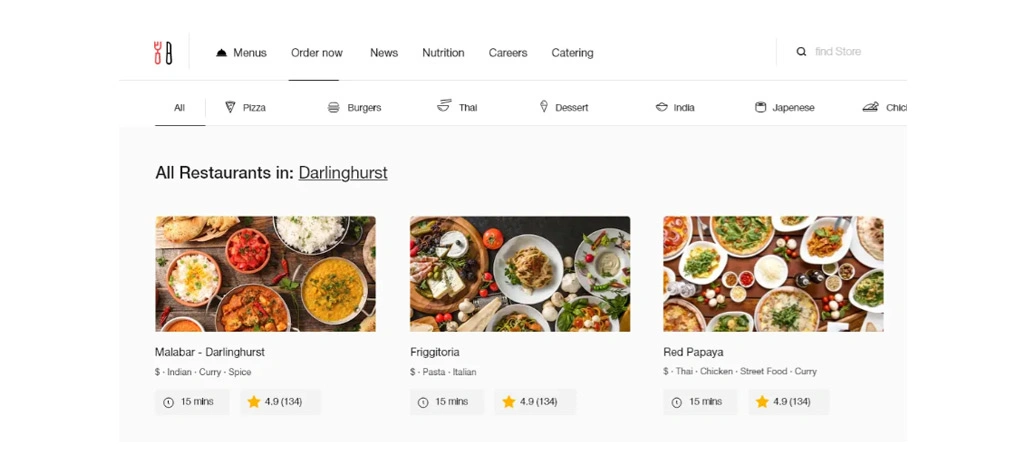
Inventory planning becomes more reliable when restaurants understand how customer demand changes across days, meal periods, locations, and seasons. Historical order records help teams estimate which ingredients, menu items, and packaging materials will be needed before demand increases.
Restaurants can review previous order volumes, cuisine preferences, item-level sales, discounts, cancellation reasons, and delivery zones to identify recurring demand signals. In the middle of this process, Food Data Scraping API supports structured collection of public restaurant listings, menu details, availability updates, pricing information, and promotional data from selected platforms.
Historical analysis may reveal that family meal bundles perform strongly on weekends, while quick lunch combinations generate higher demand near office locations. Similarly, ethical data collection practices matter when using marketplace information, and TikTok Shop Web Scraping Compliance reflects the importance of responsible, policy-aware data usage across digital platforms.
| Historical Data Point | Planning Insight | Operational Benefit |
|---|---|---|
| Daily order volume | Identifies high-demand periods | Supports accurate purchasing |
| Menu item performance | Highlights popular dishes | Improves ingredient preparation |
| Seasonal demand trends | Tracks recurring demand shifts | Reduces inventory shortages |
| Promotion response | Measures offer-driven orders | Controls stock allocation |
| Cancellation reasons | Identifies unavailable products | Improves menu availability |
A consistent historical view helps food delivery businesses maintain better inventory balance, improve menu readiness, and reduce operational disruptions across changing demand conditions. Teams can then plan supplier orders, ingredient preparation, and kitchen workflows around expected demand rather than relying on assumptions.
Data-Led Staffing Improves Kitchen Capacity During Rush Hours
Staffing and kitchen capacity planning become more effective when restaurants can predict order volumes before busy periods begin. Sudden demand spikes often create preparation delays, delivery backlogs, customer complaints, and pressure on kitchen staff.
Restaurants can study past orders by hour, day, location, cuisine category, weather condition, and promotional period. In the middle of operational planning, Food Delivery Business Intelligence combines order history with delivery performance, customer feedback, cancellation patterns, and location-level demand to create a clearer view of service capacity.
For example, weekday lunch orders may rise around commercial areas, while weekend dinner demand can increase near residential neighborhoods. Before collecting any platform data, businesses should understand usage rules, as Is TikTok Shop Scraping Legal? highlights the importance of lawful data access and responsible information handling.
| Operational Area | Historical Insight | Expected Outcome |
|---|---|---|
| Kitchen staffing | Predicts rush-hour demand | Reduces preparation delays |
| Delivery allocation | Estimates zone-level orders | Improves rider availability |
| Packaging operations | Tracks dispatch peaks | Speeds up order processing |
| Customer support | Identifies issue-heavy periods | Improves response readiness |
| Menu preparation | Measures item demand | Supports batch cooking |
Using historical demand patterns allows restaurants to improve labor planning, maintain kitchen efficiency, and deliver more consistent experiences during busy food delivery periods. Historical analysis enables managers to schedule staff more efficiently and reduce overtime expenses.
Promotion Insights Improve Pricing and Fulfillment Performance Consistently
Promotions, menu pricing, and delivery charges can strongly influence customer ordering behavior. Historical demand records help businesses measure how earlier campaigns influenced order volume, basket value, delivery times, cancellations, and repeat purchases.
Teams can evaluate previous promotions by comparing performance across weekdays, weekends, meal periods, restaurant locations, and customer segments. In the middle of this analysis, Web Scraping Food Delivery Data helps collect public information such as menu listings, item prices, delivery fees, offers, ratings, and availability changes across relevant platforms.
A restaurant may find that meal bundles perform well during weekend evenings, while percentage-based discounts attract more weekday lunch orders. Data collection should also follow platform policies and legal requirements, and How to Scrape TikTok Shop Product Data Legally reinforces the value of responsible collection methods when using publicly available marketplace information.
| Forecasting Factor | Business Question | Planning Action |
|---|---|---|
| Promotion history | Which offers increase profitable orders? | Refine campaign timing |
| Delivery duration | When do delays increase? | Add delivery capacity |
| Basket value trends | Which periods create larger orders? | Promote meal bundles |
| Menu availability | Which items go unavailable often? | Improve stock planning |
| Reorder patterns | Which offers support retention? | Build targeted campaigns |
Historical forecasting supports better pricing decisions, smoother fulfillment processes, stronger promotional planning, and improved customer experiences across competitive food delivery markets. Such findings help businesses avoid running broad campaigns that increase order volume without supporting profit margins.
How Retail Scrape Can Help You?
Restaurants and delivery-focused businesses need dependable data pipelines to make faster planning decisions across menus, inventory, pricing, and operations. With Food Delivery Demand Forecasting Using Historical Data integrated into business workflows, teams can identify order trends, prepare for demand changes, and improve service consistency across locations.
Our approach includes:
- Capture restaurant and menu-level information from selected platforms
- Track item availability across delivery locations and time periods
- Monitor pricing, discounts, delivery fees, and promotional changes
- Analyze customer ratings, reviews, and restaurant visibility signals
- Build scheduled datasets for recurring operational reporting
- Deliver structured files through APIs, cloud storage, or databases
Our data solutions can support inventory planning, menu optimization, delivery coverage analysis, and performance tracking. Competitor Analysis becomes more effective when teams can compare restaurant offerings, promotions, menu pricing, delivery charges, and availability patterns across relevant markets.
Conclusion
Restaurants that rely on historical order behavior can plan resources more accurately and reduce operational uncertainty. By applying Food Delivery Demand Forecasting Using Historical Data, businesses can improve inventory readiness, staffing allocation, promotion planning, and order fulfillment performance across busy delivery periods.
Responsible data practices remain important when collecting market information, much like TikTok Shop Pricing Data Collection for Competitive Intelligence requires careful attention to lawful and transparent methods. Contact Retail Scrape today to build customized food delivery data solutions that support smarter order planning and sustainable growth.
Effortlessly managing intricacies with customized strategies.
Mitigating risks, navigating regulations, and cultivating trust.
Leveraging expertise from our internationally acclaimed team of developers
Reliable guidance and assistance for your business's advancement