
How Can Ecommerce Brand Growth Tracking Across Multiple Platforms Reveal 30% Growth Opportunities?

Introduction
Modern ecommerce brands operate across marketplaces, direct-to-consumer stores, mobile applications, and social commerce channels. Tracking performance across these environments helps businesses identify growth patterns, understand customer behavior, and improve campaign efficiency through measurable data collection and evaluation.
Brands that compare product visibility, pricing, customer engagement, and inventory movement across platforms often recognize opportunities that remain hidden in isolated reports. Strategic analysis supported by E-Commerce Data Intelligence creates a stronger foundation for market expansion, category management, and long-term decision-making.
Research suggests that companies using Ecommerce Brand Growth Tracking Across Multiple Platforms can identify performance gaps, improve product positioning, and refine merchandising strategies. A unified view of marketplace activity enables organizations to react faster, allocate resources effectively, and build sustainable growth models.
Catalyst-Driven Frameworks for Expanding Cross-Channel Brand Visibility Performance
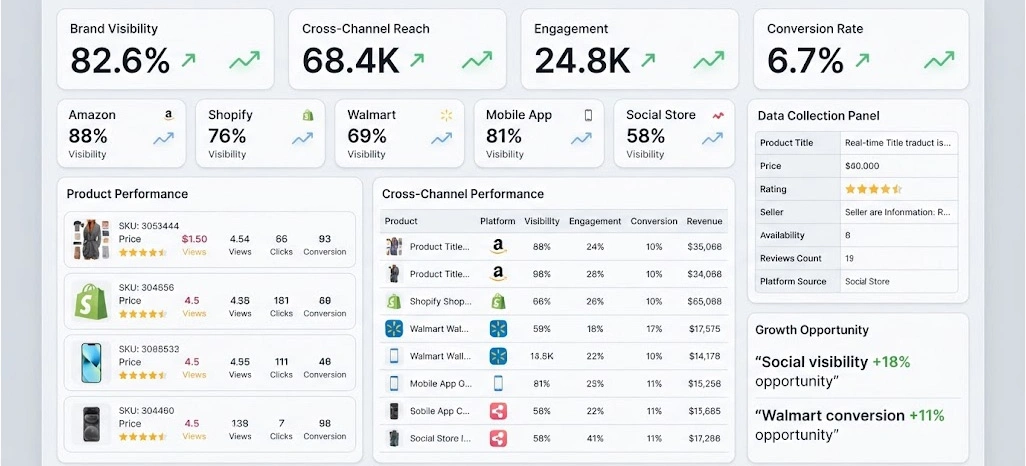
Modern commerce environments require brands to monitor multiple digital touchpoints simultaneously. Consumers frequently move between marketplaces, branded websites, mobile applications, and social storefronts before making purchasing decisions. This behavior creates a need for structured measurement systems that compare visibility, engagement, and conversion patterns across every channel. Businesses that establish standardized tracking methods often recognize performance gaps earlier and respond with more precise strategies.
Organizations implementing Ecommerce Brand Growth Tracking can build stronger reporting frameworks by aligning product performance with customer interactions across several selling channels. Integrating E-Commerce Platforms Data Scraping into analytical workflows simplifies the process of collecting marketplace information from diverse sources. A unified data structure also minimizes reporting inconsistencies and improves comparison accuracy between different platforms.
- Better product placement evaluation
- Faster identification of performance gaps
- Stronger customer engagement analysis
- More accurate campaign comparisons
- Improved marketplace benchmarking
- Consistent reporting methodologies
Another important element involves market-level evaluation. Companies relying on Ecommerce Marketplace Analytics Scraping can identify variations in product exposure, category rankings, and customer activity without depending on fragmented reports. These insights help decision-makers prioritize resources and optimize campaign investments more effectively.
| Performance Area | Business Impact |
|---|---|
| Product Exposure | Better visibility |
| Customer Activity | Stronger engagement |
| Conversion Analysis | Improved decisions |
| Ranking Assessment | Greater competitiveness |
Industry Statistics:
- Brands using integrated measurement systems often report operational improvements approaching 30%.
- Cross-platform reporting reduces analytical delays and strengthens strategic planning.
Momentum-Focused Approaches for Transforming Product Intelligence Into Growth
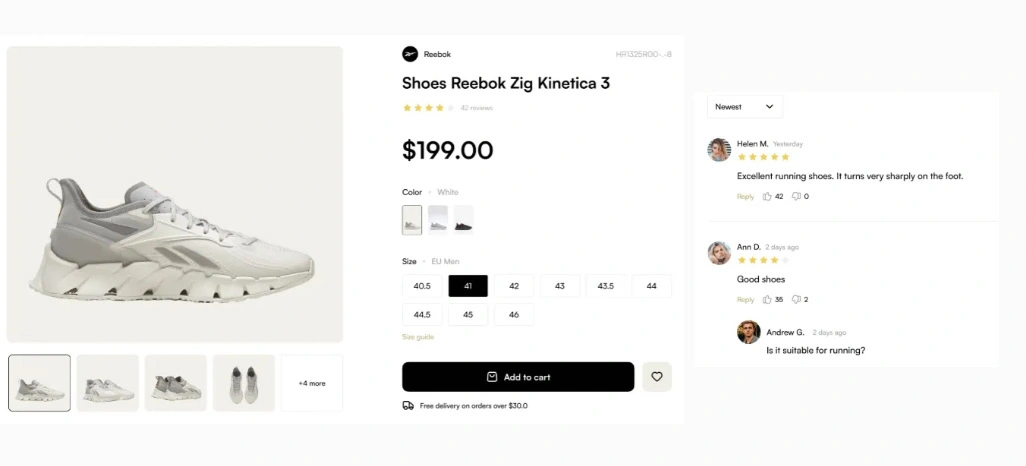
Product information serves as the foundation of every successful ecommerce strategy. Accurate records allow organizations to compare inventory, evaluate consumer demand, and identify category expansion opportunities. When product data remains disconnected across platforms, reporting becomes inefficient and limits strategic planning. Centralized information management creates a clearer understanding of market behavior.
Businesses increasingly depend on E-Commerce Datasets to consolidate information from multiple channels into a single analytical environment. This approach improves forecasting accuracy while supporting more effective product management. Structured datasets also simplify inventory comparisons and strengthen operational consistency.
- Improved catalog standardization
- Faster inventory synchronization
- Better forecasting capabilities
- Enhanced data consistency
- Stronger product comparisons
- Simplified reporting processes
Modern product intelligence frameworks frequently combine Ecommerce Product Catalog API Dataset, Ecommerce Product Database API, and Ecommerce Product Metadata API Dataset to maintain synchronized records across multiple systems. These resources help organizations standardize product attributes, compare catalog variations, and evaluate performance with greater precision.
| Data Category | Analytical Purpose |
|---|---|
| Catalog Records | Product organization |
| Attribute Data | Item classification |
| Database Information | Centralized management |
| Market Data | Trend evaluation |
Industry Statistics:
- Companies using centralized product systems often shorten reporting cycles.
- Standardized data environments contribute to more accurate forecasting and inventory planning.
Breakthrough-Oriented Strategies for Revealing Competitive Revenue Expansion Signals
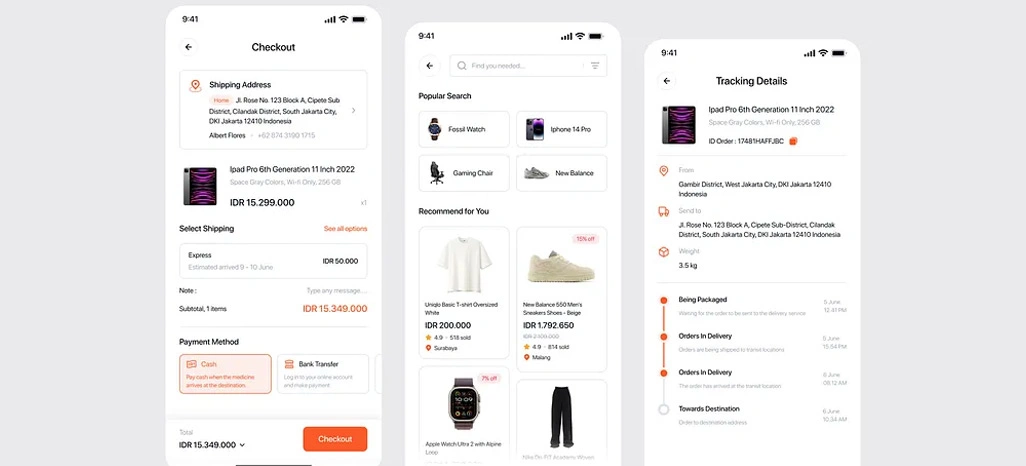
Competitive analysis has become a critical component of ecommerce growth strategies. Price fluctuations, promotional campaigns, customer preferences, and product positioning influence purchasing decisions across every marketplace. Organizations that continuously evaluate competitor activity are better equipped to adjust strategies before market changes affect performance.
Advanced analytical ecosystems frequently integrate Ecommerce Product Research Dataset API, Ecommerce Product Trend Insights Dataset, and Ecommerce Product Analytics Monitoring Dataset to identify emerging patterns across product categories. Organizations seeking better analytical outcomes often invest time in understanding How to Track Ecommerce Brand Performance to improve strategic execution and strengthen long-term growth initiatives.
- Faster reaction to market changes
- Better promotional evaluations
- Improved pricing strategies
- Stronger category positioning
- Enhanced trend identification
- More efficient resource allocation
Many businesses incorporate Ecommerce Pricing Intelligence Competitor Analysis into their analytical processes to compare pricing structures and monitor promotional activities. This practice supports more informed decision-making while improving responsiveness to market trends. Competitive monitoring also provides greater visibility into category-specific opportunities.
| Competitive Factor | Business Benefit |
|---|---|
| Pricing Activity | Revenue optimization |
| Promotional Patterns | Campaign evaluation |
| Market Movement | Strategic adjustments |
| Category Changes | Growth identification |
Industry Statistics:
- Organizations using competitor monitoring frequently improve pricing efficiency.
- Continuous market analysis supports stronger positioning across rapidly evolving digital marketplaces.
How Retail Scrape Can Help You?
Retail businesses require technology partners capable of transforming complex marketplace information into meaningful business intelligence. Through customized analytics solutions, we help organizations build scalable tracking systems that align with evolving ecommerce objectives.
Our data specialists support brands implementing Ecommerce Brand Growth Tracking Across Multiple Platforms by integrating product, marketplace, and customer data into centralized analytical environments. This approach improves reporting consistency while supporting faster strategic decisions.
- Reorganized cross-platform performance monitoring
- Automated catalog collection and validation
- Marketplace comparison and benchmarking
- Unified reporting across multiple sales channels
- Category-based trend identification
- Customized dashboards for decision-making
Businesses seeking deeper product analysis can also benefit from Ecommerce Brand Growth Tracking Tools supported by advanced data collection systems and Ecommerce Scraping API integrations that improve data accessibility and reporting flexibility.
Conclusion
Brands aiming to expand their market presence must evaluate performance beyond individual sales channels. A structured analytical framework supported by Ecommerce Brand Growth Tracking Across Multiple Platforms creates greater visibility into customer behavior, product performance, and marketplace positioning.
Long-term growth depends on continuous measurement, accurate reporting, and stronger competitive analysis. Incorporating Ecommerce Market Intelligence into decision-making processes allows businesses to respond to changing market conditions more effectively. Contact Retail Scrape today to build a customized tracking strategy that supports measurable and sustainable ecommerce growth.