
How Does eBay Price Tracking Support Better US Marketplace Intelligence and Pricing Decisions?
Introduction
The US marketplace is highly dynamic, with sellers continuously adjusting prices, promotions, shipping offers, and inventory positions. eBay Price Tracking gives businesses a structured way to observe these movements and understand how competing listings behave. This creates a stronger foundation for practical marketplace intelligence and more informed pricing decisions.
eBay reported 135 million active buyers globally in Q4 2025, while US GMV reached $10.72 billion for the quarter. For sellers operating in such a large environment, eBay Product Price Tracking USA capabilities can help organize recurring pricing observations across products, categories, conditions, and competitors.
Instead of relying on occasional manual checks, businesses can combine eBay Seller Price Monitoring Tools with historical observations to identify pricing patterns, promotional movements, and competitive gaps. eBay's Product Research also provides sellers with historical sales and pricing information, helping businesses evaluate actual market behavior rather than depending solely on listed prices.
Strengthening US Marketplace Visibility Through Competitive Pricing Data
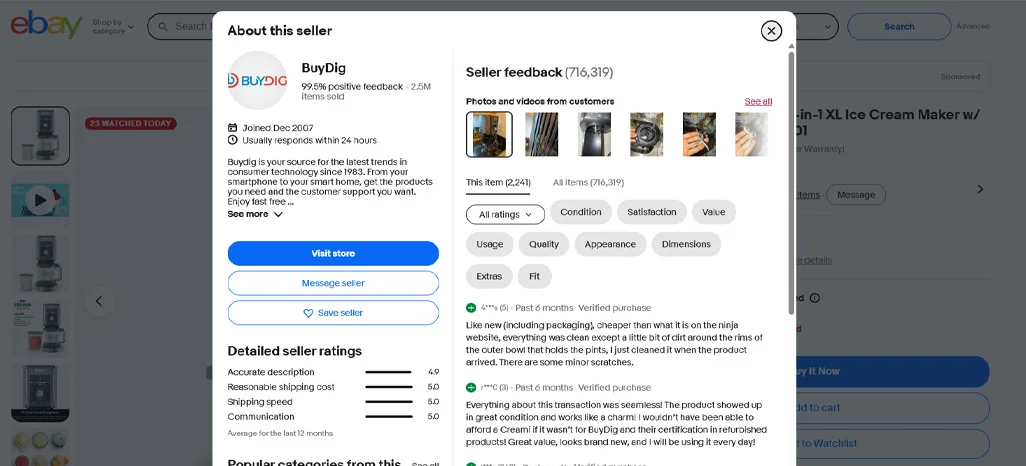
Understanding marketplace pricing requires more than checking the lowest available offer. Sellers need to evaluate price ranges, shipping charges, seller activity, product conditions, and listing differences together. A structured eBay Price Tracker USA workflow can organize these observations across targeted products, helping businesses identify meaningful variations instead of treating every price movement as an isolated event.
For broader competitive research, eBay Price Comparison USA can support comparisons between similar listings and competing offers. This approach allows businesses to assess where their products sit within the marketplace and whether pricing differences are connected to shipping, seller reputation, product condition, or other listing characteristics.
Regular monitoring also helps identify recurring pricing patterns. Sellers can examine whether competitors frequently reduce prices, introduce promotions, or maintain stable positions over longer periods. These observations become particularly useful when businesses are managing multiple product categories and need a consistent process for evaluating market changes without depending entirely on manual research.
Key observations can include:
- Current and previous listing prices
- Seller counts across comparable products
- Shipping charges and delivery differences
- Product condition and listing variations
- Recurring pricing movements
- Competitive price gaps
| Market Element | Observation | Analytical Purpose |
|---|---|---|
| Product price | Current offer | Benchmark positioning |
| Shipping | Delivery charge | Compare total value |
| Seller activity | Listing volume | Assess competition |
| Product condition | New or used | Improve comparability |
This structured approach gives sellers a clearer view of marketplace conditions and supports more consistent pricing evaluations.
Converting Competitor Pricing Movements Into Actionable Insights
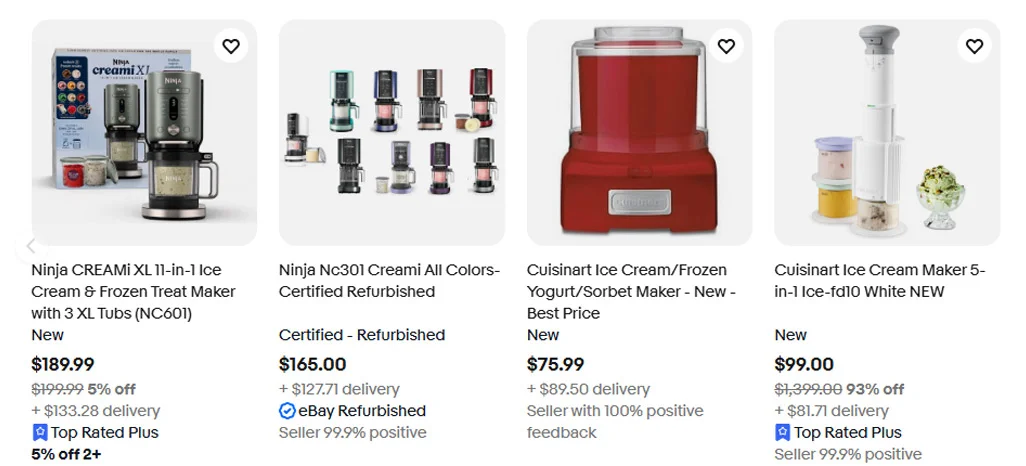
Competitive pricing becomes more useful when businesses monitor changes consistently instead of reviewing listings only when sales decline. eBay Product Price Monitoring USA can support recurring observation of selected products, sellers, and categories, helping businesses identify movements that may influence their own pricing decisions. This creates a stronger foundation for ongoing competitive evaluation.
Historical information adds another layer of context. A single price reduction may represent a short-term promotion, inventory clearance, or a strategic response to competitors. When businesses compare current observations with previous records, eBay Pricing Analysis can help distinguish temporary changes from recurring marketplace patterns that deserve closer attention.
Price movements can also reveal differences between competing sellers. Businesses may identify situations where one seller maintains a premium because of stronger ratings, faster shipping, better product condition, or additional services. These factors help explain why matching the lowest marketplace price is not always the most appropriate strategy for every listing or category.
Useful monitoring activities include:
- Recording price changes over time
- Comparing competing seller positions
- Reviewing promotional price movements
- Evaluating shipping-related differences
- Identifying recurring pricing patterns
- Segmenting products by category
| Pricing Signal | Example Observation | Possible Interpretation |
|---|---|---|
| Median price | Market reference | Establish benchmark |
| Lowest offer | Competitive floor | Review positioning |
| Price change | Weekly movement | Identify trend |
| Seller count | Active listings | Measure pressure |
Combining current observations with historical context enables sellers to make pricing decisions based on broader marketplace behavior rather than isolated listing information.
Developing Scalable Intelligence From Marketplace Data Collection
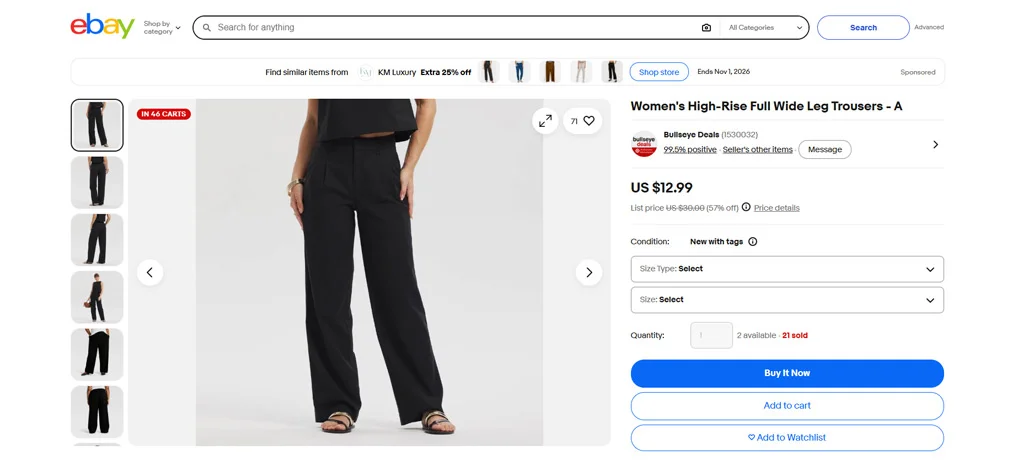
Marketplace intelligence becomes increasingly valuable when pricing information is combined with additional signals. eBay Marketplace Price Intelligence can bring together product prices, availability, shipping details, seller information, and listing attributes, giving businesses a broader view of competitive conditions and supporting more comprehensive marketplace evaluations.
Scalability is another important consideration for businesses managing extensive product catalogs. Manual research can become difficult when hundreds or thousands of listings require recurring observation. An eBay Scraping API can support structured data collection workflows, allowing businesses to organize marketplace information according to selected products, categories, sellers, and monitoring requirements.
Once collected, structured information can support several analytical activities. Businesses can compare current prices with historical records, identify products experiencing unusual movement, evaluate competitive density, and examine availability changes. These datasets can also provide useful inputs for internal dashboards, reports, pricing reviews, and category-level assessments.
Businesses can organize intelligence around:
- Product and listing information
- Current pricing observations
- Seller and competitor details
- Availability changes
- Shipping information
- Historical marketplace records
| Intelligence Category | Collected Information | Business Application |
|---|---|---|
| Pricing | Listed price | Market benchmarking |
| Availability | Stock status | Supply assessment |
| Seller | Seller information | Competition review |
| Shipping | Delivery details | Offer comparison |
A scalable collection framework therefore helps transform fragmented marketplace observations into structured intelligence that supports recurring competitive analysis and more informed pricing strategy development.
How Retail Scrape Can Help You?
For US sellers managing extensive product catalogs, eBay Price Tracking becomes more valuable when marketplace information is collected systematically instead of through occasional manual checks.
We can help businesses organize product, pricing, availability, shipping, seller, and competitor information into structured datasets. Its eBay Scraper Service can support recurring extraction workflows based on specific products, categories, sellers, and marketplace requirements.
Key ways we can support marketplace intelligence include:
- Collect pricing information across targeted product listings.
- Monitor competitor offers at defined intervals.
- Organize product and seller information into structured datasets.
- Track availability and shipping details alongside prices.
- Build historical datasets for trend evaluation.
- Prepare information for reporting and business analysis.
These capabilities can help businesses reduce repetitive research and create a more organized process for reviewing marketplace conditions. Structured datasets can also support category planning, pricing reviews, promotional evaluation, assortment decisions, and competitor assessments across changing marketplace environments.
With eBay Competitor Price Tracking, businesses can compare competitor movements against their own pricing strategies and identify areas requiring attention. We can tailor data collection around the fields, products, categories, and frequency required by each business, helping teams work with consistent information for recurring marketplace intelligence activities.
Conclusion
A structured approach to eBay Price Tracking can give US marketplace sellers clearer visibility into price movements, competitor positioning, product availability, shipping differences, and changing market conditions. When these signals are collected consistently, businesses can move beyond isolated price checks and create stronger inputs for pricing reviews, merchandising decisions, and competitive evaluation.
Combining structured data collection with eBay Price Monitoring for Sellers can make recurring marketplace analysis more organized and actionable. We can help transform marketplace observations into usable datasets that support competitor evaluation, pricing assessments, and strategic planning. Connect with Retail Scrape today to build a customized eBay marketplace intelligence and pricing data solution.