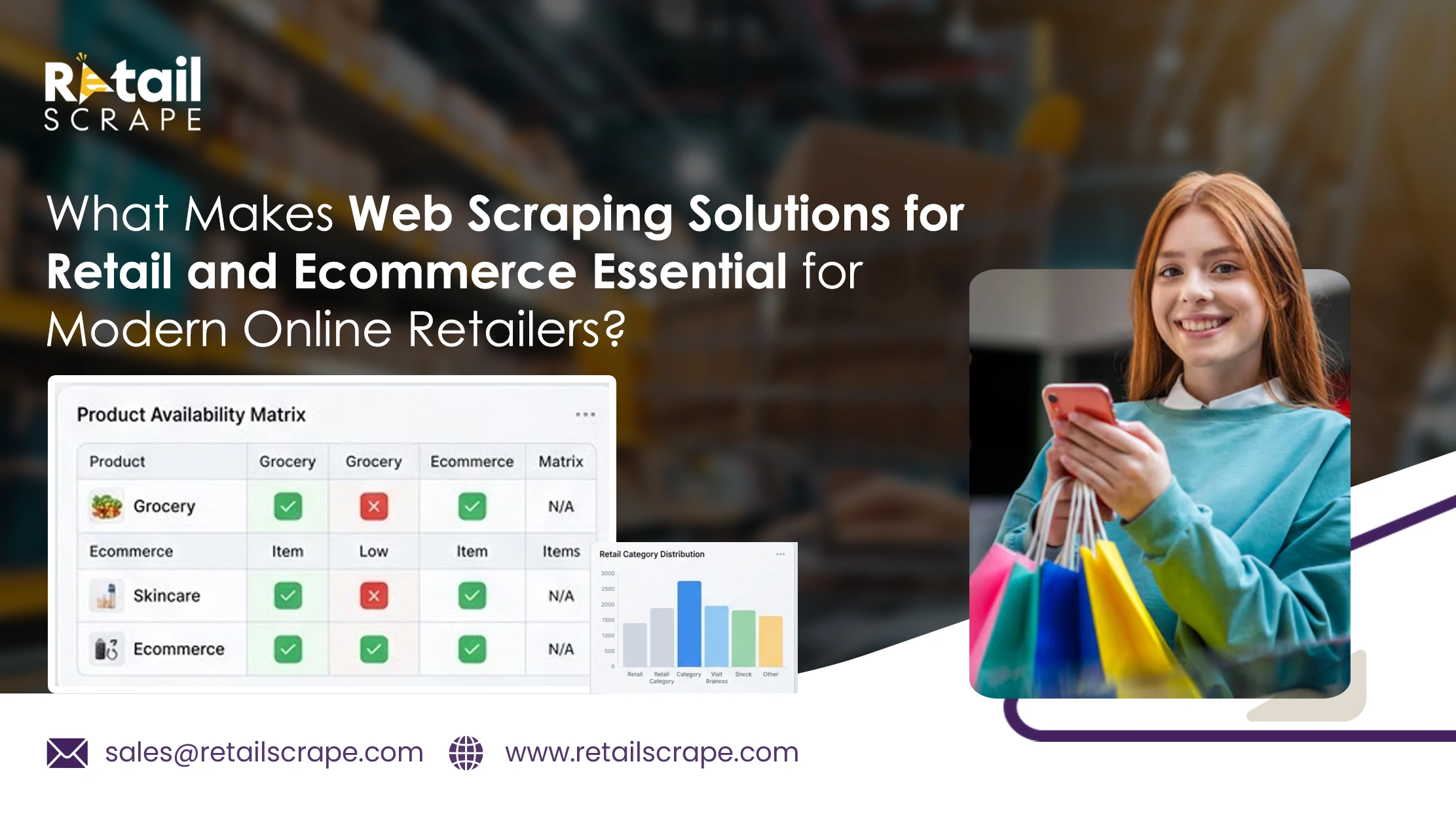
What Makes Web Scraping Solutions for Retail and Ecommerce Essential for Modern Online Retailers?
Introduction
The retail and ecommerce industry has evolved into a highly competitive environment where businesses must continuously monitor pricing trends, inventory fluctuations, customer preferences, and competitor strategies. Traditional methods of collecting market information are often slow, expensive, and incapable of keeping pace with rapidly changing digital marketplaces.
Modern enterprises are increasingly relying on Web Scraping Solutions for Retail and Ecommerce to gather large-scale market intelligence from online stores, marketplaces, brand websites, and competitor platforms. According to industry reports, businesses using data-driven retail strategies can improve pricing accuracy by up to 30% while significantly reducing decision-making delays.
Beyond pricing, data extraction technologies provide visibility into consumer demand patterns, promotional activities, product availability, and market shifts. As competition intensifies across digital channels, organizations that invest in intelligent retail data strategies position themselves to respond faster, improve customer experiences, and build sustainable advantages in dynamic marketplaces.
Creating Better Visibility Across Fast-Changing Digital Markets
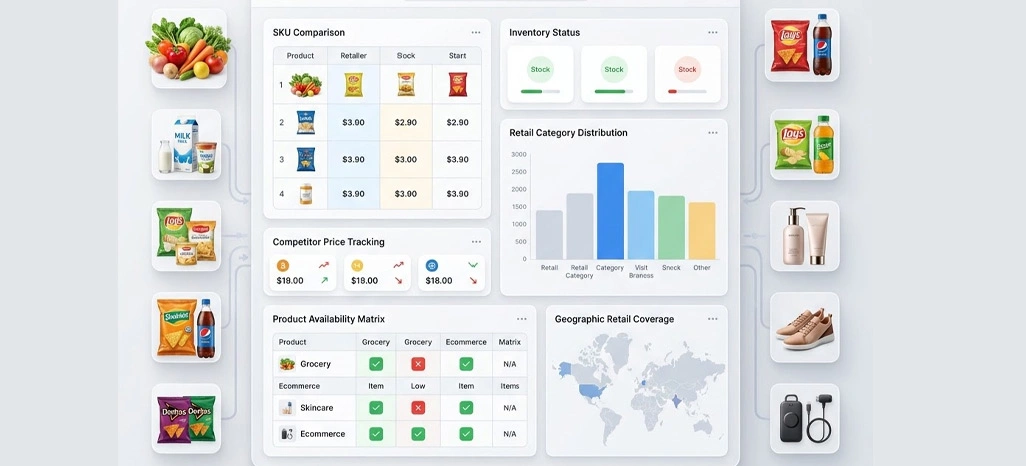
Retail businesses often struggle to maintain visibility across hundreds of online competitors, product categories, and promotional campaigns. Prices can change several times a day, inventory levels fluctuate continuously, and consumer demand patterns shift rapidly. Without a structured approach to gathering marketplace intelligence, organizations may miss revenue opportunities and react too slowly to industry changes.
Research indicates that companies using automated market intelligence systems can improve pricing responsiveness by nearly 25%, helping them adapt more effectively to competitive pressures. To overcome these challenges, many enterprises implement Retail Data Scraping for Pricing Intelligence and Analytics to collect structured information from various online sources.
This enables teams to monitor product trends, evaluate assortment strategies, and identify pricing gaps before they affect profitability. At the same time, Ecommerce Web Scraping Solutions for Market Intelligence provide businesses with continuous access to competitor activities, category movements, and emerging consumer preferences.
| Market Challenge | Strategic Approach | Expected Outcome |
|---|---|---|
| Frequent price changes | Automated tracking systems | Faster pricing decisions |
| Limited competitor visibility | Continuous data collection | Better market awareness |
| Slow reaction to trends | Real-time intelligence access | Improved responsiveness |
| Product assortment uncertainty | Demand pattern analysis | Stronger planning |
| Promotion tracking issues | Campaign monitoring tools | Better marketing execution |
Organizations that invest in structured intelligence gathering are better prepared to respond to market fluctuations. With consistent access to accurate information, retailers can improve planning accuracy, reduce uncertainty, and create stronger strategies that support sustainable growth in increasingly competitive ecommerce environments.
Strengthening Decision-Making Through Automated Competitive Monitoring
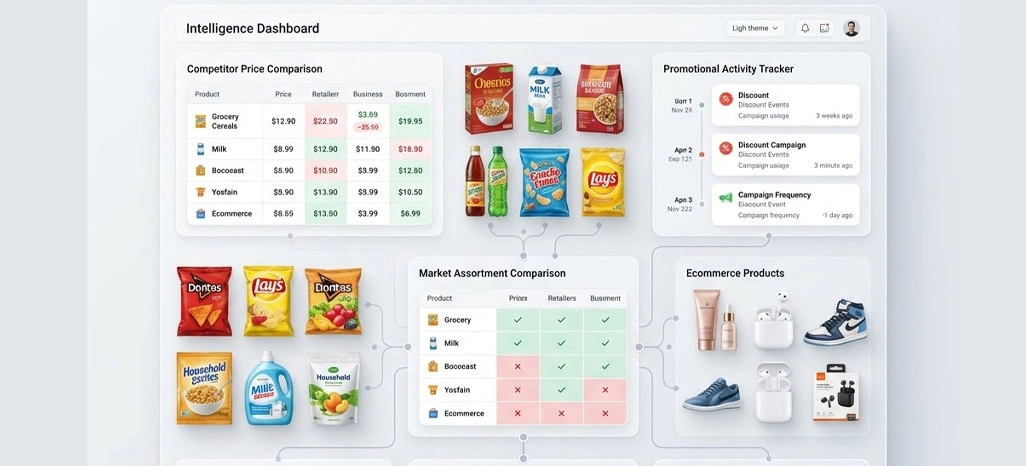
Modern ecommerce markets have become increasingly crowded as businesses compete with regional sellers, marketplaces, direct-to-consumer brands, and international retailers. According to industry findings, retailers that implement automated intelligence frameworks often improve strategic planning efficiency while reducing the time required to analyze competitive activity.
One effective solution is Automated Retail Data Collection for Competitive Analysis, which enables businesses to gather and organize information from multiple digital sources without manual intervention. Automated systems help organizations monitor product launches, promotional campaigns, assortment changes, and pricing updates across numerous competitors.
Businesses also benefit from Retail Competitive Intelligence Through Web Scraping, which supports deeper understanding of competitor strategies and category performance. Rather than relying on assumptions, organizations can use measurable market data to support strategic initiatives and long-term growth objectives.
| Competitive Challenge | Automated Solution | Business Advantage |
|---|---|---|
| Large competitor networks | Continuous monitoring | Better market coverage |
| Rapid promotional activity | Automated campaign tracking | Faster responses |
| Product launch visibility | Structured data collection | Improved planning |
| Competitive benchmarking | Performance comparisons | Stronger positioning |
| Manual research limitations | Centralized intelligence systems | Greater efficiency |
As competition continues to intensify, automated intelligence capabilities become essential for maintaining relevance. Retailers equipped with comprehensive market insights can make informed decisions, improve operational agility, and strengthen their ability to compete successfully across dynamic digital marketplaces.
Building Enterprise-Ready Frameworks For Sustainable Expansion
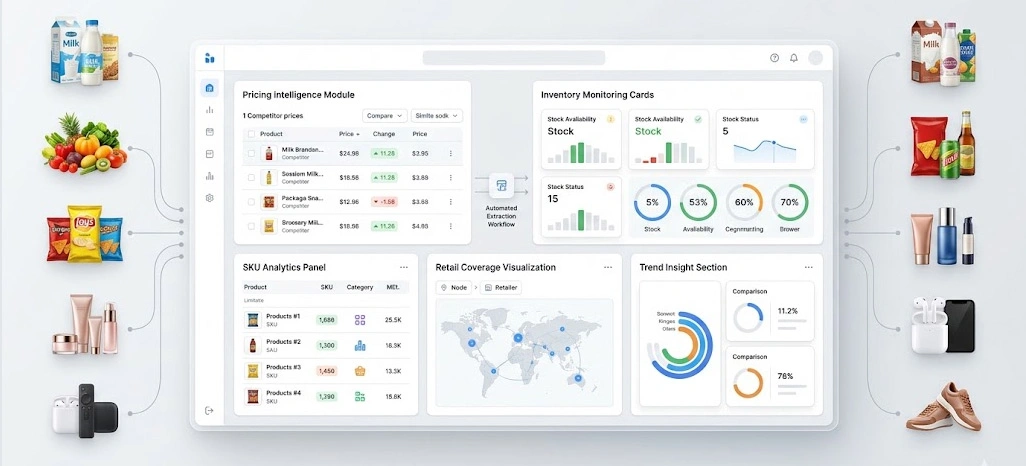
As ecommerce operations expand across multiple regions and channels, managing large volumes of market information becomes increasingly complex. Retailers must monitor inventory availability, pricing changes, assortment updates, and consumer behavior across numerous platforms. Without scalable systems, organizations may struggle to transform fragmented datasets into actionable intelligence.
To address these challenges, many enterprises adopt End-To-End Ecommerce Data Extraction and Analytics Solutions that combine collection, validation, processing, and reporting within a unified workflow. This approach improves data consistency while ensuring stakeholders receive reliable intelligence for strategic planning.
In addition, Scalable Web Scraping Solutions for Retail Businesses enable companies to expand monitoring efforts without significantly increasing operational costs. Businesses can further strengthen planning through Retail Data Extraction for Pricing and Inventory Intelligence, which provides visibility into stock levels, product availability, and assortment changes.
| Enterprise Requirement | Supporting Capability | Operational Benefit |
|---|---|---|
| Multi-channel monitoring | Centralized collection systems | Unified visibility |
| Large-scale operations | Automated workflows | Improved efficiency |
| Inventory management | Availability tracking | Better planning |
| Forecasting improvements | Advanced analytics | Accurate predictions |
| Regional expansion | Scalable infrastructure | Sustainable growth |
Organizations that establish scalable intelligence ecosystems create a stronger foundation for future expansion. By integrating automation, analytics, and centralized reporting, retailers can convert large datasets into meaningful business value while maintaining efficiency in increasingly complex digital commerce environments.
How Retail Scrape Can Help You?
Businesses seeking stronger visibility across competitors, products, and customer trends can benefit significantly from Web Scraping Solutions for Retail and Ecommerce. By automating data collection and transforming raw information into actionable intelligence, organizations can improve decision-making speed and operational efficiency.
Retail Scrape helps businesses by providing:
- Continuous competitor monitoring across marketplaces
- Automated product catalog tracking and updates
- Inventory visibility across multiple retail channels
- Promotional campaign monitoring and benchmarking
- Consumer demand trend identification
- Custom reporting for strategic decision-making
Companies can also strengthen performance through Price Monitoring, while benefiting from Real-Time Retail Analytics Using Scraped Data to support faster responses to changing market conditions and evolving customer expectations.
Conclusion
Retail success increasingly depends on the ability to collect, analyze, and act upon large volumes of market data. Businesses adopting Web Scraping Solutions for Retail and Ecommerce can improve visibility into pricing, inventory, competitor activities, and consumer trends, creating a stronger foundation for informed decision-making and sustainable growth.
Organizations that prioritize intelligent data strategies can achieve better operational efficiency and stronger market positioning through Retail Competitive Intelligence Through Web Scraping. Contact Retail Scrape today to build a customized retail intelligence solution that supports smarter decisions, faster growth, and measurable business outcomes.
Effortlessly managing intricacies with customized strategies.
Mitigating risks, navigating regulations, and cultivating trust.
Leveraging expertise from our internationally acclaimed team of developers
Reliable guidance and assistance for your business's advancement