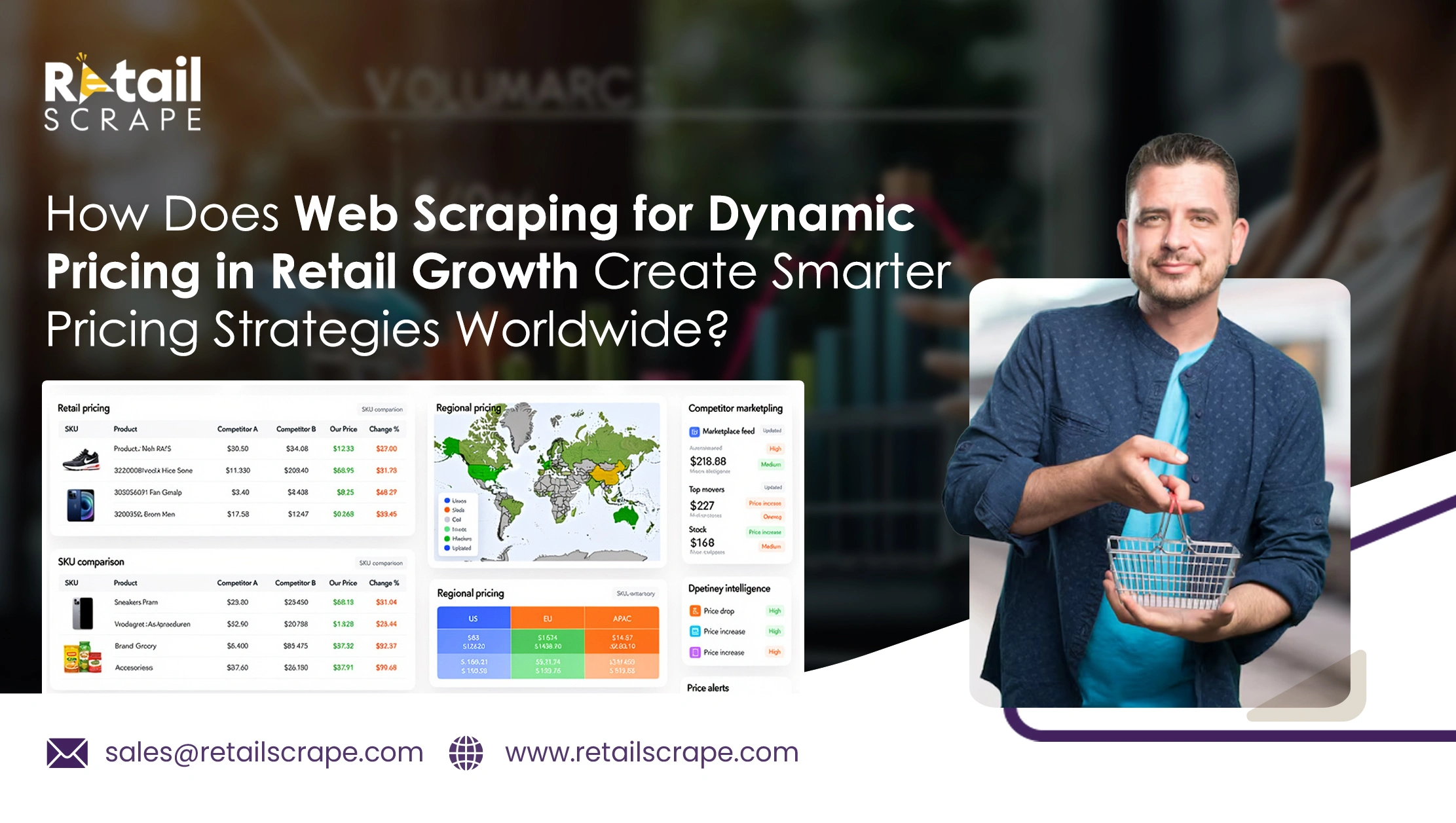
How Does Web Scraping for Dynamic Pricing in Retail Growth Create Smarter Pricing Strategies Worldwide?
Introduction
Retail pricing changes every hour across marketplaces, websites, and regional sellers. Brands that still depend on manual price checks often miss critical shifts that affect conversion and margins. With Real-Time Pricing Intelligence Scraping for Retailers, businesses can collect updated pricing data across competitors, product categories, and regions to build more accurate decisions. This approach supports faster response to promotions, discounts, and stock-based price changes.
Retail leaders increasingly rely on Web Scraping for Dynamic Pricing in Retail Growth to monitor competitors and adjust their selling prices based on live market behavior. It helps brands understand customer expectations while maintaining profitability during peak sales cycles. Price fluctuations across online stores create challenges, especially when competitors revise pricing multiple times in a single day. Automated scraping solves this by collecting structured data for analysis.
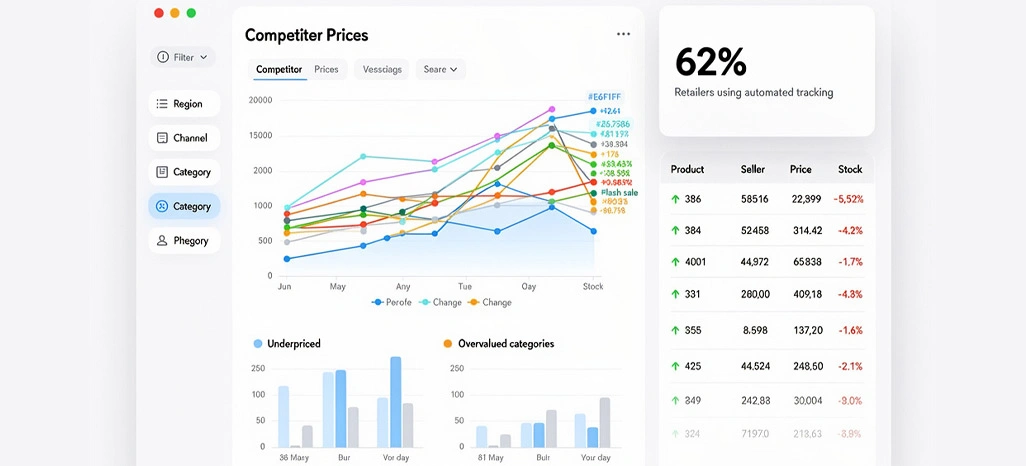
According to Statista, over 62% of online retailers worldwide use automated pricing intelligence tools to improve competitive decisions. This shift shows how pricing automation supports revenue planning. Retailers that adapt to automated intelligence often create stronger customer retention because their pricing remains competitive without sacrificing operational control.
Creating Smarter Retail Decisions Through Market Analysis
Retail brands often struggle to react quickly when competitor prices change multiple times in one day. Static pricing models cannot respond to promotional discounts, flash sales, or regional campaigns, creating a gap between market demand and internal pricing plans. To solve this, companies now rely on automated intelligence systems that collect competitor price changes in real time and convert them into decision-ready insights.
Businesses increasingly use Web Scraping for Dynamic Pricing Optimization in Retail to collect structured pricing data from competitor websites, marketplaces, and regional platforms. This approach improves market visibility and creates stronger decision support for pricing teams. It allows retailers to compare multiple sellers at once, helping them identify underpriced categories or overvalued products before revenue loss occurs.
According to Statista, more than 62% of digital retailers now depend on automated market tracking systems to improve pricing accuracy and competitive response. Retail teams also implement Dynamic Pricing Strategy to adjust product values according to changing market conditions. This creates stronger price consistency during peak sales periods.
| Retail Pricing Issue | Data Solution | Business Outcome |
|---|---|---|
| Flash sales | Live market tracking | Faster updates |
| Discount campaigns | Competitor comparison | Better pricing |
| Regional offers | Geo-based collection | Market alignment |
| Product changes | Automated monitoring | Revenue protection |
Advanced systems integrate Competitor Price Tracking Software with dashboards that identify competitor movements instantly. By using structured pricing intelligence, businesses create faster decisions, reduce missed opportunities, and improve profitability. Automated analysis ensures that pricing strategies remain aligned with changing consumer expectations and external market competition.
Improving Pricing Accuracy Across Competitive Markets
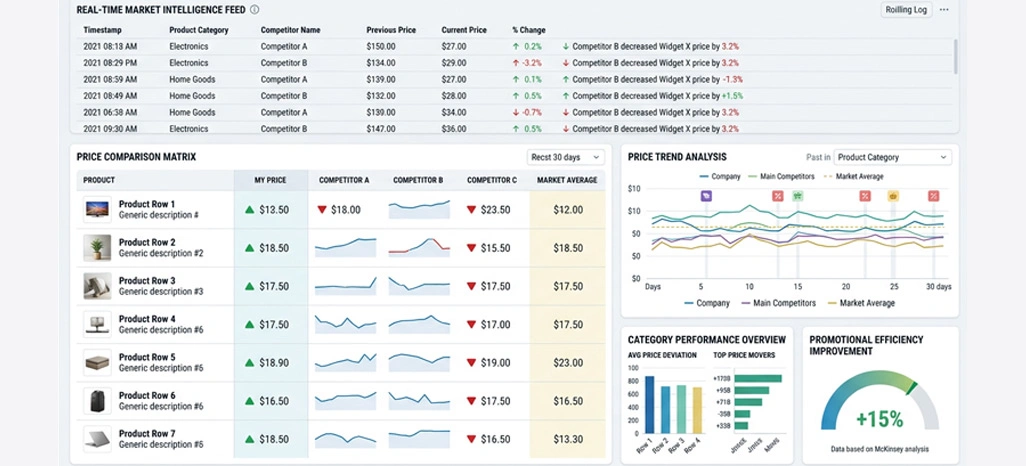
Retail markets generate thousands of price changes every day across marketplaces, eCommerce stores, and direct sellers. Without automated systems, companies often fail to capture competitor actions at the right time. This creates missed pricing opportunities and weak campaign performance. Businesses now use advanced data collection to compare competitor prices and adjust offers based on live market conditions.
Organizations implement Retail Price Monitoring Using Web Scraping Tools to monitor price movements across categories and brands. McKinsey reports show retailers using automated market intelligence improve promotional efficiency by approximately 15%. This highlights the value of real-time competitor tracking for sales optimization.
Retailers often use tools to Scrape Competitor Pricing Data for Retail Optimization to create structured databases that support pricing analysis. By collecting data continuously, brands gain stronger visibility into competitor tactics and category-level performance. This supports more accurate pricing adjustments and reduces margin loss.
| Market Source | Data Collected | Retail Benefit |
|---|---|---|
| Competitor stores | Product prices | Competitive comparison |
| Marketplaces | Discount updates | Promotion planning |
| Regional portals | Local offers | Price consistency |
| Historical records | Trend analysis | Better forecasting |
Companies also apply Dynamic Pricing Strategy Using Scraped Data Retail to evaluate stock levels, customer demand, and market changes together. As businesses collect more competitor insights, they improve internal pricing models and campaign planning. Automated market intelligence helps reduce delays and supports better decision-making during high-demand retail periods.
Scaling Retail Operations With Intelligent Automation Systems
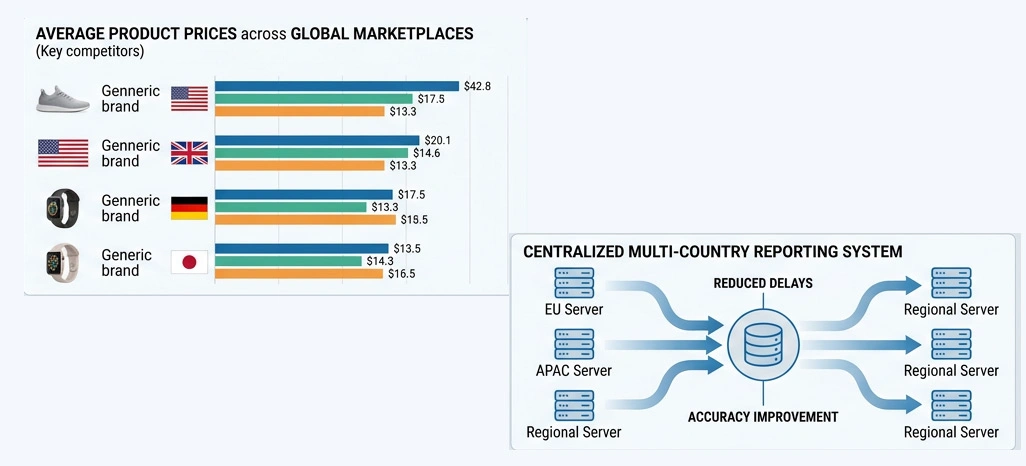
Global retailers face challenges from regional discounts, currency fluctuations, and local competitor campaigns. These variables create pricing inconsistencies that impact customer trust and revenue performance. Automated pricing systems help solve these issues by collecting competitor pricing data across international markets and converting it into strategic reports.
Businesses now Automate Price Comparison Using Web Scraping API to gather structured data from global sellers and marketplaces. This makes it easier to compare prices across locations and align offers according to regional demand. Recent global retail studies show businesses using automated pricing systems achieve nearly 21% higher campaign efficiency.
Another essential capability is AI-Based Dynamic Pricing Using Scraped Datasets, which combines competitor intelligence with machine learning. These systems identify trends, predict market changes, and support better campaign timing. This demonstrates how real-time data improves international pricing consistency.
| International Challenge | Automation Support | Result |
|---|---|---|
| Regional campaigns | Data collection | Better planning |
| Currency shifts | Live comparison | Stable pricing |
| Local competition | Market visibility | Stronger entry |
| Sales events | Automated alerts | Quick action |
Retail brands also use Competitor Price Monitoring Services for Retail Brands to track competitor expansion into new regions. Automation reduces manual workload and creates a centralized pricing process. Retail teams can manage multiple countries through one reporting system, improving accuracy and reducing delays. With structured intelligence, businesses create stronger global pricing strategies that support sustainable growth.
How Retail Scrape Can Help You?
Retail pricing decisions often fail because market data becomes outdated quickly. Businesses using Web Scraping for Dynamic Pricing in Retail Growth can improve pricing visibility and make timely adjustments based on live market trends.
We support businesses by delivering structured competitor intelligence for better planning:
- Collect pricing data from multiple competitor websites
- Track category-level price changes automatically
- Compare regional offers across markets
- Support pricing dashboards with live updates
- Improve promotional timing decisions
- Reduce manual monitoring errors
These services help retailers improve price consistency, protect margins, and identify competitor patterns for better business planning. Many brands also adopt Web Scraping API to connect data collection with internal pricing systems.
With customized dashboards and automated collection, businesses improve visibility into market changes. Retail teams also benefit from Competitor Price Monitoring Services for Retail Brands to strengthen strategic decision-making.
Conclusion
Retail success depends on fast pricing decisions built on real-time data. Businesses using Web Scraping for Dynamic Pricing in Retail Growth improve competitive positioning while reducing pricing delays across channels.
Market intelligence becomes stronger when supported by AI-Based Dynamic Pricing Using Scraped Datasets, helping retailers create predictive pricing systems. Contact Retail Scrape today to transform your retail pricing strategy with accurate market intelligence.