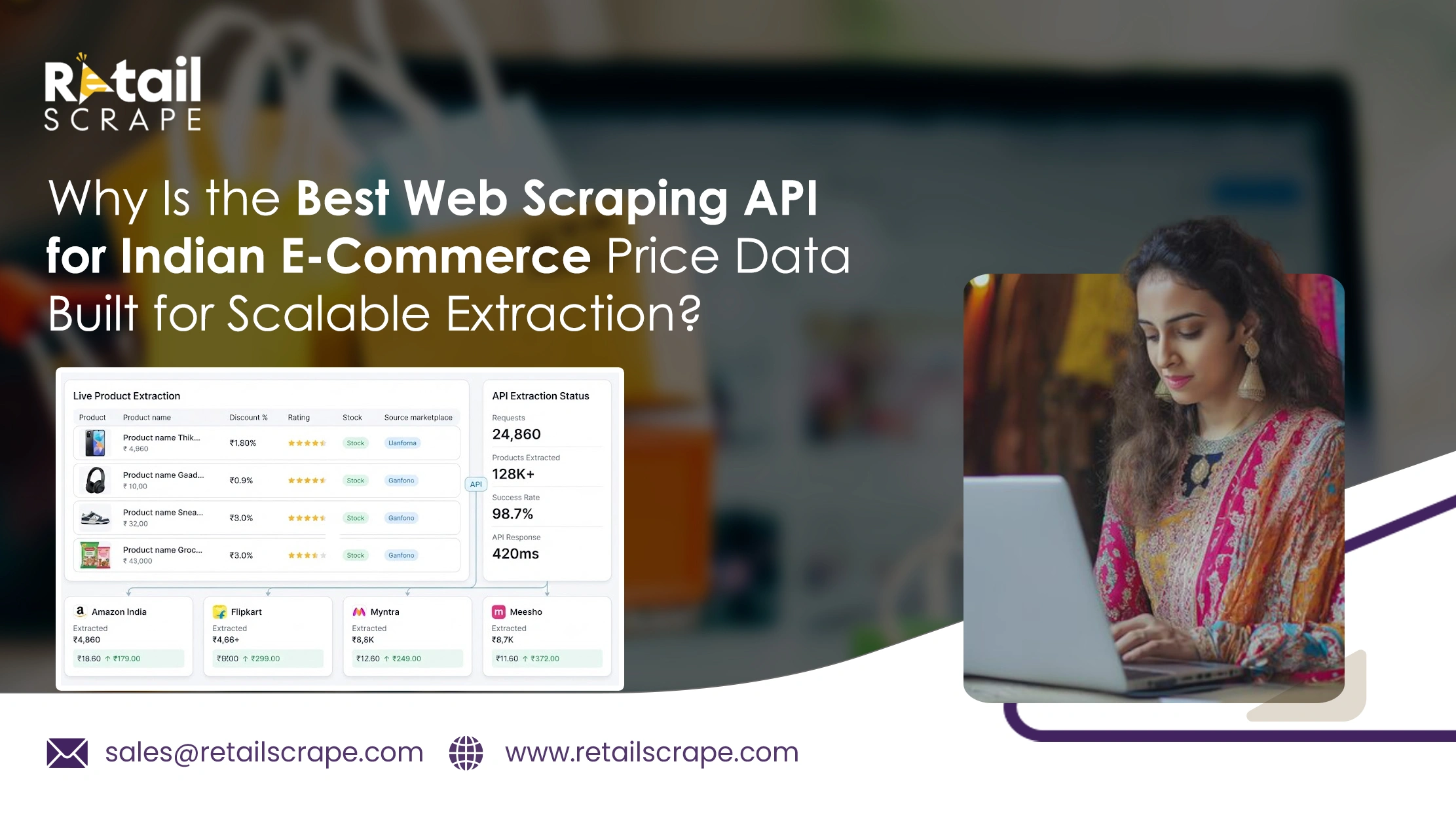
Why Is the Best Web Scraping API for Indian E-Commerce Price Data Built for Scalable Extraction?
Introduction
Indian online retail is expanding quickly, making dependable price intelligence essential for brands, marketplaces, and analysts. E-Commerce Data Scraping helps teams collect structured information across changing catalogs, locations, sellers, and promotions. A scalable architecture keeps collection consistent while reducing manual checks and supporting timely commercial decisions.
The Best Web Scraping API for Indian E-Commerce Price Data is designed around scale, reliability, and structured output rather than one-time extraction. It can organize product names, prices, discounts, ratings, availability, and seller details into usable datasets. This approach helps businesses compare market movements without building complex scraping infrastructure from scratch.
With automated collection, validation, and delivery, teams can convert constantly changing storefront information into practical intelligence. The right API can support scheduled monitoring, regional comparisons, assortment analysis, and pricing workflows while maintaining consistent data formats. This makes large-scale ecommerce intelligence easier to integrate into dashboards, analytics systems, and business processes.
Building Scalable Collection Systems for Indian E-Commerce
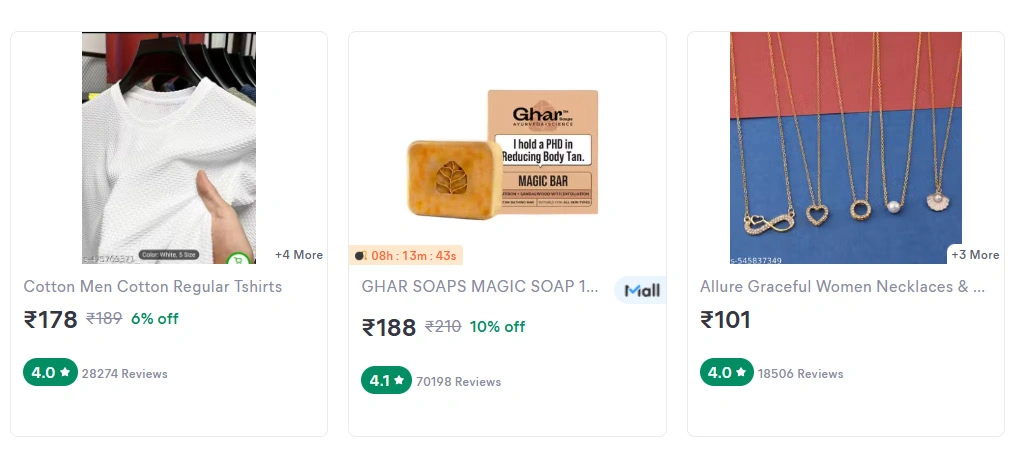
Indian ecommerce platforms continuously introduce new products, modify prices, update discounts, and change availability. Handling these fluctuations requires an architecture that can process large volumes without sacrificing consistency. A well-planned collection framework can distribute requests, manage recurring schedules, and organize outputs across categories, sellers, and locations. This creates a dependable foundation for businesses that require regular market intelligence instead of occasional snapshots.
A Web Scraping API for Indian Ecommerce can simplify high-volume collection by providing reusable extraction workflows for different marketplace structures. Instead of developing separate processes repeatedly, teams can establish standardized fields and collection schedules. The approach is particularly useful when organizations need to monitor thousands of product records across several categories while maintaining comparable information for analysis and reporting.
| Metric | Illustrative Result |
|---|---|
| Product records processed | 100,000+ |
| Price fields captured | 10+ |
| Monitoring frequency | Hourly |
| Output formats | JSON, CSV |
For competitive research, the Ecommerce Price Monitoring API approach can support recurring checks of pricing, promotions, and product availability. Automated validation can identify incomplete records, while retry mechanisms can help address temporary collection interruptions. These capabilities make recurring monitoring more dependable and reduce the amount of manual intervention required during large-scale operations.
Businesses can also improve downstream analysis when Web Scraping Ecommerce Product Data is delivered through consistent schemas. Standardized fields make it easier to connect collected information with dashboards, databases, business intelligence platforms, and internal applications. This structured approach supports historical comparisons and helps teams evaluate marketplace changes without repeatedly transforming raw information before analysis.
- Distributed request processing for larger workloads
- Scheduled collection across selected product categories
- Automated validation for incomplete records
- Consistent output structures for analytics
Structuring Product Intelligence for Better Commercial Decisions

Product information becomes more valuable when every record follows a predictable structure. Businesses often need more than product names and prices; they may also require seller details, ratings, specifications, promotional information, and availability. Organizing these fields consistently allows analysts to compare products across marketplaces and identify meaningful changes. Structured collection therefore creates a stronger foundation for commercial reporting and competitive research.
An Ecommerce Product Data Scraping API India workflow can organize important catalog attributes into standardized records suitable for recurring analysis. Product-level information can be mapped into predefined fields, making comparisons easier across categories and sellers. This reduces the need for repeated manual restructuring and supports consistent data preparation when collection volumes increase or monitoring requirements become more detailed.
| Data Element | Business Application |
|---|---|
| Product price | Competitive comparison |
| Discount | Promotion analysis |
| Availability | Stock monitoring |
| Seller | Marketplace analysis |
| Rating | Product benchmarking |
The Best API for Ecommerce Price Scraping can also simplify integration by delivering organized information through reusable collection processes. When product and commercial fields are consistently captured, businesses can create comparison dashboards, evaluate promotional activity, and analyze assortment changes more efficiently. Standardization is especially valuable for teams working with multiple marketplaces that present similar information in different formats.
An Ecommerce Data Extraction API India workflow can connect collected records with databases, analytical applications, and reporting systems. Historical datasets can then be compared to identify recurring pricing patterns, product movements, and category-level changes. This creates a practical information pipeline where extracted marketplace records become usable inputs for pricing teams, researchers, retailers, and strategic decision-makers.
- Standardized product and seller attributes
- Consistent field mapping across marketplaces
- Historical records for trend comparison
- Integration-ready data for analytics platforms
Strengthening Pricing Intelligence Through Frequent Data Updates
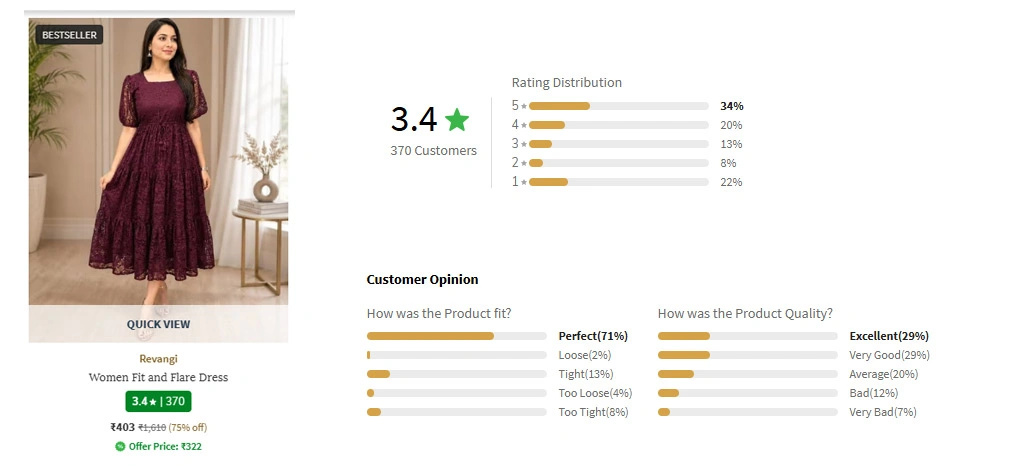
Ecommerce prices can change several times during a business day because of promotions, competitor movements, inventory conditions, and seller activity. Relying on infrequent collection can therefore leave analytical teams working with outdated information. Frequent extraction provides a clearer view of current marketplace conditions and helps businesses identify meaningful changes before they become difficult to evaluate or act upon.
An Ecommerce Pricing Data API India workflow can capture updated commercial information according to predefined schedules and monitoring requirements. Businesses can use recurring extraction to observe price fluctuations, promotional campaigns, stock conditions, and seller changes. This creates a structured stream of information that can support pricing analysis while reducing dependence on manually checking individual marketplace pages.
| Intelligence Area | Potential Frequency |
|---|---|
| Price monitoring | Hourly |
| Availability checks | 30–60 minutes |
| Promotion tracking | Daily |
| Catalog validation | Daily |
A Real Time Indian Ecommerce Product Data API can provide frequently refreshed product and pricing information for teams that require current market signals. Faster updates are useful for competitive benchmarking, promotion analysis, and availability tracking because marketplace conditions can change rapidly. Regular collection also creates stronger historical datasets that can reveal recurring patterns across products and categories.
A Scalable Ecommerce Scraping API can distribute extraction workloads while maintaining standardized outputs as data requirements expand. This allows organizations to increase monitored categories, products, or marketplaces without rebuilding their complete collection environment. Combined with scheduling, validation, and structured delivery, scalable processing creates a practical foundation for ongoing ecommerce intelligence programs.
- Frequent price and availability refreshes
- Automated monitoring schedules
- Workload distribution for larger datasets
- Structured delivery for downstream systems
How Retail Scrape Can Help You?
We can help organizations build structured ecommerce intelligence workflows without requiring them to maintain complex extraction infrastructure internally. By combining automation, validation, scheduling, and structured delivery, the Best Web Scraping API for Indian E-Commerce Price Data can support dependable collection across large product catalogs.
Key ways we can support ecommerce data operations include:
- Automate recurring product information collection
- Monitor pricing changes across selected marketplaces
- Track product availability and catalog movements
- Standardize extracted records for analytics
- Support regional and category-level comparisons
- Deliver structured datasets for business applications
We can further support AI Demand & Availability Forecasting by supplying organized historical and current market signals. An Indian Ecommerce Data Scraping API can help feed product, pricing, seller, and availability information into analytical workflows, making collected information more practical for forecasting, benchmarking, and operational planning.
Conclusion
Scalable ecommerce intelligence requires more than collecting individual product pages. Businesses need reliable extraction, structured datasets, recurring updates, and integration-ready outputs that can accommodate growing data volumes. The Best Web Scraping API for Indian E-Commerce Price Data brings these capabilities together to support pricing analysis, product monitoring, and competitive intelligence.
A well-designed collection framework can turn changing marketplace information into organized business inputs. With automated workflows and standardized delivery, teams can reduce repetitive data work and focus on analysis. Ecommerce Data Extraction API India capabilities can further support scalable information pipelines across product and pricing use cases. Connect with Retail Scrape to build a scalable ecommerce data collection solution tailored to your business requirements.