
How Can a Unified Grocery API Boost Data Sync Accuracy by 98% Across Major Grocery Delivery Apps?
Introduction
The rapid growth of digital grocery shopping has pushed brands, aggregators, and analytics platforms to handle increasingly complex data pipelines. With hundreds of SKUs shifting prices, availability, and delivery timelines across different apps every few minutes, data inconsistency has become a major operational challenge. That’s where a Unified Grocery API becomes a strategic foundation for accuracy, scalability, and real-time synchronization across multiple Indian grocery delivery apps.
Most retailers and data teams struggle with keeping product listings consistent between platforms, especially when dealing with varied API structures, inconsistent update intervals, and different catalog formats. The process becomes even more chaotic when scaling operations to apps such as Instamart API Integration, each presenting its own structural variations.
A well-designed multi-app pipeline cannot rely on manual processes. Instead, it requires a system engineered for fast response times, error-proof data mapping, and unified catalog structures. By forming the backbone of real-time grocery intelligence, it helps businesses scale effortlessly without worrying about data mismatches.
Managing Complex Multi-Platform Grocery Data Alignment Challenges
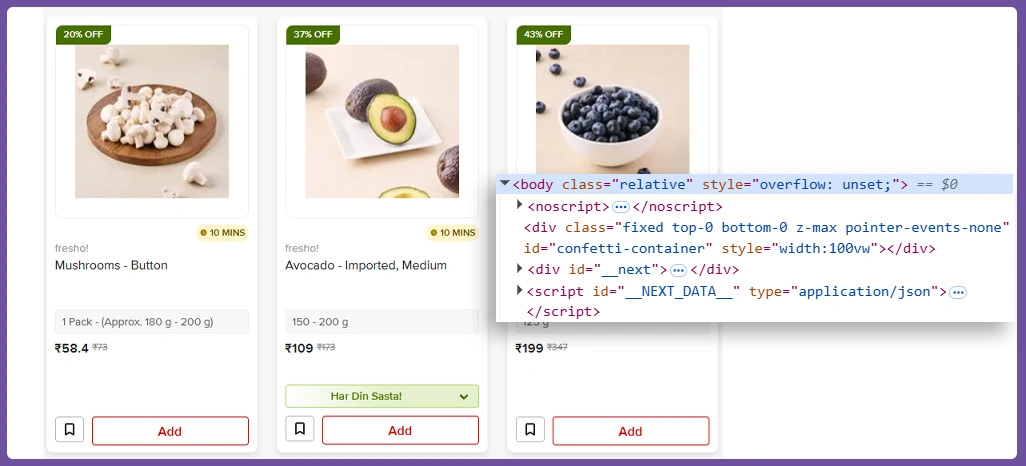
Synchronizing grocery information across fast-moving delivery apps is becoming increasingly demanding as product catalogs keep shifting based on pricing, regional variations, and stock availability. When teams work with large Grocery Store Datasets, the chances of inconsistencies multiply rapidly, especially when platforms change record formats or pricing intervals without standardized patterns.
These challenges intensify when teams attempt direct pipelines involving sources such as Bigbasket API Data. Each platform refreshes attributes at different speeds, creating unavoidable gaps in product values. Even slight differences in product weight formats, variant classifications, or timestamp logic lead to incorrect pricing, duplicated SKUs, or incomplete category mapping.
Many operators attempt to mitigate this by adopting structured Grocery API Integration models, but they still face varying response speeds, data structures, and formatting irregularities. That’s why teams follow consolidated approaches such as Using APIs to Combine Instamart and Bigbasket Data, ensuring uniform attributes are preserved before merging values across platforms.
The summary below reflects the most frequent sync issues across delivery apps:
| Issue Type | Operational Impact | Typical Delay |
|---|---|---|
| Pricing Discrepancies | Improper promotions and incorrect margins | 15–35 mins |
| Stock Visibility Errors | Out-of-stock items displayed incorrectly | 10–25 mins |
| Attribute Formatting Gaps | Variant-level mismatches across catalogs | 12–20 mins |
| Incorrect SKU Mapping | Duplicate or missing items during sync | 18–30 mins |
Teams increasingly adopt guidelines inspired by the India E-Commerce Grocery API Integration Guide, ensuring consistency across data streams. With structured preprocessing, reliability improves significantly, enabling smooth, multi-app synchronization for continuous platform alignment.
Handling High-Velocity Updates in Complex Grocery Data Pipelines
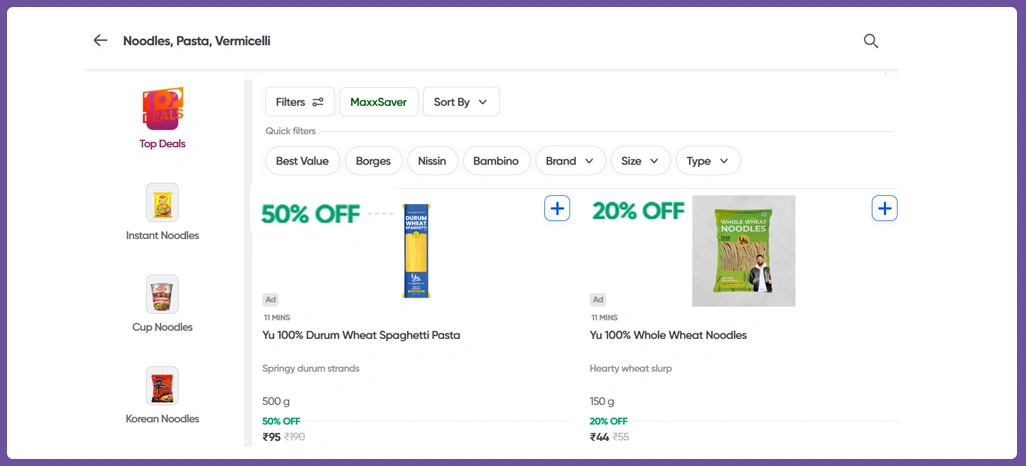
As grocery platforms update thousands of items in short cycles, maintaining a smooth pipeline becomes challenging for businesses operating across multiple delivery apps. Teams using tools such as a Grocery Scraper often struggle to merge structured and unstructured data coming from independent systems that follow no unified pattern.
The complexity increases when integrating sources like How Brands Unify Instamart and Bigbasket Datasets, where both platforms push updates at varying intervals. Instamart may update product availability faster, while BigBasket modifies pricing or variant attributes later. Meanwhile, dynamic datasets such as Real-Time Grocery Catalog Synchronization API introduce rapid changes based on local inventory and delivery slot availability, creating substantial pressure on existing sync pipelines.
Apps like Real-Time Grocery Price and Stock API for India show how much influence regional fluctuations have on inventory planning. Managing these variations requires high-speed harmonization logic, failure recovery mechanisms, and automated format checks. Manual monitoring or traditional ETL structures fail under such workloads, especially during peak demand events.
Below is a summary of scalability issues frequently experienced during high-speed updates:
| Scalability Challenge | Operational Impact | Severity |
|---|---|---|
| API Rate Restrictions | Slowed refresh frequency | High |
| Rapid SKU Turnover | Frequent mismatches across apps | High |
| Multi-City Differences | Increased transformation workload | Medium |
| Dynamic Discount Cycles | High error rates during flash sales | High |
To manage expanding requirements, organizations adopt workflows influenced by Grocery API Integration, ensuring stable pipelines and accurate decision-making. This approach maintains data reliability at scale, supporting continuous expansion across marketplaces and regions.
Establishing Reliable Real-Time Intelligence Across Grocery Ecosystems
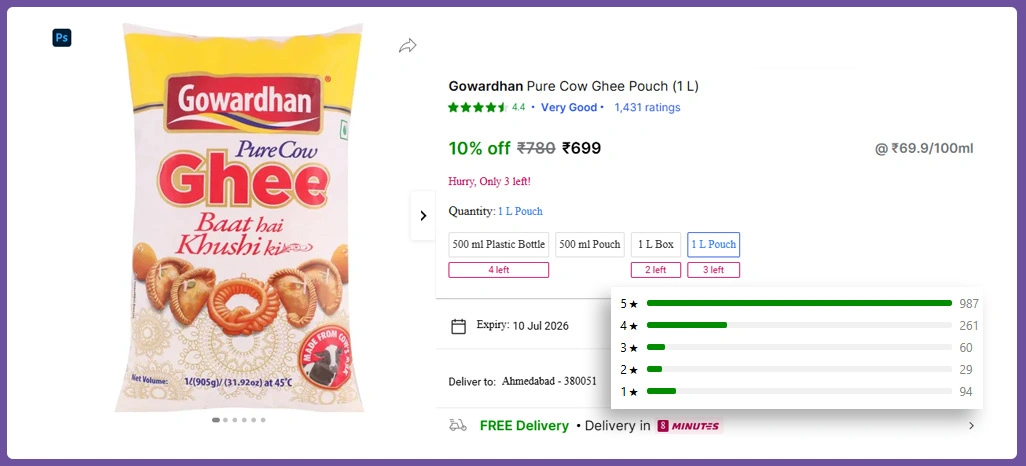
With multiple platforms refreshing product attributes constantly, businesses must process new values within seconds to maintain operational accuracy. When teams deal with mixed-format inputs from methods like Grocery Data Scraping, the lack of standardization creates gaps in mapping, pricing uniformity, and availability checks.
Apps such as Flipkart Minutes Grocery Data publish frequent changes in weights, variants, stock levels, and regional availability. Many teams build workflows based on models inspired by Real-Time Grocery Catalog Synchronization API, enabling automated correction and conflict detection.
Real-time decision systems rely heavily on synchronized actions, especially during sudden demand spikes, warehouse-level stock movement, and last-minute price revisions. Businesses also refer to structured frameworks similar to the Using APIs to Combine Instamart and Bigbasket Data methodology, helping them merge multi-source updates without losing accuracy.
The table below highlights key real-time dependencies:
| Real-Time Requirement | Reason | Failure Impact |
|---|---|---|
| Price Refresh Cycles | Vendor updates, surge demand | Margin errors |
| Stock Movements | Warehouse-level fluctuations | Customer cancellations |
| Delivery Slot Changes | Region-wise demand shifts | Service delays |
| Attribute Modifications | Packaging or weight corrections | SKU conflicts |
Brands referencing the How Brands Unify Instamart and Bigbasket Datasets methodology consistently achieve smoother execution because of automated validation and continuous refresh cycles. With strong real-time processes, businesses operate more confidently and maintain consistency across every connected marketplace.
How Retail Scrape Can Help You?
Brands often struggle to build reliable and scalable data systems, especially when managing multi-app grocery integrations. With deep experience in retail data engineering, we help businesses implement intelligent solutions using a Unified Grocery API that streamlines catalog updates, automates pricing accuracy, and ensures real-time synchronization across multiple platforms.
Our approach includes:
- Build consistent catalog structures across apps.
- Reduce mismatched SKU entries and duplication.
- Automate high-frequency stock and price updates.
- Improve data delivery speed with optimized pipelines.
- Support multi-city grocery operations with accuracy.
- Design powerful dashboards for monitoring API performance.
With our advanced methodology, we ensure superior efficiency and long-term scalability, especially for businesses following models similar to the India E-Commerce Grocery API Integration Guide, helping them achieve smooth expansion and operational stability.
Conclusion
Building strong multi-platform pipelines becomes significantly more efficient when businesses adopt centralized frameworks that reduce data fragmentation. A well-engineered Unified Grocery API allows organizations to eliminate inconsistencies, automate updates, and enhance accuracy across all major delivery platforms.
Modern grocery ecosystems now rely on structured integration models such as Grocery API Integration, helping businesses scale confidently while maintaining clean, synchronized records. Ready to transform your grocery data ecosystem? Connect with Retail Scrape and build a future-ready, high-accuracy data pipeline today.