


How to Track Tourist Behavior Using Web Scraping Data for 2026 Insights Across 50+ Destinations?
Introduction
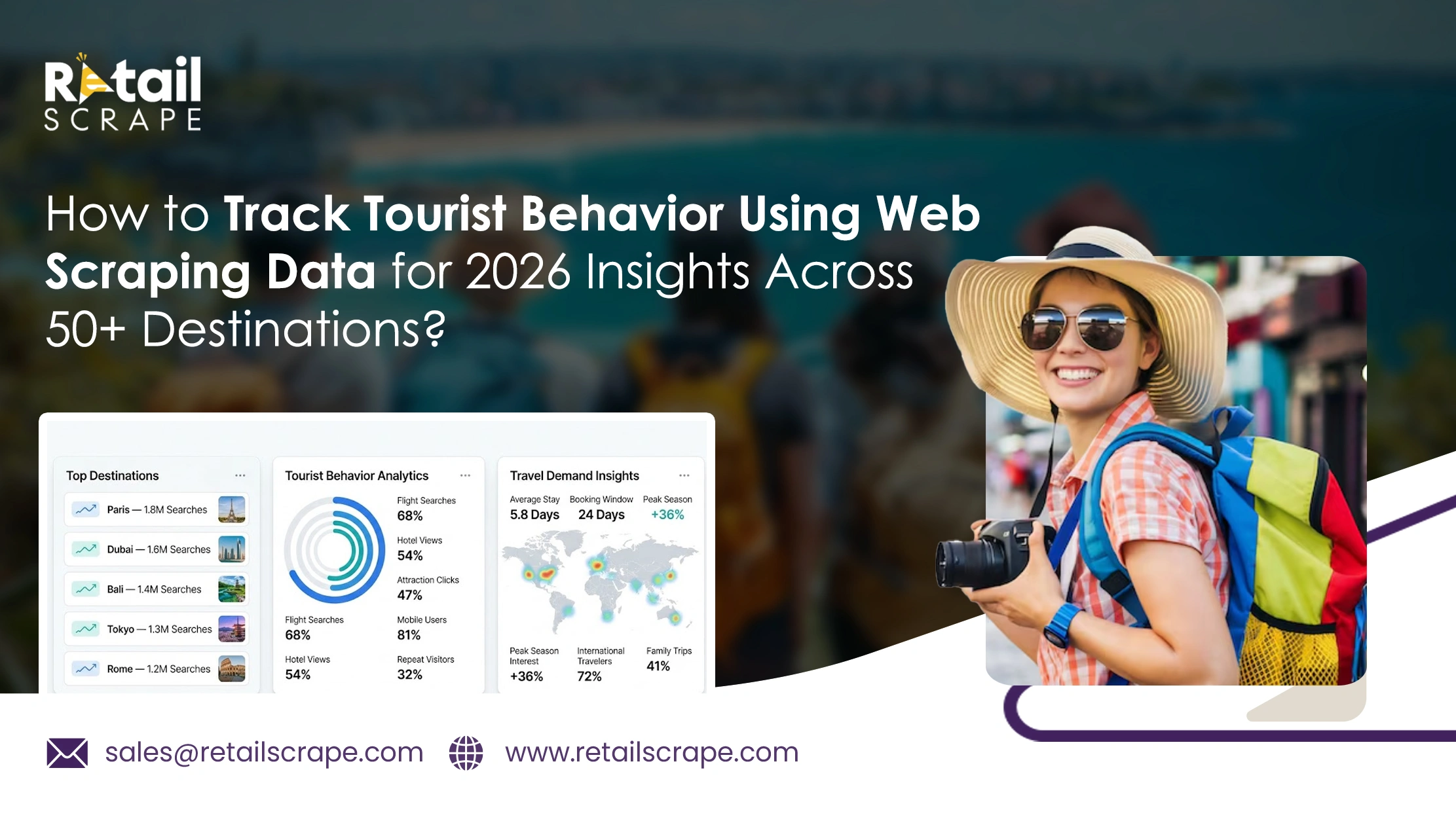
Tourism has become one of the most data-driven industries in recent years, with businesses relying on digital information to understand visitor preferences, booking patterns, destination popularity, and seasonal demand. From airlines and hotels to travel agencies and destination management organizations, every stakeholder requires accurate insights to make informed decisions.
Modern data collection methods provide valuable visibility into customer journeys, helping businesses respond to evolving expectations with greater confidence. One of the most reliable approaches is to Track Tourist Behavior Using Web Scraping Data, allowing organizations to collect structured information from travel platforms, review websites, booking portals, and tourism marketplaces.
Combined with Travel Data Scraping, businesses can evaluate pricing movements, visitor interests, seasonal demand, accommodation preferences, and attraction popularity in near real time. Companies using structured travel intelligence can improve marketing accuracy, demand forecasting, and destination planning while identifying emerging tourism opportunities before competitors react.
Identifying Changing Traveler Interests Across Multiple Digital Platforms
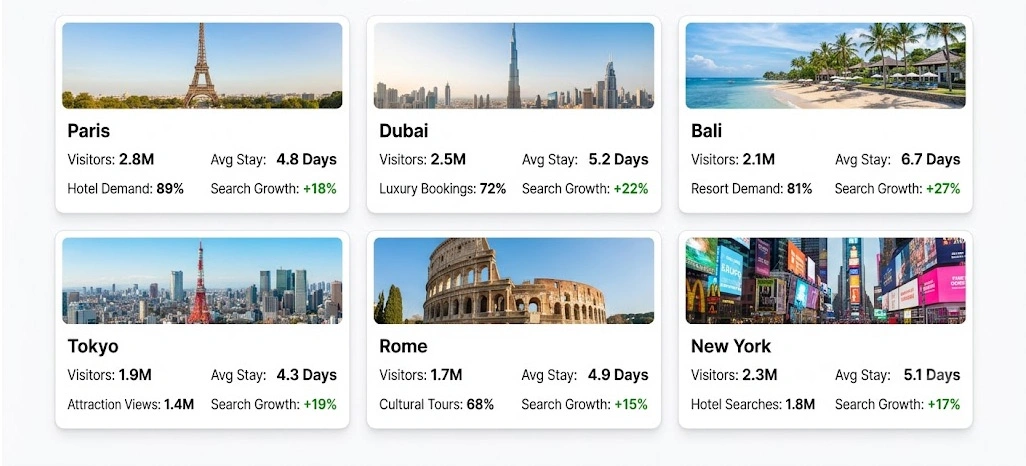
Understanding tourist preferences has become increasingly complex because travelers interact with numerous booking portals, review platforms, airline websites, and destination guides before making travel decisions. Businesses require structured digital information that reflects visitor interests, booking trends, accommodation choices, attraction popularity, and seasonal travel patterns in real time.
By integrating Web Scraping Data for Tourist Behavior Analysis, organizations can collect consistent information from multiple online sources, making it easier to recognize changing consumer preferences and identify emerging tourism opportunities. These insights allow tourism businesses to improve customer segmentation, personalize promotional campaigns, forecast demand more accurately, and allocate marketing budgets effectively.
Businesses can further strengthen data collection processes through Tourism Insights Using Web Scraping API, enabling continuous monitoring of travel-related platforms with minimal manual effort. Industry studies indicate that nearly 74% of travelers research destinations online before making reservations, while over 70% compare multiple travel websites before selecting accommodations or travel packages.
| Challenge | Data-Driven Solution | Business Benefit |
|---|---|---|
| Limited customer visibility | Structured travel data collection | Better traveler segmentation |
| Seasonal demand uncertainty | Continuous destination monitoring | Improved forecasting |
| Marketing inefficiencies | Behavior-based analysis | Higher campaign performance |
Additionally, Travel and Tourism Datasets for Market Research provide valuable benchmarking data that helps compare destinations, customer segments, and competitive offerings across different regions. Reliable digital intelligence ultimately supports better strategic planning while helping tourism companies respond quickly to evolving visitor expectations across more than 50 destinations.
Building Smarter Destination Strategies Through Reliable Market Intelligence
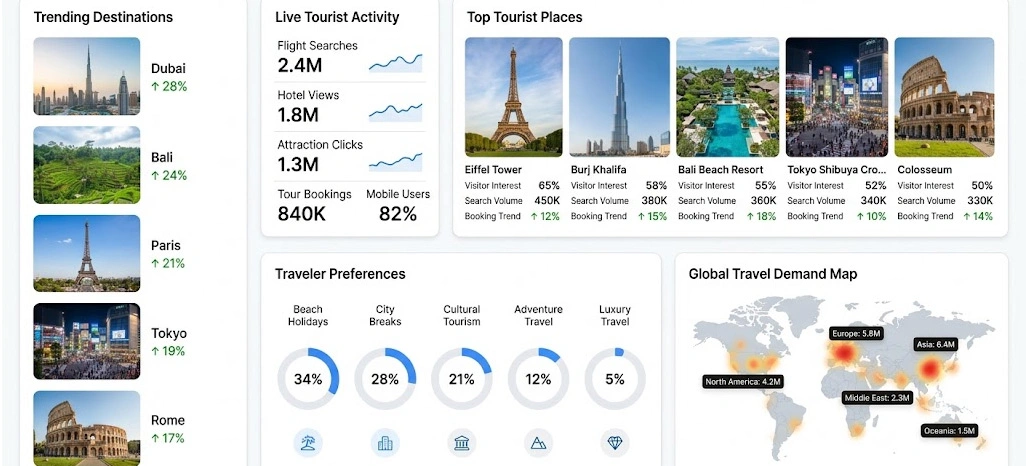
Planning successful tourism initiatives requires accurate information about visitor movements, destination popularity, accommodation demand, pricing fluctuations, and travel preferences. Traditional surveys often provide delayed insights, making it difficult for organizations to respond quickly to changing market conditions. Modern data collection techniques simplify this process by delivering continuous updates from multiple travel-related platforms.
Businesses adopting Web Scraping for Tourism Industry can monitor destination performance, compare regional travel trends, and evaluate customer behavior across diverse online channels. Research suggests that organizations using advanced tourism analytics improve forecasting accuracy by nearly 35%, helping reduce planning uncertainty while improving operational efficiency.
Complementing these capabilities, Tourism Market Insights From Scraped Data support evidence-based investment planning, marketing optimization, and competitive benchmarking for tourism authorities, hotel chains, travel agencies, and destination management companies. Access to continuously updated travel intelligence also supports resource allocation, promotional planning, pricing strategies, and customer engagement initiatives.
| Planning Issue | Data Source | Outcome |
|---|---|---|
| Demand fluctuations | Live travel platforms | Better resource allocation |
| Destination popularity | Booking trends | Improved promotion strategies |
| Competitive benchmarking | Multi-source analytics | Stronger market positioning |
At the same time, Real-Time Travel Trend Analysis With Datasets enables organizations to identify sudden shifts in tourist demand, seasonal booking patterns, and emerging travel hotspots before they significantly impact business operations.
Transforming Collected Travel Information Into Business Growth Opportunities
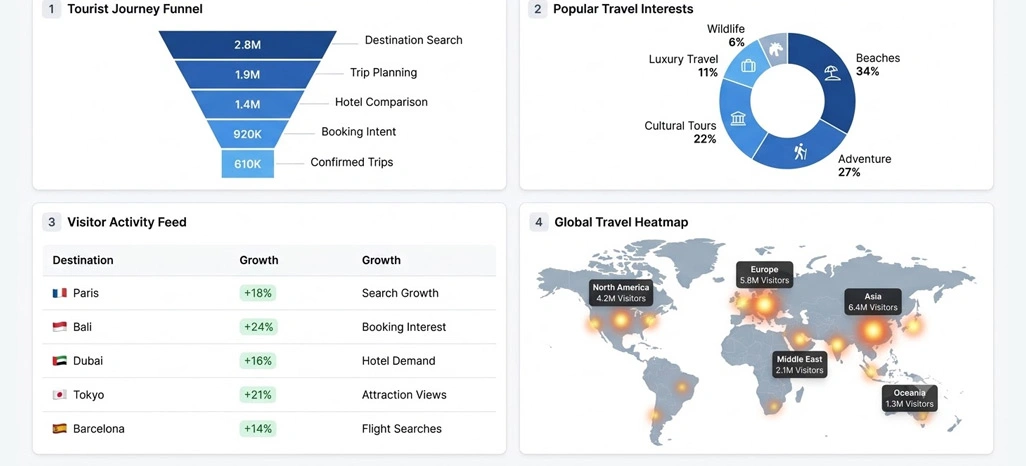
Collecting travel information is only the beginning; transforming raw datasets into actionable business intelligence creates meaningful value for tourism organizations. Companies increasingly depend on structured analytics to improve pricing strategies, personalize marketing campaigns, forecast customer demand, and identify profitable destinations.
Businesses implementing Travel Scraping API can streamline large-scale data extraction, ensuring consistent and accurate travel intelligence for strategic decision-making. Industry reports indicate that companies using behavioral analytics can improve marketing performance by nearly 40% while increasing forecasting accuracy and customer engagement.
In addition, Tourist Analytics Using Web Scraping enables tourism businesses to monitor traveler interactions, evaluate destination performance, and recognize changing market opportunities with greater confidence. Reliable travel intelligence also supports expansion into new markets, enhances promotional planning, improves service offerings, and strengthens competitive positioning.
| Business Objective | Analytical Method | Expected Result |
|---|---|---|
| Dynamic pricing | Traveler demand tracking | Competitive pricing |
| Customer targeting | Behavioral segmentation | Higher conversions |
| Market expansion | Regional travel analysis | Better investment decisions |
Moreover, Travel Behavior Analytics Datasets for Businesses help organizations understand visitor demographics, booking preferences, spending habits, and destination interests, allowing more precise customer segmentation and campaign optimization.
How Retail Scrape Can Help You?
Travel businesses increasingly depend on structured intelligence to improve planning, understand customer preferences, and monitor destination performance. By helping organizations Track Tourist Behavior Using Web Scraping Data, Retail Scrape delivers scalable data collection solutions that support smarter tourism decisions across global markets.
Our approach includes:
- Collect structured travel information from multiple online platforms.
- Monitor destination popularity with automated updates.
- Analyze seasonal travel demand efficiently.
- Compare pricing and accommodation trends across markets.
- Build customized datasets for strategic planning.
- Deliver scalable data solutions with high accuracy.
Our specialized Travel Datasets are designed to support tourism operators, travel agencies, hospitality businesses, destination marketers, and research organizations seeking reliable insights.
Combined with Tourism Analytics Using Scraped Travel Data, businesses can improve forecasting, optimize marketing campaigns, identify emerging travel opportunities, and make informed operational decisions based on continuously updated tourism intelligence.
Conclusion
As tourism markets become increasingly competitive, organizations must rely on accurate digital intelligence to improve planning, marketing, and customer engagement. Businesses that Track Tourist Behavior Using Web Scraping Data can respond more effectively to changing traveler preferences while improving long-term decision-making.
Integrating Tourism Market Insights From Scraped Data further strengthens forecasting accuracy and destination performance evaluation. Reliable tourism analytics provide measurable advantages for companies seeking sustainable growth across expanding travel markets. Contact Retail Scrape today to build customized travel data solutions that support smarter tourism strategies and long-term business success.
Effortlessly managing intricacies with customized strategies.
Mitigating risks, navigating regulations, and cultivating trust.
Leveraging expertise from our internationally acclaimed team of developers
Reliable guidance and assistance for your business's advancement