


Why Is Tabelog API a Smart Choice for Scraping Real-Time Restaurant Reviews and Ratings Across Japan?
Introduction
Japan boasts one of the most vibrant culinary landscapes globally, making consumer feedback essential for food industry analysts. Gaining reliable access to localized dining sentiment requires direct access to Japan's premier review platforms. Utilizing the Tabelog API allows businesses to harvest accurate dining metrics efficiently without dealing with manual data collection obstacles.
Traditional web scraping techniques often fail when dealing with complex multi-lingual structures and frequently updated dynamic pages. By leveraging automated data pipelines, developers can extract authentic customer feedback, detailed score metrics, and valuable culinary information seamlessly. This streamlined process ensures high data fidelity while saving significant time and operational resources.
Whether you are evaluating market entry strategies or tracking shifting consumer tastes across major cities like Tokyo and Osaka, structured data extraction is crucial. Implementing Tabelog API Data Scraping helps organizations turn raw food reviews into actionable market intelligence, giving research teams a distinct competitive edge across foreign food markets.
Unlocking Actionable Japanese Restaurant Metrics Through Structured Data
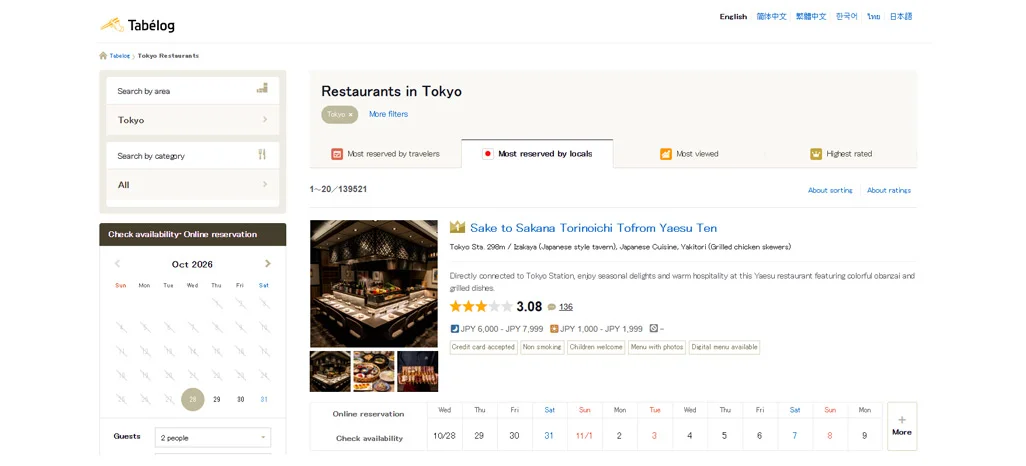
Understanding Japanese food culture requires direct access to hyper-local dining feedback. Mainstream global review platforms often miss subtle nuances, localized tastes, and regional dining trends that native consumers highlight daily. Deploying specialized Restaurant Data Intelligence Services gives researchers access to authentic diner sentiments that shape local dining decisions across prefectures.
Navigating complex multi-lingual site layouts manually creates massive operational bottlenecks for analytical teams trying to extract reliable information. By integrating a dedicated Tabelog Restaurant Data API, data analysts bypass complex page rendering and IP blocking issues while capturing valuable details.
Continuous extraction ensures strategic teams maintain an accurate view of changing market conditions without technical interruptions. Having ready access to structured metric feeds simplifies long-term performance tracking across both regional dining hubs and major municipal centers.
- Extraction of exact venue identification and location metadata
- Categorized breakdown of individual food and service scores
- Aggregation of qualitative customer commentary across all prefectures
- Standardized formatting for immediate enterprise software ingestion
| Metric Category | Data Description | Analytical Purpose |
|---|---|---|
| Establishment Profile | Unique identifier and location tags | Tracks specific venue history over time |
| User Rating Metrics | Numerical breakdown of dining elements | Isolates food quality from service sentiment |
| Qualitative Feedback | Unstructured customer review text | Reveals specific dish and atmosphere trends |
| Spatial Tagging | Prefecture and city classification | Enables hyper-local competitive mapping |
Automated pipelines allow businesses to collect standardized datasets at scale, converting raw unstructured content into clear analytical formats. Studies show structured extraction reduces data handling time by nearly 60%, empowering analysts to focus on identifying emerging growth opportunities.
Analyzing Live Scoring Metrics To Drive F&B Growth
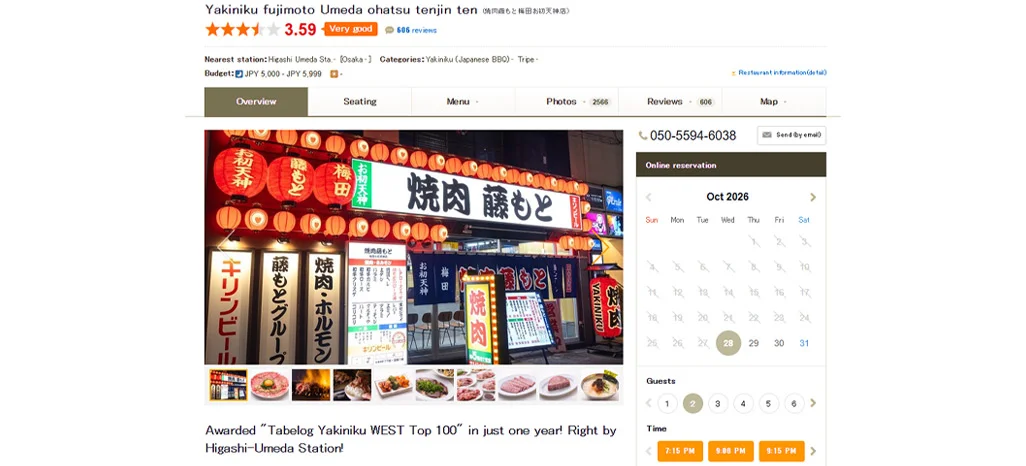
Maintaining competitive advantage in the food and beverage industry depends heavily on real-time market surveillance. Consumer tastes evolve rapidly, and monitoring score fluctuations helps businesses spot emerging culinary trends before competitors do. Utilizing a robust Tabelog Ratings Data Scraping mechanism ensures that performance metrics remain accurate, fresh, and ready for immediate business intelligence modeling.
Integrating a comprehensive Tabelog Food Dataset allows analysts to cross-examine customer rating distribution against location metrics to identify high-performing dining concepts. Industry benchmarks show that platforms monitoring sentiment daily experience significant improvements in trend forecasting accuracy over traditional quarterly research methods.
Consistent monitoring of localized scores provides clear guidance for prospective investors evaluating new hospitality projects across Japan. Relying on verified performance metrics minimizes financial risks during expansion planning while ensuring marketing strategies align with actual consumer preferences.
- Systematic tracking of rating changes across core dining categories
- Daily score updates to capture immediate customer sentiment shifts
- Aggregation of historical review volumes to evaluate venue popularity
- Cross-referencing rating variations against specific price brackets
| Performance Metric | Update Frequency | Strategic Application |
|---|---|---|
| Overall Score Metrics | Daily Refresh | Tracks general brand reputation shifts |
| Category Breakdown | Live Synchronization | Pinpoints operational strengths and flaws |
| Engagement Volume | Weekly Aggregation | Measures overall customer interest growth |
| Spend Metrics | Monthly Review | Informs competitive pricing strategy models |
Having direct visibility into dynamic rating changes helps operational managers adapt menu concepts and pricing models to match customer expectations. Systematic data harvesting eliminates information lag, allowing analysts to detect subtle shifts in customer approval before broader market trends emerge.
Automating Customer Feedback Analysis For Better Market Intelligence
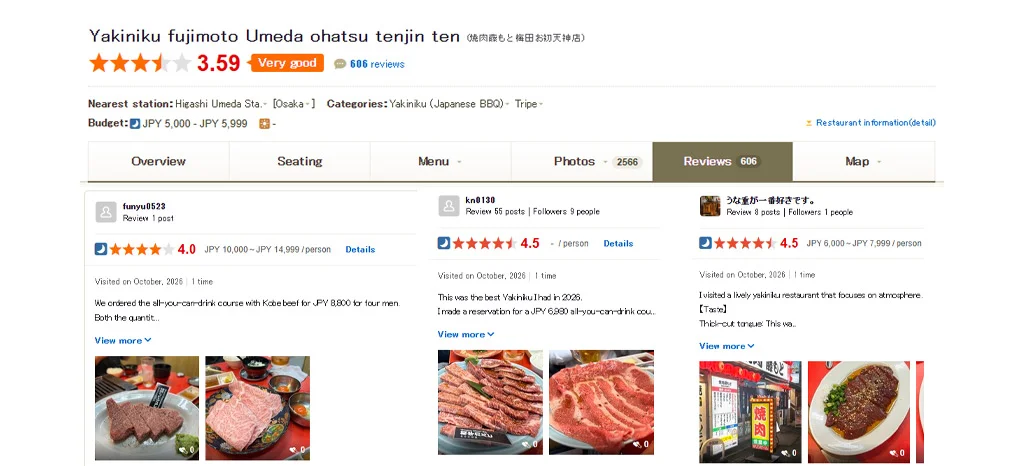
Qualitative review analysis requires consistent monitoring to capture operational feedback accurately. Gathering unstructured text manually across thousands of restaurant listings leads to massive data gaps and human error. Employing a targeted Restaurant Review Data Scraping API standardizes text extraction, making natural language processing and sentiment analysis far more straightforward.
Implementing advanced Ratings & Reviews Intelligence enables brands to track specific keywords related to customer service, cleanliness, and dish preparation quality across Japanese dining spots. Automatically processing review feeds allows data science teams to convert subjective commentary into measurable score distributions across regions.
Automated pipelines eliminate manual sampling limitations by covering millions of customer posts across multiple prefectures concurrently. This complete analytical coverage ensures research teams do not overlook critical localized operational issues that could negatively impact overall brand equity.
- Complete text extraction optimized for natural language processing
- Automated filtering of positive and negative sentiment keywords
- Scalable tracking across thousands of concurrent venue listings
- Direct mapping of sentiment trends against specific regional dining hubs
| Insight Type | Scraping Objective | Operational Outcome |
|---|---|---|
| Text Polarity | Review phrase classification | Highlights specific service strengths and flaws |
| Score Variance | Rating distribution tracking | Detects sudden drops in operational quality |
| Pricing Sentiment | Cost per head feedback | Optimizes pricing for local demographic expectations |
| Menu Feedback | Dish-specific keyword extraction | Identifies popular and underperforming menu items |
Deploying a modern Tabelog Review Monitoring API guarantees continuous monitoring of customer sentiment, giving businesses the exact data tools needed to act on emerging market changes immediately. Maintaining reliable data pipelines keeps your analytical models populated with accurate real-world customer perspectives.
How Retail Scrape Can Help You?
Navigating complex site architectures and dynamic web pages often creates huge hurdles for data collection teams. Integrating the reliable Tabelog API through our specialized infrastructure eliminates scraping blocks and ensures clean data feeds tailored to your exact operational requirements.
We deliver bespoke data extraction solutions designed to handle large-scale data aggregation effortlessly.
- Customized data collection pipelines built for complex target sites
- Dynamic proxy management to ensure uninterrupted data streaming
- Structured data delivery in preferred formats including JSON, CSV, and SQL
- Full compliance with regional data extraction standards and guidelines
- High-frequency updating schedules to capture live market changes
- Complete end-to-end integration support for enterprise analytical tools
Partnering with enterprise-grade Web Scraping API Services ensures your organization receives clean, structured, and ready-to-use restaurant data on demand.
Conclusion
Gathering structured data from specialized local review channels is essential for modern F&B enterprise strategies. Integrating the high-performing Tabelog API transforms raw customer feedback into organized, actionable intelligence that drives smarter operational and expansion decisions.
Businesses looking to scale their analytical capabilities need reliable technology partners to handle data pipelines smoothly. Utilizing Tabelog API for Real-Time Review Scraping gives your team the exact market insights required to make confident business moves. Contact Retail Scrape today to upgrade your F&B data collection capabilities!