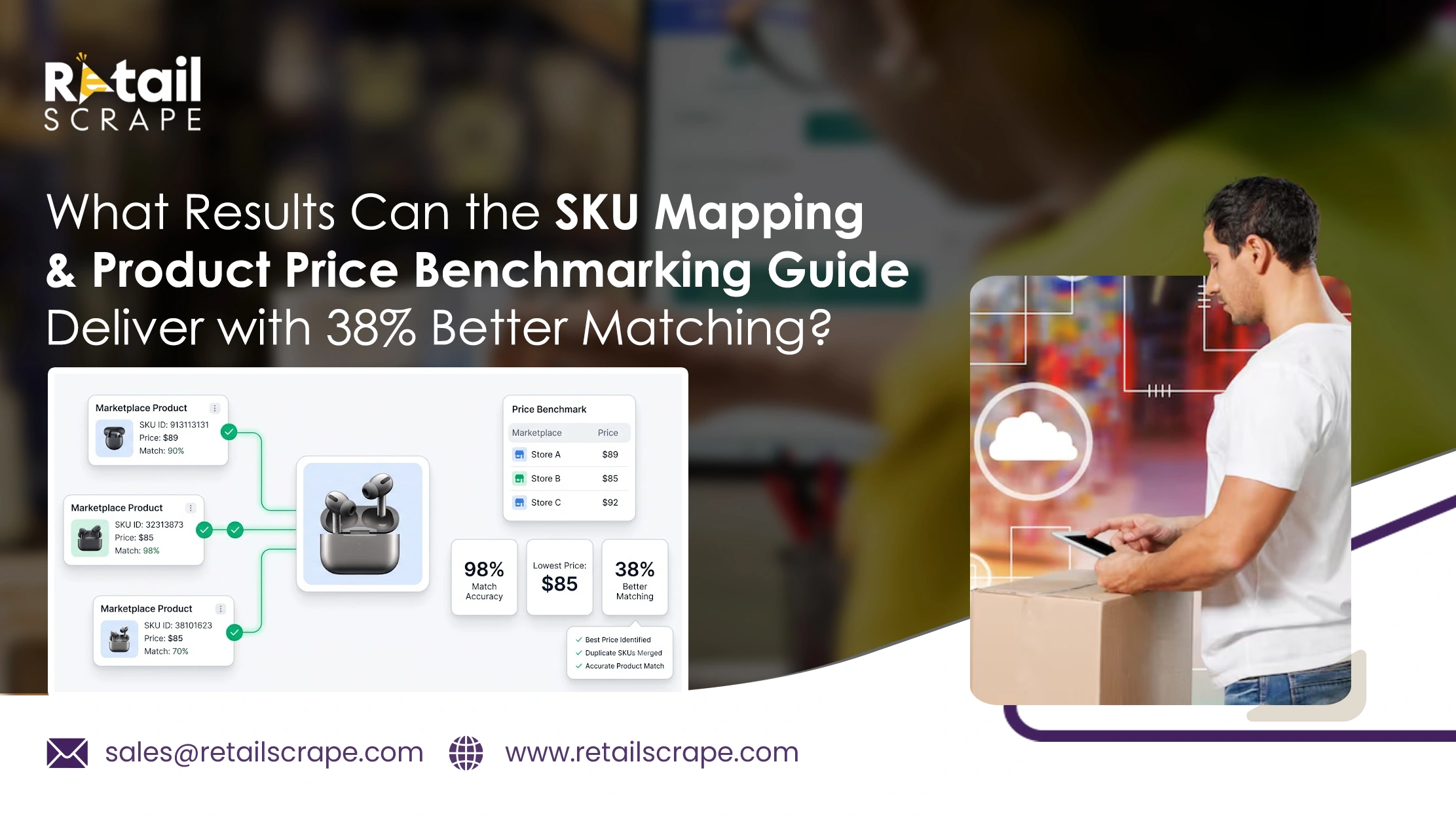
What Results Can the SKU Mapping & Product Price Benchmarking Guide Deliver with 38% Better Matching?
Introduction
Retail businesses operate in a highly dynamic environment where product catalogs, seller listings, prices, promotions, and availability can change several times a day. A structured SKU Mapping & Product Price Benchmarking Guide helps retailers organize fragmented product information into comparable, actionable intelligence.
Accurate product-level comparisons allow businesses to identify matching items across platforms, monitor market movements, and understand how competitors position similar products. Instead of relying on manual checks or incomplete spreadsheets, retail teams can use automated data workflows to connect equivalent products and analyze pricing patterns at scale.
Modern Web Scraping Services support this process by collecting structured data from retailer websites, marketplaces, brand stores, and delivery platforms. Businesses can gather product titles, SKUs, images, descriptions, ratings, stock status, seller details, and price information from multiple sources. A 38% improvement in matching quality can significantly enhance catalog visibility, competitive analysis, and retail performance across fast-changing digital commerce environments.
Improving Product Identification Across Complex Retail Catalogs
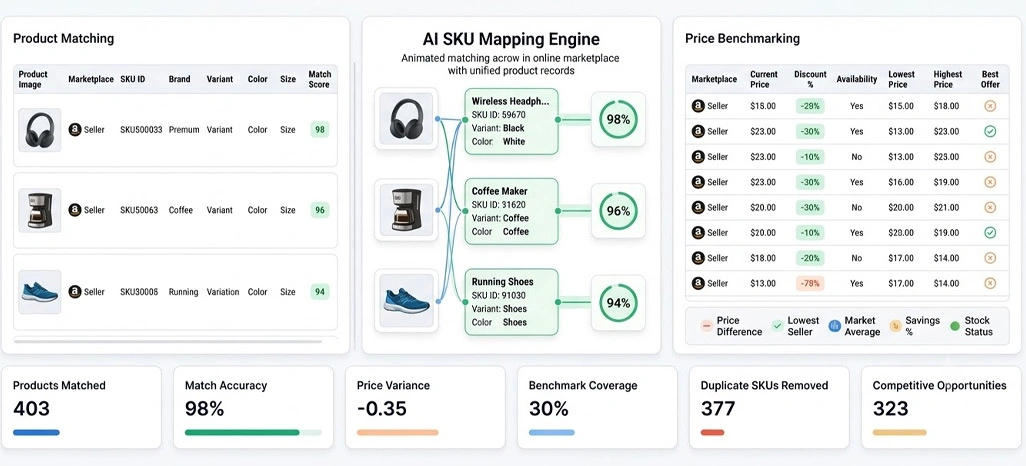
Retail catalogs often contain inconsistent titles, incomplete specifications, duplicate listings, and seller-specific naming patterns. These differences make it difficult to identify equivalent products across online stores, marketplaces, and brand websites. A single item may appear with varied pack sizes, colors, bundles, product codes, or promotional labels, creating confusion during catalog comparison.
Businesses can improve catalog accuracy by collecting product titles, brands, model numbers, images, descriptions, category details, and unit measurements from multiple sources. SKU Mapping for Ecommerce helps teams organize these attributes into structured records that make equivalent items easier to identify.
Large retail operations can use Enterprise Web Crawling to gather product information from several platforms at scale. Automated crawling supports faster data collection while helping businesses refresh catalog records regularly. When product attributes are standardized, teams can compare listings more confidently and validate whether products belong to the same group.
| Catalog Challenge | Retail Impact | Recommended Action |
|---|---|---|
| Different listing titles | Incorrect product comparisons | Standardize naming patterns |
| Missing product codes | Lower matching confidence | Use image and attribute signals |
| Pack-size variations | Unclear value comparison | Normalize quantity details |
| Duplicate listings | Inflated catalog volume | Merge verified records |
| Category mismatches | Weak reporting accuracy | Apply structured classification |
AI Product Matching improves identification by evaluating several product attributes rather than relying only on exact titles or SKU values. A reliable Product Matching API can return matched records, confidence scores, and validation details for faster review.
Building Reliable Pricing Comparisons Across Retail Channels
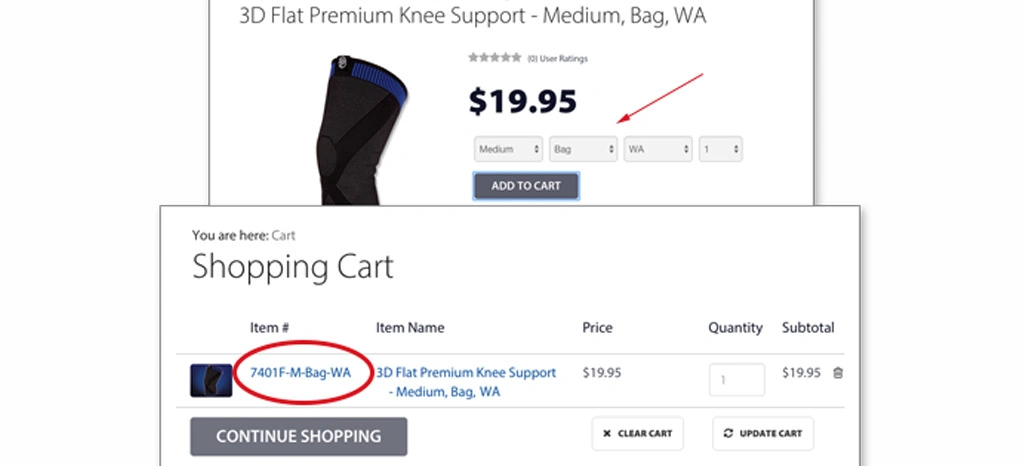
Retail pricing analysis becomes unreliable when businesses compare products with different quantities, variants, bundles, or promotional conditions. A lower listed price may not represent better value if another retailer sells a larger pack size, includes delivery charges, or offers a temporary discount. Accurate comparison requires standardized product information and normalized pricing data across all monitored channels.
Retail teams can collect regular prices, discounted prices, seller details, shipping charges, promotional labels, and unit-level values to understand true market positioning. Competitor Price Benchmarking helps businesses compare equivalent products and identify whether their prices remain above, below, or aligned with competing retailers.
A dependable Product Mapping API can connect product records with collected pricing feeds, reducing manual data preparation and improving dashboard consistency. SKU Mapping and Price Benchmarking enables retailers to identify recurring price gaps, promotional patterns, and category-level pricing opportunities.
| Pricing Data Element | Business Purpose | Practical Benefit |
|---|---|---|
| Regular price | Measures standard position | Supports baseline comparison |
| Discounted price | Tracks promotional activity | Identifies short-term changes |
| Unit price | Normalizes quantity differences | Improves value analysis |
| Seller details | Identifies competition source | Separates seller-level pricing |
| Offer type | Explains price variation | Supports campaign evaluation |
Automated pricing intelligence can improve review efficiency by 25% to 40% across high-volume retail categories. Competitive Benchmarking also helps businesses understand market-specific behavior, including rapid price changes in electronics and unit-value comparisons in grocery.
Monitoring Catalog Changes for Continuous Market Visibility
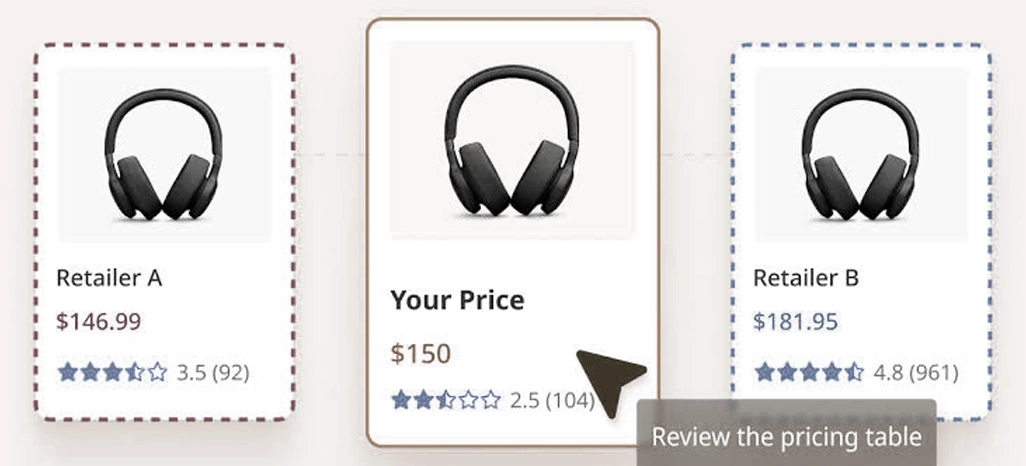
Online retail catalogs change frequently due to new launches, discontinued items, price revisions, seller updates, stock movements, and promotional campaigns. These changes can affect product comparisons when listings are modified without notice. Retail teams need continuous monitoring to maintain reliable records and understand how competitors adjust their catalogs over time.
Businesses can track product titles, images, descriptions, variants, prices, seller information, and category placement to identify important market changes. Product Matching for Price & Catalog Comparison helps connect updated listings with historical records, allowing teams to review product movement without losing earlier comparison data.
A structured Product Matching and Price Monitoring workflow combines automated data collection, attribute standardization, and regular validation. This helps businesses avoid outdated comparisons and identify unusual price movements, listing removals, or sudden competitor activity.
| Monitoring Area | Data Captured | Retail Benefit |
|---|---|---|
| Price updates | Daily or hourly changes | Improves response timing |
| New listings | Recently added products | Identifies assortment shifts |
| Variant changes | Size, color, or packaging updates | Maintains accurate records |
| Seller activity | New or removed sellers | Reveals market movement |
| Promotion updates | Discount duration and type | Supports campaign planning |
Advanced Product Matching for Real-Time analysis supports quicker detection of catalog changes across marketplaces and retail websites. Continuous monitoring improves visibility into assortment changes, competitor pricing behavior, and product-level activity.
How Retail Scrape Can Help You?
Retail businesses need reliable, structured, and scalable data to compare products accurately across multiple online channels. By placing the SKU Mapping & Product Price Benchmarking Guide within a broader data workflow, businesses can create dependable comparisons that support pricing, assortment, and catalog decisions.
Our approach includes:
- Collect product listings from multiple retail platforms.
- Standardize titles, brands, specifications, and variants.
- Track price updates across competitor websites.
- Identify duplicate and equivalent product records.
- Monitor promotional offers and seller-level changes.
- Deliver structured datasets for business reporting.
Our data solutions also help businesses monitor Product Availability across different platforms, helping teams understand stock changes, listing removals, and assortment gaps. With SKU Mapping for Competitive Intelligence, retailers can transform fragmented product data into clear market insights that support more accurate comparisons and stronger commercial decisions.
Conclusion
Retail success increasingly depends on the ability to compare equivalent products accurately across changing online catalogs. A well-structured SKU Mapping & Product Price Benchmarking Guide helps businesses reduce data inconsistencies, improve product-level visibility, and make more reliable pricing decisions.
Businesses can also use SKU Mapping for Competitive Intelligence to monitor assortment changes, competitor activity, and category-level market movement more effectively. We provide scalable data extraction and matching support for organizations seeking more accurate retail intelligence. Contact Retail Scrape today to build a smarter product comparison workflow and improve your pricing performance.
Effortlessly managing intricacies with customized strategies.
Mitigating risks, navigating regulations, and cultivating trust.
Leveraging expertise from our internationally acclaimed team of developers
Reliable guidance and assistance for your business's advancement