
How Can Singapore Competitor Price Intelligence Track Prices Across Carousell, Lazada & Amazon?
Introduction
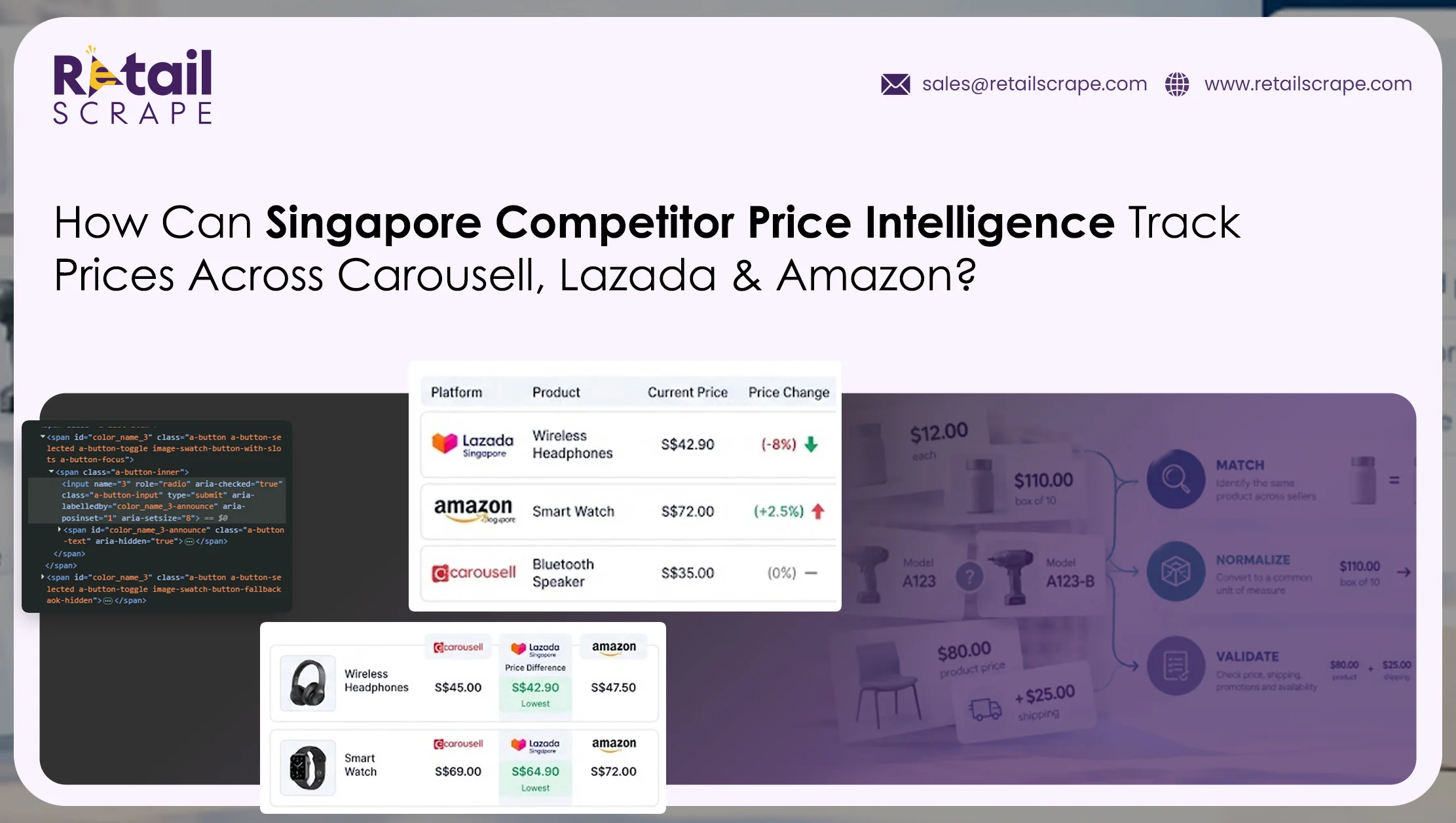
Singapore's e-commerce market includes multiple marketplaces where sellers compete through product pricing, discounts, availability, and delivery offers. Retailers need reliable information to understand how competitors position similar products and respond to changing market conditions. Comparing marketplace listings helps pricing teams identify differences, evaluate promotional activities, and make informed decisions using organized product-level information rather than occasional manual checks.
Businesses can evaluate listed prices, promotional discounts, shipping charges, and product variations across different sellers. Singapore Competitor Price Intelligence helps retailers organize competitor pricing information from Carousell, Lazada, and Amazon Singapore. This information supports consistent pricing decisions while helping teams identify opportunities to improve product positioning, evaluate margins, and understand how marketplace offers influence customer purchasing decisions.
A structured monitoring process also helps retailers understand changing customer expectations and competitor behavior. By collecting product information at scheduled intervals, businesses can review historical changes, assess promotional patterns, and identify pricing gaps. These insights support campaign planning, inventory decisions, and marketplace performance evaluations across Singapore's competitive online retail environment.
Evaluating Product Price Differences Across Major Marketplaces
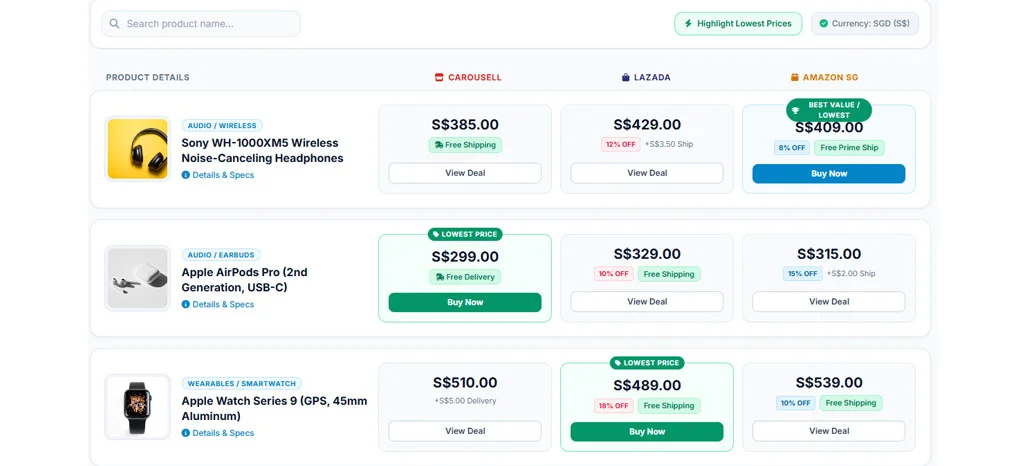
Retailers operating across multiple online platforms need a consistent process for comparing competitor offers and understanding differences between similar products. Singapore E-Commerce Price Monitoring helps businesses organize listing prices, promotional discounts, shipping charges, and availability into structured records. This approach provides a clearer view of competing offers and helps pricing teams evaluate marketplace-specific variations.
Through Carousell Lazada Amazon Price Comparison, retailers can examine differences between listings and understand how seller strategies influence the final customer cost. The comparison should account for product specifications, seller reputation, delivery charges, and promotional conditions. Singapore Online Retail Price Comparison becomes more useful when businesses distinguish identical products from similar items with different models, sizes, bundles, or conditions.
Retailers can also Compare Carousell Lazada and Amazon Product Prices to identify pricing gaps across relevant product categories. Electronics, fashion, household essentials, and personal care products may require different comparison criteria because their specifications, purchasing patterns, and promotional cycles vary.
| Comparison factor | Illustrative example | Business application |
|---|---|---|
| Listed product price | S$100 | Establish a baseline |
| Promotional discount | 10% | Evaluate promotional offers |
| Shipping charge | S$5 | Assess delivery costs |
| Final payable amount | S$95 | Compare total customer costs |
Key activities include:
- Standardizing product identifiers and specifications.
- Recording listed prices and delivery charges.
- Reviewing discounts and seller-specific offers.
- Identifying differences between comparable products.
A standardized comparison process allows teams to identify products priced above or below competing offers and investigate the reasons behind those differences. Retailers can combine the resulting records with internal costs and margin requirements before adjusting their prices. This makes marketplace comparisons more practical for routine pricing reviews and promotional planning.
Monitoring Price Movements and Promotional Changes Over Time
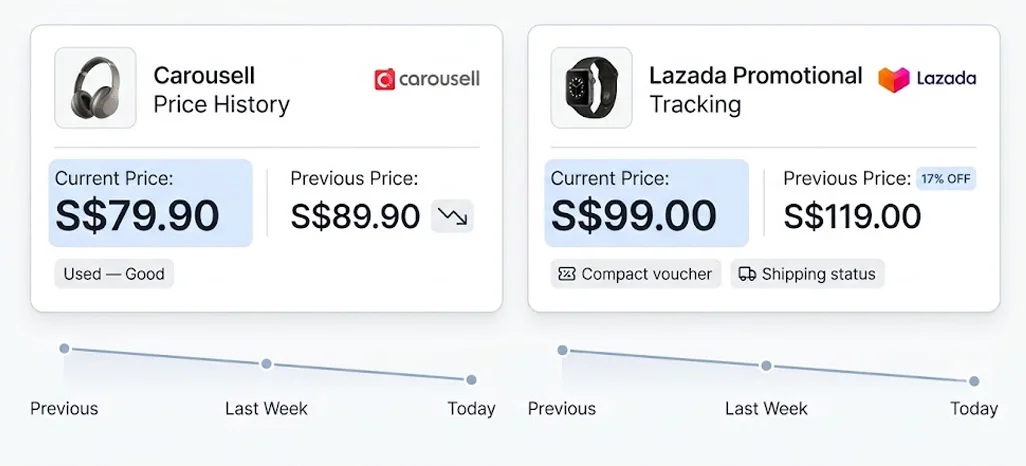
Marketplace prices can change frequently as sellers introduce vouchers, limited-time discounts, seasonal promotions, and revised offers. E-Commerce Price Tracking in Singapore helps businesses maintain dated records of these changes and compare current observations with previous listings. Historical information gives pricing teams a better understanding of how competitors adjust their offers during different sales periods.
A structured Carousell Price Tracking process can record advertised prices, product conditions, seller information, and listing availability. These records help businesses distinguish temporary discounts from more persistent price changes. Retailers can also review how different sellers position similar products and identify categories where competitive pricing changes occur more frequently.
On Lazada, Lazada Price Monitoring can support the evaluation of product-level price movements and promotional offers. Businesses should consider vouchers, bundle deals, shipping charges, and eligibility conditions when interpreting displayed prices. Recording these details helps analysts avoid comparing headline prices that do not represent equivalent purchasing conditions.
| Tracking indicator | Illustrative observation | Potential application |
|---|---|---|
| Previous price | S$120 | Establish historical context |
| Current price | S$108 | Identify a price reduction |
| Price movement | -10% | Review competitor activity |
| Observation interval | Every 6 hours | Support timely analysis |
Key activities include:
- Scheduling recurring listing observations.
- Recording historical prices and discounts.
- Comparing promotional periods across sellers.
- Flagging unusual or significant price movements.
Retailers can Collect Singapore Ecommerce Pricing Data for Market Research to examine price ranges, promotional frequency, and category-level differences. Monitoring frequency should reflect product turnover, marketplace activity, and business requirements, with more frequent observations for categories experiencing rapid price changes.
Applying Competitive Insights to Improve Retail Pricing Decisions
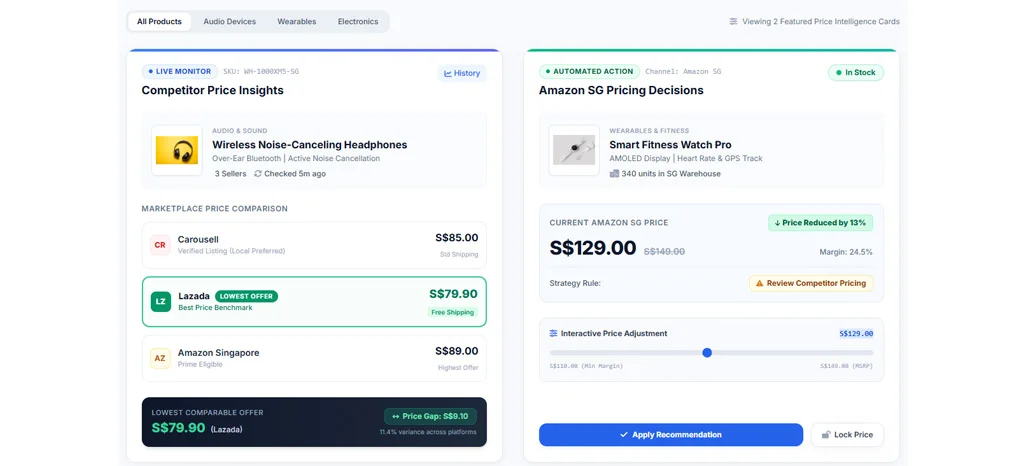
Collected pricing information becomes more valuable when retailers convert it into practical business insights. Retail Price Monitoring Singapore helps teams assess competitor price positions, identify persistent differences, and evaluate how promotional activity influences category performance. Businesses can combine pricing records with product availability, seller details, and historical observations to understand marketplace changes more clearly.
Retailers can use structured records to identify products priced significantly above or below comparable offers. However, an apparent price difference may reflect variations in product specifications, delivery costs, seller conditions, or promotional eligibility. Reviewing these factors before making adjustments helps pricing teams avoid unnecessary price reductions and protect their profit margins.
Through Amazon Singapore Price Tracking, businesses can monitor relevant listing prices, product variations, and availability across Amazon Singapore. Analysts can organize collected information into dashboards that highlight price changes, unusual discounts, and products requiring further investigation. These dashboards make it easier for teams to prioritize important changes instead of manually reviewing every listing.
| Business indicator | Illustrative finding | Recommended response |
|---|---|---|
| Competitor price difference | 8% lower | Review margins and positioning |
| Repeated discounting | Weekly changes | Evaluate campaign timing |
| Product availability | Listing unavailable | Check comparable sellers |
| Increasing price gap | 12% difference | Verify product matching |
Key activities include:
- Reviewing price differences against internal costs.
- Identifying products requiring pricing adjustments.
- Integrating observations into reporting dashboards.
- Evaluating promotions alongside inventory and demand.
For example, a retailer might investigate a persistent competitor discount before responding with a promotion of its own. This approach supports informed decisions, improves pricing consistency, and helps businesses evaluate competitive positioning without relying exclusively on competitor prices.
How Retail Scrape Can Help You?
Managing product prices across multiple marketplaces requires reliable data collection, consistent product matching, and organized reporting. With Singapore Competitor Price Intelligence, retailers can assess marketplace differences, examine promotional movements, and establish repeatable monitoring processes suited to their product categories and commercial objectives.
We can support these activities through practical data collection and analysis workflows. Its services can help businesses reduce repetitive research, organize product information, and prepare structured records for ongoing pricing reviews.
- Automated collection of publicly accessible product listing information.
- Scheduled monitoring of competitor prices and promotional changes.
- Product matching based on names, brands, models, and specifications.
- Organized datasets for historical comparisons and pricing analysis.
- Reporting workflows that highlight significant price movements.
- Structured exports for dashboards, business intelligence, and internal reviews.
These capabilities help teams organize information for faster analysis and more consistent reporting. Amazon Data Scraping can support the collection of relevant product listing details where permitted, while monitoring workflows can be adapted to business requirements and available marketplace access.
Conclusion
A structured approach to marketplace monitoring helps Singapore retailers understand competitor offers, review promotional patterns, and make informed pricing decisions. By combining historical records with product availability and listing information, businesses can identify meaningful price differences and evaluate their market position. Singapore Competitor Price Intelligence provides a framework for organizing these observations and supporting consistent retail planning across multiple online channels.
We help businesses turn collected marketplace information into organized datasets for reporting, comparison, and pricing analysis. Singapore E-Commerce Price Monitoring can further support ongoing assessments of marketplace activity. Contact Retail Scrape to discuss tailored data collection and competitor pricing solutions for your business.