Why Businesses Need a Custom API for PapaJohns.com: A Web Scraping–Driven Data Solution
Introduction
In today’s fast-moving food delivery and quick-service restaurant (QSR) industry, real-time data plays a critical role in decision-making. Pizza chains like Papa John’s operate across hundreds of locations, each with dynamic menus, location-based pricing, promotions, delivery fees, and availability. For businesses that rely on food pricing intelligence, competitor analysis, or market research, manually collecting this data is inefficient and unreliable.
This is where the need for a custom API for PapaJohns.com becomes essential. Since Papa John’s does not provide a public, enterprise-ready API for all commercial use cases, companies increasingly turn to web scraping–powered APIs to extract, structure, and deliver Papa John’s data at scale.
In this blog, we explore why clients demand an API for PapaJohns.com, what data can be scraped, how scraping-based APIs work, key use cases, challenges, and how businesses can unlock value using automated data pipelines.
Understanding the Client Need for a PapaJohns.com API
Businesses across multiple industries require structured, real-time access to Papa John’s data. However, PapaJohns.com is primarily designed for consumer ordering, not bulk data consumption.
Common Client Pain Points
- No official public API for large-scale data access
- Manual tracking of menu prices and offers is time-consuming
- Location-based pricing varies by store
- Promotions and deals change frequently
- Data needs to be integrated into internal systems
To solve these issues, clients request a custom API built using web scraping from PapaJohns.com.
What Is a Scraping-Based API for PapaJohns.com?
A scraping-based API is a system that:
- Scrapes data from PapaJohns.com using automated crawlers
- Cleans and structures the extracted data
- Delivers data through API endpoints in real time or on schedule
Instead of scraping the website repeatedly, clients simply call an API and receive ready-to-use data in formats like JSON.
Types of Data Clients Want to Extract from PapaJohns.com
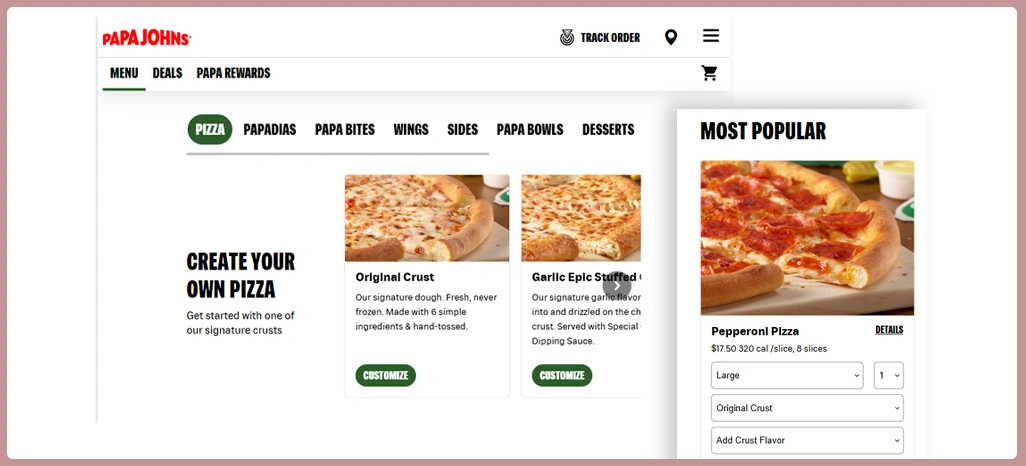
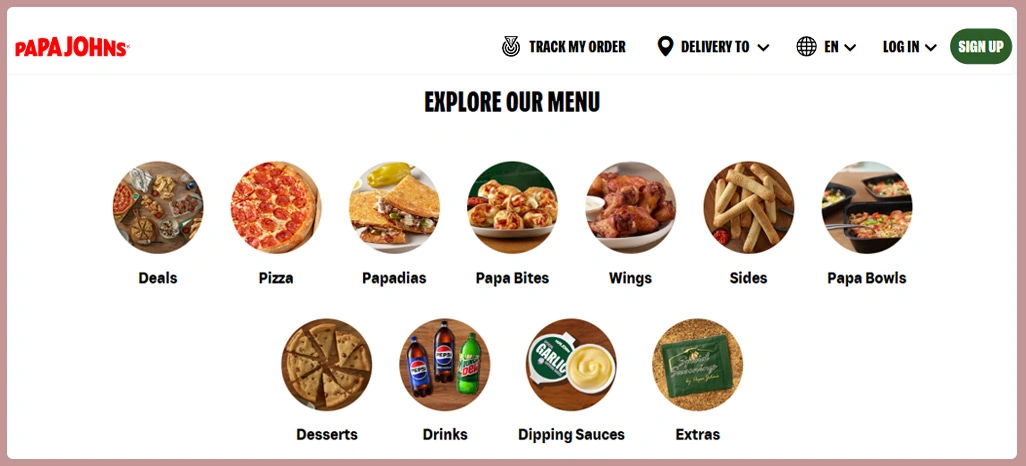
Using web scraping PapaJohns.com, businesses can extract a wide range of valuable datasets.
Menu Data Extraction
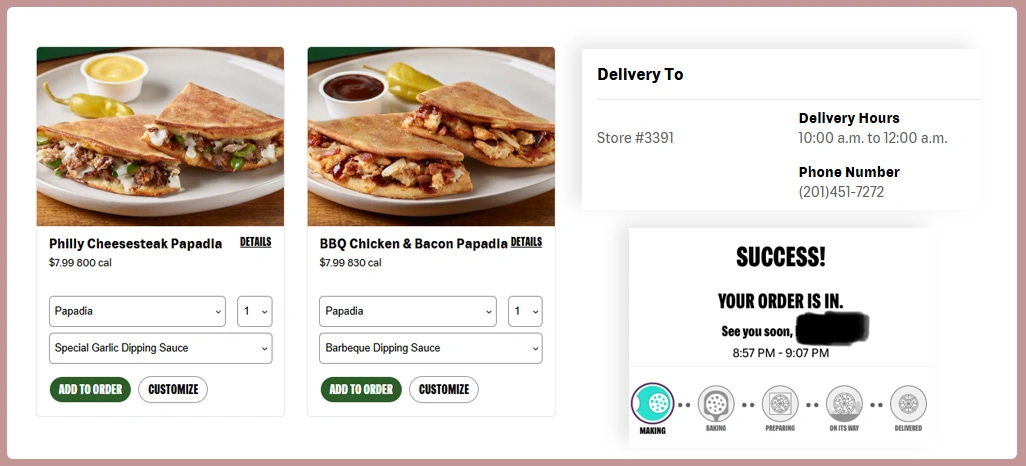
- Pizza names and descriptions
- Crust types and sizes
- Ingredients and toppings
- Sides, desserts, and beverages
This data helps build menu intelligence and product comparison systems.
Pricing Data
- Base prices by item
- Size-based pricing
- Add-on and topping prices
- Taxes and delivery fees (where available)
Papa John’s pricing varies by location, making scraping essential for accurate analysis.
Location-Based Store Data
- Store ID
- City, state, and ZIP code
- Store hours
- Delivery and pickup availability
Clients often need city-wise or state-wise pricing intelligence.
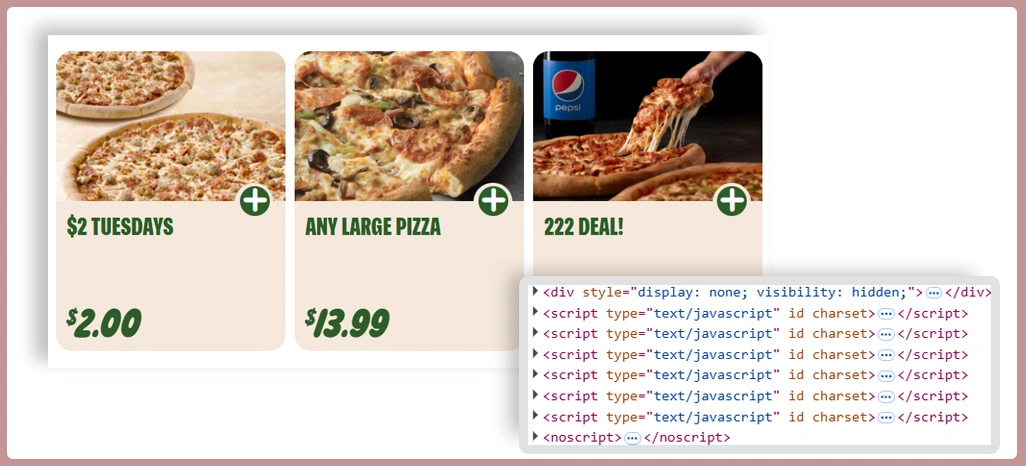
Deals & Promotions Data
- Coupons and discount codes
- Limited-time offers
- Bundle deals
- Seasonal promotions
Scraping promotional data enables real-time deal monitoring.
Availability & Order Logic
- Item availability by store
- Customization options enabled/disabled
- Delivery time estimates
This is especially useful for aggregator platforms and analytics tools.
Why Web Scraping Is the Backbone of the PapaJohns API
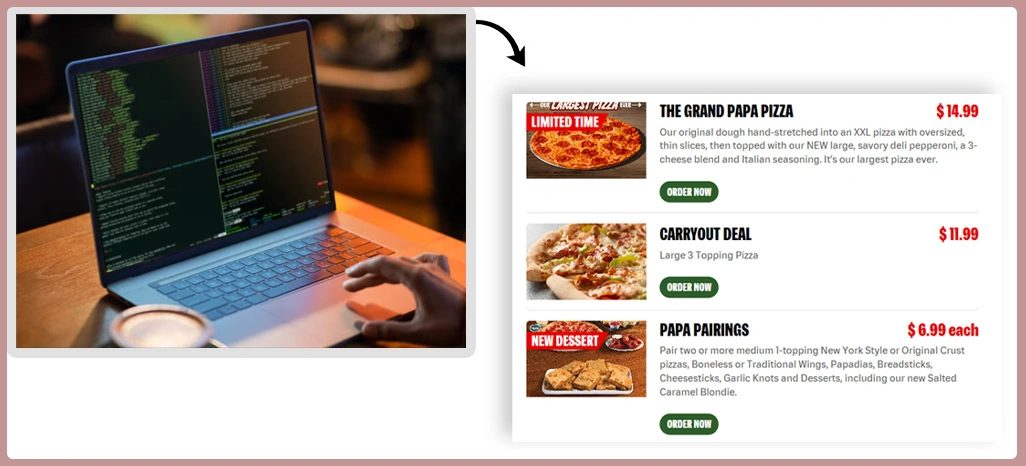
PapaJohns.com is a dynamic, JavaScript-heavy website with location-based logic. Traditional static data extraction methods do not work effectively.
Web Scraping Enables:
- Automated data collection at scale
- Location-aware menu and pricing extraction
- Real-time or near real-time updates
- Structured datasets ready for API delivery
This makes web scraping PapaJohns.com the most practical approach for building a reliable API.
How a PapaJohns.com Scraping API Works
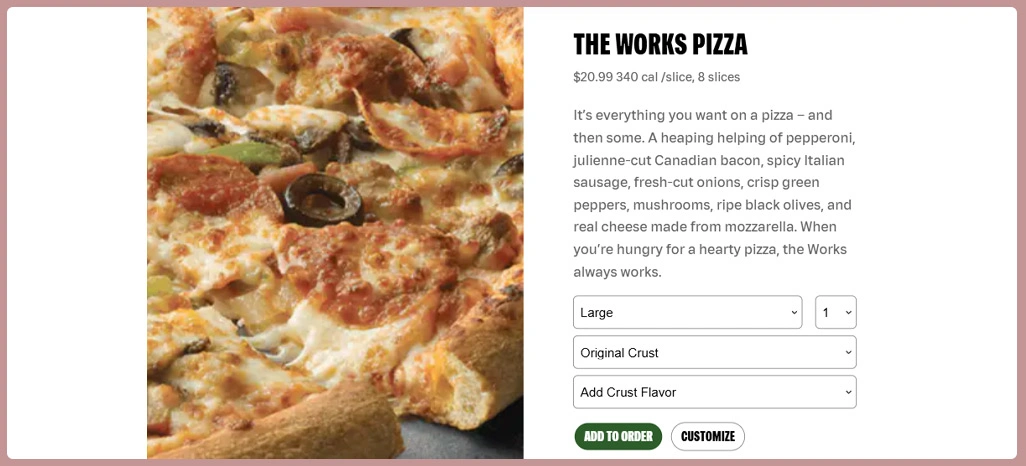
Requirement Gathering
The client defines:
- Locations to track
- Data fields required
- Update frequency
- API response format
Smart Web Scraping
Advanced scrapers:
- Simulate real user behavior
- Handle location selection
- Extract menu, pricing, and deals
- Render dynamic content
Data Processing & Normalization
- Remove duplicates
- Normalize pricing formats
- Map items across locations
- Validate missing or inconsistent data
API Layer Development
The cleaned data is exposed via:
- REST APIs
- Secure endpoints
- Authentication tokens
- Rate-limited access
Clients consume the data seamlessly without touching the scraper.
Use Cases Driving Demand for PapaJohns.com API
Food Price Comparison Platforms
Companies compare pizza prices across:
- Papa John’s
- Domino’s
- Pizza Hut
- Local chains
Scraping-powered APIs make real-time price comparison possible.
Market Research & Analytics Firms
Researchers analyze:
- Regional pricing differences
- Promotion frequency
- Menu expansion trends
Without scraping, this level of insight is impossible.
Food Delivery & Aggregator Platforms
Aggregators need:
- Menu synchronization
- Pricing updates
- Availability status
A PapaJohns.com API ensures accurate listings.
Competitive Intelligence for QSR Brands
- New product launches
- Discount strategies
- Seasonal menu changes
Scraped data fuels strategic planning.
AI & Data Science Applications
Papa John’s data feeds:
- Demand forecasting models
- Promotion effectiveness analysis
- Dynamic pricing simulations
APIs ensure continuous data flow for AI systems.
Challenges in Scraping PapaJohns.com

Location-Based Logic
Menu and pricing depend heavily on ZIP code selection.
Dynamic Rendering
PapaJohns.com relies on JavaScript and APIs behind the UI.
Anti-Bot Measures
Rate limiting, IP blocking, and behavior detection are common.
Frequent Website Updates
Frontend changes can break basic scrapers.
Professional scraping infrastructure is required to maintain stability.
Best Practices for PapaJohns.com Scraping APIs
To deliver reliable data:
- Use rotating IPs and user agents
- Implement geo-targeted scraping
- Schedule incremental crawls
- Monitor site structure changes
- Validate data continuously
Following best practices ensures long-term API reliability.
API Output Formats & Delivery
Clients typically receive data in:
- JSON (most common)
- REST API endpoints
- Webhooks for updates
- Cloud storage integration
This allows easy integration with dashboards, apps, and BI tools.
Compliance & Ethical Considerations
Responsible scraping includes:
- Respecting crawl limits
- Avoiding personal user data
- Extracting only publicly available information
- Using data for analytics, not misuse
Ethical scraping builds sustainable data pipelines.
Future of Scraping-Based APIs in Food Tech
As food delivery and QSR competition intensifies:
- Real-time pricing intelligence will become standard
- APIs will replace manual data collection
- AI-driven insights will depend on continuous scraping
Businesses that invest early in scraping-powered APIs gain a long-term advantage.
Conclusion
Build a Reliable PapaJohns.com API with Retail Scrape
The growing demand for menu, pricing, and promotion data from PapaJohns.com highlights a clear business need: a scalable, reliable API powered by web scraping.
Manual tracking and ad-hoc scripts are no longer sufficient. Companies need structured, real-time data delivered via secure APIs to support pricing intelligence, competitive analysis, and food-tech innovation.
Retail Scrape specializes in building custom scraping-based APIs for platforms like PapaJohns.com, delivering accurate, location-aware, and enterprise-ready datasets. From menu extraction and price monitoring to promotions tracking and real-time API delivery, Retail Scrape transforms raw website data into powerful business intelligence.