

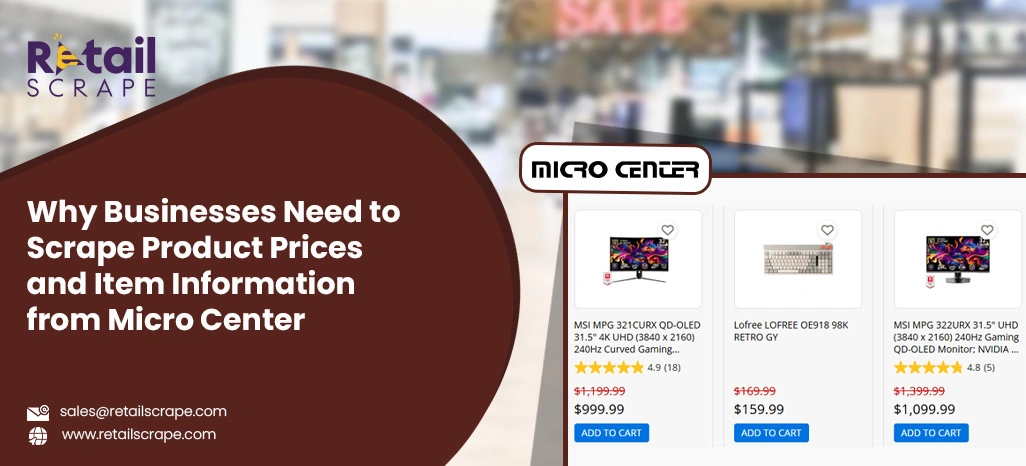
Why Businesses Need to Scrape Product Prices and Item Information from Micro Center
Introduction
In the competitive electronics and computer hardware retail market, accurate and real-time product pricing data is essential for making informed business decisions. Micro Center is one of the most trusted technology retailers in the United States, known for its extensive catalog of computer components, laptops, gaming hardware, networking equipment, and electronics—often with store-specific pricing and availability.
For retailers, brands, distributors, price intelligence firms, and market researchers, manually tracking product prices and item information from Micro Center is inefficient and error-prone. This has created a strong client need to scrape product price and item info from Micro Center using scalable web scraping solutions.
This blog explains why businesses want to scrape Micro Center product prices, what data can be extracted, how web scraping enables structured datasets, key use cases, challenges, and best practices for building reliable Micro Center data pipelines.
Understanding the Client Need for Micro Center Product Data
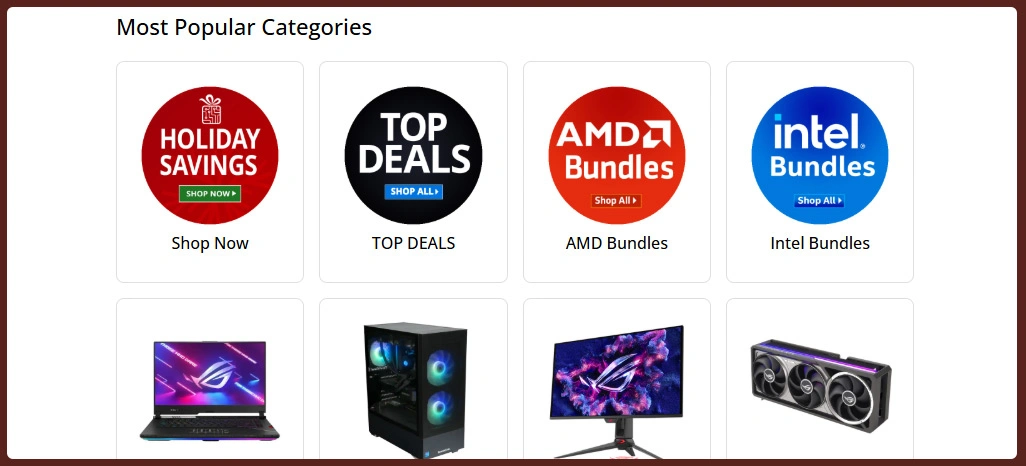
Micro Center’s website is designed for consumer browsing and in-store purchasing—not for large-scale data access. Unlike some marketplaces, Micro Center does not provide a public API for bulk product or pricing data.
Key Client Challenges- No official API for bulk product pricing
- Frequent price changes and limited-time deals
- Store-level pricing differences
- High-demand items with fast-changing availability
- Manual tracking does not scale
To overcome these challenges, businesses rely on web scraping Micro Center product data.
Why Micro Center Is a Critical Source for Price Intelligence
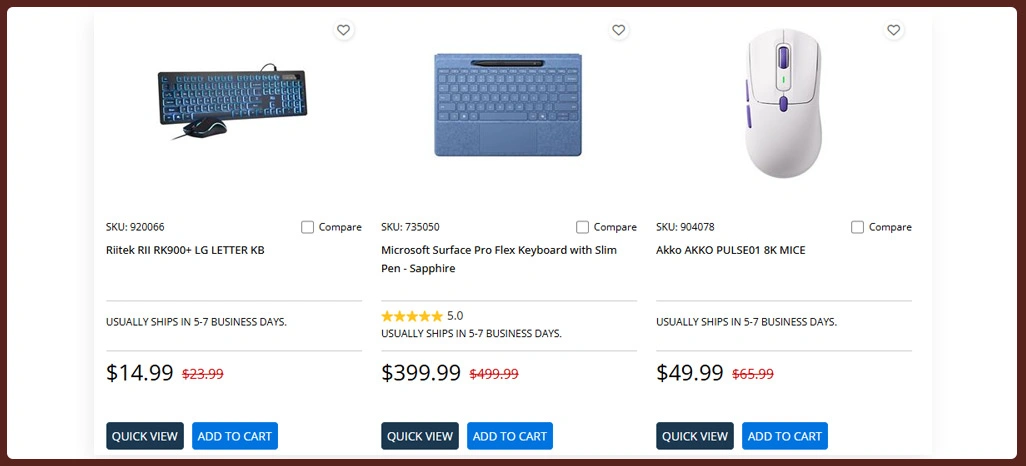
Micro Center is often used as a pricing benchmark in the PC and electronics industry. Many products—especially CPUs, GPUs, and motherboards—are priced aggressively at Micro Center, sometimes undercutting national competitors.
Scraping Micro Center helps businesses:
- Monitor competitive pricing
- Track regional price differences
- Detect flash deals and bundle offers
- Analyze in-store vs online pricing trends
This makes scraping product prices and item info from Micro Center strategically valuable.
Types of Product Price and Item Information Clients Want from Micro Center
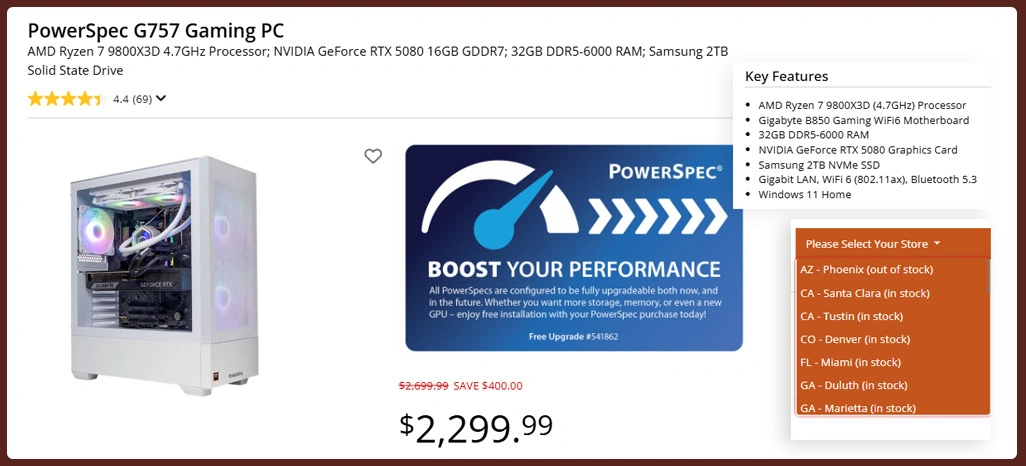
Using Micro Center product data scraping, businesses can extract comprehensive datasets.
Core Product Information
- Product name
- Brand and manufacturer
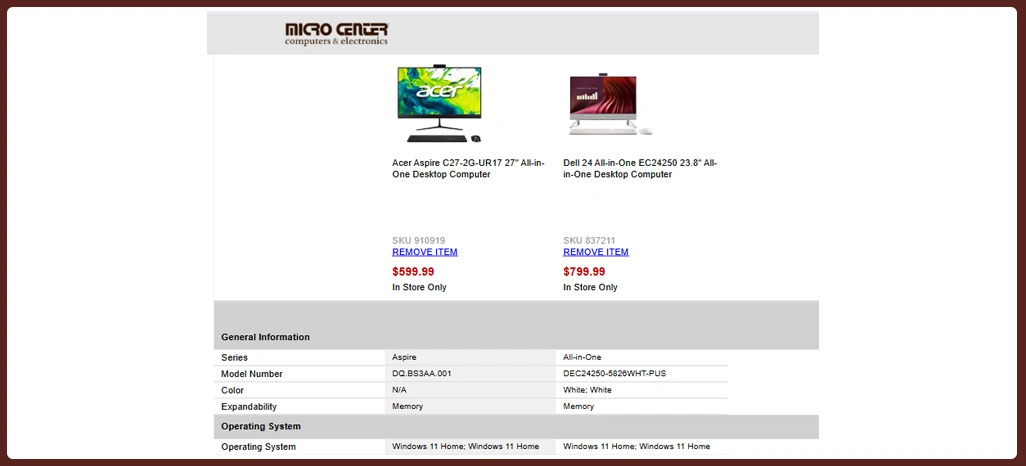
- Model number / SKU
- Product descriptions
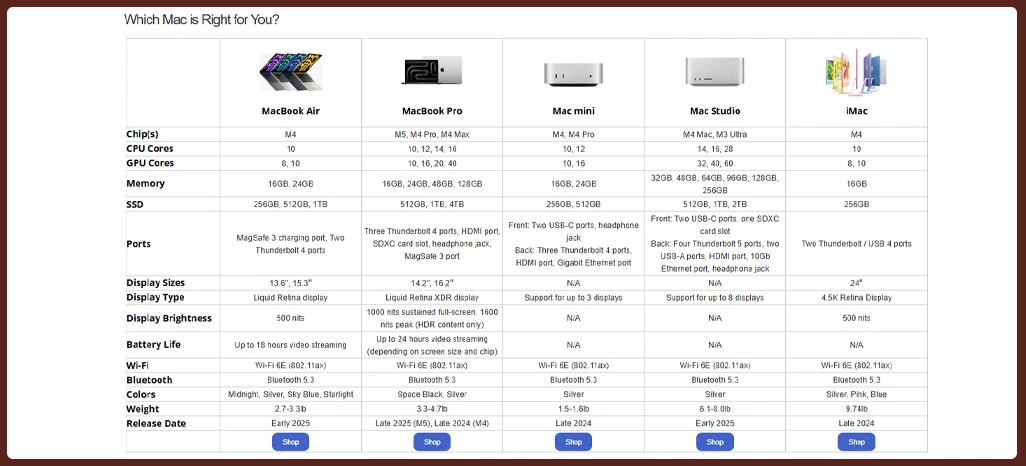
- Technical specifications
This data supports catalog enrichment and product comparison tools.
Pricing Data
- Current product price
- Sale or discounted price
- Bundle pricing (e.g., CPU + motherboard deals)
- Online vs in-store pricing
Price scraping is often the primary client requirement.
Store-Level Availability
- In-stock / out-of-stock status
- Store-specific inventory
- Pickup availability by location
- Limited stock indicators
Micro Center’s location-driven inventory makes this data especially valuable.
Category & Product Hierarchy
- Category and subcategory
- Filters and attributes
- Brand classification
This improves data organization and analytics.
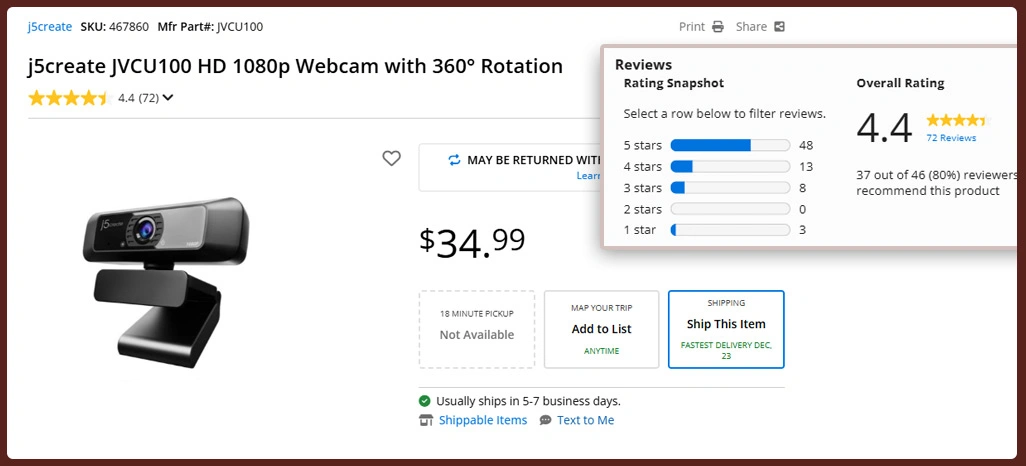
Reviews & Ratings (Optional)
- Average product rating
- Total number of reviews
- Review trends
Used for product performance and sentiment analysis.
Role of Web Scraping in Micro Center Data Collection
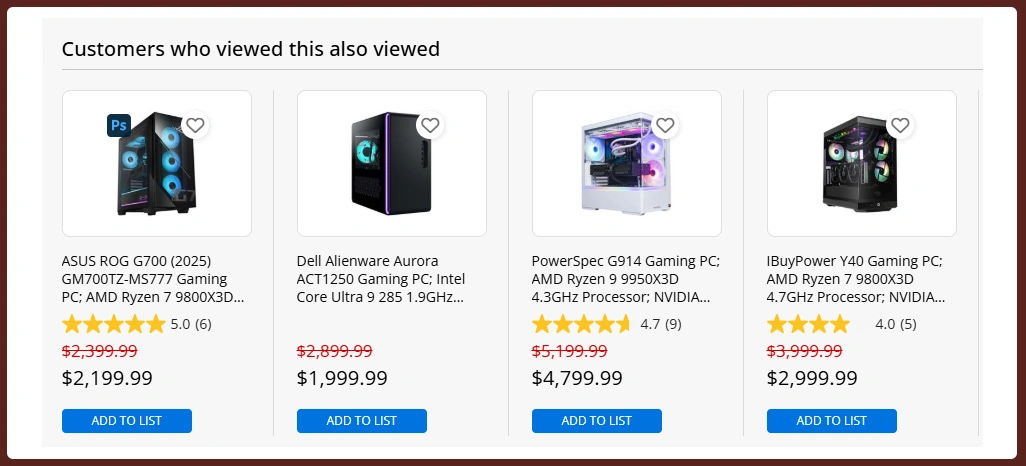
Why Web Scraping Is Essential
Micro Center’s website uses dynamic content and store-based logic. Web scraping enables:
- Automated extraction across thousands of SKUs
- Location-aware pricing and availability
- Real-time or scheduled updates
- Structured, analytics-ready datasets
Without scraping, gathering this data consistently is not feasible.
Scraping-Related Keywords in Practice
Businesses actively search for:
- Scrape Micro Center product prices
- Web scraping Micro Center product data
- Extract Micro Center item information
- Electronics price scraping
- Retail price intelligence
These scraping-driven strategies power modern competitive analysis.
How Scraping Micro Center Product Prices Works
Requirement Definition
Clients define:
- Product categories or SKUs
- Store locations to track
- Data fields required
- Update frequency
Intelligent Web Crawling
Advanced scrapers:
- Navigate category and product pages
- Select store locations
- Handle pagination and filters
- Extract dynamic price and availability data
Data Cleaning & Normalization
- Remove duplicates
- Normalize prices and bundles
- Standardize product identifiers
- Validate store-level availability
Data Delivery & Integration
Clean data is delivered via:
- APIs
- CSV / Excel
- JSON feeds
- Dashboards
This allows easy integration into internal systems.
Key Use Cases Driving Demand for Micro Center Data Scraping
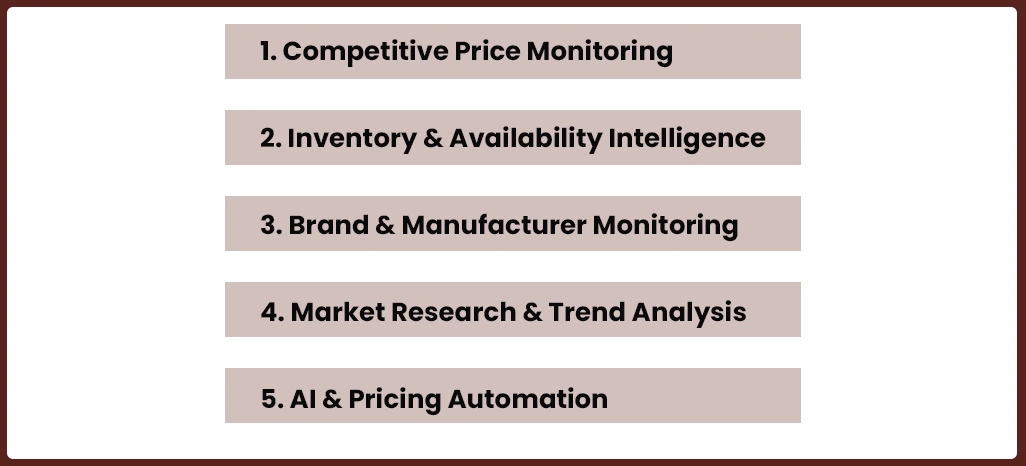
Competitive Price Monitoring
Retailers track Micro Center prices to:
- Adjust pricing strategies
- Stay competitive on high-demand electronics
- Avoid losing margin or sales
Inventory & Availability Intelligence
Businesses monitor:
- Fast-selling SKUs
- Stock shortages
- Regional demand patterns
This supports smarter inventory planning.
Brand & Manufacturer Monitoring
Manufacturers track:
- Pricing consistency
- Bundle strategies
- Product positioning
Scraped data helps protect brand value.
Market Research & Trend Analysis
Analysts examine:
- Adoption of new hardware technologies
- Category-level price trends
- Seasonal electronics demand
Historical scraped data enables long-term insights.
AI & Pricing Automation
Micro Center data feeds:
- Dynamic pricing engines
- Demand forecasting models
- AI-driven competitive intelligence
APIs powered by scraping ensure continuous data flow.
Challenges in Scraping Micro Center Product Data
Store-Based Logic
Pricing and availability change based on selected store location.
Dynamic Rendering
Pages rely on JavaScript and real-time inventory checks.
Anti-Bot Measures
Rate limiting and IP blocking can occur with aggressive scraping.
High SKU & Update Frequency
Large catalogs require scalable infrastructure.
Professional scraping solutions are required to maintain accuracy.
Best Practices for Scraping Micro Center Prices & Item Info
To ensure reliable results:
- Use geo-targeted and store-aware scraping
- Rotate IPs and user agents
- Schedule incremental crawls
- Monitor page structure changes
- Continuously validate data quality
These best practices ensure long-term success.
Data Output Formats for Micro Center Scraped Data
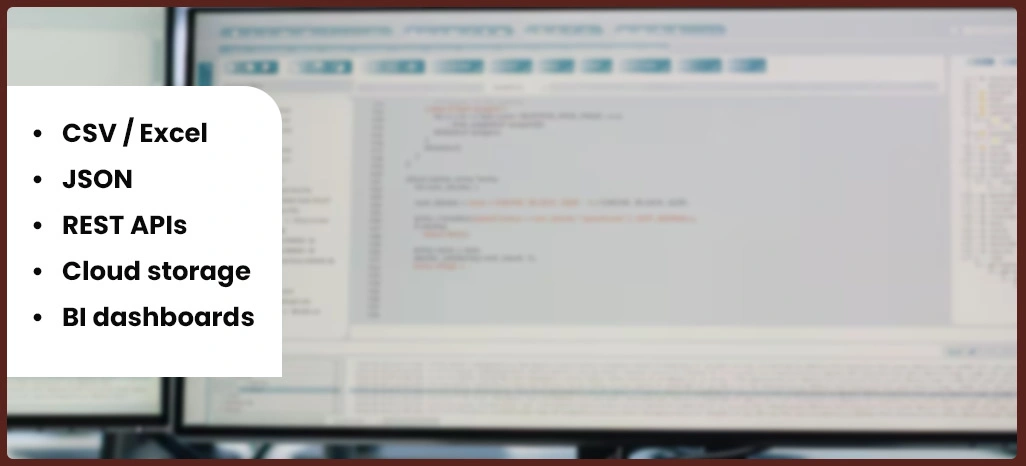
Clients typically receive data in:
- CSV / Excel
- JSON
- REST APIs
- Cloud storage
- BI dashboards
Flexible delivery supports diverse business needs.
Compliance & Responsible Scraping
Ethical scraping practices include:
- Respecting crawl rate limits
- Avoiding personal or customer data
- Extracting publicly available information
- Using data for analytics and research
Responsible scraping ensures sustainability.
Future of Micro Center Price Intelligence
As electronics retail competition intensifies:
- Real-time price monitoring will become standard
- Automation will replace manual tracking
- AI systems will depend on continuous data extraction
Businesses that invest early in Micro Center price scraping gain a long-term advantage.
Conclusion
Transform Micro Center Data into Insights with Retail Scrape
The growing client demand to scrape product price and item information from Micro Center reflects the shift toward data-driven retail strategies. Manual tracking cannot keep pace with store-level pricing and fast-changing inventory.
By leveraging web scraping for Micro Center product data, businesses gain accurate, scalable, and real-time insights into pricing, availability, and product attributes.
Retail Scrape delivers enterprise-grade solutions for Micro Center price scraping and item data extraction, enabling real-time monitoring, store-level intelligence, and API-ready datasets. With reliable scraping infrastructure and custom delivery options, Retail Scrape helps businesses turn Micro Center data into competitive advantage and smarter decision-making.