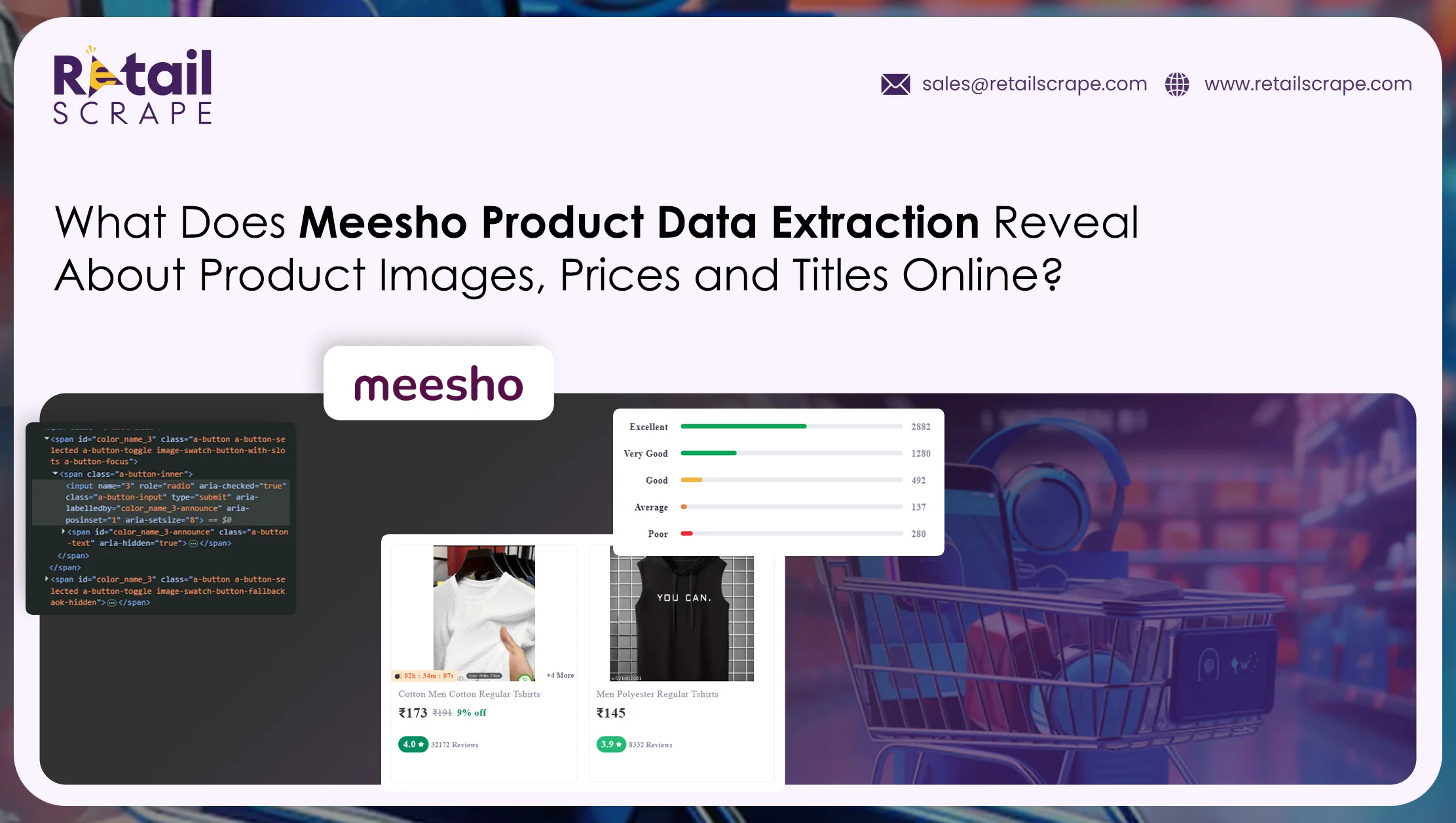
What Does Meesho Product Data Extraction Reveal About Product Images, Prices and Titles Online?
Introduction
Online marketplaces generate large volumes of product information that can help businesses understand pricing, catalog positioning, product presentation, and competitive movements. Meesho Product Data Extraction organizes publicly available product information into structured datasets, making product-level research more consistent and easier to analyze across categories.
Product images, titles, prices, and attributes can reveal how sellers position similar products, adjust pricing, and present catalogs to shoppers. Businesses can combine these details with Meesho Product Data API for Ecommerce workflows to support catalog monitoring, competitor research, assortment analysis, and recurring market intelligence activities.
Structured marketplace information also helps teams identify pricing variations, repeated product patterns, image presentation differences, and changing catalog structures. When collected systematically, these signals can support dashboards, research reports, pricing models, and merchandising decisions without relying entirely on manual data collection processes.
Emerging Marketplace Patterns Through Product Visibility Signals
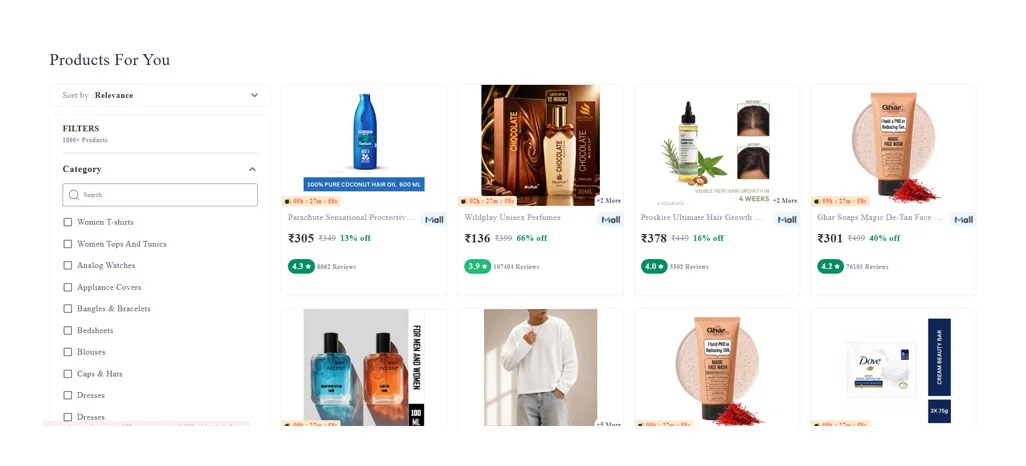
Marketplace listings reveal how products compete through presentation, pricing, naming, and assortment structure. A structured Meesho Product Catalog brings these elements together, allowing teams to compare similar products across categories and sellers. Instead of reviewing individual listings manually, analysts can organize product records into consistent fields and evaluate changes across larger collections for ongoing marketplace research.
Product visibility also depends on how information is presented to shoppers. E-Commerce Data Intelligence becomes more useful when product images, titles, categories, and pricing signals are connected within one analytical workflow. Businesses can examine visual emphasis, naming patterns, category placement, and pricing differences across comparable listings, supporting stronger merchandising and market positioning decisions.
Product-level characteristics add another layer to marketplace research because shoppers often respond to specifications, formats, sizes, colors, and other listing details. Meesho Product Attributes can help analysts group comparable items and identify recurring patterns across categories. Combined with consistent naming records, these fields make product comparisons more precise and easier to update when marketplace assortments change.
Key analytical focus areas:
- Category-level assortment comparison
- Seller product positioning analysis
- Product naming pattern monitoring
- Visual presentation assessment
- Attribute-based product grouping
- Recurring catalog change tracking
| Analysis Area | Business Application |
|---|---|
| Catalog Structure | Assortment Review |
| Product Visibility | Listing Comparison |
| Category Coverage | Market Evaluation |
| Naming Patterns | Content Analysis |
A broader dataset can reveal relationships that are difficult to identify through isolated product checks. Analysts can compare listing frequency, assortment depth, seller coverage, and naming structures while tracking changes over selected periods. Meesho Product Title Extraction supports this review by turning listing names into organized fields for classification, comparison, and recurring content analysis across product groups.
Shifting Price Patterns Across Product Listings And Categories
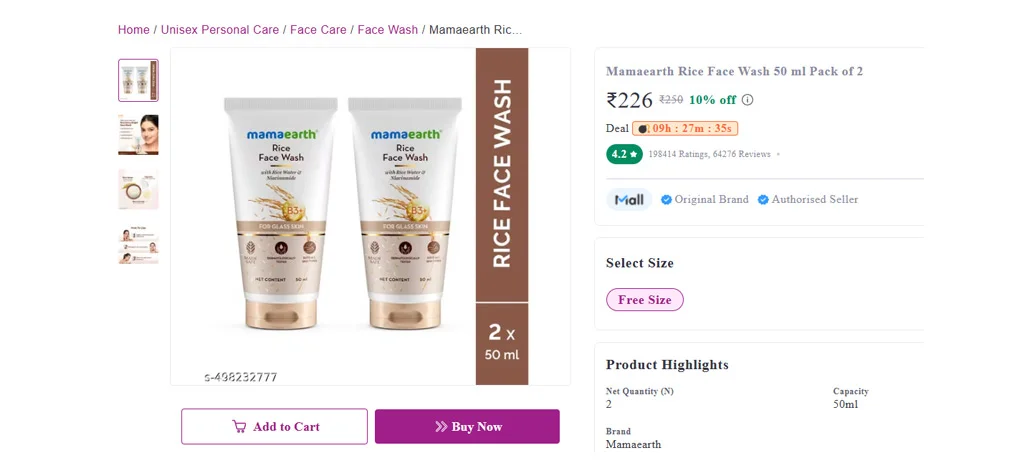
Price research becomes more practical when product information is collected in a consistent structure. Meesho Product Details Extraction can organize listing names, descriptions, categories, seller information, and other relevant fields into standardized records. This reduces repetitive manual checking and gives analysts a clearer basis for comparing similar products across marketplace segments, seller groups, and product categories.
Pricing signals can change as sellers adjust offers, discounts, or product positioning. Web Scraping Services can support recurring collection workflows that capture marketplace information at defined intervals. With consistent observations, analysts can compare price ranges, identify unusual movements, review competitive gaps, and separate temporary changes from broader pricing patterns across selected product categories.
A structured pricing layer makes comparative analysis easier because products can be grouped by category, seller, title structure, or observed price. Meesho Product Price Data helps teams evaluate price dispersion, identify frequently changing listings, and review how similar products are positioned. These insights can contribute to pricing research, competitor benchmarking, assortment planning, and promotional strategy development.
Key monitoring activities:
- Product price comparison
- Discount movement tracking
- Seller-level pricing review
- Category price benchmarking
- Historical price monitoring
- Competitive gap identification
| Tracking Metric | Analytical Purpose |
|---|---|
| Price Range | Market Benchmarking |
| Discount Level | Promotion Review |
| Seller Pricing | Competition Analysis |
| Historical Changes | Trend Monitoring |
Regular monitoring also helps businesses create historical records instead of relying on one-time snapshots. Teams can review product changes across daily, weekly, or monthly collection cycles, then connect those observations with internal sales or merchandising information. This approach supports practical reporting, faster comparison, and more consistent evaluation of marketplace pricing behavior across competitive segments.
Connecting Images Titles And Pricing For Deeper Analysis
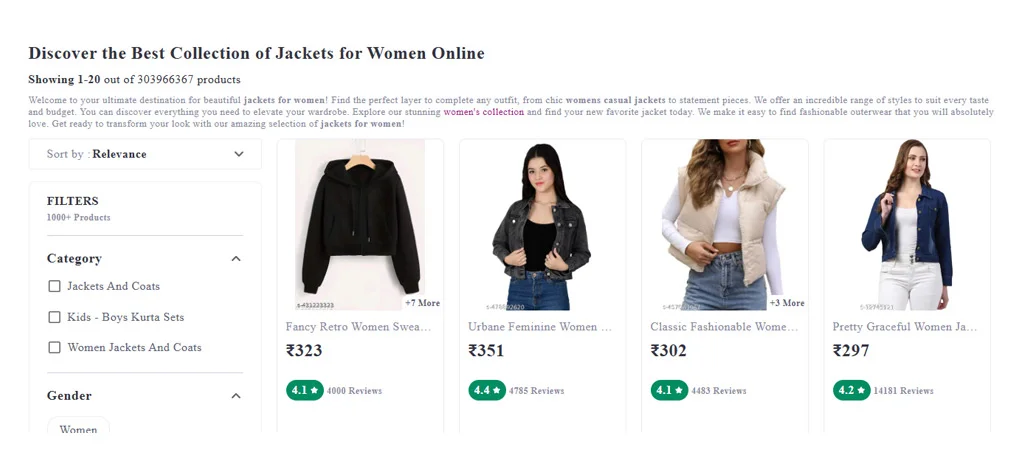
Product titles and pricing often work together to shape how shoppers interpret marketplace listings. Meesho Product Title and Pricing Data can help analysts compare naming structures with price positioning across similar products. This relationship may reveal whether premium wording, pack information, or descriptive terms frequently appear alongside particular price ranges and product segments.
Visual presentation adds useful context when evaluating comparable listings because images can communicate product quality, format, packaging, and style before shoppers read detailed information. Meesho Product Price and Image Data allows teams to examine visual presentation alongside pricing signals, supporting category benchmarking and structured reviews of how competing products are positioned across marketplace listings.
Automated delivery can make these analytical workflows easier to integrate with internal systems. Web Scraping API Services can route structured marketplace records into databases, dashboards, or data pipelines according to business requirements. This reduces repeated manual transfers and allows teams to build monitoring processes around consistent product fields, collection schedules, reporting structures, and analytical outputs.
Key analysis opportunities:
- Visual product comparison
- Title structure assessment
- Price positioning analysis
- Listing presentation review
- Category-level benchmarking
- Automated data integration
| Data Component | Analytical Use |
|---|---|
| Product Titles | Naming Review |
| Listing Images | Visual Assessment |
| Product Prices | Price Comparison |
| Combined Records | Market Analysis |
The combined dataset can support deeper title, pricing, and visual comparisons across large product groups. Analysts can segment listings by category, compare naming patterns, evaluate price differences, and review image presentation within the same workflow. These connected signals make marketplace research more organized and provide useful context for catalog optimization, competitive assessment, and product positioning decisions.
How Retail Scrape Can Help You?
We can help businesses organize marketplace information into structured datasets for recurring research and competitive monitoring. By applying Meesho Product Data Extraction across relevant product categories, teams can collect standardized information that supports pricing analysis, catalog monitoring, merchandising research, competitor benchmarking, and marketplace intelligence.
The workflow can be adapted to different collection requirements and analytical environments. Key capabilities can include:
- Automated collection across selected product categories
- Structured output for easier business analysis
- Recurring monitoring of marketplace changes
- Product-level comparison across multiple listings
- Flexible datasets for dashboards and reporting
- Support for scalable research and monitoring workflows
Collected information can then be processed into a Meesho Dataset containing product-level records for pricing, imagery, titles, and other analytical fields. This structured approach reduces repetitive manual research and gives teams a consistent foundation for evaluating marketplace movements, comparing competing products, and developing data-backed merchandising strategies.
Conclusion
Marketplace information can reveal valuable patterns when product images, titles, prices, and attributes are collected systematically. Meesho Product Data Extraction helps transform scattered listing information into organized records that support competitor benchmarking, catalog research, pricing evaluation, and product-level market analysis.
Combining structured collection with Meesho Product Image Extraction can provide a broader view of product presentation and assortment changes across marketplace listings. Connect with Retail Scrape to build a structured marketplace data collection workflow tailored to your analytics requirements.