Analyzing Keeta Food Delivery Data: Web Scraping for Real-Time Market Intelligence
The global food delivery ecosystem is evolving at an unprecedented pace. With intense competition, dynamic pricing models, and rapidly shifting consumer preferences, real-time data intelligence has become the backbone of decision-making for food delivery platforms, restaurants, brands, and market analysts. Among emerging players, Keeta is gaining attention as a fast-growing food delivery platform, making it a valuable source of competitive and market data.
This is where Keeta Food Delivery Data Scraping comes into play. By extracting real-time, structured data from the Keeta platform, businesses can unlock deep insights into pricing, restaurant availability, delivery performance, promotions, and consumer demand patterns.
In this blog, we explore how Keeta food delivery data scraping works, what data can be extracted, key business use cases, technical considerations, challenges, and why real-time scraping intelligence is critical in the modern food delivery economy.
Understanding Keeta as a Food Delivery Platform
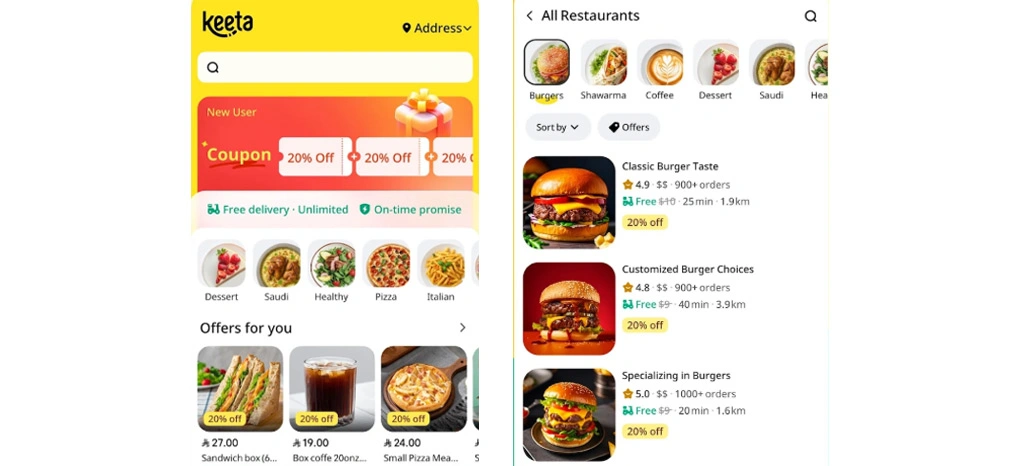
Keeta operates as a digital food delivery marketplace connecting restaurants, cloud kitchens, and consumers through a mobile-first platform. Like other modern food delivery apps, Keeta relies on:
- Hyperlocal restaurant discovery
- Dynamic pricing and offers
- Real-time delivery tracking
- Location-based availability
- Rapid onboarding of new food partners
Because of these characteristics, Keeta generates massive volumes of high-frequency data, making it a valuable intelligence source when captured through ethical and scalable scraping methods.
What Is Keeta Food Delivery Data Scraping?
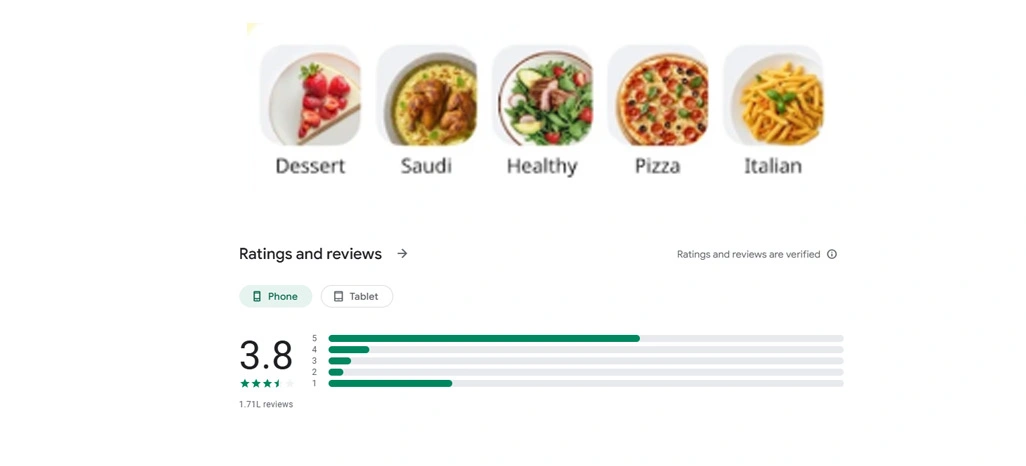
Keeta Food Delivery Data Scraping refers to the automated extraction of publicly accessible data from Keeta’s food delivery platform using advanced web scraping technologies. These scraping systems simulate real user interactions, capture dynamically rendered content, and convert raw app or web data into structured, machine-readable datasets.
Instead of manually collecting information, businesses rely on scraping-powered APIs to obtain:
- Real-time food delivery insights
- Clean, normalized data
- Location-specific intelligence
- Historical trend datasets
This enables faster, more accurate, and scalable food delivery analytics.
Types of Data Extracted from Keeta Food Delivery Platforms
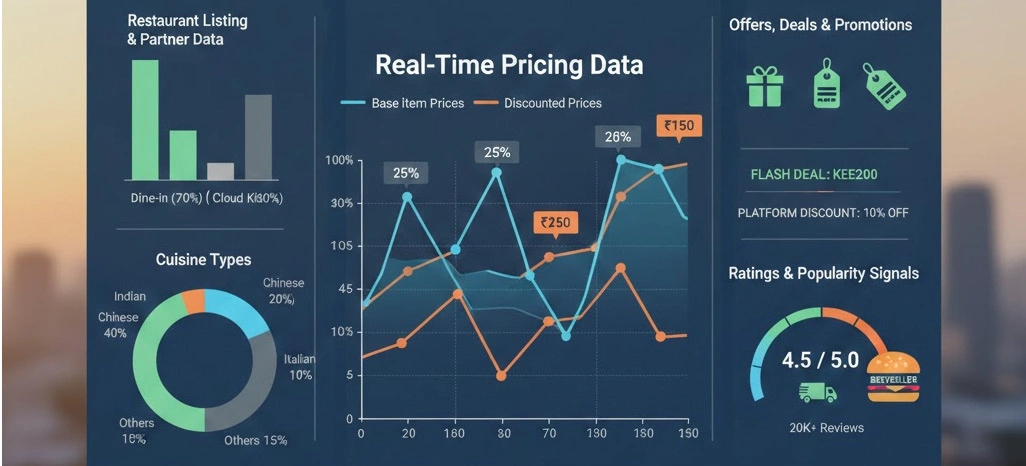
1. Restaurant Listing & Partner Data
Keeta data scraping allows extraction of:
- Restaurant names and IDs
- Cuisine types and categories
- Cloud kitchen vs dine-in classification
- Location and service area
- Operating hours
This data supports restaurant landscape analysis and market expansion research.
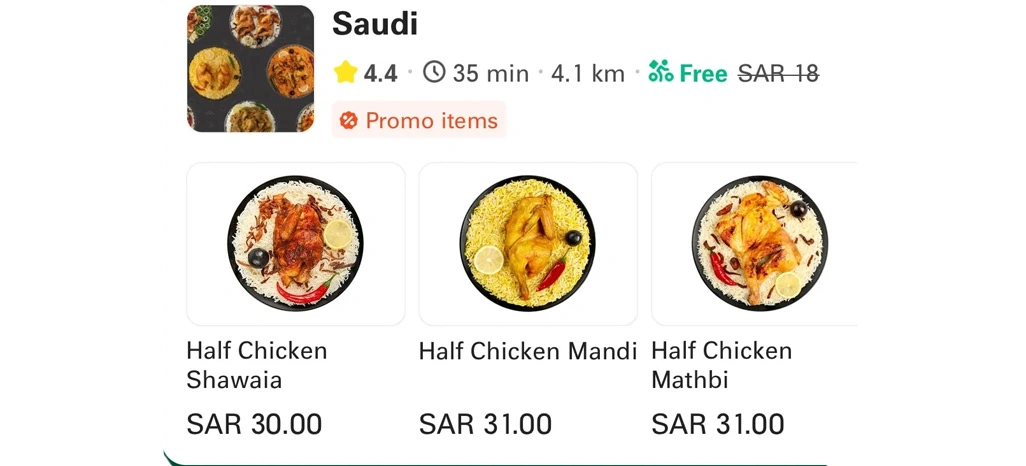
2. Menu & Food Item Data
Menu-level scraping provides:
- Menu item names
- Prices and portion details
- Add-ons and customizations
- Images and descriptions
- Category-level segmentation
Menu intelligence helps businesses analyze pricing consistency, menu engineering, and product positioning.
3. Real-Time Pricing Data
Pricing on food delivery platforms is highly dynamic. Keeta data scraping captures:
- Base item prices
- Discounted prices
- Platform-driven price changes
- Restaurant-specific pricing variations
This data is essential for competitive price monitoring and revenue optimization.
4. Offers, Deals & Promotions
Keeta frequently runs promotions to drive user engagement. Scraping enables tracking of:
- Promo codes
- Platform-level discounts
- Restaurant-funded offers
- Time-bound and flash deals
Promotion intelligence supports campaign analysis and customer acquisition strategy.
5. Availability & Operational Status
Scraping real-time availability data reveals:
- Open vs closed restaurants
- Temporary service pauses
- Item-level availability
- Location-based restrictions
This is critical for supply-demand alignment and operational benchmarking.
6. Delivery Time & Logistics Data
Keeta delivery performance data includes:
- Estimated delivery time
- Distance-based delivery metrics
- Surge or peak-hour signals
- Delivery fee structures
These insights help evaluate logistics efficiency and customer experience performance.
7. Ratings & Popularity Signals
Where publicly visible, scraping can extract:
- Restaurant ratings
- Review counts
- Bestseller tags
- Popular cuisine indicators
These signals are widely used for demand forecasting and restaurant performance ranking.
Why Real-Time Food Delivery Intelligence Matters
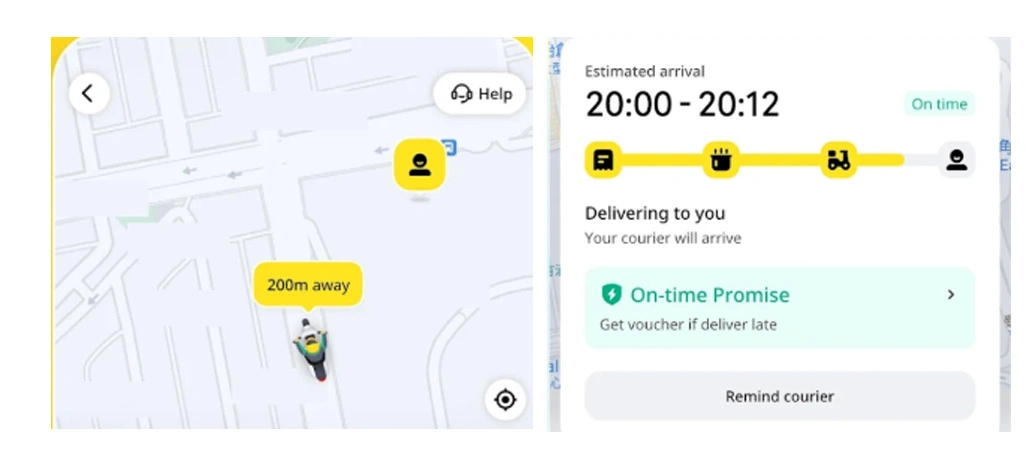
Food delivery markets are highly volatile. Prices, availability, and delivery timelines can change multiple times a day. Real-time Keeta food delivery data scraping allows businesses to:
- Respond faster to market changes
- Identify pricing gaps instantly
- Monitor competitor promotions
- Detect demand spikes early
Without real-time intelligence, decisions quickly become outdated.
Key Use Cases of Keeta Food Delivery Data Scraping
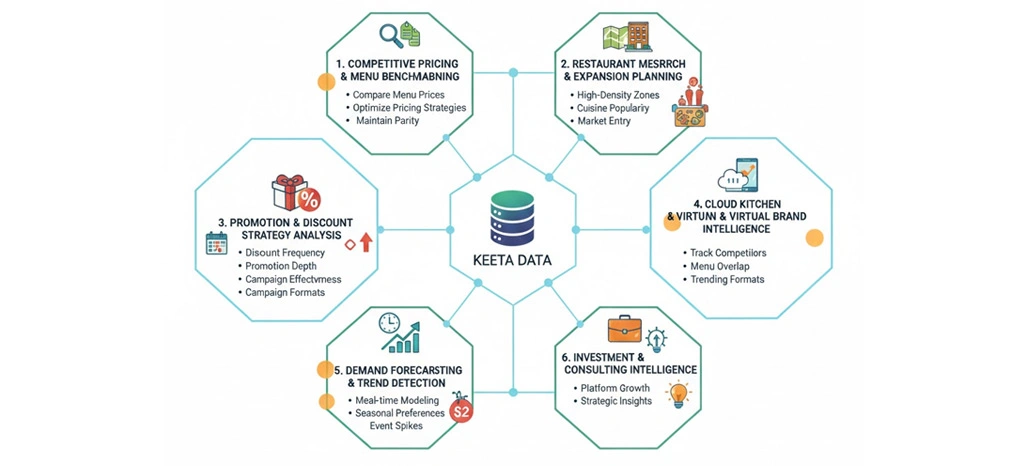
1. Competitive Pricing & Menu Benchmarking
Restaurants and aggregators use Keeta data scraping to:
- Compare menu prices across platforms
- Identify premium vs discount positioning
- Optimize menu pricing strategies
- Maintain pricing parity
This is especially valuable in competitive urban food delivery markets.
2. Restaurant Market Research & Expansion Planning
Data scraping enables:
- Identification of high-density restaurant zones
- Cuisine popularity analysis by region
- Gap analysis for underserved categories
- City-wise food demand mapping
This supports data-backed market entry and expansion decisions.
3. Promotion & Discount Strategy Analysis
By tracking Keeta promotions, businesses can:
- Analyze discount frequency
- Measure promotion depth
- Identify peak discount windows
- Evaluate campaign effectiveness
This helps optimize marketing spend and offer timing.
4. Cloud Kitchen & Virtual Brand Intelligence
Cloud kitchens rely heavily on delivery platforms. Scraped Keeta data helps:
- Track competitor virtual brands
- Analyze menu overlap
- Monitor price competitiveness
- Identify trending food formats
This is crucial for scaling delivery-only food brands.
5. Demand Forecasting & Trend Detection
Historical Keeta data enables:
- Meal-time demand modeling
- Weekend vs weekday trends
- Seasonal food preferences
- Event-driven consumption spikes
These insights drive inventory planning and operational efficiency.
6. Investment & Consulting Intelligence
Investors and consultants use Keeta data scraping to:
- Evaluate platform growth
- Assess restaurant partner density
- Track pricing behavior
- Analyze customer demand signals
This transforms raw platform data into actionable strategic insights.
Technical Architecture Behind Keeta Data Scraping
A professional Keeta food delivery scraping system includes:
- Dynamic content rendering
- Headless browser automation
- Location-based request handling
- Anti-bot and rate-limit mitigation
- Data normalization and validation
- API-based data delivery
This ensures high accuracy, scalability, and reliability.
Challenges in Keeta Food Delivery Data Scraping
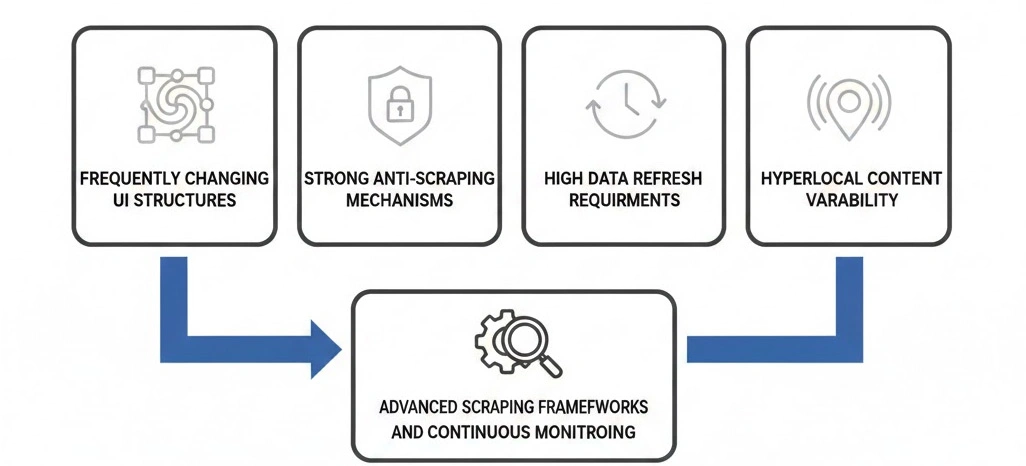
Despite its value, Keeta data scraping presents challenges:
- Frequently changing UI structures
- Strong anti-scraping mechanisms
- High data refresh requirements
- Hyperlocal content variability
Advanced scraping frameworks and continuous monitoring help overcome these obstacles.
Ethical & Compliant Data Collection Practices
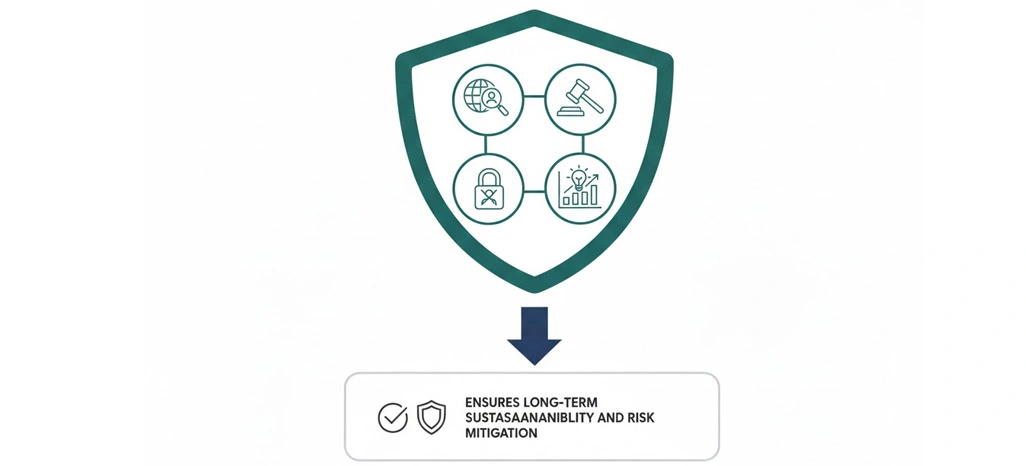
Responsible Keeta data scraping focuses on:
- Publicly available data only
- No personal or user-identifiable information
- Compliance with applicable data regulations
- Ethical use for market intelligence
This ensures long-term sustainability and risk mitigation.
Future of Keeta Food Delivery Data Intelligence
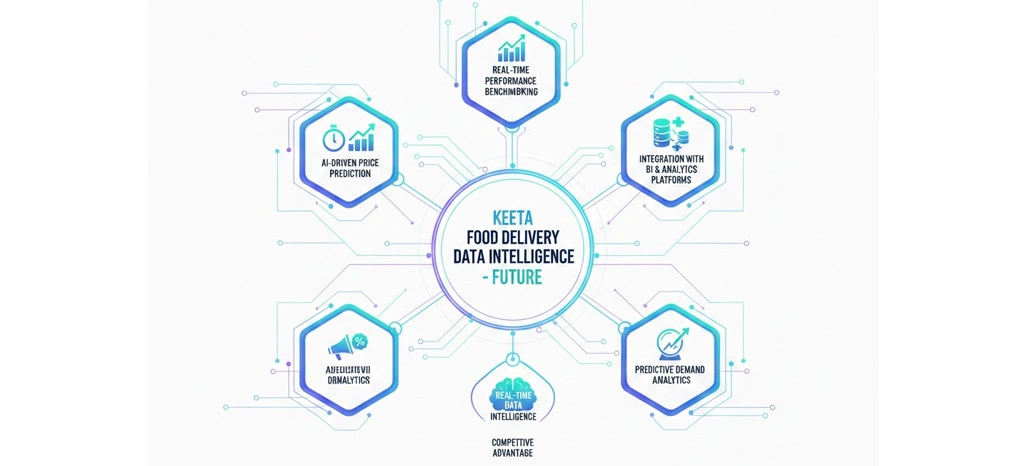
The future of food delivery data scraping will include:
- AI-driven price prediction
- Real-time delivery performance benchmarking
- Automated promotion optimization
- Predictive demand analytics
- Integration with BI and analytics platforms
As food delivery platforms evolve, real-time data intelligence will define competitive advantage.
Conclusion
The food delivery ecosystem is increasingly shaped by real-time data, rapid experimentation, and hyperlocal competition. Platforms like Keeta generate vast amounts of dynamic information related to restaurant availability, menu pricing, promotions, delivery timelines, and consumer demand. However, the true value of this information lies in the ability to systematically collect, structure, and analyze it at scale.
Keeta food delivery data scraping enables businesses to move beyond surface-level observations and build a data-driven understanding of market behavior. From pricing benchmarks and menu optimization to demand forecasting and competitive analysis, real-time food delivery intelligence supports smarter strategic decisions across restaurants, cloud kitchens, investors, and research teams.
As food delivery platforms continue to evolve, organizations that leverage ethical, scalable, and real-time web scraping frameworks will be best positioned to anticipate trends rather than react to them. Turning raw platform data into actionable insights is no longer optional—it is a core requirement for staying competitive in the modern food delivery economy.
For enterprises and analysts looking to extract structured, reliable, and real-time food delivery intelligence from platforms like Keeta, Retail Scrape provides advanced web scraping and data API solutions designed to support research, analytics, and business decision-making at scale.