
How Does Digital Shelf Monitoring for US E-Commerce Brands Reduce Pricing and Stockout Risks?
Introduction
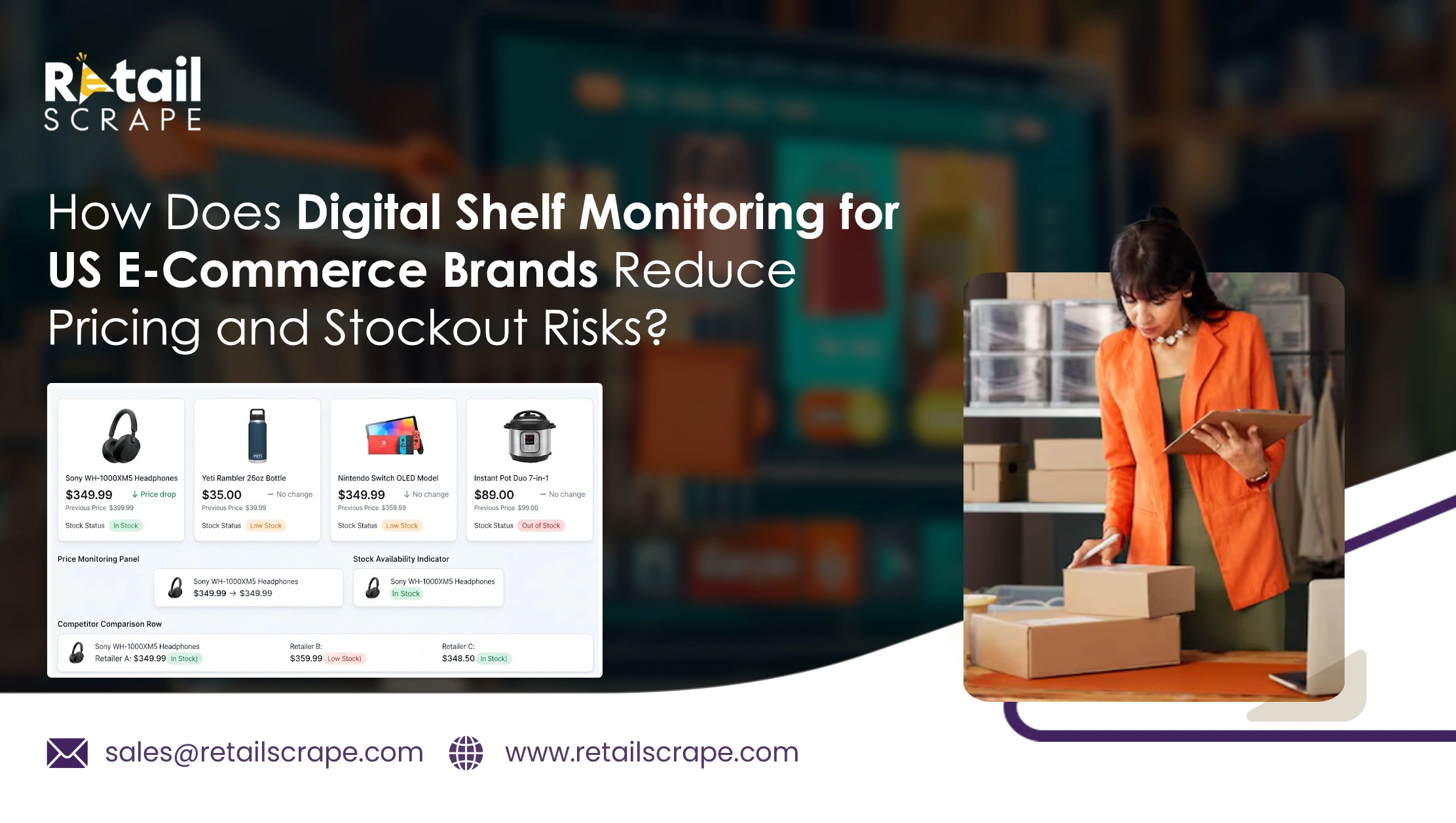
US e-commerce brands operate in a highly competitive environment where prices, inventory, product rankings, and competitor activity can change throughout the day. Digital Shelf Monitoring for US E-Commerce Brands provides continuous visibility into these changes, helping businesses identify pricing inconsistencies, stockout risks, content gaps, and marketplace performance issues before they affect sales.
For brands managing thousands of products across marketplaces and retail websites, manual tracking quickly becomes inefficient. Digital Shelf Monitoring for US Retailers combines structured online data with automated tracking to monitor product availability, pricing, promotions, ratings, reviews, and visibility. This creates a consistent view of digital shelf performance across multiple channels.
According to common e-commerce benchmarks, stockouts can contribute to significant lost sales, while frequent price changes can directly influence conversion decisions. Automated monitoring helps teams detect these changes faster and prioritize corrective actions. With accurate data, businesses can coordinate pricing, inventory, merchandising, and competitive strategies while maintaining a stronger online presence across the US market.
Reducing Pricing And Inventory Risks Across US Marketplaces
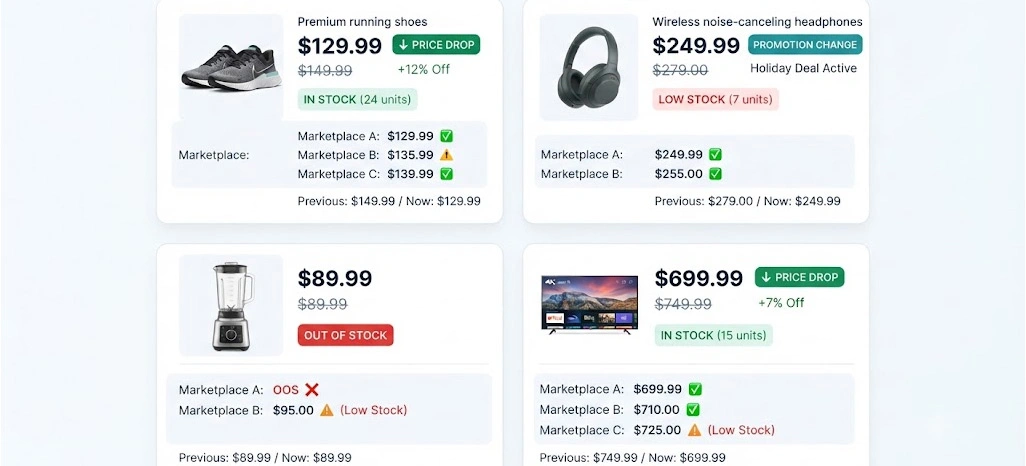
Pricing and inventory conditions directly influence how customers perceive competing products online. Frequent changes can create inconsistent offers, while unavailable products may lose traffic and purchase opportunities. Digital Shelf Price Monitoring allows retailers to identify meaningful price movements and availability changes across relevant online channels without depending entirely on manual research.
A structured monitoring process can highlight sudden price reductions, promotional adjustments, unavailable SKUs, and assortment gaps. When these signals are collected consistently, merchandising teams can compare current conditions with historical observations and determine whether corrective action is necessary. This supports faster responses when important products become less competitive.
For example, a retailer can organize monitored information around several operational indicators:
| Risk Area | Monitoring Signal | Business Response |
|---|---|---|
| Pricing | Sudden movement | Review pricing |
| Inventory | Product unavailable | Check replenishment |
| Promotions | Offer changes | Evaluate campaign |
| Assortment | SKU disappears | Review catalog |
Businesses can strengthen these processes through Ecommerce Price Monitoring, which provides recurring visibility into online pricing conditions and helps teams identify patterns that may otherwise remain hidden within large product catalogs.
Key advantages include:
- Faster identification of pricing changes
- Earlier detection of unavailable products
- Better visibility into promotional movements
- More consistent catalog evaluation
Combining these capabilities helps reduce avoidable pricing and inventory exposure while giving teams a clearer operational picture of changing marketplace conditions.
Strengthening Competitive Decisions Through Continuous Market Tracking
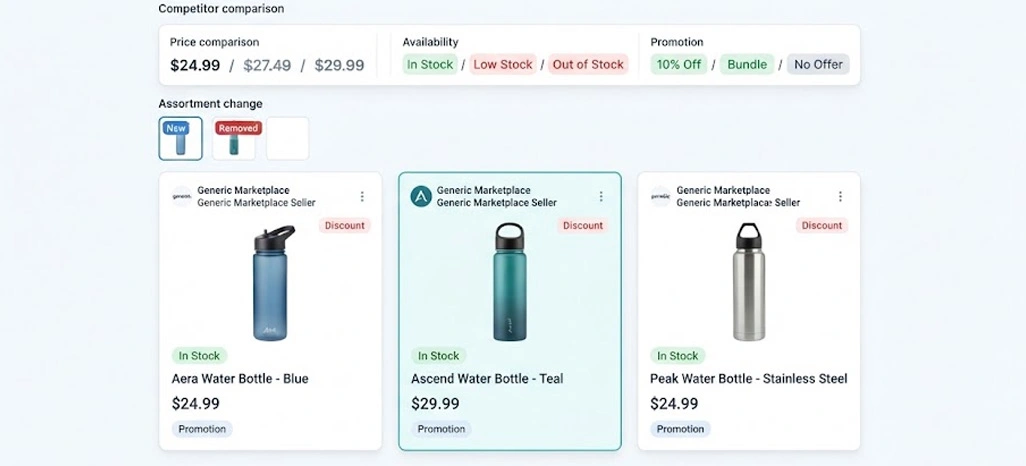
Competitive pressure increases when multiple sellers offer similar products across overlapping marketplaces. Timely market information helps brands understand competitor pricing, availability, promotions, assortment changes, and positioning. Ecommerce Competitive Intelligence USA supports this process by organizing market observations into structured information that teams can evaluate alongside their own product performance.
A competitor lowering prices across a popular category can quickly influence customer expectations. Similarly, a newly introduced bundle, discount, or product variation can affect demand and marketplace positioning. Continuous monitoring allows teams to identify these changes earlier instead of relying solely on periodic research or delayed sales reports.
| Competitive Area | Observation | Strategic Purpose |
|---|---|---|
| Pricing | Market movement | Pricing review |
| Availability | Seller status | Demand assessment |
| Promotions | Offer changes | Campaign planning |
| Assortment | New listings | Catalog decisions |
Competitor Digital Shelf Monitoring in the USA provides a broader perspective by tracking relevant digital shelf signals across competing retail channels. This helps businesses understand where competitors are changing their online strategies and where their own products may require attention.
Useful monitoring activities include:
- Comparing competing product prices
- Tracking competitor product availability
- Reviewing promotional activity
- Identifying assortment changes
- Observing marketplace positioning
With Competitor Digital Shelf Monitoring in the USA incorporated into regular research, teams can build more consistent competitive comparisons and respond to market movements using current evidence rather than assumptions.
Improving Product Visibility With Deeper Digital Shelf Insights
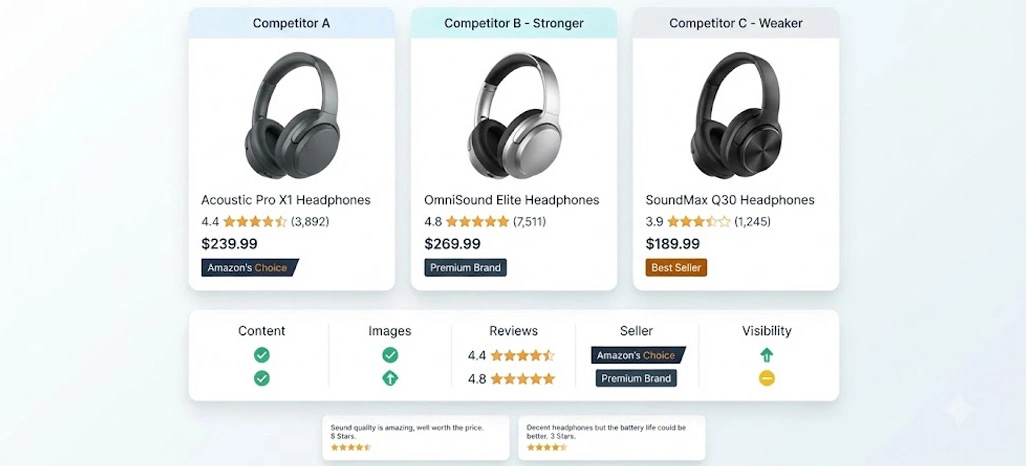
Digital shelf performance depends on more than price and stock availability. Product content, ratings, reviews, seller presence, images, and marketplace positioning can also influence customer decisions. Competitor Digital Shelf Analysis helps businesses compare these elements across competing listings and identify weaknesses that conventional sales reports may not reveal.
Automated data collection can evaluate large numbers of product pages and identify differences in titles, descriptions, images, pricing, availability, ratings, and customer feedback. A product with strong inventory but declining reviews may require a different response from one experiencing reduced visibility because of weak content or competitive positioning.
| Shelf Element | Tracked Information | Business Application |
|---|---|---|
| Product Content | Listing details | Merchandising review |
| Ratings | Score changes | Reputation assessment |
| Reviews | Customer feedback | Product evaluation |
| Visibility | Position movement | Traffic analysis |
Retail Digital Shelf Intelligence Solutions can organize these observations into structured datasets for merchandising, assortment, pricing, and category teams. This makes it easier to identify recurring patterns and prioritize issues according to business impact.
Businesses can focus on:
- Reviewing product content consistency
- Comparing competing listings
- Monitoring customer feedback
- Assessing seller positioning
- Identifying visibility changes
Using Digital Shelf Data Scraping Services can further support recurring collection of online retail information, enabling teams to maintain broader coverage and evaluate product-level changes across multiple channels with greater consistency.
How Retail Scrape Can Help You?
Managing multiple online channels manually can create delays when prices, stock levels, listings, and competitor activity change frequently. We help businesses implement Digital Shelf Monitoring for US E-Commerce Brands through automated collection and structured analysis of online retail data. The approach can support Ecommerce Digital Shelf Monitoring USA by organizing information from relevant marketplaces and retailer websites into usable datasets.
Key capabilities include:
- Automated collection of product and marketplace information
- Monitoring of price and promotional changes
- Tracking of product availability across online channels
- Comparison of competing product assortments
- Identification of listing and content inconsistencies
- Structured datasets for recurring business analysis
Retail teams can also use Retail Digital Shelf Intelligence Solutions to organize product-level information for pricing, merchandising, assortment, and inventory decisions. With Buy Box & Seller Monitoring, businesses can evaluate seller presence, marketplace positioning, and changes affecting product visibility.
Conclusion
As online competition intensifies, Digital Shelf Monitoring for US E-Commerce Brands gives businesses a structured way to observe pricing, availability, product visibility, and competitive movements. Combining automated monitoring with Digital Shelf Monitoring Using Ecommerce Data can help teams identify risks earlier and make more informed merchandising and pricing decisions.
A scalable monitoring framework also supports consistent data collection across large product catalogs and multiple retail channels. Digital Shelf Data Scraping Services can provide the structured information needed for recurring analysis, helping businesses respond to market changes with greater efficiency and accuracy. Connect with Retail Scrape to build a reliable digital shelf monitoring solution for your US e-commerce operations.