Improving Strategic Planning Through Competitive Intelligence Using Multi-Source Data Aggregation
Introduction
Modern retail businesses operate in a landscape where market conditions shift faster than traditional intelligence methods can track. Competitive Intelligence Using Multi-Source Data Aggregation has emerged as the defining capability that separates proactive market leaders from those perpetually playing catch-up. We have helped enterprises build this capability through Business Intelligence Using Multi-Source Web Scraping Data, establishing a scalable foundation for informed strategic planning.
The demand for real-time, cross-platform market insights has reshaped how procurement and strategy teams operate. Traditional approaches involving manual tracking, siloed reports, and periodic reviews no longer serve the speed at which wholesale and retail markets evolve. Multi-Source Data Aggregation for Competitive Analysis addresses this gap by providing a continuous, unified view of the competitive environment that supports faster, more confident decision-making.
This case study explores how we partnered with a regional retail enterprise to transform its strategic planning function through structured data aggregation. By implementing end-to-end intelligence workflows, the organization gained critical visibility into market dynamics, competitor behavior, and pricing patterns. Business Intelligence Data Aggregation Techniques played a central role in restructuring the client's analytical capabilities, enabling a transition from reactive reporting to forward-looking competitive strategy.
The Client
A mid-sized retail organization operating across more than 90 distribution points had long prided itself on deep customer relationships and regional brand strength. However, as wholesale pricing environments grew more volatile and competitors accelerated their digital procurement strategies, the company's internal planning processes began showing signs of strain. Leadership recognized that their decision-making framework lacked the market-level data required to compete effectively, and that Competitive Intelligence Using Multi-Source Data Aggregation was critical to closing this gap.
The company managed a broad and diverse product catalog spanning household goods, packaged foods, personal care, and seasonal merchandise. Each category carried distinct sourcing cycles, demand patterns, and pricing sensitivities that required dedicated monitoring. This approach left significant blind spots in category-level intelligence. The absence of Cross-Platform Data Aggregation Competitive Insights meant that pricing shifts from competitors often went undetected until they had already impacted the company's margin performance.
What made the situation particularly pressing was the company's growth trajectory. Plans to expand into three additional regional markets required a significantly stronger intelligence foundation before new store operations could be launched responsibly. The requirement for Competitor Benchmarking Using Real-Time Aggregated Data became central to both the expansion plan and the broader effort to stabilize margins across existing locations.
Key Challenges Faced by the Client
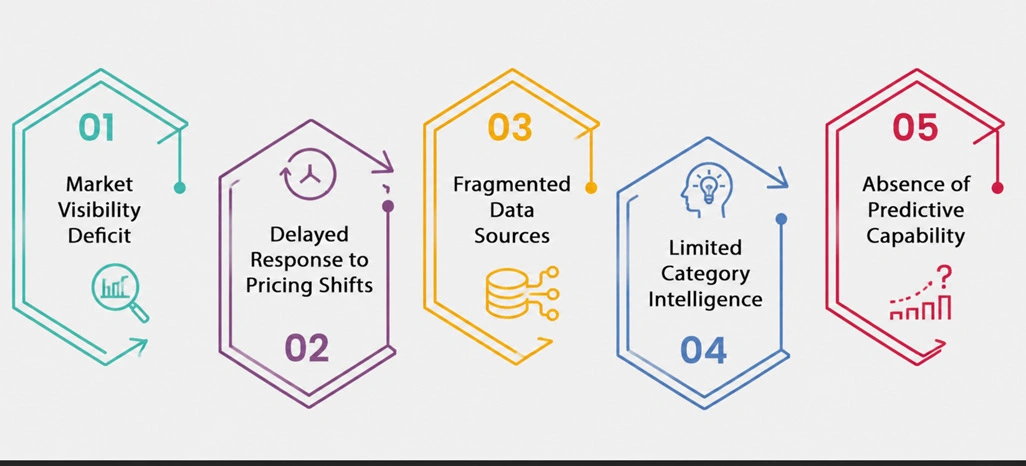
The client's challenges were rooted in structural limitations across their intelligence and procurement systems. Each of the following gaps compounded the others, creating a cycle of reactive decision-making that constrained growth.
- Market Visibility Deficit
Enterprise Competitive Analysis Using Data Aggregation was entirely absent from the client's existing toolkit. Without a structured way to monitor competitor assortment, pricing, and promotional activity, the team operated with an incomplete understanding of the markets they served. - Delayed Response to Pricing Shifts
Pricing changes across competitor platforms were identified days or weeks after the fact. By the time internal teams reviewed updated pricing data, the window for strategic realignment had often closed, weakening the company's ability to protect its margin position. - Fragmented Data Sources
The client's data was spread across disconnected tools, vendor reports, and manual records. The lack of Data Integration for Market Intelligence Analysis meant that no single team had a consolidated view of market conditions, making coordinated strategy development nearly impossible. - Limited Category Intelligence
Individual product categories were monitored inconsistently, and benchmarking against competitors was rarely category-specific. This resulted in procurement decisions that were either too conservative or misaligned with current market pricing realities. - Absence of Predictive Capability
The organization lacked any mechanism for anticipating demand shifts or pricing trends. Without forward-looking intelligence, seasonal planning was based primarily on historical sales data rather than live market signals, creating recurring inventory mismatches.
Key Solutions for Addressing Client Challenges
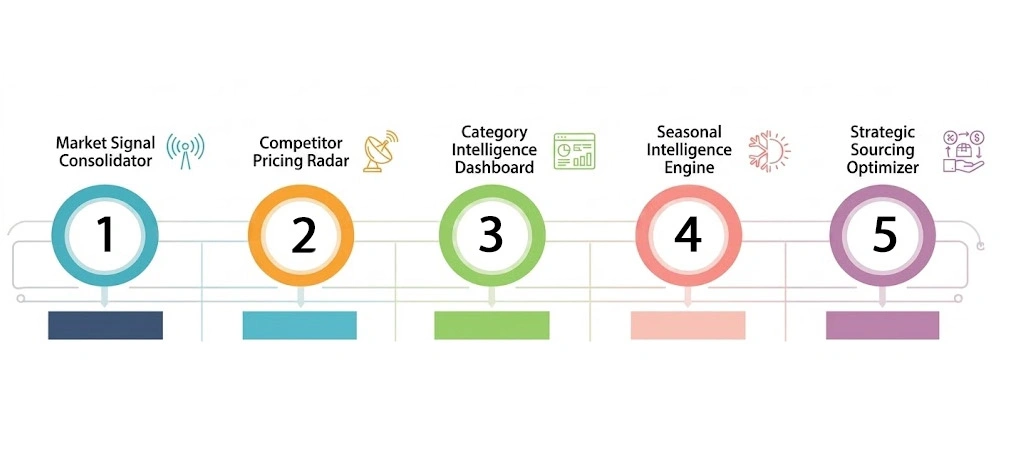
We developed a tailored suite of data aggregation and intelligence tools, each designed to address a specific operational gap while contributing to a unified strategic picture.
- Market Signal Consolidator
By using Combine Web Scraping APIs for Competitive Intelligence, the solution unified previously fragmented data streams into a single, queryable intelligence repository, giving procurement teams consistent access to category-level market information. - Competitor Pricing Radar
Alerts were configured for category-specific thresholds, allowing teams to respond quickly when significant pricing gaps emerged. This module directly supported Competitive Benchmarking Using Multi-Source Datasets by enabling systematic comparison of the client's pricing position against active market benchmarks. - Category Intelligence Dashboard
An interactive reporting layer presented consolidated intelligence by product category, region, and time period. Decision-makers could view SKU-level competitor pricing, promotional patterns, and assortment gaps within a single interface, eliminating the need to reconcile multiple data sources manually. - Seasonal Intelligence Engine
This module analyzed historical pricing and demand data alongside current market signals to generate forward-looking procurement recommendations. The engine gave the planning team early visibility into demand peaks and price fluctuation windows, enabling proactive inventory positioning rather than reactive replenishment. - Strategic Sourcing Optimizer
By mapping competitor pricing trends against the client's internal procurement data, this tool identified sourcing opportunities that could improve cost efficiency without compromising product availability. Multi-Source Data Aggregation for Competitive Analysis was central to how this module generated its sourcing recommendations.
Key Insights Gained from Competitive Intelligence Using Multi-Source Data Aggregation
| Intelligence Dimension | Strategic Outcome Delivered |
|---|---|
| Competitor Pricing Coverage | Consistent tracking across multiple platforms enabled proactive pricing alignment. |
| Category-Level Benchmarking | Segment-specific insights supported more precise procurement and margin decisions. |
| Seasonal Demand Accuracy | Forward-looking demand signals improved inventory planning across key seasonal windows. |
| Market Expansion Readiness | Pre-launch intelligence reduced competitive risk for new regional entries. |
| Procurement Cycle Efficiency | Automated sourcing recommendations shortened decision timelines across categories. |
Benefits of Competitive Intelligence Using Multi-Source Data Aggregation From Retail Scrape
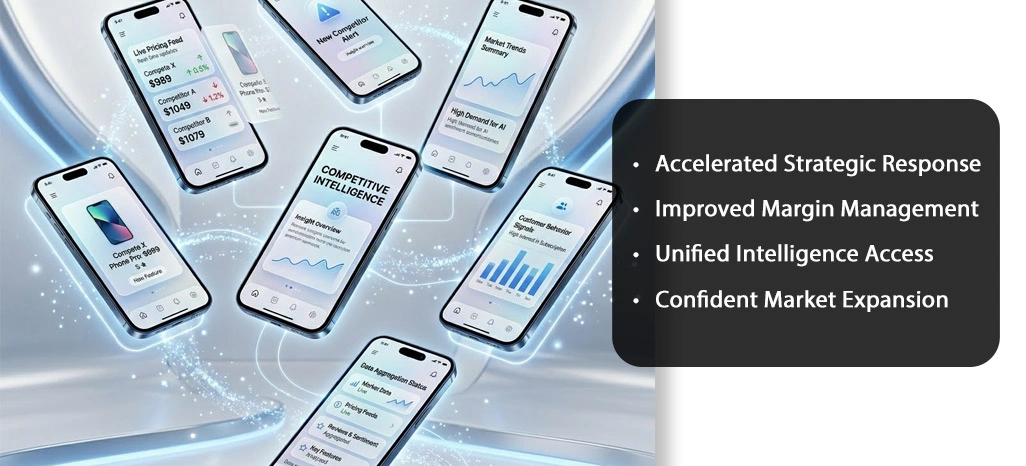
- Accelerated Strategic Response
With Enterprise Web Crawling Services forming the backbone of their new intelligence infrastructure, the client transitioned from monthly reviews to near-continuous market monitoring. Decision cycles shortened considerably, and teams could respond to competitive pricing shifts within hours rather than weeks. - Improved Margin Management
Access to accurate, consolidated competitor pricing data gave the procurement team a stronger negotiating position with suppliers. Business Intelligence Data Aggregation Techniques helped identify categories where pricing adjustments could recover lost margins without triggering customer attrition. - Unified Intelligence Access
The elimination of data silos meant that procurement, planning, and commercial teams were working from the same market picture simultaneously. Data Integration for Market Intelligence Analysis enabled cross-functional alignment that had previously been difficult to achieve, reducing internal friction and improving the quality of strategic discussions. - Confident Market Expansion
The availability of structured pre-launch intelligence for each new regional market gave leadership the confidence to proceed with expansion on schedule. Rather than entering new markets with limited visibility, the team could validate their strategies against real competitive data before committing resources.
Client's Testimonial

Retail Scrape fundamentally changed how we approach competitive planning. With Competitive Intelligence Using Multi-Source Data Aggregation now embedded in our workflow, we operate with a level of market clarity we didn't believe was achievable at our scale. Cross-Platform Data Aggregation Competitive Insights helped us see our market position accurately for the first time.
– Head of Commercial Strategy, Regional Retail Group
Conclusion
Sustained competitive performance in modern retail demands more than operational efficiency; it requires an intelligence infrastructure capable of processing and interpreting market signals at scale. Competitive Intelligence Using Multi-Source Data Aggregation equips businesses with the structural capability to monitor, analyze, and act on competitive data across every relevant market dimension.
As competitive environments grow more dynamic and data-intensive, organizations that invest in structured intelligence frameworks will consistently outperform those relying on manual or fragmented approaches. Cross-Platform Data Aggregation Competitive Insights enables businesses to build a durable advantage grounded in continuous market awareness rather than periodic reviews.
Contact Retail Scrape today to build the intelligence infrastructure your business needs. Our specialists will assess your current data landscape, identify the most impactful aggregation opportunities, and deploy customized solutions designed for your specific competitive environment.