
How Can Amazon, Target, and Nordstrom Product Data API Simplify Cross-Store Product Comparisons?
Introduction
Modern e-commerce operates at an unprecedented speed, where pricing dynamics, stock availability, and consumer preferences shift minute by minute. Navigating this fast-paced marketplace requires brands and online retailers to leverage real-time analytics to make fast, educated operational decisions. Accessing structured data from retail powerhouses allows companies to monitor catalog shifts, detect high-demand product categories, and benchmark performance across diverse selling channels.
Tracking multi-channel performance across distinct market segments—from low-cost marketplaces to high-end department stores—provides actionable intelligence. By evaluating raw product feeds, businesses can map price adjustments and identify catalog gaps before they impact market share. Implementing E-Commerce Price Monitoring Retail Brands methodologies ensures businesses maintain strict price competitiveness while protecting margins.
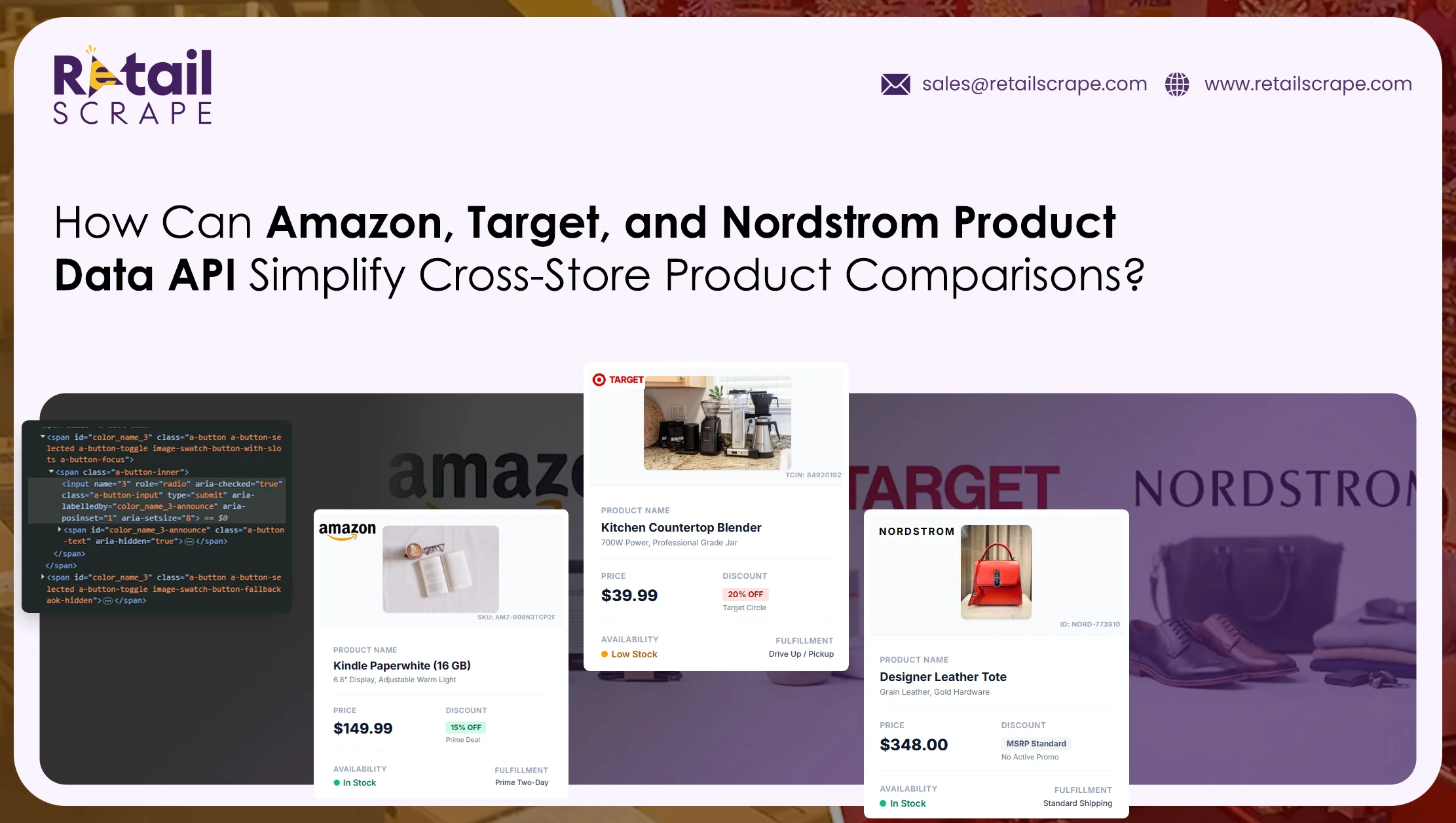
Cross-platform tracking creates a unified view of market demand, bridging disparate data sources into a single analytical pipeline. Utilizing specialized tools like the Amazon, Target, and Nordstrom Product Data API allows decision-makers to streamline workflow integration, automate competitor tracking, and optimize dynamic pricing strategies with complete precision.
Evaluating Marketplace Catalog Dynamics Through Automated Extraction Frameworks
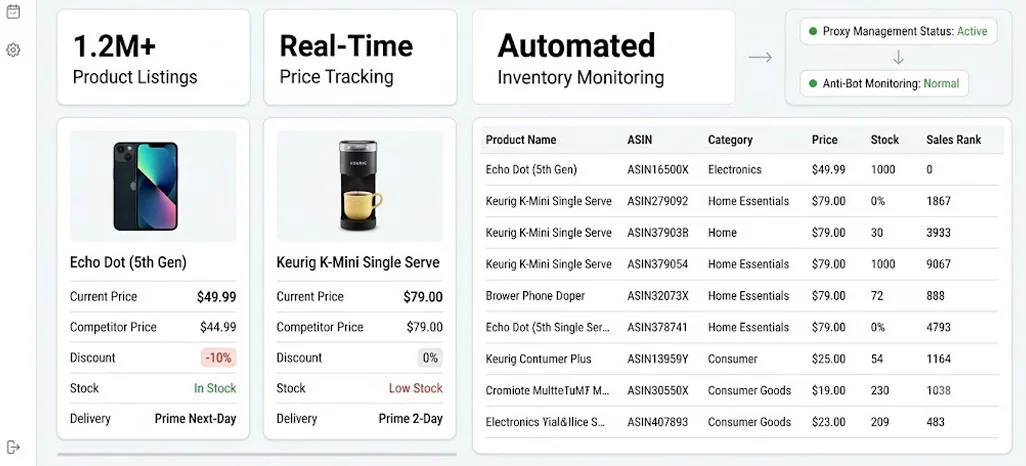
Analyzing global marketplace dynamics requires continuous extraction of high-frequency catalog metrics to understand shifting consumer purchasing behaviors. Modern retail platforms exhibit constant price fluctuations that demand robust technological solutions for tracking online product availability and fulfillment speeds. E-commerce organizations often implement Amazon API Data Scraping protocols to capture vital inventory records without manual delays.
Advanced automated tracking systems help brands maintain competitive positioning by delivering immediate alerts regarding competitor markdowns and promotional adjustments. Recent retail industry studies demonstrate that continuous data harvesting significantly reduces manual auditing hours while substantially improving repricing accuracy. Enterprise decision-makers increasingly rely on the Amazon Product Data API to process millions of product listings, enabling rapid responses to marketplace volatility and demand surges.
Maintaining scalable data pipelines requires sophisticated proxy management and anti-bot handling to ensure uninterrupted data collection from large digital storefronts. As online retail ecosystems continue expanding, automated monitoring serves as the foundational backbone for successful digital commerce strategies.
- Automated high-frequency tracking of marketplace catalog updates and pricing shifts.
- Comprehensive monitoring of seller metrics, shipping speeds, and fulfillment options.
- Elimination of manual auditing delays through robust automated data pipelines.
- Real-time visibility into competitive pricing adjustments and promotional strategies.
| Data Metric | Tracking Frequency | Analytical Business Value |
|---|---|---|
| Buy Box Status | Real-Time / Hourly | Identifies immediate loss of seller placement and price undercutting. |
| Price Movement | Dynamic (15–30 Mins) | Drives automated dynamic repricing algorithms to maintain target margins. |
| Stock & Fulfillment | Daily | Highlights competitors' inventory exhaustion to capture demand spikes. |
Effective catalog analysis extends beyond simple price tracking to encompass comprehensive reviews, seller ratings, and shipping duration metrics. By synthesizing these diverse variables, merchandising teams can optimize their product offerings and identify emerging market opportunities before competitors notice them.
Uncovering Mass Market Retail Trends With Specialized Extraction Tools
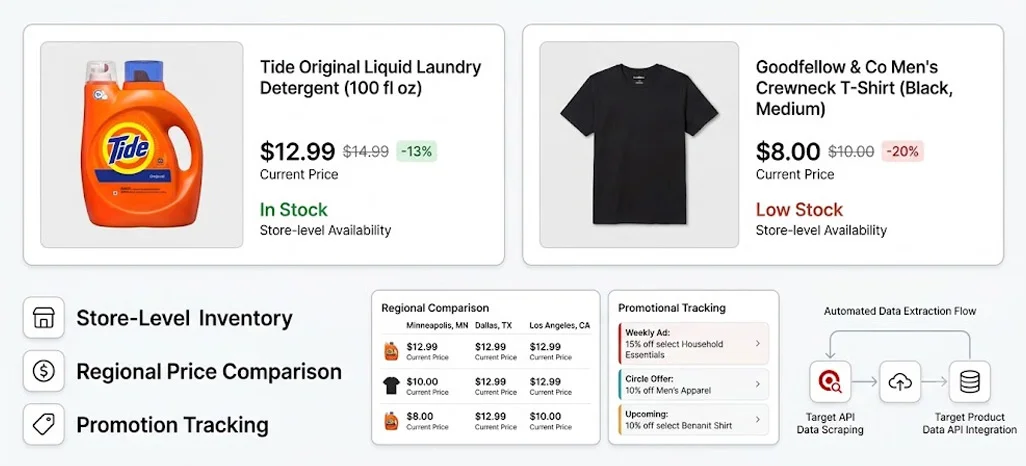
Mass-market retail environments feature complex assortments spanning household essentials, exclusive apparel lines, and regional grocery selections. Understanding consumer demand across these diverse categories demands specialized technical approaches to capture localized pricing and regional promotional shifts. Analysts frequently utilize Target API Data Scraping procedures to map store-level availability and discount frequencies.
Integrating structured data feeds enables businesses to evaluate how mass-merchant promotions influence consumer purchasing decisions across multiple digital channels. Research indicates that a vast majority of online retail products undergo recurring monthly price modifications, highlighting the necessity of continuous monitoring. Organizations successfully deploy the Target Product Data API Integration to synchronize inventory records and benchmark promotional effectiveness against major competitors.
Building resilient data workflows empowers digital commerce teams to navigate complex promotional landscapes with absolute clarity and operational efficiency. Continuous catalog oversight remains indispensable for maximizing revenue potential in competitive mass-market segments.
- Regional stock tracking across diverse store locations and fulfillment centers.
- Continuous monitoring of promotional discounts and seasonal clearance events.
- Evaluation of exclusive brand performance against standard national alternatives.
- Enhanced visibility into mass-market category rankings and consumer trends.
| Feature Metric | Extraction Field | Operational Advantage |
|---|---|---|
| Promo & Circle Deals | Discount Percentage | Prepares countermeasures against rival storewide sales and bundles. |
| Fulfillment Method | In-Store vs. Delivery | Reveals localized fulfillment strategies and regional stock distribution. |
| Category Ranking | Best-Seller Position | Pinpoints trending products within specific home and lifestyle niches. |
Catalog intelligence helps merchandising departments align their promotional calendars with broader retail shifts, ensuring optimal inventory allocation across regional distribution centers. Digital shelf monitoring provides deep insights into how exclusive product lines perform relative to standard national brands.
Monitoring Luxury Department Store Assortments Through Advanced Feed Scraping
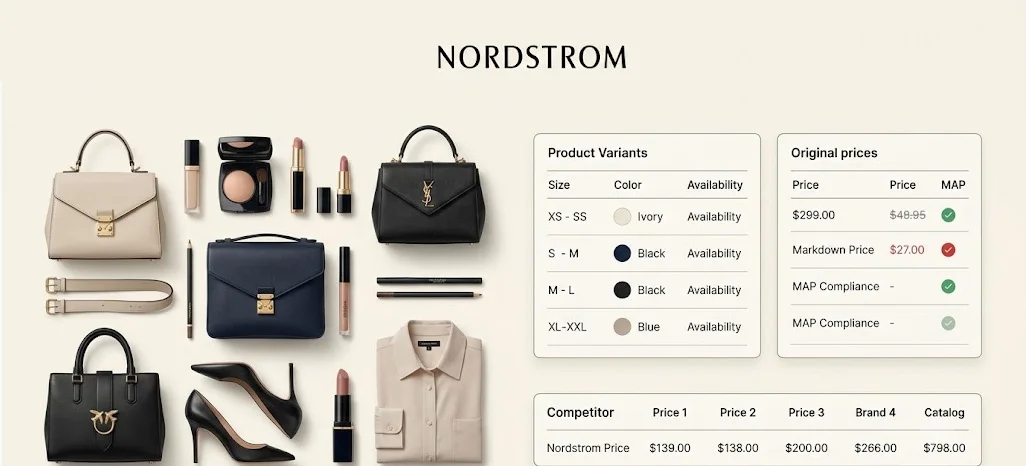
Premium department stores represent unique retail ecosystems characterized by high-end designer apparel, luxury cosmetics, and stringent brand protection policies. Tracking upscale merchandise requires granular extraction capabilities to monitor intricate size matrices, color variations, and seasonal markdown schedules. Luxury brand managers frequently implement Nordstrom ECommerce API Data Scraping to evaluate authorized distribution channels and maintain strict pricing compliance.
Leveraging specialized extraction endpoints allows luxury brands to track premium catalog fluctuations and promotional cadence without compromising brand prestige. Industry analysts utilize the Nordstrom Product Data Extraction API alongside retail intelligence APIs for competitor analysis to gain comprehensive oversight of high-end market positioning. These technological integrations ensure that luxury retailers remain competitive while preserving the exclusive appeal of their product catalogs.
Maintaining pristine brand image across digital platforms depends entirely on accurate, up-to-date catalog visibility and rigorous enforcement of minimum advertised pricing policies. Advanced data extraction frameworks provide the essential intelligence required to navigate the complexities of upscale e-commerce successfully.
- Granular tracking of luxury apparel size and color availability matrices.
- Comprehensive oversight of designer brand distribution and authorized sellers.
- Monitoring of seasonal markdown schedules and promotional discounting cadence.
- Preservation of brand positioning through strict minimum advertised pricing tracking.
| Luxury Attribute | Data Point | Strategic Application |
|---|---|---|
| Brand Catalog | Designer / Brand Name | Tracks luxury brand distribution and exclusive partner collection launches. |
| Size & Color Matrix | SKU Availability | Identifies high-demand variant shortages to optimize production runs. |
| Discount Cadence | Markdown Percentage | Informs promotional calendars and seasonal clearance strategies. |
Detailed tracking of premium inventories enables organizations to identify emerging design preferences and regional demand concentrations quickly. By monitoring markdown timings, brands can fine-tune their clearance strategies to maximize profitability at the end of each selling season.
How Retail Scrape Can Help You?
In the fast-moving e-commerce landscape, collecting clean, structured, and reliable data from disparate sources remains a significant technical challenge. We offer end-to-end extraction solutions that deliver seamless access to the Amazon, Target, and Nordstrom Product Data API, helping business teams eliminate complex scraping infrastructure, proxy management, and anti-bot obstacles.
- Automated high-frequency product data extraction across global marketplace feeds.
- Enterprise-grade proxy rotation ensures 99.9% uptime and CAPTCHA bypass.
- Normalized JSON and CSV structured output ready for immediate database ingestion.
- Customized webhooks providing instantaneous alerts on competitor price changes.
- Granular variant extraction including size, color, seller notes, and shipping details.
- Scalable infrastructure capable of monitoring millions of SKUs concurrently.
Integrating reliable scrapers simplifies your analytical workflow and reduces operational costs. Utilizing customized Product Data APIs for Competitor Analysis allows your enterprise to focus on core strategic growth while automation handles complex data harvesting.
Conclusion
Building a sustainable competitive edge requires continuous, structured visibility across major retail platforms. Unifying multi-store insights through the Amazon, Target, and Nordstrom Product Data API allows business leaders to refine pricing models, forecast inventory demands, and spot industry trends before competitors react.
By eliminating data silos and automating continuous feed collection, brands can turn raw online listings into strategic market intelligence. Partnering with specialized extraction providers ensures access to clean, reliable streams of Real-Time Price Monitoring data designed to fuel sustainable growth and elevate multi-channel e-commerce operations. Contact Retail Scrape today to transform your competitor data pipeline and scale your online market share.