
What Airline Price Monitoring Tells Us About 49% Faster Detection of Fare Volatility in 2025?
Introduction
The airline industry continues to experience significant price fluctuations driven by real-time competition, seasonal demand, route-based shifts, and rapidly changing traveler sentiments. As fare volatility intensifies in 2025, airlines and OTAs are facing mounting pressure to react faster, analyze deeper, and optimize pricing decisions with greater accuracy. This is where Airline Price Monitoring plays a defining role. The ability to track fare variations at scale no longer provides just surface-level clarity—it now fuels smarter revenue strategies that support more competitive offerings.
Modern aviation markets demand precise visibility over booking channels, route categories, promotional shifts, and customer booking windows. Real-time intelligence has transitioned from a strategic advantage into a baseline expectation. With automation-driven insights becoming increasingly accessible, airlines are enhancing decision-making with faster data cycles and improved analytical depth.
In 2025, the shift isn’t only about the availability of data but the ability to detect change points 49% faster than traditional monitoring approaches. This speed drives more profitable pricing corrections, stronger market positioning, and more proactive fare strategies—all achieved through refined, automated data workflows that extract, enrich, and interpret fare intelligence at scale.
Examining Core Factors Influencing Rapid Fare Movements
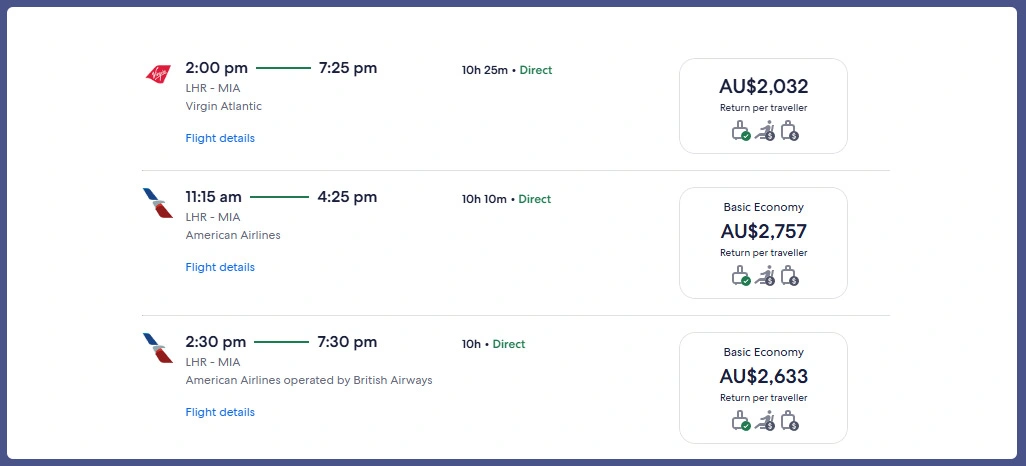
Market fluctuations often originate from time-sensitive promotional cycles, irregular shifts in destination demand, and competitor adjustments across different booking windows. To create more stable strategies, many travel companies use structured monitoring systems enhanced by tools such as Real-Time Airline Price Intelligence for OTAs, which offer increased clarity around sudden variations observed across booking platforms.
The growing prevalence of automation allows analysts to evaluate multi-platform changes with improved consistency. Translating large data streams into structured signals becomes easier with solutions like Airfare Scraping Technology for Dynamic Pricing Insights, enabling teams to map competitive movements with greater precision.
As fare volatility continues to increase, such systems help categorize deviation patterns and detect influential triggers more efficiently. Enhanced tracking capabilities available through Booking Platform Price Tracking also support a more synchronized process for comparing fares across origin-destination pairs.
Internal pricing teams rely heavily on interpretation models that dynamically adapt to real-time market adjustments. Many organizations integrate Airline Dynamic Pricing frameworks to better anticipate variable fare behaviors linked to demand cycles, route sensitivities, or booking-window anomalies.
| Driver | Impact | Observation |
|---|---|---|
| Competitor fare drops | High | Triggers immediate market shifts |
| OTA promotional testing | High | Creates sudden and temporary dips |
| Seasonal route changes | Medium | Affects short-term booking patterns |
| Event-related spikes | Medium | Causes unexpected fare elevation |
Enhancing Decision Precision Through Expanded Analytical Frameworks
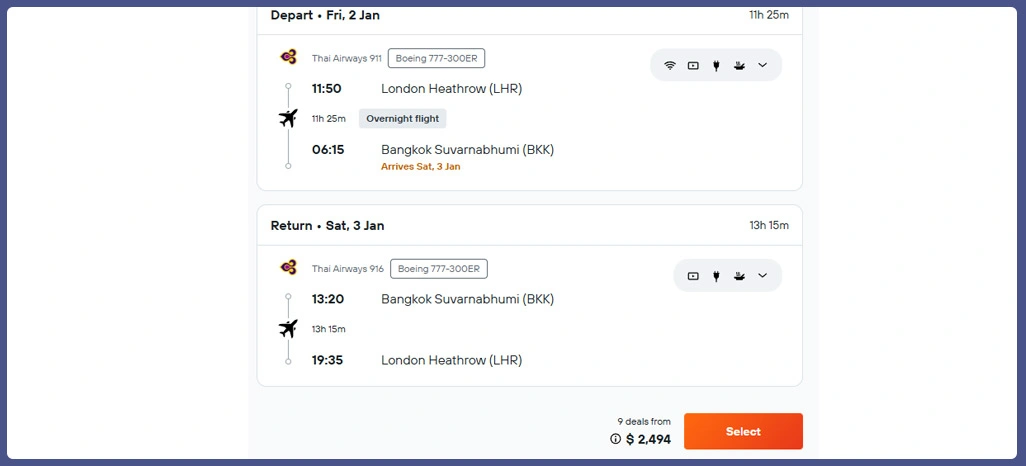
Accuracy in fare interpretation is increasingly dependent on broader data ecosystems and structured analytical layers. As competitive pressures intensify, pricing and revenue teams turn toward diversified information sources such as the Airline Price Dataset for Travel Analytics in 2025, which helps contextualize how market trends evolve across different travel corridors.
Improved decision cycles also rely on deeper historical mapping. Using the Airline Fare Trends Dataset for Travel Companies, analysts can better understand recurring patterns, identify long-term demand cycles, and predict potential booking anomalies. These insights enhance readiness for market transitions and allow pricing teams to develop more strategic evaluation processes.
Automated intelligence workflows further streamline the process of obtaining fresh insights, supported by systems built around Automated Travel Price Scraping, which offer frequent refresh intervals that reduce blind spots. Accuracy also depends on robust supporting inputs generated from broader Travel Datasets, which enrich the contextual background surrounding fare variations. Combining these multi-layered data sources builds stronger forecasting structures, enabling teams to plan more confidently during demand fluctuations.
| Parameter | Avg. Uplift | Insight |
|---|---|---|
| Prediction accuracy | 38% | Better interpretation of past trends |
| Change detection speed | 41% | Faster identification of new signals |
| Decision alignment | 49% | Improved modeling responsiveness |
| Benchmarking depth | 36% | Clearer competitive direction |
Strengthening Pricing Understanding Through Advanced Data Evaluation

With continuous fluctuations across global booking platforms, airlines and travel companies increasingly rely on advanced evaluation processes to understand hidden pricing triggers. Modern strategies focus on mapping multi-channel fare behaviors to ensure revenue teams can assess competitive shifts more effectively. A core component of this ecosystem involves structured pricing workflows supported by Airline Revenue Optimization, enabling teams to align revenue goals with observed booking patterns.
These shared elements allow pricing analysts to examine fare deviations, correlate potential causes, and plan corrective actions in shorter timeframes. Enhanced clarity often stems from synchronized monitoring layers integrating Booking Platform Price Tracking, which simplifies the process of comparing fares across major digital sales channels.
With data volumes expanding rapidly across digital ecosystems, extracting actionable signals requires modern techniques. Teams increasingly depend on Travel Data Scraping to ensure high-frequency retrieval and consistent visibility over evolving fare behaviors. These structured data flows support decision-making cycles that depend on real-time insight translation.
| Metric | Influence | Notes |
|---|---|---|
| Route variation mapping | High | Identifies channel-specific discrepancies |
| Competitor movement tracking | High | Supports faster response strategies |
| Seasonal pattern detection | Medium | Helps structure promotional cycles |
| Multi-channel benchmarking | Medium | Ensures stronger pricing alignment |
How Retail Scrape Can Help You?
In today’s competitive travel landscape, advanced analytical workflows are essential for navigating shifting fare environments. By integrating automated systems, teams can process high-volume fare signals more consistently, and this is where solutions centered on Airline Price Monitoring offer clear advantages.
Our approach includes:
- Automated multi-route tracking systems for consistent fare visibility.
- Intelligent analytics integration for enhanced reporting structures.
- High-frequency data refresh workflows.
- Unified dashboarding for multi-channel clarity.
- Customized evaluation solutions for targeted insight generation.
- Scalable infrastructure adaptable to growing data needs.
We also enable integration of competitive intelligence frameworks supported by Airfare Scraping Technology for Dynamic Pricing Insights, ensuring teams receive timely, actionable updates that strengthen long-term pricing strategies.
Conclusion
In 2025, competitive pricing requires sharper insight pipelines and faster workflows that elevate decision-making across global travel networks. Enhanced analytical processes supported by Airline Price Monitoring contribute to better forecasting accuracy and deeper strategic visibility.
Digital intelligence tools now empower organizations to interpret massive datasets with greater precision. By integrating enhanced automation aligned with the Airline Fare Trends Dataset for Travel Companies, airlines can adapt more effectively to evolving fare environments. Connect with Retail Scrape today to build smarter, automated fare intelligence workflows for your travel business.