


How Is AI Food Delivery Demand Prediction Using Data Reshaping the Future of Delivery Intelligence?
Introduction
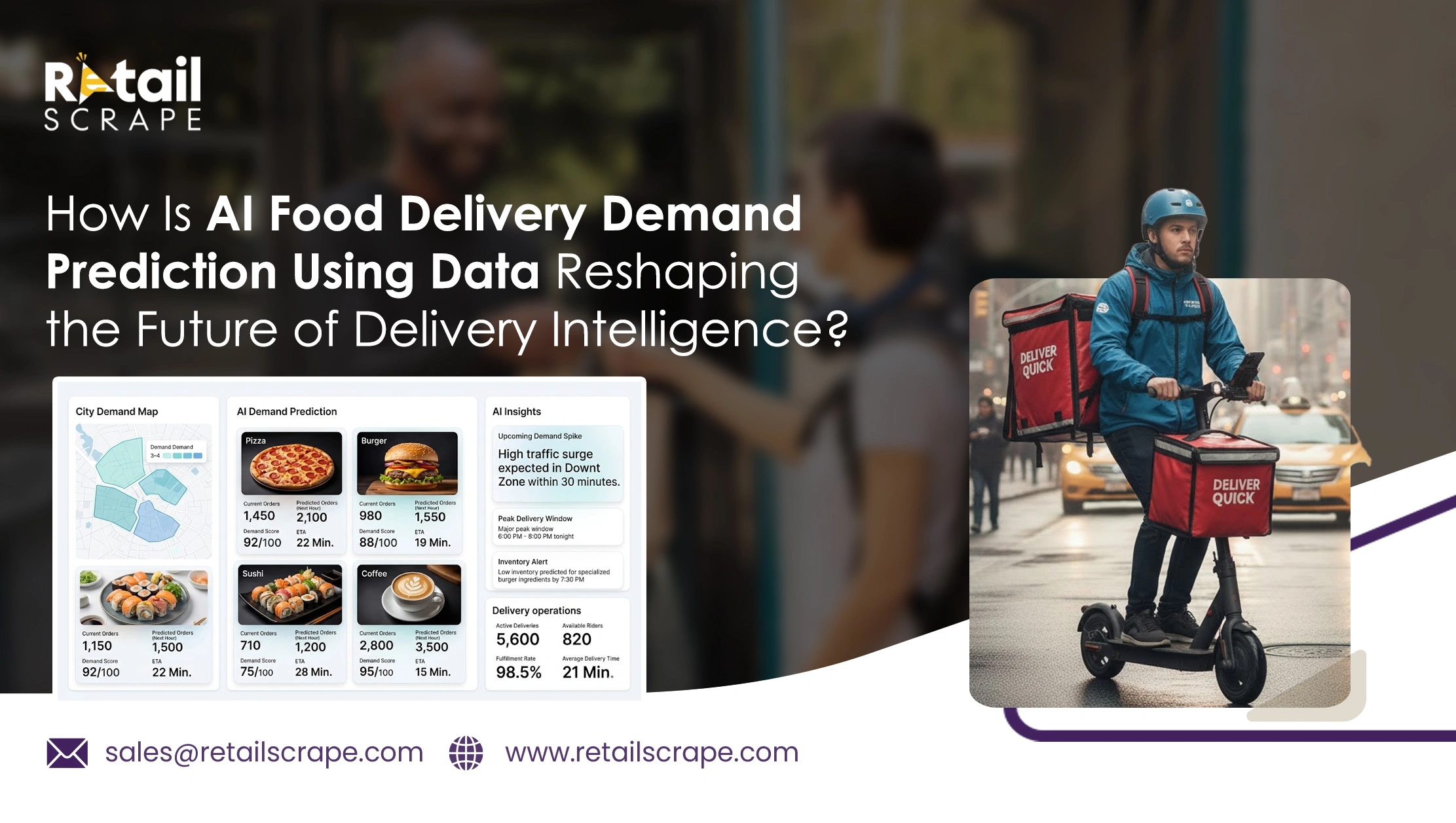
The food delivery ecosystem is evolving rapidly as consumer expectations continue to shift toward faster, more reliable, and highly personalized services. Businesses operating in this space face growing challenges related to fluctuating demand, inventory management, delivery optimization, and customer retention. Traditional forecasting methods often fail to capture the complexity of modern food delivery patterns, making advanced data-driven intelligence a necessity rather than an option.
Today, Food Delivery Demand Forecasting Using AI and Web Scraping is transforming how restaurants, aggregators, and quick-commerce platforms predict customer behavior. By analyzing historical orders, seasonal trends, customer preferences, pricing movements, and regional demand fluctuations, organizations can make informed operational decisions.
The adoption of AI Food Delivery Demand Prediction Using Data allows businesses to improve staffing efficiency, optimize delivery routes, reduce food waste, and maintain ideal inventory levels. As competition intensifies across food delivery platforms, organizations increasingly depend on intelligent analytics solutions to anticipate market shifts and respond proactively. Data-backed forecasting is becoming a critical pillar of delivery intelligence, helping businesses maximize profitability while delivering superior customer experiences.
Enhancing Operational Planning Through Predictive Analytics
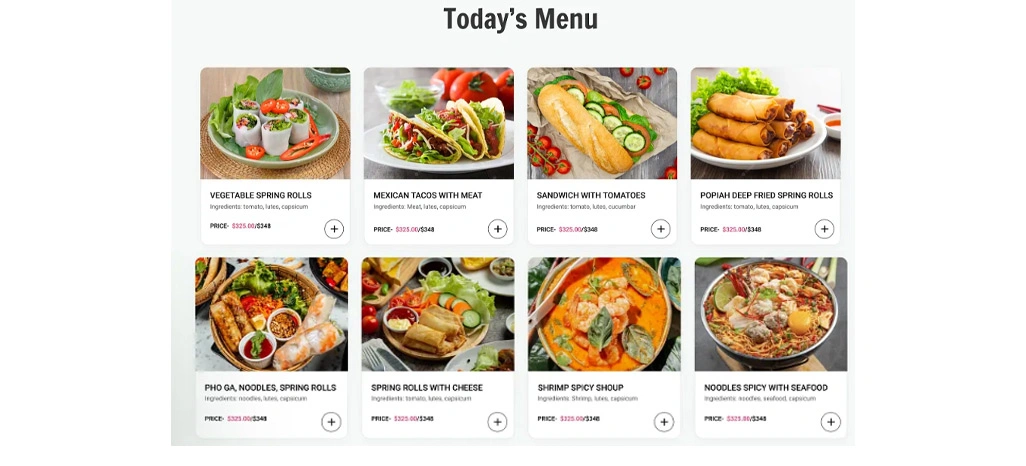
Accurate demand planning remains one of the most significant challenges for food delivery businesses operating in dynamic and highly competitive markets. Consumer ordering behavior changes constantly due to weather conditions, local events, festivals, promotional campaigns, and economic factors. Without reliable forecasting mechanisms, businesses often struggle with excess inventory, delayed deliveries, and inefficient resource utilization.
Organizations increasingly rely on AI Food Delivery Data Intelligence Services to transform large volumes of operational data into meaningful business insights. These solutions help identify demand fluctuations, peak ordering periods, and regional consumption trends that influence operational planning. Studies suggest that AI-driven forecasting systems can improve demand prediction accuracy by up to 30%, reducing food waste and enhancing customer satisfaction.
Additionally, businesses utilize Scraped Data for Food Delivery Analytics to assess purchasing trends across different customer segments and geographic regions. Companies also benefit from evaluating a Restaurant Performance Dataset, which provides visibility into menu popularity, fulfillment efficiency, and customer engagement metrics.
Key Data Sources Supporting Forecast Accuracy:
| Data Source | Business Value |
|---|---|
| Historical Orders | Trend Identification |
| Customer Preferences | Personalization Insights |
| Seasonal Demand | Inventory Planning |
| Geographic Patterns | Regional Forecasting |
| Promotions Data | Campaign Evaluation |
These insights collectively support more informed operational decisions and contribute to sustainable business growth.
Optimizing Resource Allocation Across Delivery Networks
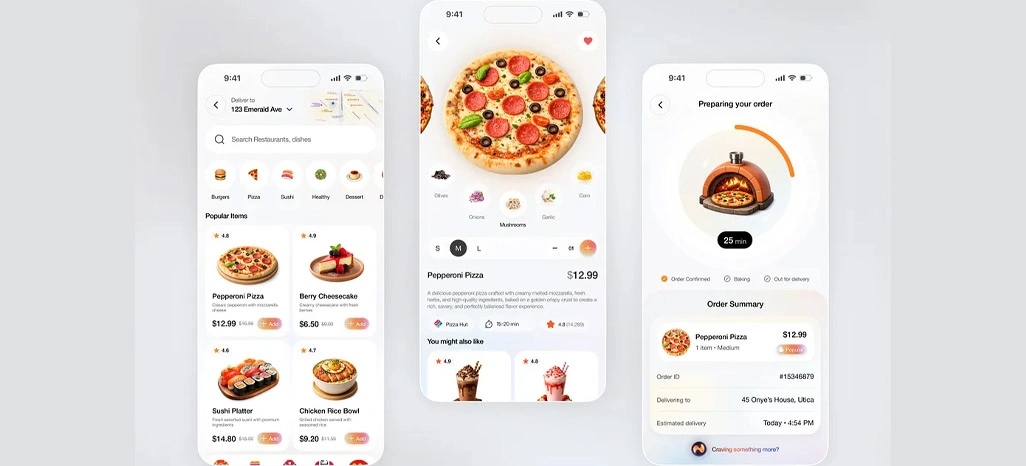
Food delivery companies frequently encounter challenges related to resource allocation, staffing optimization, and delivery efficiency. Unexpected demand spikes can lead to service disruptions, while inaccurate planning may result in unnecessary operational expenses. Many organizations implement AI Food Delivery Data Scraping Services to continuously monitor market activity, customer preferences, and ordering trends. These solutions provide valuable real-time intelligence that supports faster and more accurate operational decision-making.
Industry research indicates that businesses using predictive analytics can reduce operational inefficiencies by nearly 20% while improving order fulfillment performance. To further enhance forecasting capabilities, businesses often Automate Food Delivery Forecasting With AI Models that process historical and real-time data simultaneously.
Automated forecasting systems help organizations anticipate demand changes before they occur, enabling proactive adjustments to workforce deployment, inventory distribution, and delivery operations. Companies also Scrape Food Delivery Data for Demand Forecasting Insights to identify emerging consumer patterns and evaluate competitive market behavior. These insights contribute to more resilient delivery strategies and improved service consistency.
Operational Areas Enhanced Through Forecasting:
| Business Challenge | Predictive Solution |
|---|---|
| Delivery Delays | Route Optimization |
| Inventory Waste | Demand-Based Allocation |
| Staffing Gaps | Workforce Forecasting |
| Rising Costs | Resource Optimization |
| Service Variability | Real-Time Monitoring |
The result is a more agile operational framework capable of adapting quickly to changing market conditions.
Strengthening Regional Decisions With Local Intelligence
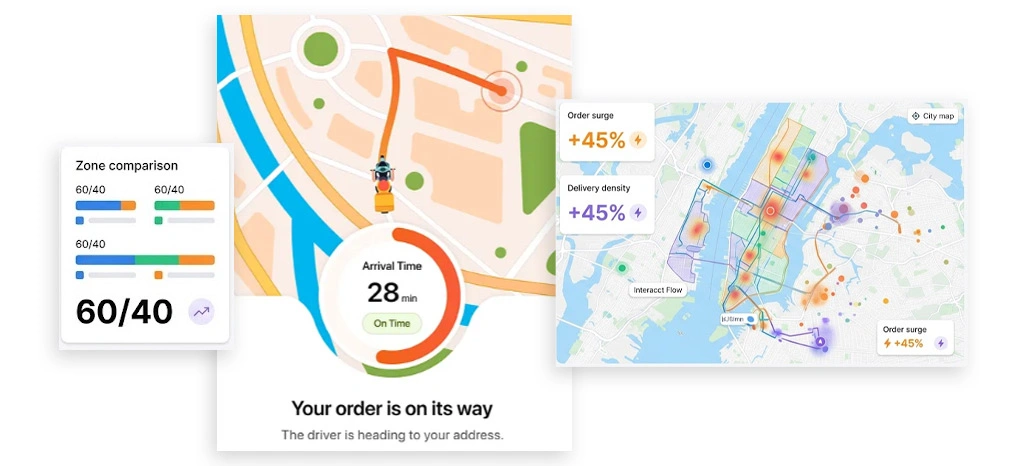
Demand patterns within the food delivery industry often vary significantly across neighborhoods, districts, and metropolitan regions. Broad forecasting models may overlook these localized differences, limiting the effectiveness of operational planning. Organizations increasingly utilize AI Food Delivery Menu Prices Datasets to analyze pricing strategies, customer purchasing behavior, and competitor positioning within specific markets.
These datasets provide detailed visibility into local market dynamics and support more accurate forecasting outcomes. Reports suggest that localized forecasting strategies can improve prediction accuracy by more than 35% in densely populated urban environments. An important advancement in this area is Hyperlocal Demand Prediction for Food Delivery Platforms, which allows businesses to identify neighborhood-specific demand fluctuations and allocate resources accordingly.
This localized approach helps improve delivery speed, optimize inventory placement, and enhance customer satisfaction. Businesses also benefit from geographically segmented forecasting models that support expansion planning and service coverage optimization. By understanding where demand is increasing or declining, operators can allocate resources more effectively and improve profitability.
Benefits of Location-Based Forecast Intelligence:
| Focus Area | Business Impact |
|---|---|
| Neighborhood Analysis | Better Demand Visibility |
| Price Monitoring | Competitive Awareness |
| Delivery Planning | Faster Fulfillment |
| Inventory Control | Stock Accuracy |
| Customer Experience | Improved Satisfaction |
Localized intelligence continues to play a critical role in shaping future-ready delivery ecosystems.
How Retail Scrape Can Help You?
Data-driven forecasting is becoming essential for organizations seeking greater operational efficiency and stronger customer engagement. Through AI Food Delivery Demand Prediction Using Data, businesses can identify changing market trends, anticipate ordering volumes, and improve resource allocation with greater confidence.
Our Capabilities:
- Monitor customer ordering behavior across multiple regions.
- Analyze pricing movements and promotional effectiveness.
- Track menu performance and product demand trends.
- Evaluate competitor activities and market positioning.
- Improve inventory planning and fulfillment efficiency.
- Support AI-driven forecasting and operational optimization.
Businesses seeking scalable forecasting solutions can also benefit from our Food Scraper technology and specialized Restaurant Insights Scraping Service offerings for deeper market visibility and strategic decision-making.
Conclusion
As delivery ecosystems become increasingly data-centric, AI Food Delivery Demand Prediction Using Data is helping organizations improve forecasting accuracy, operational efficiency, and customer satisfaction. Intelligent analytics allows businesses to make proactive decisions based on real-world demand signals rather than assumptions.
Organizations that invest in predictive intelligence and Restaurant Insights Scraping Service capabilities are better positioned to respond to market changes, optimize resources, and maximize growth opportunities. Contact Retail Scrape today to build smarter forecasting strategies and transform your delivery intelligence with advanced data solutions.