How Does Web Scraping Google Maps Restaurant Data Reveal About 100K+ Verified Restaurants Instantly?

Introduction
The global food service industry is projected to surpass $4 trillion in revenue, with millions of restaurants competing across cities, towns, and hyperlocal markets. For food aggregators, delivery startups, market researchers, and investors, identifying verified restaurants quickly is essential. Traditional data collection methods are slow, manual, and often outdated.
Google Maps hosts one of the most comprehensive and continuously updated restaurant directories worldwide. From business names and contact details to cuisine categories, operating hours, and ratings, the platform reflects real-time market dynamics. By applying structured scraping frameworks, businesses can instantly analyze 100K+ verified restaurant listings across multiple cities without manual intervention.
When implemented correctly, Web Scraping Google Maps Restaurant Data allows companies to map market density, identify emerging food hubs, track competitor expansion, and monitor consumer preferences. Automated extraction provides scalable access to reliable dining information, helping businesses optimize expansion strategies, delivery network planning, and targeted marketing initiatives based on verified geographic insights.
Addressing Large-Scale Restaurant Verification Across Urban Markets

Identifying verified and active restaurants across large metropolitan regions is one of the most persistent challenges in food intelligence. City directories often contain outdated, duplicated, or inactive listings. Structured Google Maps Restaurant Data Scraping helps businesses build reliable datasets by filtering restaurants based on ratings, activity signals, and service availability.
Organizations often implement strategies to Scrape Restaurants From Google Maps for validating business names, operational hours, and cuisine classifications. This structured process ensures higher data accuracy compared to manual listing collection. For delivery aggregators and supply-chain providers, such filtering reduces outreach inefficiencies by nearly 40%.
Another emerging application is Real-Time Restaurant Price Monitoring, which allows businesses to track menu-level pricing across neighborhoods. Price variation analysis across urban zones often reveals 20–30% fluctuations depending on locality demographics and commercial density.
| Data Attribute | Insight Generated | Business Application |
|---|---|---|
| Business Name | Active verification | Competitor mapping |
| Rating Score | Reputation benchmark | Brand positioning |
| Price Range | Affordability index | Pricing comparison |
| Cuisine Type | Demand clusters | Targeted expansion |
| Location Data | Area density | Delivery optimization |
Structured extraction pipelines designed to Extract Restaurant Data From Google Maps also enable segmentation based on rating thresholds, popularity indicators, and geographic clusters. Companies expanding into new cities frequently rely on this model to assess cuisine penetration and competitive saturation before launching services.
Automating Structured Data Collection for Scalable Intelligence

Manual data gathering often leads to incomplete coverage and inconsistent formatting. Technical teams frequently deploy Python Google Maps Scraping models to automate multi-location extraction. Python-based scripts allow rapid parsing of restaurant listings including contact details, cuisine categories, and operational hours.
Enterprises also utilize a configured Google Maps Data Scraper to manage filtering conditions such as rating levels, open status, and service areas. This ensures clean, analytics-ready output without redundant entries. Structured scraping pipelines further support geo-targeted campaigns and supply-chain vendor identification.
Many organizations adopt workflows to Scrape Google Maps Restaurant Data in bulk for competitive mapping and franchise analysis. When combined with Google Maps Location Data Scraping, businesses gain deeper visibility into neighborhood clusters and underserved commercial pockets.
| Automation Component | Efficiency Advantage | Operational Benefit |
|---|---|---|
| Python Framework | Rapid extraction | Multi-city coverage |
| Structured Scraper | Clean segmentation | Accurate datasets |
| API Integration | Stable data flow | Reduced downtime |
| Geo Extraction | Area mapping | Expansion strategy |
Integration with the Google Maps Web Scraping API enhances request management and improves extraction reliability during high-volume operations. API-driven workflows are particularly beneficial when collecting structured data across multiple cities simultaneously.
Transforming Geo-Based Listings Into Strategic Insights
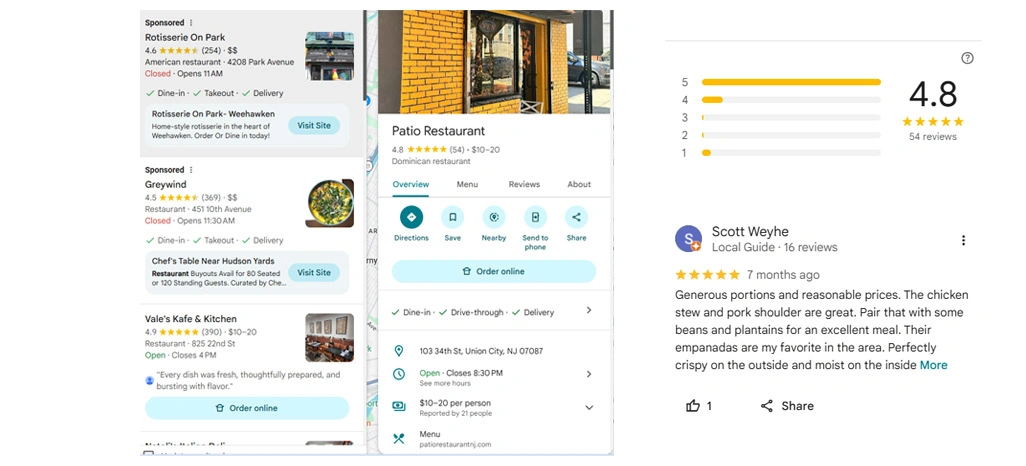
Collecting restaurant listings alone does not create value; structured interpretation converts raw records into actionable intelligence. Businesses increasingly apply Google Maps Leads Scraping to build targeted B2B outreach databases segmented by cuisine, ratings, and locality.
City-level benchmarking becomes more effective through Google Maps Restaurant Scraping by City, which enables side-by-side comparison of density patterns, cuisine penetration, and service intensity across regions. Advanced dashboards powered by Google Maps Monitoring Data help track listing updates, rating shifts, and operational status changes over time.
Market analysts also combine structured frameworks to Extract Restaurant Data From Google Maps for competitor tracking and supply-chain targeting. This structured dataset supports outreach planning for POS providers, packaging suppliers, and marketing agencies.
| Intelligence Metric | Insight Derived | Business Value |
|---|---|---|
| Rating Trends | Reputation movement | Marketing planning |
| Cuisine Spread | Demand analysis | Menu positioning |
| Density Mapping | Competitive pressure | Location targeting |
| Lead Segmentation | B2B prospecting | Sales growth |
Additionally, businesses using structured methods to Scrape Restaurants From Google Maps can identify under-served micro-markets with limited cuisine diversity, creating opportunities for strategic expansion or delivery network enhancement.
How Retail Scrape Can Help You?
Restaurant intelligence at scale requires accuracy, automation, and compliance-ready extraction pipelines. Businesses implementing Web Scraping Google Maps Restaurant Data with us benefit from structured, scalable, and geo-targeted datasets covering thousands of verified listings across cities.
Our solutions provide:
- Multi-city restaurant database extraction.
- Location-based density mapping.
- Competitive benchmarking reports.
- Rating and review analysis dashboards.
- Price trend evaluation frameworks.
- Verified contact and operational insights.
We also offer advanced capabilities to Scrape Google Maps Restaurant Reviews and Ratings, helping businesses analyze sentiment trends, customer engagement metrics, and brand perception patterns.
At the infrastructure level, we deploy structured extraction frameworks powered by Google Maps Restaurant Data Scraping, ensuring clean formatting, scalable delivery, and analytics-ready outputs tailored to your business objectives.
Conclusion
Accurate restaurant intelligence requires scalable extraction strategies and structured analytics. When implemented effectively, Web Scraping Google Maps Restaurant Data enables businesses to map verified listings, track pricing patterns, and analyze geographic density across thousands of restaurants instantly.
With the right automation partner and tools like Google Maps Data Scraper, organizations can streamline data collection, improve expansion planning, and enhance competitive analysis. Connect with Retail Scrape today to build scalable restaurant intelligence solutions tailored to your growth strategy.
Effortlessly managing intricacies with customized strategies.
Mitigating risks, navigating regulations, and cultivating trust.
Leveraging expertise from our internationally acclaimed team of developers
Reliable guidance and assistance for your business's advancement