What Makes Food Delivery Data Scraping for Price Intelligence Boost Restaurant Margins by 32%?
Introduction
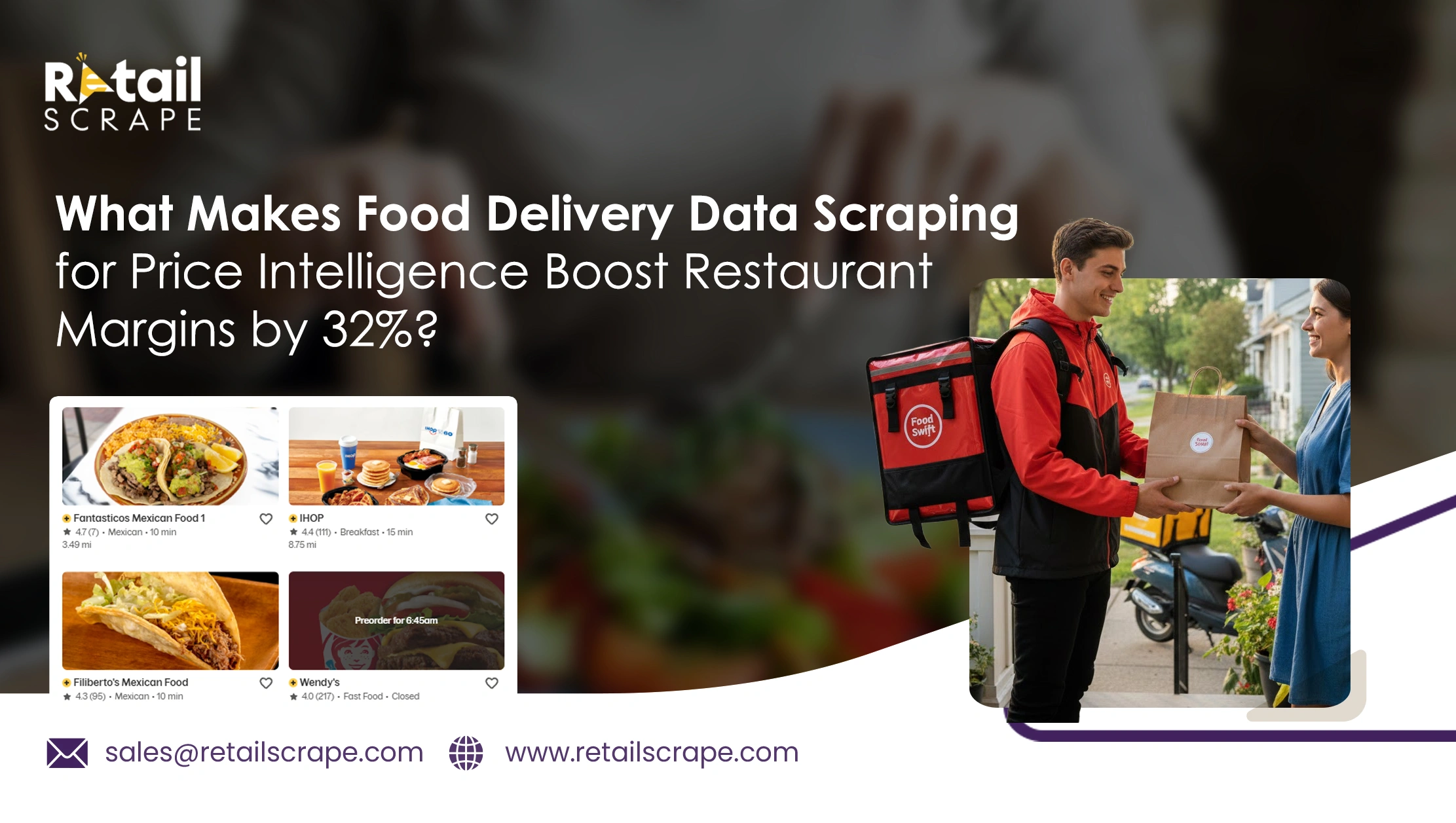
In today’s hyper-competitive food-tech ecosystem, restaurants operate on razor-thin margins—often between 5% and 12%. However, brands that implement Food Delivery Data Scraping for Price Intelligence strategies are reporting margin improvements of up to 32%. The reason is simple: real-time competitive visibility leads to smarter pricing, optimized discounts, and better demand forecasting.
With food aggregators constantly adjusting commissions, promotions, and delivery fees, static pricing models no longer work. Restaurants must adopt Food Web Scraping Services to capture live menu prices, competitor offers, bundle deals, and customer ratings across platforms. This data helps brands make agile adjustments based on peak-hour trends, cuisine competition, and local demand.
Whether you're a QSR chain or a cloud kitchen brand, data-driven decisions reduce guesswork and improve profitability. By combining technology with actionable analytics, restaurants can transition from reactive discounting to proactive price optimization—turning competitive pressure into measurable financial growth.
Eliminating Revenue Leakage from Multi-Platform Menu Gaps
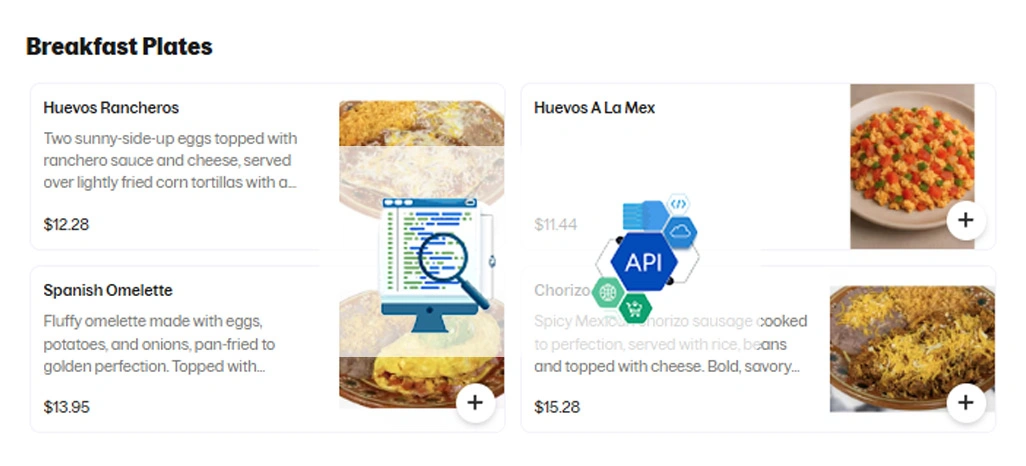
Restaurants operating across multiple food aggregators often struggle with inconsistent menu pricing. Even minor pricing mismatches—₹10 to ₹20 per item—can reduce annual profit margins by 8–15%. These discrepancies usually arise from delayed updates, manual uploads, or commission adjustments.
When comparing API vs Web Scraping for Food Delivery Data, restaurants often discover that scraping provides broader competitive visibility. APIs may restrict access to competitor data, whereas scraping allows structured monitoring of publicly available listings. Integrating a Food Menu & Pricing Scraping API further streamlines synchronization between internal dashboards and external aggregators.
Modern Restaurant Menu Price Scraping Solutions help track item-level differences, combo structures, add-on charges, and delivery fee variations. Meanwhile, Food Delivery Pricing Analytics for Restaurants provides elasticity insights, enabling smarter markups without sacrificing order volume.
Pricing Alignment Impact Table:
| Pricing Factor | Before Automation | After Automation | Margin Improvement |
|---|---|---|---|
| Menu Inconsistency | 12% variance | 2% variance | +9% |
| Combo Pricing Errors | Frequent | Rare | +6% |
| Commission Adjustments | Manual review | Automated sync | +5% |
| Update Delays | 3–4 weeks | 24–48 hours | +7% |
Integrating advanced analytics and Online Food Ordering Data Scraping into their pricing strategy enables operators to identify hidden inconsistencies, respond faster to market shifts, and implement data-backed adjustments that drive measurable financial improvements.
Controlling Promotional Overspending Through Data Insights
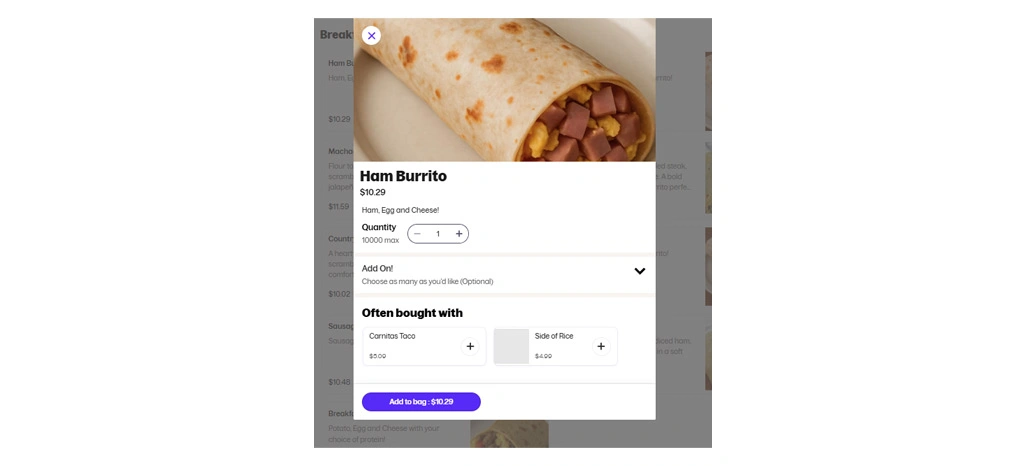
Discount-heavy strategies often erode restaurant profitability. Research shows nearly 40% of promotional campaigns fail to deliver sustainable ROI because they are reactive rather than strategic. Instead of offering blanket 30% discounts, brands now use structured data to refine promotional timing and depth.
Through advanced Food Delivery Data Intelligence Solutions, restaurants analyze competitor discount frequency, cuisine-based offer patterns, and city-level pricing strategies. Businesses that actively Monitor Discount Trends in Food Delivery Apps identify optimal time windows—such as weekday afternoons or late-night slots—where smaller incentives generate higher conversions.
By analyzing competitor bundles and seasonal offers, restaurants reduce over-discounting by 18–25%. Instead of reacting to competitor promotions, brands design structured campaigns backed by measurable performance indicators.
Promotion Optimization Metrics:
| Metric | Before Data Insights | After Data Insights | Financial Outcome |
|---|---|---|---|
| Average Discount | 28% | 19% | +11% margin |
| Campaign Duration | 10 days | 5 days | Reduced spend |
| ROI Tracking | Limited | Real-time visibility | +14% profit |
| Offer Timing | Fixed schedule | Demand-based | +8% revenue |
Data-driven promotion control safeguards brand value while ensuring steady order growth and healthier performance metrics. By leveraging advanced analytics to Extract Restaurant Menu Data From Food Apps, businesses can refine discount strategies, optimize campaign timing, and maintain pricing integrity—driving sustainable expansion without compromising long-term margins.
Responding Faster to Dynamic Competitive Price Changes
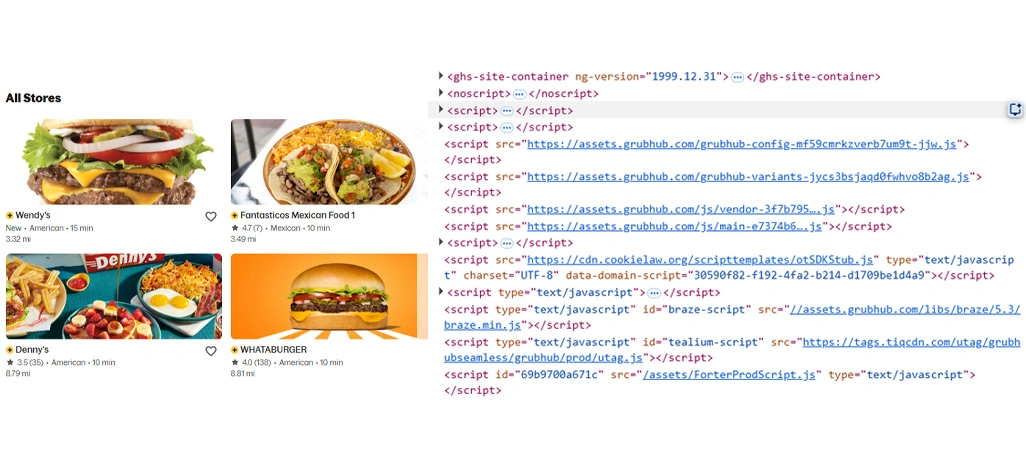
Food delivery marketplaces are highly dynamic, with competitors updating prices multiple times per week. Manual audits simply cannot keep pace with this environment. Restaurants that fail to react quickly often lose peak-hour sales or compromise contribution margins.
Using Real-Time Menu Price Tracking Using Web Scraping, operators receive automated alerts whenever competitors adjust menu prices, introduce limited-time offers, or restructure combos. Combined with Real-Time Food Delivery Price Tracking, this enables rapid adjustments during high-demand windows.
Restaurants implementing automated tracking frameworks report up to 32% improvement in contribution margins within six months. Faster response times reduce lost sales, optimize price positioning, and maintain competitiveness across high-density zones.
Real-Time Competitive Monitoring Table:
| Tracking Area | Manual Process | Automated Monitoring | Margin Boost |
|---|---|---|---|
| Competitor Price Changes | Weekly review | Hourly alerts | +10% |
| Peak Hour Adjustments | Delayed | Instant | +7% |
| Demand Forecasting | Static | Dynamic modeling | +9% |
| Local Competition Mapping | Limited visibility | Multi-location tracking | +6% |
By integrating Online Food Ordering Data Scraping into strategic decision-making, businesses can monitor pricing movements, promotional patterns, and competitive positioning with greater precision—ensuring they remain responsive, profitable, and resilient in a rapidly evolving environment.
How Retail Scrape Can Help You?
In a volatile pricing environment, strategic visibility becomes a competitive advantage. Restaurants implementing Food Delivery Data Scraping for Price Intelligence with us gain structured dashboards, automated tracking, and city-level benchmarking insights that drive measurable margin growth.
Our approach includes:
- Competitor benchmarking across aggregators.
- Dynamic pricing trend monitoring.
- Promotion performance evaluation.
- Demand-based price recommendations.
- Automated menu change alerts.
- Multi-location comparison reporting.
We deliver actionable insights tailored to QSR chains and cloud kitchens. With our Menu Price Intelligence Strategy for QSR Brands, you gain clarity across pricing, offers, and performance metrics—without manual effort.
To enhance operational precision, we also enable Real-Time Food Delivery Price Tracking that integrates seamlessly with your analytics systems.
Conclusion
Restaurants that integrate Food Delivery Data Scraping for Price Intelligence into their pricing workflow consistently outperform competitors by making faster, smarter adjustments. Data-backed pricing decisions reduce margin leakage and improve promotional efficiency across platforms.
By combining automation with structured insights, brands can implement advanced Restaurant Menu Price Scraping Solutions that protect profitability and strengthen competitive positioning. Ready to increase your restaurant margins by up to 32%? Partner with Retail Scrape today and transform your pricing strategy into a growth engine.
Effortlessly managing intricacies with customized strategies.
Mitigating risks, navigating regulations, and cultivating trust.
Leveraging expertise from our internationally acclaimed team of developers
Reliable guidance and assistance for your business's advancement