
What Benefits Can Structuring Scraped Data for Power BI and Tableau Deliver for 80% Smarter Analytics?

Introduction
Modern businesses collect information from websites, marketplaces, review platforms, and digital channels at unprecedented speed. While data extraction has become easier, transforming large volumes of unstructured information into meaningful business intelligence remains a significant challenge. Organizations often struggle with inconsistent formats, duplicate records, missing values, and fragmented datasets that limit reporting accuracy.
This is where Web Scraping Data for Power BI and Tableau becomes increasingly valuable. Businesses can collect competitive, operational, and consumer data from multiple sources and transform it into structured datasets suitable for analytics environments. Clean and organized information improves dashboard performance, reporting consistency, and decision-making speed.
Companies seeking smarter analytics workflows increasingly rely on Structuring Scraped Data for Power BI and Tableau to create reliable reporting ecosystems. Structured datasets enable teams to monitor trends, identify opportunities, and evaluate performance metrics with greater confidence. When scraped information is transformed into analysis-ready formats, organizations benefit from improved visualization accuracy, streamlined reporting workflows, and scalable analytical frameworks.
Establishing Reliable Foundations for Consistent Reporting Outcomes
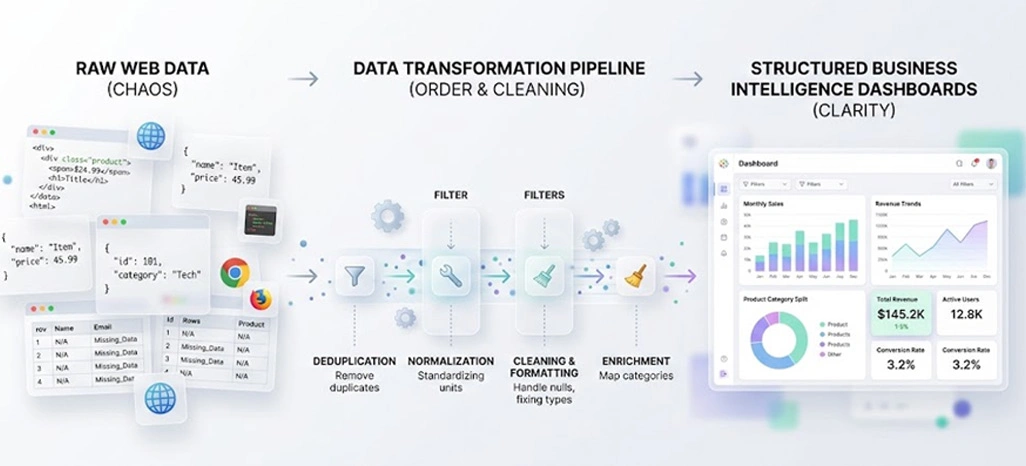
Organizations often face significant challenges when transforming extracted digital information into meaningful business intelligence assets. Raw datasets collected from websites frequently contain duplicate entries, inconsistent formats, missing values, and fragmented records that negatively impact reporting accuracy. Without proper preparation, dashboards can generate misleading insights, resulting in poor strategic decisions and inefficient resource allocation.
Research indicates that data professionals spend nearly 60%–80% of their analytical efforts preparing information before visualization and reporting processes begin. A major step toward resolving these challenges involves Converting Scraped Raw Data Into BI-Ready Datasets, which ensures information follows standardized formats and aligns with reporting requirements.
Additionally, Data Modeling for Scraped Datasets in Power BI allows businesses to establish relationships between multiple sources, making complex reporting environments easier to manage and interpret. Structured preparation also supports trend analysis, performance tracking, and operational monitoring by ensuring that datasets remain accurate and consistent across departments.
| Data Challenge | Structured Approach | Business Benefit |
|---|---|---|
| Duplicate Records | Automated Cleansing | Better Accuracy |
| Missing Fields | Validation Processes | Reliable Insights |
| Mixed Formats | Standardization Rules | Consistency |
| Data Silos | Unified Structures | Improved Visibility |
| Reporting Errors | Quality Controls | Better Decisions |
Businesses that focus on preparation and validation create stronger analytical foundations that support scalable reporting initiatives and improved operational intelligence. As organizations collect increasing amounts of digital information, investing in standardized preparation methods becomes critical for maintaining analytical efficiency and long-term reporting reliability.
Creating Streamlined Workflows Across Analytical Environments
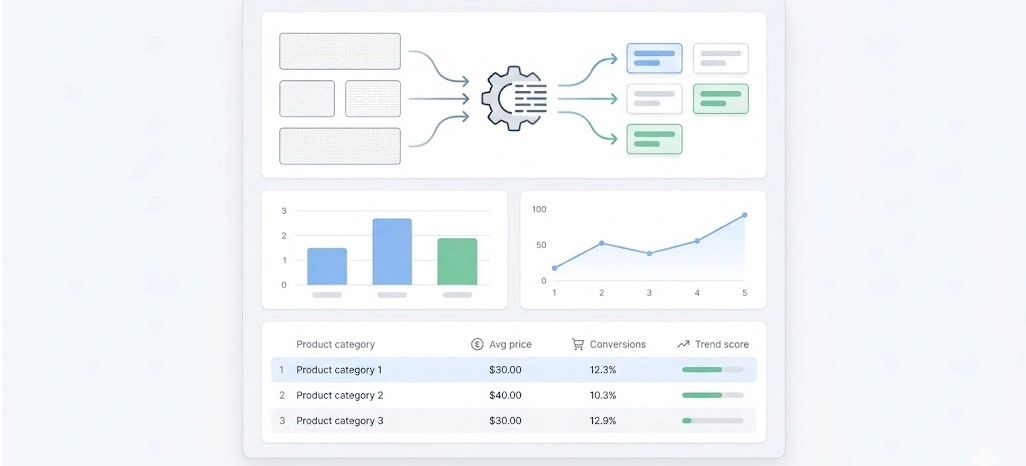
Many organizations successfully collect information from multiple digital channels but struggle to transform it into usable business intelligence. Industry studies suggest that businesses implementing automated data workflows experience substantially faster reporting turnaround times and improved operational visibility. Efficient integration frameworks allow organizations to convert collected information into actionable intelligence while minimizing manual intervention.
Companies increasingly rely on Web Scraping API Services to automate large-scale data collection and maintain continuous information flows from various online sources. Information must be standardized, validated, and transformed into formats compatible with business intelligence platforms. This is where Data Transformation for Power BI and Tableau plays a crucial role.
Through structured processing techniques, businesses can align metrics, normalize records, and create reporting-ready datasets that support advanced analytical requirements. Furthermore, Power BI Web Scraping Integration enables seamless movement of structured information into reporting ecosystems, reducing delays associated with manual uploads and repetitive preparation tasks.
| Workflow Stage | Purpose | Result |
|---|---|---|
| Data Collection | Source Aggregation | Comprehensive Coverage |
| Validation | Error Detection | Improved Accuracy |
| Transformation | Data Alignment | Consistency |
| Integration | Dashboard Connectivity | Faster Reporting |
| Automation | Continuous Updates | Real-Time Visibility |
Organizations also benefit from Integrating Web Scraped Data Into Tableau Dashboards, allowing stakeholders to visualize customer behavior, market trends, and operational performance through centralized reporting systems.
Converting Digital Intelligence Into Strategic Business Actions
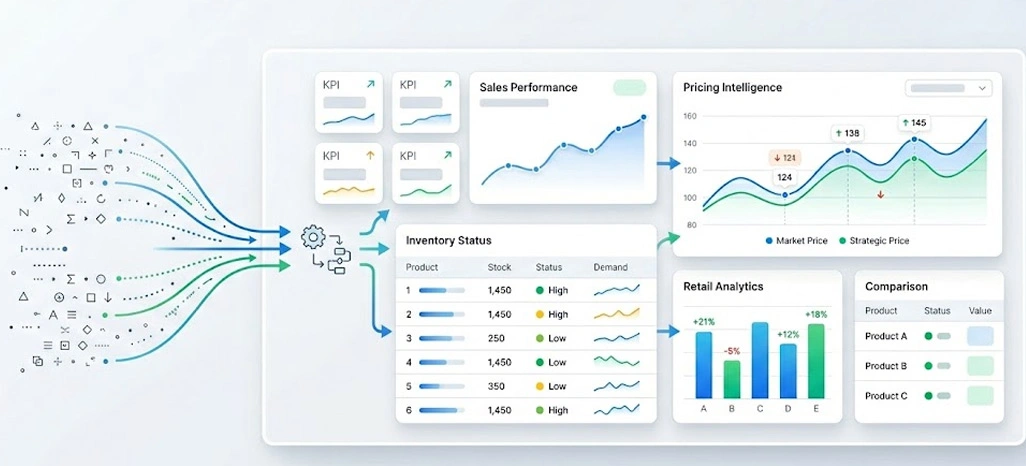
Access to large volumes of digital information offers tremendous opportunities for organizations seeking stronger market visibility and competitive awareness. However, raw information alone provides limited value unless it is transformed into a format that supports informed business decisions and measurable outcomes. Standardized information environments improve visibility across departments while supporting long-term planning initiatives.
Organizations implementing Structuring Scraped Data for BI Tools Like Microsoft Power BI and Tableau establish scalable analytical ecosystems capable of handling growing data volumes and increasingly complex reporting requirements. Structured datasets improve dashboard responsiveness, simplify reporting maintenance, and support advanced forecasting activities.
Businesses involved in retail analytics frequently complement these frameworks with Dynamic Pricing Solutions, enabling them to monitor market fluctuations and respond more effectively to changing customer demand patterns. In addition, maintaining Clean Scraped Data for Power BI Dashboards ensures that reporting outputs remain reliable and easy to interpret.
| Business Goal | Structured Data Advantage | Outcome |
|---|---|---|
| Market Tracking | Unified Information | Better Visibility |
| Competitor Analysis | Consistent Metrics | Faster Decisions |
| Customer Insights | Organized Records | Improved Targeting |
| Forecasting | Reliable Inputs | Stronger Planning |
| Performance Reporting | Accurate Dashboards | Better Strategy |
Companies also utilize Web Scraping for Analytics Dashboards to support continuous market monitoring and performance evaluation initiatives. By organizing extracted information into structured analytical frameworks, organizations can transform scattered datasets into strategic intelligence that drives operational improvements and supports long-term business growth.
How Retail Scrape Can Help You?
Organizations seeking stronger analytics performance often require specialized expertise to prepare large-scale datasets for reporting environments. Companies implementing Structuring Scraped Data for Power BI and Tableau can significantly enhance the value extracted from business intelligence platforms.
Our solutions help organizations:
- Standardize large-scale extracted datasets.
- Improve reporting consistency across departments.
- Eliminate duplicate and incomplete records.
- Create scalable reporting frameworks.
- Automate continuous data preparation workflows.
- Accelerate dashboard deployment timelines.
Businesses looking to improve market intelligence initiatives can also benefit from Price Optimization strategies supported by structured datasets and analytical reporting environments. Additionally, our expertise in Converting Scraped Raw Data Into BI-Ready Datasets helps organizations transform fragmented information into reliable assets for enterprise-level analytics.
Conclusion
Modern analytics success depends heavily on data quality, consistency, and preparation. Businesses investing in Structuring Scraped Data for Power BI and Tableau create stronger foundations for reporting accuracy, dashboard efficiency, and informed decision-making. Structured datasets enable organizations to transform raw information into meaningful business intelligence with greater confidence.
Organizations seeking long-term analytical advantages can also improve reporting performance through Data Transformation for Power BI and Tableau while establishing scalable data management frameworks. Contact Retail Scrape today to build smarter analytics workflows, accelerate business intelligence initiatives, and turn complex datasets into actionable insights.