How Can Retail Negative Product Review Monitoring Data Track Issues Across E-Commerce Platforms?
Introduction
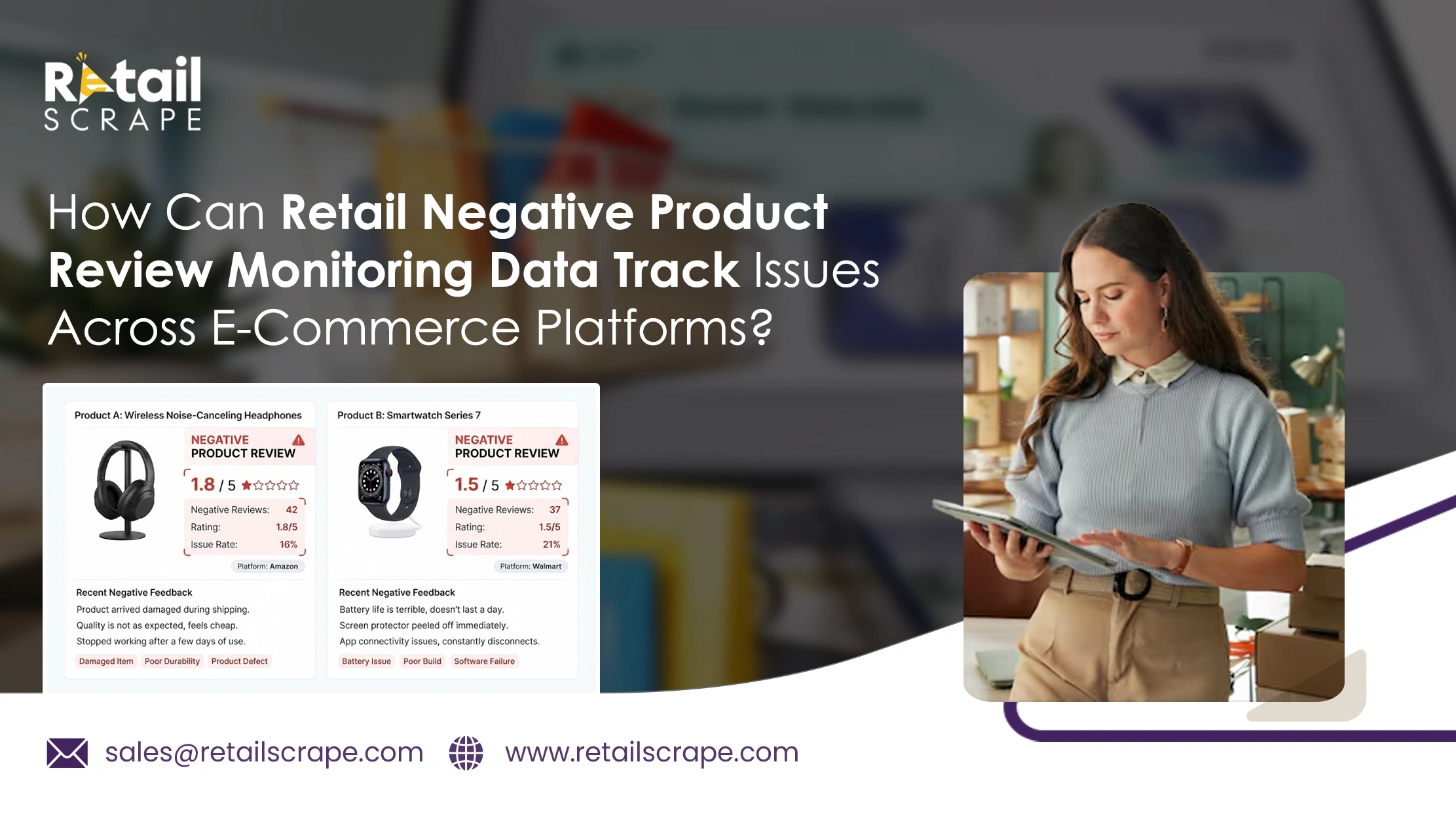
Customer reviews provide direct insight into how shoppers experience products, packaging, delivery, pricing, and service quality across e-commerce platforms. Negative feedback can expose recurring problems that may otherwise remain unnoticed. Businesses increasingly use Ecommerce Data Scraping to collect review information from multiple marketplaces and organize it for detailed analysis.
Manually checking thousands of reviews across different platforms can consume considerable time and make it difficult to identify recurring complaints. Automated systems can collect ratings, comments, review dates, product details, and customer feedback at scale. This information helps businesses recognize patterns, compare marketplace performance, and prioritize issues requiring immediate attention.
By analyzing Retail Negative Product Review Monitoring Data, companies can connect individual complaints with broader product and marketplace trends. A centralized monitoring process makes it easier to understand customer expectations, evaluate product performance, identify quality concerns, and support improvements that can contribute to stronger customer satisfaction and more informed business decisions.
Detecting Recurring Product Issues Across Multiple Marketplaces
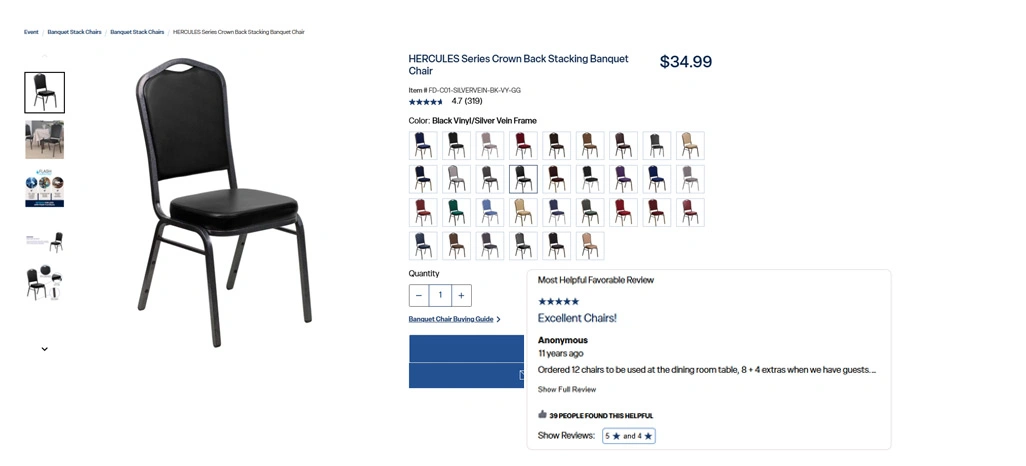
Negative customer feedback can reveal problems involving product quality, packaging, delivery, functionality, pricing, or after-sales support. When businesses collect reviews from several e-commerce platforms, they can identify whether similar complaints appear repeatedly for the same product. This broader perspective makes Online Product Review Monitoring useful for recognizing patterns that may not be visible when feedback is examined separately on individual marketplaces.
Review analysis can also be compared with pricing information to understand whether customer dissatisfaction changes after promotions, price increases, or other commercial adjustments. Combining Real-Time Price Monitoring with customer feedback creates additional context around product performance. For example, a sudden increase in complaints about value for money may require businesses to examine pricing, product quality, or competitor positioning.
| Review Area | Business Insight |
|---|---|
| Product quality | Identifies recurring defects |
| Packaging | Highlights handling concerns |
| Delivery | Reveals fulfillment problems |
| Customer service | Shows support-related complaints |
Businesses can organize collected feedback according to product, marketplace, rating, complaint category, and review date. This structured approach makes Scrape Negative Product Review Tracking more practical for large product catalogs because teams can identify frequently mentioned concerns and determine which issues require deeper investigation.
Key points:
- Compare recurring complaints across platforms.
- Categorize reviews by issue type.
- Track changes in customer ratings.
- Connect feedback with pricing movements.
- Prioritize frequently reported product problems.
Review monitoring becomes more valuable when businesses establish consistent tracking criteria across marketplaces. Teams can examine complaint frequency, rating changes, repeated keywords, and changes in sentiment over time. These observations provide a clearer understanding of customer expectations while helping product and support teams coordinate corrective actions across different sales channels.
Comparing Customer Feedback Patterns Across E-Commerce Channels
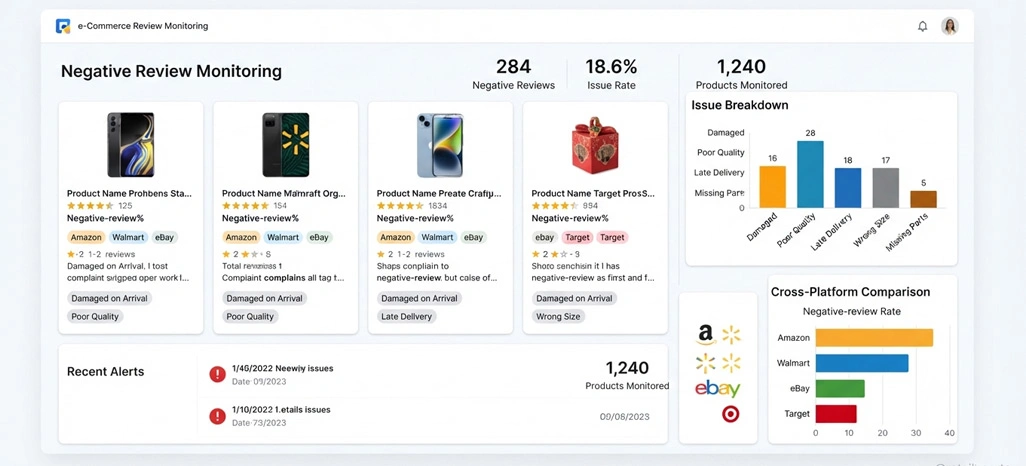
Customer sentiment can vary significantly between e-commerce platforms because shoppers may experience different delivery services, seller policies, pricing structures, or product availability. Comparing these differences helps businesses determine whether complaints are related to the product itself or the marketplace experience. Ecommerce Product Review Tracking can organize feedback according to marketplace, product category, rating, and complaint type.
Availability is another factor that can influence customer satisfaction. When products frequently become unavailable, customers may leave negative comments because of delayed purchases, substitutions, or canceled orders. Combining review information with Real-Time Product Availability can help businesses determine whether inventory conditions correspond with changes in customer feedback and ratings.
| Comparison Factor | Possible Insight |
|---|---|
| Marketplace | Platform-specific complaint patterns |
| Product category | Category-level quality concerns |
| Rating | Customer satisfaction movement |
| Review frequency | Emerging issue identification |
A centralized system can compare feedback from multiple marketplaces without requiring teams to manually visit each platform. This approach helps businesses evaluate complaint volumes, rating distributions, and recurring themes across sales channels. It also supports Product Review Monitoring Across Marketplaces, allowing organizations to identify whether a particular concern is isolated or occurring across several platforms.
Key points:
- Compare review trends across marketplaces.
- Identify platform-specific customer concerns.
- Connect complaints with inventory conditions.
- Monitor rating changes over time.
- Separate product issues from marketplace issues.
Historical review records can provide additional context when businesses investigate product performance. Teams can compare current complaints with older feedback to determine whether an issue is new, recurring, or gradually improving. Tracking these changes supports better coordination between product development, inventory management, customer support, and marketplace operations.
Transforming Review Collections Into Actionable Business Insights
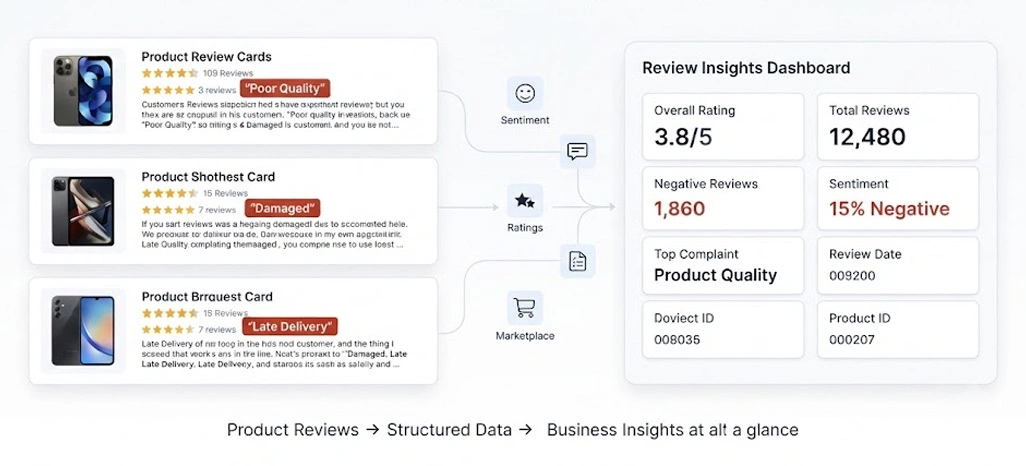
Large e-commerce catalogs can generate thousands of customer reviews, making manual analysis difficult for business teams. Automated collection systems can organize ratings, review text, product identifiers, dates, and marketplace information into structured datasets. A Product Review Data Scraping API can simplify this process by supporting consistent collection from multiple sources and feeding information into analytical workflows.
Once collected, review information can be categorized according to complaint type, sentiment, product feature, and customer concern. Businesses can then examine which issues occur most frequently and determine whether specific products require attention. Ecommerce Review Data Scraping can support this process by providing structured feedback that teams can analyze alongside sales, pricing, inventory, and product information.
| Data Element | Analytical Purpose |
|---|---|
| Review text | Identifies customer concerns |
| Star rating | Measures satisfaction |
| Review date | Tracks issue development |
| Product identifier | Connects feedback with products |
Sentiment analysis can provide another layer of interpretation by separating positive, neutral, and negative customer opinions. Businesses can examine frequently mentioned terms and themes to identify product characteristics associated with dissatisfaction. Using Scrape Product Reviews for Sentiment Analysis can therefore help teams convert large volumes of unstructured customer feedback into clearer patterns for product and service improvements.
Key points:
- Structure reviews for analytical use.
- Categorize complaints by recurring themes.
- Analyze sentiment across product categories.
- Connect feedback with business metrics.
- Build dashboards for continuous monitoring.
Businesses can further integrate review insights into dashboards and reporting systems to monitor changes over time. Product managers can use recurring complaints to guide improvements, while customer service teams can prioritize common concerns. Marketing teams can also understand customer expectations more clearly, creating a coordinated approach to improving product experiences across e-commerce channels.
How Retail Scrape Can Help You?
We help businesses collect and organize customer feedback from multiple e-commerce platforms, making large volumes of review information easier to analyze. By using Retail Negative Product Review Monitoring Data within a structured workflow, companies can identify recurring complaints, compare marketplace performance, and understand product-related concerns.
Our solutions can help businesses:
- Collect customer reviews from multiple platforms
- Organize feedback into structured datasets
- Monitor product ratings and review trends
- Identify recurring customer complaints
- Compare marketplace-specific feedback
- Support product improvement decisions
We can also help businesses process review information at scale through customized collection and analytical workflows. The collected information can also be combined with E-Commerce Datasets to create broader market intelligence and support informed business decisions. Teams can organize customer comments, ratings, product details, and marketplace information according to their specific requirements.
With scalable data collection and structured reporting, businesses can continuously evaluate customer feedback and identify changes in marketplace sentiment. Automated workflows reduce repetitive manual monitoring while providing teams with organized information for analysis.
Conclusion
Monitoring negative customer feedback across multiple marketplaces provides businesses with a clearer understanding of product quality, service concerns, and changing customer expectations. Retail Negative Product Review Monitoring Data can help organizations consolidate scattered feedback, identify recurring problems, and support timely improvements based on structured customer insights.
When businesses combine automated review collection with Real-Time Negative Review Tracking, they can continuously observe emerging complaints and changing sentiment across their e-commerce channels. This approach supports more responsive product, quality, and customer-service decisions. Contact Retail Scrape today to build a scalable review monitoring solution tailored to your e-commerce data requirements.