How 37% Revenue Growth Happens with Restaurant Performance Tracking Using Web Scraping in 2026?
Introduction
In 2026, India’s online food delivery ecosystem is more competitive than ever. With platforms like Swiggy and Zomato driving massive order volumes, restaurants must rely on structured intelligence rather than guesswork. Menu positioning, dynamic pricing, delivery time accuracy, and customer sentiment directly influence visibility and revenue.
This is where Restaurant Performance Tracking Using Web Scraping becomes a measurable growth engine. Instead of depending only on internal reports, restaurants now extract live data on competitor pricing, customer reviews, trending dishes, and discount frequency. By combining this with POS data, operators gain a unified performance dashboard.
Modern operators also use Web Scraping for Restaurant Competitor Analysis to evaluate price gaps, promotion timing, and menu duplication across delivery zones. This intelligence allows restaurants to respond in real time rather than after revenue dips.
With automated tracking, brands are reporting up to 37% revenue growth by optimizing menus, refining pricing, and synchronizing delivery platforms with internal systems. In 2026, performance tracking is not optional—it is foundational for sustainable expansion.
Identifying Revenue Gaps Through Structured Market Visibility Systems
Revenue leakage in online food delivery often happens silently. Restaurants lose margins due to inconsistent pricing, delayed updates, competitor undercutting, and lack of real-time visibility. Many operators rely on periodic reviews instead of continuous performance monitoring, which creates strategic blind spots.
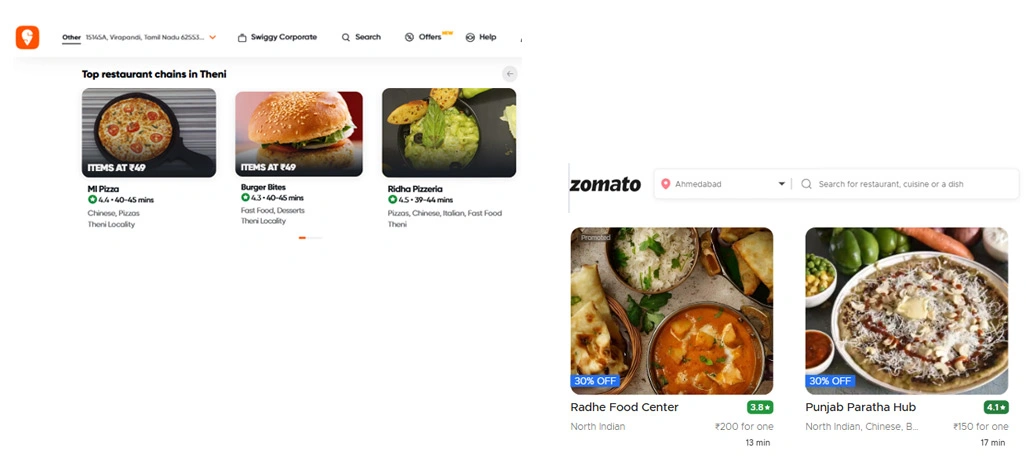
Modern brands rely on Food Delivery Data Scraping for Market Insights to monitor competitor menu pricing, customer rating patterns, delivery timelines, and promotional frequency. This structured visibility allows restaurants to adjust pricing and offers dynamically rather than reactively. Using Swiggy Zomato Data Scraping for Price Intelligence, restaurants benchmark dish-level pricing and identify underpriced or overpriced menu items.
This data-driven correction improves profit margins without compromising competitiveness. Additionally, Restaurant Competitor Price Monitoring ensures that price differences are detected early before customer migration begins. Restaurants can analyze which competitor promotions are driving order spikes and replicate or counter them strategically.
Below is a simplified performance comparison model:
| Metric | Without Live Intelligence | With Structured Monitoring |
|---|---|---|
| Price Update Frequency | Weekly | Real-time |
| Offer Response Time | Delayed | Immediate |
| Competitor Visibility | Partial | Continuous |
| Revenue Growth Potential | 8–12% | Up to 37% |
Restaurants implementing structured monitoring in 2026 reported improved average order value, reduced discount dependency, and stronger ranking consistency across food delivery platforms.
Strengthening Operational Accuracy Through Integrated System Alignment
Operational misalignment between delivery platforms and in-house systems frequently leads to cancellations, refund losses, and customer dissatisfaction. Menu discrepancies and stock mismatches directly impact ratings and repeat orders.
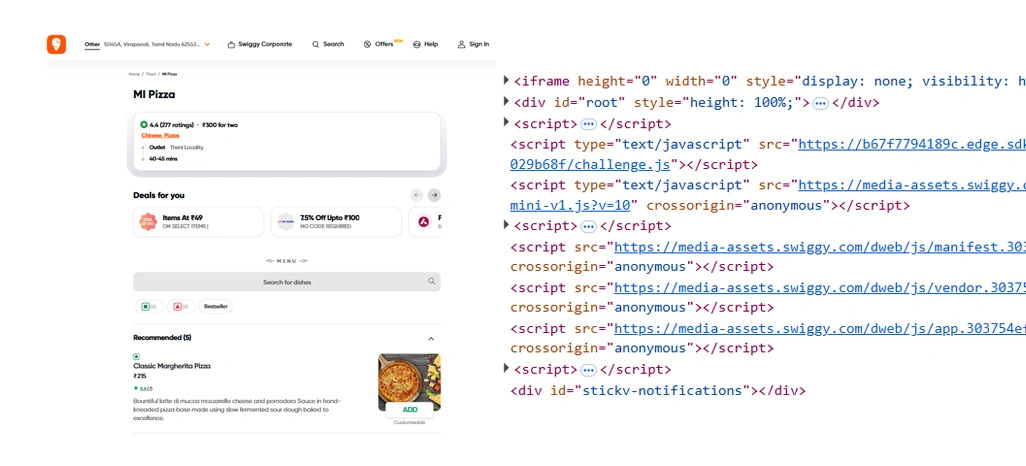
Restaurants that adopt Swiggy POS API Integration Services eliminate these friction points by ensuring synchronized order flow and pricing updates between internal POS systems and marketplace dashboards. This integration reduces manual intervention and improves accuracy. Through Swiggy Data Scraping, restaurants track dish rankings, review trends, surge pricing patterns, and competitor packaging charges.
These insights help operators refine kitchen preparation priorities and pricing alignment. At the same time, implementing Swiggy and Zomato Real-Time Menu Sync Solution ensures instant reflection of menu edits across delivery platforms. When inventory updates happen in POS, listings update simultaneously, preventing order cancellations due to unavailable items.
Below is an operational comparison model:
| Operational Area | Before System Alignment | After Integration |
|---|---|---|
| Menu Update Delay | 6–12 Hours | Instant |
| Stock Mismatch Errors | Frequent | Minimal |
| Order Sync Accuracy | 82% | 99%+ |
| Refund Loss Impact | High | Controlled |
With advanced Food Delivery POS Integration, restaurants align kitchen operations, delivery listings, and customer orders into one unified workflow. This leads to faster service cycles, improved ratings, and measurable cost efficiency.
Driving Strategic Growth with Integrated Platform Intelligence Models
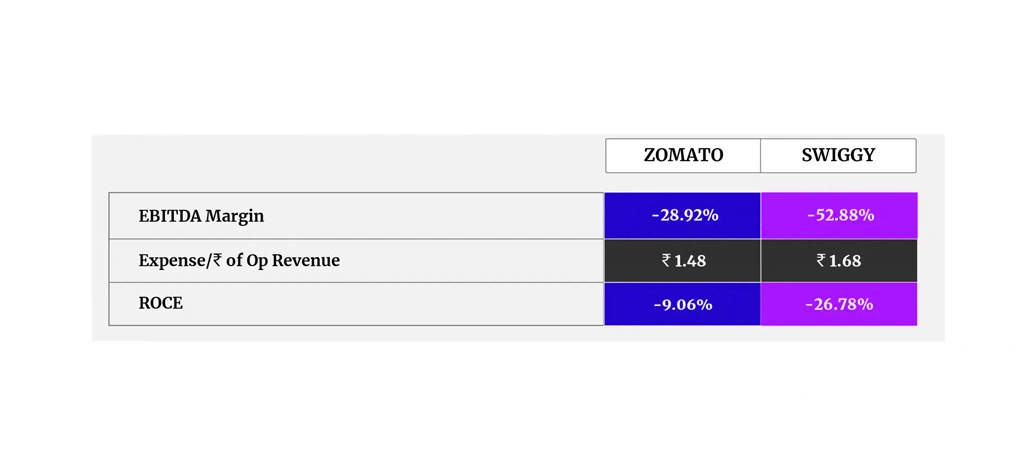
Data-driven restaurants no longer depend on isolated analytics dashboards. Instead, they combine public marketplace intelligence with structured API integration to drive smarter decisions. The debate around Swiggy Zomato API vs Web Scraping often centers on control versus flexibility. APIs provide structured internal data, while scraping offers broader competitive visibility.
Growth-focused restaurants combine both to achieve balanced intelligence. Through a structured Swiggy Zomato Integration Solution, brands centralize order flow, ratings, promotions, and customer feedback into a unified performance system. This ensures pricing adjustments, campaign launches, and menu restructuring are backed by measurable insights.
Strategic monitoring also includes Restaurant Revenue Optimization 2026, where predictive analysis identifies peak demand windows, profitable dish categories, and geo-specific price elasticity.
Below is a strategy effectiveness comparison:
| Strategic Capability | API Only Approach | Combined Intelligence Model |
|---|---|---|
| Internal Order Data | Yes | Yes |
| Competitor Pricing Visibility | No | Yes |
| Review Trend Tracking | Limited | Extensive |
| Promotion Impact Measurement | Moderate | Advanced |
Restaurants using integrated intelligence models reported stronger campaign ROI, improved demand forecasting accuracy, and enhanced profitability per delivery zone. Structured platform intelligence transforms operational data into long-term strategic growth.
How Retail Scrape Can Help You?
In a competitive digital marketplace, restaurants need clarity, precision, and automation. Our solutions combine analytics, automation, and Restaurant Performance Tracking Using Web Scraping to deliver measurable improvements in online revenue and operational efficiency.
We help you:
- Real-time competitor benchmarking dashboards.
- Automated pricing intelligence systems.
- Integrated order and inventory synchronization.
- Rating and review performance monitoring.
- Location-based demand analytics.
- Delivery platform performance comparison tools.
Our technical framework includes advanced Zomato Data Scraping capabilities to extract structured insights from live listings while maintaining compliance standards.
At the implementation stage, we help brands scale through Boost Online Food Delivery Sales With POS Integration, ensuring your delivery ecosystem works as one synchronized growth engine.
Conclusion
Sustainable growth in 2026 depends on visibility, agility, and automation. Businesses adopting Restaurant Performance Tracking Using Web Scraping are transforming fragmented delivery data into structured revenue intelligence. Combined with smart execution strategies, restaurants achieve measurable scalability and stronger digital positioning.
Integrated analytics and synchronization through Swiggy Zomato Integration Solution convert operational accuracy into financial performance. If you are ready to increase margins, strengthen rankings, and improve consistency, partner with Retail Scrape today and transform your restaurant into a data-driven growth leader.
Effortlessly managing intricacies with customized strategies.
Mitigating risks, navigating regulations, and cultivating trust.
Leveraging expertise from our internationally acclaimed team of developers
Reliable guidance and assistance for your business's advancement