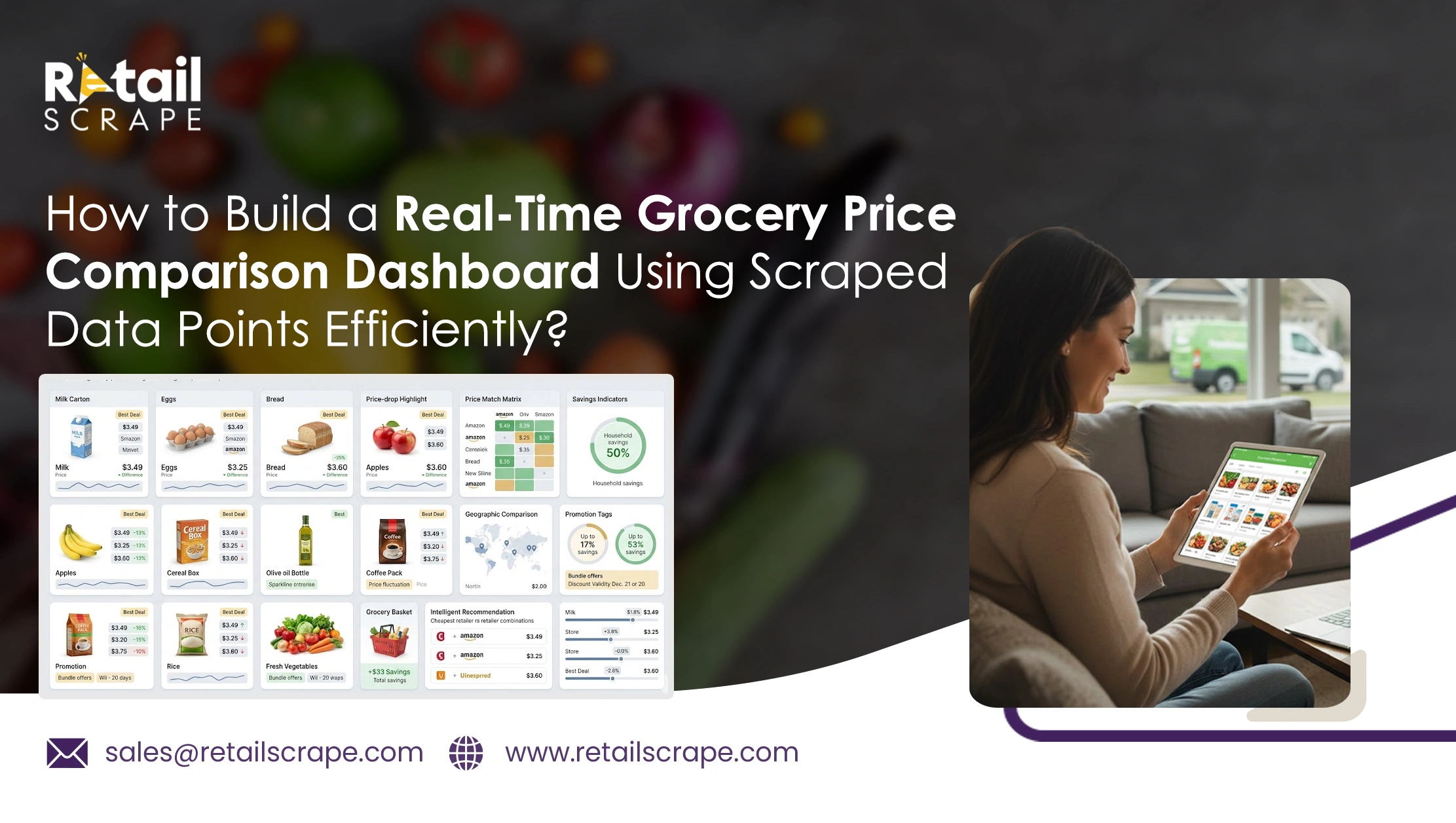
How to Build a Real-Time Grocery Price Comparison Dashboard Using Scraped Data Points Efficiently?
Introduction
The grocery retail market is becoming increasingly competitive as consumers compare prices across multiple stores before making purchasing decisions. Retailers, brands, and market analysts require accurate pricing information to understand market trends, promotional activities, and consumer purchasing behavior. One of the most effective ways to achieve this is through Web Scraping Grocery Data, which enables businesses to collect pricing information from numerous online grocery platforms automatically.
Modern pricing ecosystems generate massive volumes of product information every day. Manual tracking methods often fail to provide the speed and accuracy needed to respond to frequent price changes. Organizations that Build a Real-Time Grocery Price Comparison Dashboard can centralize data from multiple retailers, normalize product information, and create dynamic visualizations that help stakeholders monitor pricing performance.
Such dashboards provide transparency into market movements and help identify opportunities for price optimization. As grocery eCommerce continues to expand, data-driven pricing strategies are becoming essential rather than optional. By combining automated collection methods, intelligent processing workflows, and visualization tools, businesses can create scalable systems that deliver accurate market intelligence and improve pricing decisions across product categories.
Creating A Strong Foundation For Continuous Price Collection
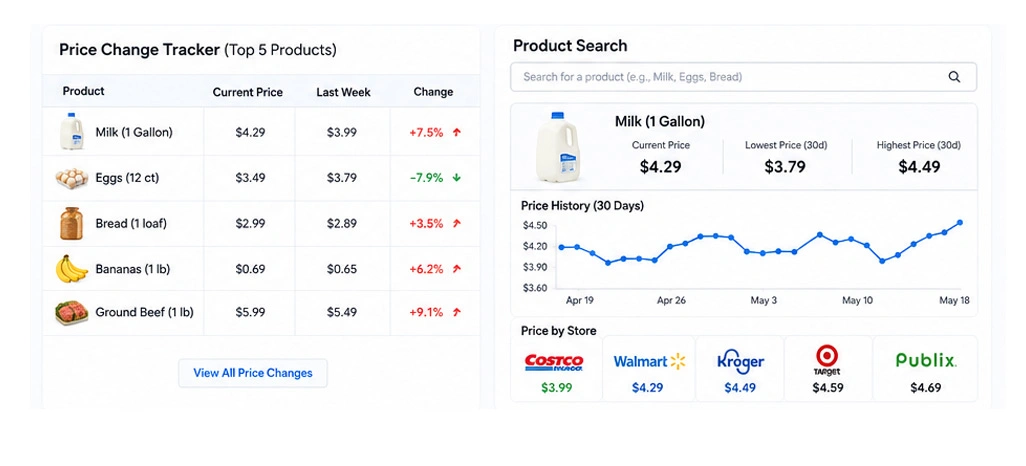
Accurate grocery pricing analysis depends on a dependable data collection system that can gather and organize information consistently. Retailers frequently update prices throughout the day, so manual tracking methods quickly become outdated. A structured pipeline should collect product names, package sizes, availability status, promotional offers, and pricing details from multiple grocery platforms.
The first priority is identifying the most relevant retail sources and standardizing the information they provide. Product normalization is essential because different retailers may describe the same item in different ways. Clean, structured data makes comparisons more reliable and improves the quality of downstream analytics.
A well-organized Grocery Price Dashboard gives businesses a centralized view of market activity and helps teams monitor pricing changes across categories. Continuous collection also supports faster reactions to promotions, stock fluctuations, and competitor adjustments.
| Data Element | Purpose |
|---|---|
| Product Name | Standardized comparison |
| Current Price | Competitive tracking |
| Discount Offers | Promotion analysis |
| Stock Status | Availability monitoring |
| Brand Information | Market positioning |
Industry studies show that online grocery shoppers increasingly compare prices before purchasing, and price differences between retailers can change significantly within short time windows. Reliable automation ensures businesses always work with current information rather than outdated snapshots.
Using Real-Time Grocery Price Monitoring helps organizations detect pricing shifts immediately and maintain visibility into competitive market movements. A strong collection framework ultimately supports scalable analytics, faster decision-making, and more accurate market intelligence.
Turning Collected Information Into Strategic Market Intelligence
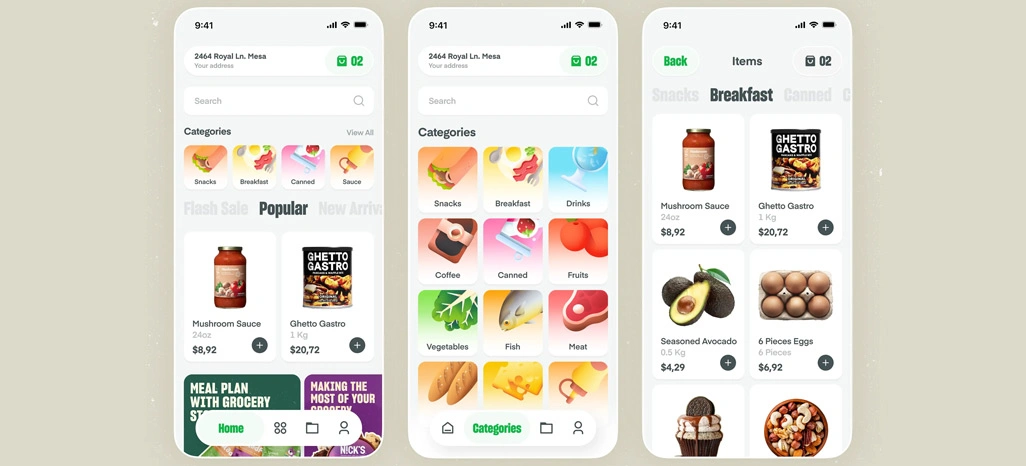
Raw pricing records become valuable only when they are transformed into actionable insights. After collection, businesses should focus on product matching, category classification, historical trend analysis, and promotion tracking. These processing steps create a structured dataset that supports meaningful comparisons across retailers and product categories.
One of the biggest advantages of analytics-driven workflows is the ability to identify patterns that are difficult to see manually. Seasonal pricing trends, recurring discount cycles, and competitor behavior can all be uncovered through systematic analysis. This allows teams to respond faster and make more informed pricing decisions.
Grocery Pricing Analytics helps organizations evaluate market movements over time and measure the effectiveness of promotions. Historical comparisons also support forecasting and long-term strategy planning, especially in categories with frequent price fluctuations.
| Analytical Metric | Strategic Benefit |
|---|---|
| Price Trend Analysis | Market forecasting |
| Competitor Tracking | Faster response times |
| Promotion Monitoring | Campaign optimization |
| Category Performance | Better assortment planning |
| Historical Comparisons | Long-term benchmarking |
Organizations that use Grocery Price Intelligence can detect emerging trends earlier and adapt pricing strategies with greater confidence. This capability is especially useful during competitive campaigns, holiday seasons, and periods of rapid market change.
By turning collected information into clear visualizations and measurable insights, businesses improve collaboration between pricing, merchandising, and operations teams. The result is a more agile pricing strategy backed by data rather than assumptions.
Designing A Scalable Architecture For Long-Term Growth
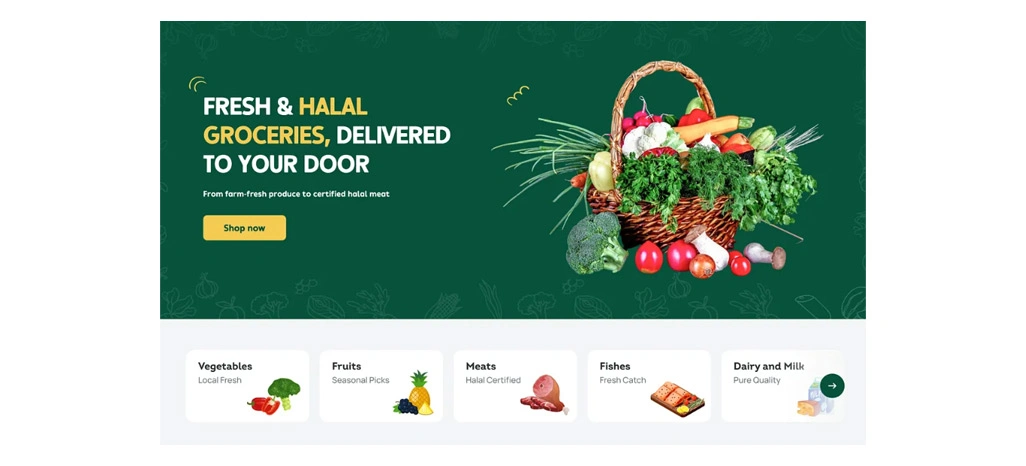
As pricing information expands across retailers and product categories, dashboard architecture becomes a critical success factor. A scalable system must handle increasing data volumes while maintaining fast performance and reliable updates. The core components typically include centralized storage, automated processing pipelines, visualization tools, and scheduled refresh mechanisms.
Cloud-based infrastructure is often the preferred approach because it provides flexibility and supports continuous growth without major hardware investments. Automated workflows reduce manual effort and help ensure that pricing insights remain current throughout the day.
Scraped Grocery Data serves as the foundation for comprehensive market benchmarking and category analysis. When data is stored in a structured format, businesses can compare retailers, evaluate regional differences, and track long-term pricing behavior more effectively.
| Architecture Component | Primary Function |
|---|---|
| Data Warehouse | Centralized storage |
| Processing Engine | Data transformation |
| Visualization Layer | Insight presentation |
| Automation System | Continuous updates |
| Reporting Module | Decision support |
Using standardized Grocery Datasets improves consistency across analyses and simplifies the addition of new retailers or categories in the future. A modular architecture also makes it easier to introduce advanced features such as forecasting models, alert systems, and regional benchmarking.
With scalable infrastructure in place, organizations can expand their pricing initiatives confidently while maintaining accuracy, speed, and operational efficiency.
How Retail Scrape Can Help You?
Modern grocery pricing initiatives require more than basic data collection. Organizations aiming to Build a Real-Time Grocery Price Comparison Dashboard need reliable technology, structured workflows, and scalable infrastructure to support continuous market intelligence efforts.
Key Advantages:
- Automated collection from multiple retail platforms.
- Consistent product matching and categorization.
- High-frequency updates for current market visibility.
- Scalable infrastructure for growing data volumes.
- Custom dashboard integration and reporting support.
- Reliable data delivery tailored to business objectives.
With dedicated Grocery Data Scraping Services, organizations can simplify data acquisition while improving operational efficiency. Businesses also benefit from enhanced Grocery Price Monitoring capabilities that support informed pricing decisions and long-term competitive analysis.
Conclusion
Retail markets continue to evolve rapidly, making accurate pricing visibility a critical competitive advantage. Businesses that Build a Real-Time Grocery Price Comparison Dashboard can respond faster to market changes, optimize pricing strategies, and improve decision-making through centralized intelligence.
A well-designed Grocery Price Dashboard transforms complex market information into actionable insights that support growth and operational efficiency. Contact Retail Scrape today to build a customized grocery pricing solution that aligns with your business goals and delivers measurable results.
Effortlessly managing intricacies with customized strategies.
Mitigating risks, navigating regulations, and cultivating trust.
Leveraging expertise from our internationally acclaimed team of developers
Reliable guidance and assistance for your business's advancement