
What Makes Quick Commerce Data Scraping During FIFA World Cup 2026 Critical for Demand Intelligence?

Introduction
The FIFA World Cup 2026 is expected to create one of the largest global consumer demand surges ever witnessed across digital retail channels. Millions of fans will gather to watch parties, stadium events, local celebrations, and live streaming experiences, significantly increasing purchases of groceries, beverages, snacks, ready-to-eat meals, and household essentials.
Traditional forecasting methods often struggle to capture sudden fluctuations caused by match schedules, team performance, regional fan engagement, and real-time promotional campaigns. This is where Quick Commerce Data Scraping During FIFA World Cup 2026 becomes a valuable intelligence source for identifying demand spikes before they impact stock availability and customer satisfaction.
Real-time data collection enables businesses to track product availability, pricing movements, delivery demand, consumer preferences, and regional purchasing behavior. These insights support proactive inventory planning and efficient supply chain execution. As FIFA 2026 approaches, businesses that invest in data-driven demand intelligence will be better prepared to respond to rapidly evolving consumer behavior across multiple quick commerce platforms.
Understanding Consumer Purchase Patterns During Global Football Events
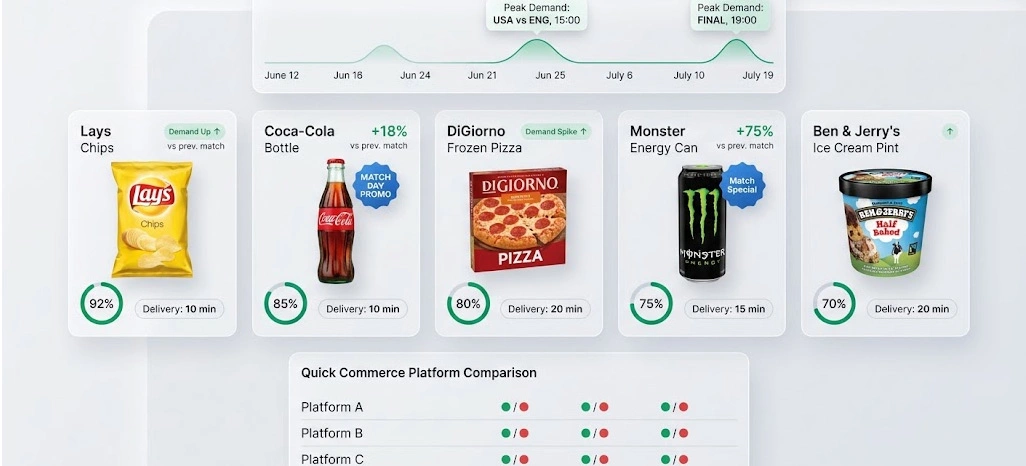
During FIFA 2026, millions of viewers are expected to order snacks, beverages, frozen foods, ready-to-eat meals, and household essentials before and during matches. Using Quick Commerce Demand Tracking During FIFA 2026, businesses can identify category-level demand fluctuations as they emerge rather than relying on delayed sales reports.
Continuous monitoring enables teams to understand which products are trending across specific cities, regions, and customer segments. Additionally, Quick Commerce Data Intelligence FIFA 2026 provides deeper market visibility by highlighting how match schedules, team popularity, and regional engagement influence shopping behavior.
Such intelligence supports proactive inventory planning and more accurate allocation strategies. Industry studies suggest that major sporting tournaments can increase beverage purchases by 40%–60%, snack orders by 35%–55%, and instant delivery requests by more than 40% during high-profile matches.
| Demand Indicator | Average Increase During Tournament |
|---|---|
| Snack Purchases | 35%–55% |
| Beverage Orders | 40%–60% |
| Ready Meals | 25%–45% |
| Convenience Products | 20%–40% |
| Delivery Requests | 30%–50% |
Another valuable capability comes from FIFA World Cup Quick Commerce Demand Monitoring and Insights, which helps organizations analyze demand variations across different marketplaces and delivery platforms.
Strengthening Inventory Allocation and Delivery Planning Strategies
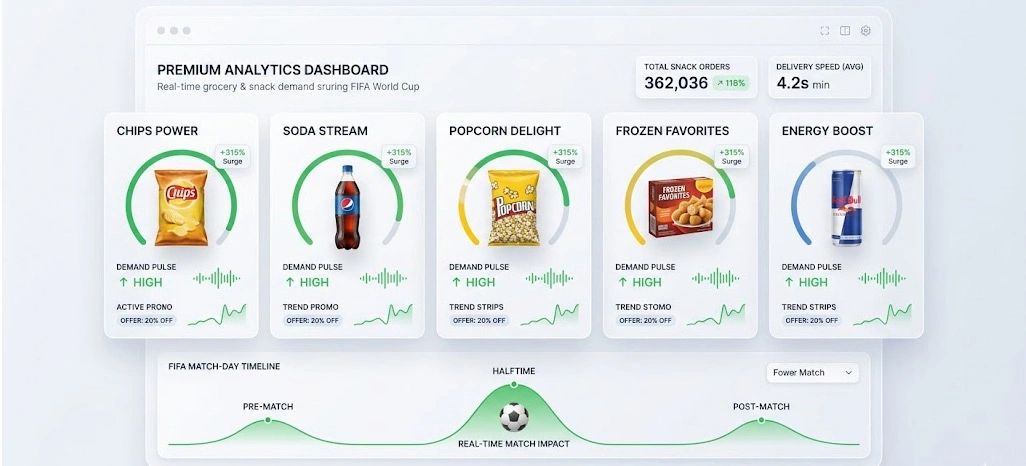
Managing inventory and delivery operations during a global sporting event presents significant challenges for retailers, FMCG brands, and quick commerce platforms. Through Real-Time Grocery and Snack Demand Tracking During FIFA World Cup, organizations can monitor changing demand conditions across product categories and geographic regions.
Many businesses rely on professional Web Scraping Services to gather large-scale marketplace information from multiple quick commerce platforms. These data collection processes provide valuable insights into product availability, pricing shifts, stock movements, and customer purchasing patterns. Such intelligence enables retailers to respond more effectively to changing market conditions.
Additionally, Tracking Delivery Demand Spikes During FIFA World Cup 2026 helps businesses anticipate fulfillment pressure during peak ordering periods. Understanding delivery trends allows operators to optimize resources, reduce delays, and maintain customer satisfaction during high-demand match days.
| Operational Metric | Potential Improvement |
|---|---|
| Stock Availability | +30% |
| Fulfillment Accuracy | +25% |
| Inventory Efficiency | +22% |
| Delivery Performance | +20% |
| Revenue Retention | +18% |
At the same time, Grocery and Beverage Demand Forecasting During FIFA 2026 supports procurement planning by identifying categories likely to experience elevated demand throughout the tournament. Organizations leveraging these insights can improve operational efficiency while ensuring products remain available when consumers need them most.
Transforming Event-Driven Market Signals Into Predictive Intelligence
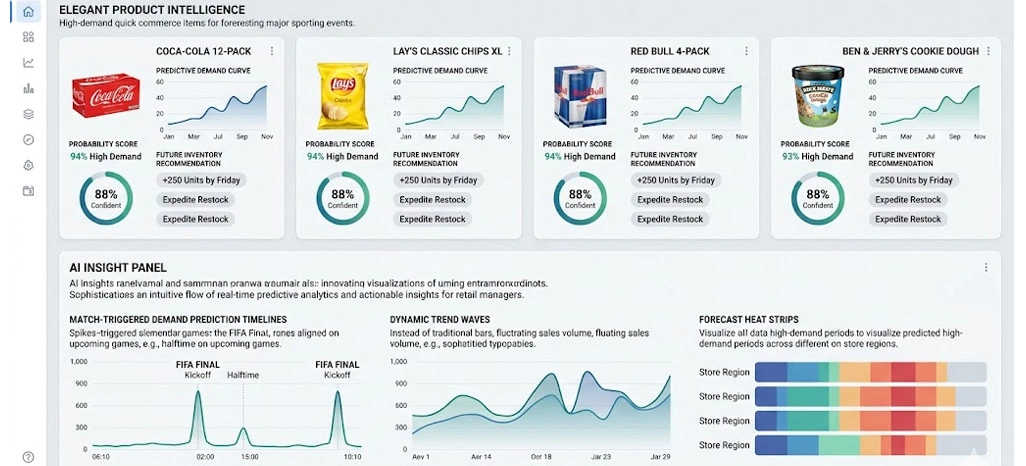
Beyond operational management, businesses increasingly require advanced analytical capabilities to convert large volumes of marketplace data into actionable intelligence. FIFA 2026 is expected to generate substantial shifts in purchasing behavior, creating valuable opportunities for organizations that can accurately interpret emerging demand signals and future market trends.
One of the most effective approaches is Ai-Powered Demand Forecasting for Quick Commerce During Sporting Events, which combines historical purchasing patterns, live match schedules, regional demand indicators, and consumer activity signals to estimate future buying behavior.
Another significant advantage comes from Fmcg Demand Intelligence Through Data Scraping During FIFA, which provides manufacturers and retailers with detailed visibility into category performance and consumer preferences. This intelligence helps organizations understand which products are gaining traction and where supply adjustments may be required.
| Analytics Capability | Business Impact |
|---|---|
| Predictive Forecasting | +35% Accuracy |
| Inventory Optimization | +28% Efficiency |
| Promotion Planning | +22% Effectiveness |
| Demand Visibility | +30% Improvement |
| Revenue Growth Potential | +18%–25% |
In addition, Demand Prediction & Trend Analysis During FIFA enables businesses to identify evolving market patterns across products, customer segments, and delivery zones. By recognizing trends early, retailers can optimize pricing strategies, improve inventory allocation, and enhance overall operational planning.
How Retail Scrape Can Help You?
Major sporting events create highly dynamic retail environments where consumer demand can shift within minutes. By leveraging Quick Commerce Data Scraping During FIFA World Cup 2026, organizations can monitor inventory movements, pricing changes, delivery activity, and product demand trends across multiple quick commerce platforms.
Key capabilities include:
- Continuous product availability monitoring
- Real-time pricing intelligence collection
- Regional demand pattern identification
- Marketplace trend tracking and reporting
- Inventory planning support and optimization
- Competitive benchmarking and performance analysis
In addition, our expertise in Customer Sentiment Analysis During FIFA enables businesses to evaluate customer preferences, purchasing behavior, and engagement trends throughout the tournament, helping improve demand forecasting accuracy and customer-focused decision-making.
Conclusion
Businesses preparing for FIFA 2026 must prioritize data-driven planning to manage rapid demand fluctuations, inventory challenges, and delivery pressures. Organizations utilizing Quick Commerce Data Scraping During FIFA World Cup 2026 can improve forecasting accuracy, strengthen operational efficiency, and respond quickly to evolving consumer purchasing behavior.
The value of FIFA World Cup 2026 Quick Commerce Analytics extends beyond short-term event management by providing actionable intelligence that supports long-term retail growth and strategic decision-making. Contact Retail Scrape today to access powerful demand intelligence solutions and build a smarter retail strategy for FIFA World Cup 2026.
Effortlessly managing intricacies with customized strategies.
Mitigating risks, navigating regulations, and cultivating trust.
Leveraging expertise from our internationally acclaimed team of developers
Reliable guidance and assistance for your business's advancement