What Are Data-as-a-Service (DaaS) Trends & Future in 2026: Transforming the Next Era of Data Access?
-Trends-&-Future-in-2026-Transforming-the-Next-Era-of-Data-Access.webp "What Are Data-as-a-Service (DaaS) Trends & Future in 2026: Transforming the Next Era of Data Access?")
Introduction
Data availability has become a central requirement for organizations managing changing customer behavior, pricing shifts, supply chain movements, and digital competition. Instead of maintaining fragmented databases and manually collecting information from multiple channels, businesses increasingly use service-based data delivery models.
These models provide structured, accessible, and continuously refreshed information for teams that need faster answers without expanding internal infrastructure. The Data-as-a-Service (DaaS) Trends & Future in 2026 reflect a major transition from static reporting toward on-demand intelligence systems. Companies now expect data platforms to support faster integration, automated updates, flexible scaling, and secure access across departments.
Retailers, manufacturers, travel firms, financial institutions, and digital marketplaces are using external data feeds to improve forecasting, product decisions, campaign measurement, and market monitoring. Modern data delivery also depends on accurate source coverage. Enterprise Web Crawling supports large-scale collection from public digital sources, helping businesses organize product listings, reviews, prices, inventory indicators, and competitor activities into usable formats.
Creating Connected Workflows for Faster Business Decisions
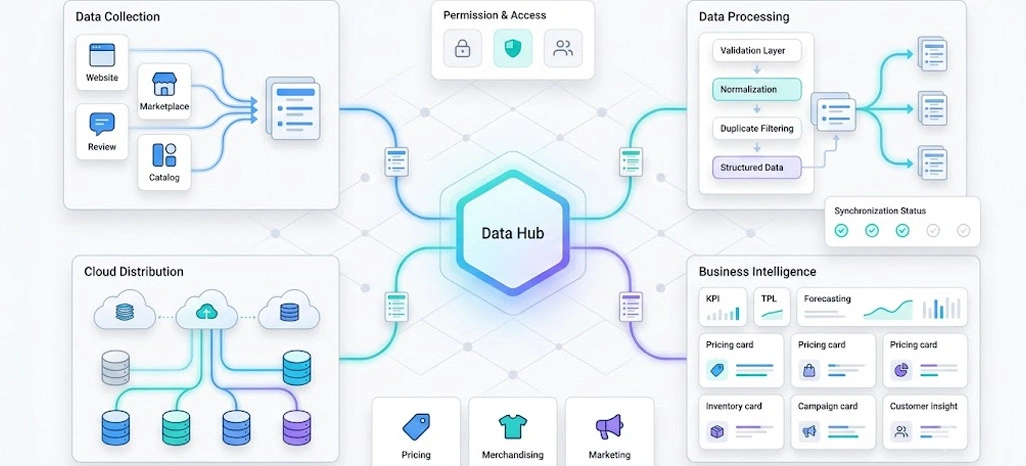
Businesses often face delayed reporting, disconnected sources, inconsistent formats, and limited access to current market information. Manual collection methods can require extensive validation before data reaches analysts, creating delays in pricing, assortment, campaign, and customer experience decisions.
As organizations modernize their infrastructure, Cloud-Based Data as a Service provides centralized access to structured datasets without requiring teams to maintain extensive on-premise storage environments. Authorized users can access relevant records across departments, supporting stronger collaboration between marketing, operations, merchandising, and analytics teams.
For businesses collecting information from websites, marketplaces, review platforms, and digital catalogs, Web Scraping Services can convert unstructured public data into usable records. These records can be delivered in formats suitable for dashboards, internal databases, visualization platforms, and forecasting tools.
| Data Challenge | Connected Delivery Approach | Business Impact |
|---|---|---|
| Slow data preparation | Automated collection and processing | Reduced reporting delays |
| Fragmented sources | Unified cloud data delivery | Improved operational alignment |
| Limited internal capacity | Managed collection workflows | Lower technical workload |
| Inconsistent formats | Standardized structured datasets | Better analytics accuracy |
| Delayed market updates | Scheduled refresh processes | Faster response planning |
Industry estimates indicate that global data creation may exceed 180 zettabytes by 2026. Businesses that automate data preparation can reduce manual workload significantly while improving reporting consistency, accuracy, and accessibility across essential decision-making functions.
Strengthening Market Awareness Through Continuous Intelligence Systems
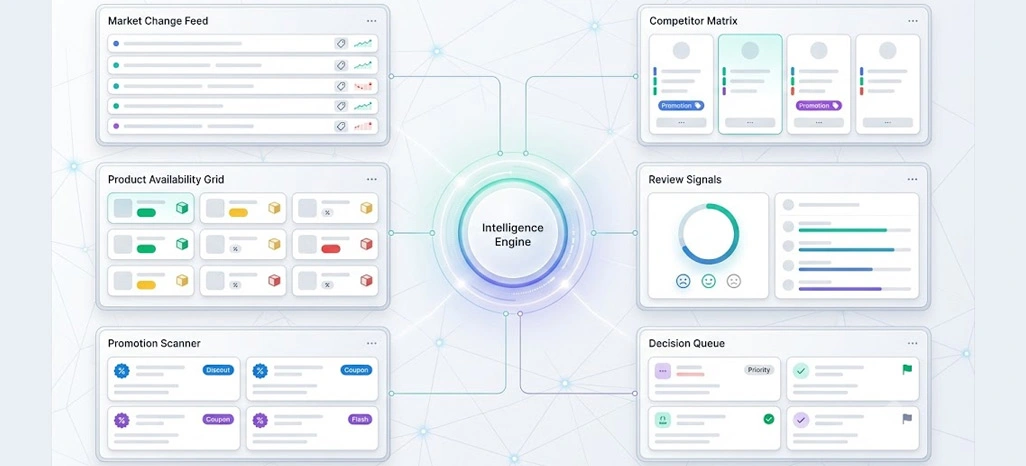
Competitive markets require businesses to monitor changing prices, promotions, product availability, customer feedback, and category movements with greater speed. Growing demand for Data Intelligence Services also reflects the need for validated and contextual information instead of disconnected raw data.
Within modern data operations, Real-Time Data as a Service supports updated information delivery as conditions change across digital channels. Teams can receive relevant inputs related to price changes, stock movements, promotional activity, review patterns, and marketplace listings.
Organizations can also compare performance against market rivals through Competitive Benchmarking, using structured datasets to evaluate pricing ranges, assortment depth, promotion frequency, review ratings, and online visibility. These comparisons help identify performance gaps, improve category strategies, and prioritize actions based on measurable market conditions rather than assumptions.
| Intelligence Area | Data Signals Collected | Strategic Use |
|---|---|---|
| Pricing activity | Product prices, discounts, offers | Improve pricing decisions |
| Product assortment | SKUs, brands, categories | Identify assortment gaps |
| Customer feedback | Ratings, reviews, comments | Improve customer experience |
| Promotion tracking | Deals, bundles, campaign periods | Plan competitive campaigns |
| Market visibility | Listings, availability, placement | Strengthen digital presence |
Research suggests that organizations using continuous analytics can make operational decisions substantially faster than teams relying only on periodic reporting. Through Daas for Competitive Intelligence, businesses can receive organized market information that supports more timely analysis.
Expanding Intelligent Operations With Scalable Data Foundations
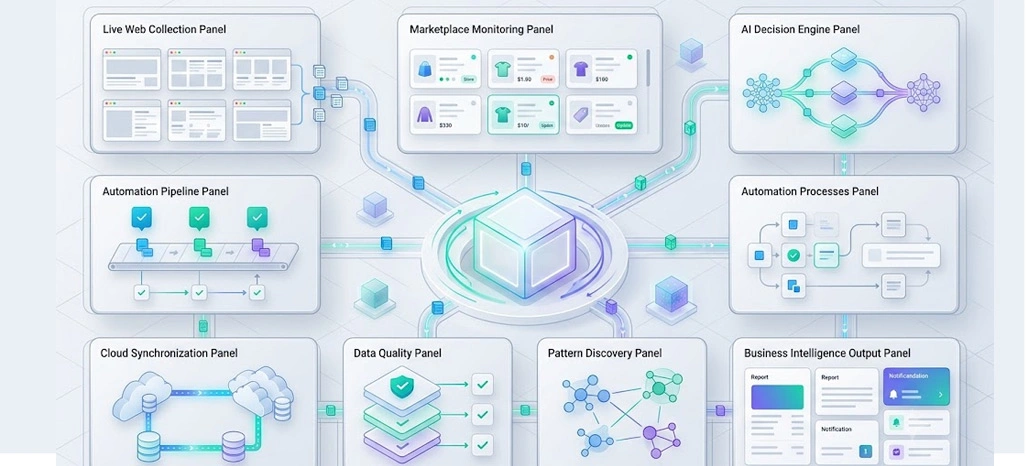
Organizations adopting artificial intelligence, predictive analytics, and automation need reliable information that remains accurate as operations grow. The Benefits of Data as a Service for Businesses include reduced operational complexity, improved governance, faster analytics deployment, and stronger support for long-term digital growth.
As AI adoption increases, Ai-Powered Data as a Service combines managed data delivery with intelligent processing capabilities. This approach can help classify records, identify anomalies, enrich datasets, detect emerging patterns, and support recommendation systems.
To maintain current inputs from rapidly changing online sources, Live Crawler Services can collect updated details from websites, digital catalogs, marketplaces, and review platforms. Continuous monitoring helps ensure that product information, availability indicators, pricing details, promotional offers, and customer feedback remain relevant for reporting and analytics systems.
| Growth Requirement | Data Capability | Expected Outcome |
|---|---|---|
| AI model training | Clean and enriched datasets | More reliable predictions |
| Expanding data volume | Flexible infrastructure capacity | Reduced storage limitations |
| Continuous source changes | Automated refresh cycles | Updated decision inputs |
| Multi-market monitoring | Broad source coverage | Better regional visibility |
| Departmental access | Controlled user permissions | Secure collaboration |
Industry studies indicate that many enterprise AI initiatives face challenges related to data readiness, accessibility, and quality. With Scalable Data as a Service Solutions, organizations can expand coverage across markets, categories, platforms, and regions without rebuilding their full infrastructure.
How Retail Scrape Can Help You?
Modern retail teams require accurate and timely data to manage changing market conditions, customer expectations, and competitor activity. Businesses evaluating the Data-as-a-Service (DaaS) Trends & Future in 2026 can use specialized data workflows to improve visibility across products, prices, promotions, reviews, and availability.
Our approach includes:
- Track product prices across multiple retail platforms.
- Monitor stock availability and assortment changes.
- Collect customer reviews and rating information.
- Analyze promotional campaigns and discount patterns.
- Compare marketplace listings across target categories.
- Receive customized datasets in preferred formats.
Our Web Scraping API enables seamless integration of collected data into existing applications, business intelligence platforms, and automated reporting workflows.
For retailers seeking Data as a Service for Retail Analytics, our tailored datasets can support category management, pricing analysis, product research, demand planning, and competitor monitoring.
Conclusion
Businesses are increasingly shifting toward managed data ecosystems that provide timely, structured, and accessible information for everyday decisions. Enterprise Data as a Service Solutions can help teams reduce infrastructure burdens while improving access to relevant market intelligence.
The Data-as-a-Service (DaaS) Trends & Future in 2026 indicate that organizations will prioritize data quality, automation, security, and customization as they expand analytics and AI initiatives. Contact Retail Scrape today to build a scalable data intelligence strategy that supports smarter business decisions.
Effortlessly managing intricacies with customized strategies.
Mitigating risks, navigating regulations, and cultivating trust.
Leveraging expertise from our internationally acclaimed team of developers
Reliable guidance and assistance for your business's advancement