
How Can Mobile App Price Tracking by Location for Market Analysis Optimize City-Level Pricing Trends?
Introduction
Retailers and analysts increasingly depend on app-driven data to understand regional pricing shifts across cities, neighborhoods, and consumer clusters. Businesses need visibility into how product prices fluctuate based on user location, demand density, and operational costs. Mobile App Price Tracking by Location for Market Analysis helps companies interpret these variations and refine pricing strategies for competitive planning.
Many commerce and delivery platforms adjust product pricing dynamically depending on ZIP codes, city centers, and local demand. This creates a need for businesses to Scrape Pricing Data From Mobile Apps and examine how regional pricing differs in real time. Companies that analyze these variations can identify pricing gaps, monitor market saturation, and evaluate city-wise opportunities more accurately. Data gathered from apps reflects actual buying conditions rather than estimated averages.
Using Mobile App Price Tracking by Location for Market Analysis, organizations can map city-level pricing benchmarks and assess how products perform in dense urban regions compared with suburban areas. Insights from Location Based Pricing Data Scraping also support campaign planning and regional pricing adjustments. Accurate city pricing intelligence helps e-commerce brands, FMCG firms, and aggregators understand shifting customer expectations while building stronger market strategies for localized growth.
Analyzing Regional Pricing Variations Across Urban Commerce Platforms
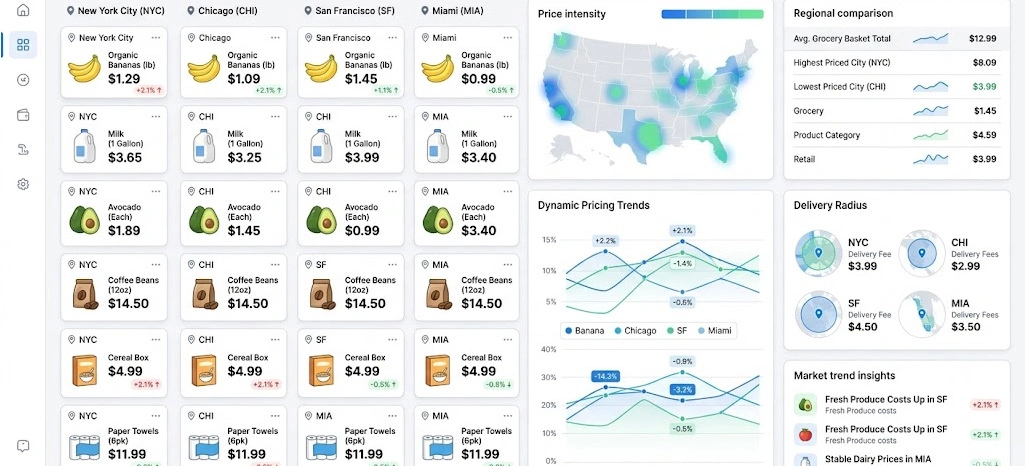
Businesses monitoring app-based retail trends often struggle to understand why the same product appears at different prices across neighboring cities. Local demand, delivery radius, and user density influence these fluctuations. Brands need accurate systems to compare city-level pricing and understand the logic behind app-driven price changes.
A growing number of retail and delivery applications adjust prices by customer location. Reports suggest nearly 63% of digital commerce platforms change listed prices several times a day based on serviceable zones and buying patterns. This creates operational challenges for pricing teams. By applying Location Based Pricing Data Scraping, businesses collect city-specific datasets that reveal how prices differ from one market to another.
Organizations using Competitor Pricing Monitoring Solutions often identify regional trends before price shifts affect sales performance. By studying pricing structures at the local level, businesses uncover demand-sensitive regions and optimize product promotions accordingly. This improves decision-making for inventory placement and market targeting.
| Market Variable | Pricing Impact |
|---|---|
| Delivery zone | Price adjustment |
| Consumer density | Premium pricing |
| Local stock | Discount patterns |
| Competitor offers | Price reactions |
Monitoring Location Based Product Pricing Trends allows analysts to identify neighborhoods with higher profit opportunities. Businesses also apply Competitor Price Monitoring Using Mobile App Data Scraping to benchmark products against local competitors. This comparison helps assess promotional frequency, hidden markups, and market behavior.
Solving Dynamic Pricing Complexity Through Structured App Intelligence
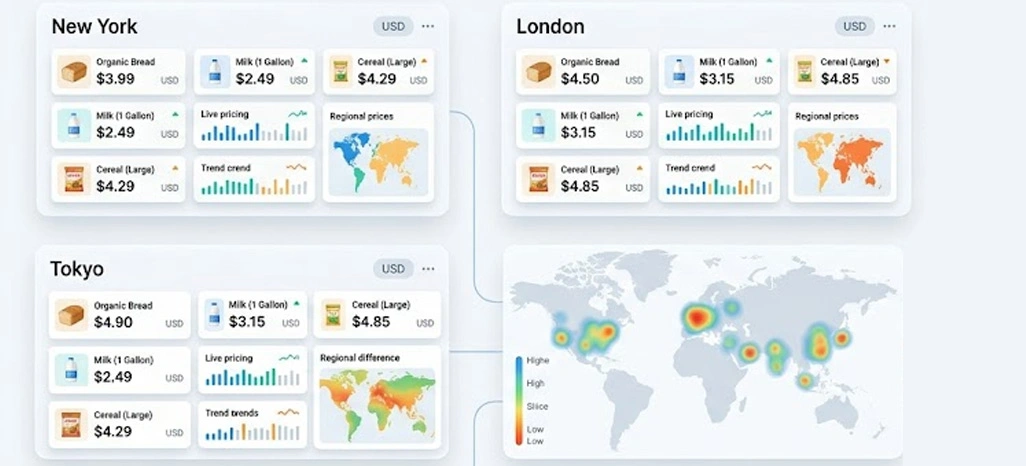
Modern retail applications frequently change product prices depending on service area, user address, and market demand. This creates a fragmented pricing environment where businesses struggle to monitor exact differences across cities. Manual observation often fails when thousands of products update throughout the day. Automated analysis enables organizations to identify regional patterns and support stronger commercial decisions.
Research shows approximately 58% of digital marketplaces adjust prices according to local demand signals, inventory status, and competitor activity. This makes automated extraction crucial for businesses requiring precise regional pricing visibility. Through Real-Time Location Pricing Datasets From Mobile Apps, companies can compare live prices across multiple locations and understand shifting city-level trends.
Businesses often depend on Web Scraping Services to gather large-scale pricing records from mobile applications. These systems collect location-specific pricing data continuously, helping analysts monitor changes without relying on delayed reports. Structured collection improves forecasting and regional price optimization.
| Source Channel | Business Application |
|---|---|
| Grocery apps | City price comparison |
| Delivery apps | Regional pricing |
| Retail apps | Promotion tracking |
| Marketplaces | Competitor analysis |
By using Scrape Location-Based Pricing Data From Delivery Apps, businesses compare identical products listed in different districts and delivery zones. Insights generated from AI-Powered Location Pricing Intelligence Platform systems help businesses identify premium markets, underperforming regions, and high-demand neighborhoods.
Improving Strategic Decisions With Local Market Insights
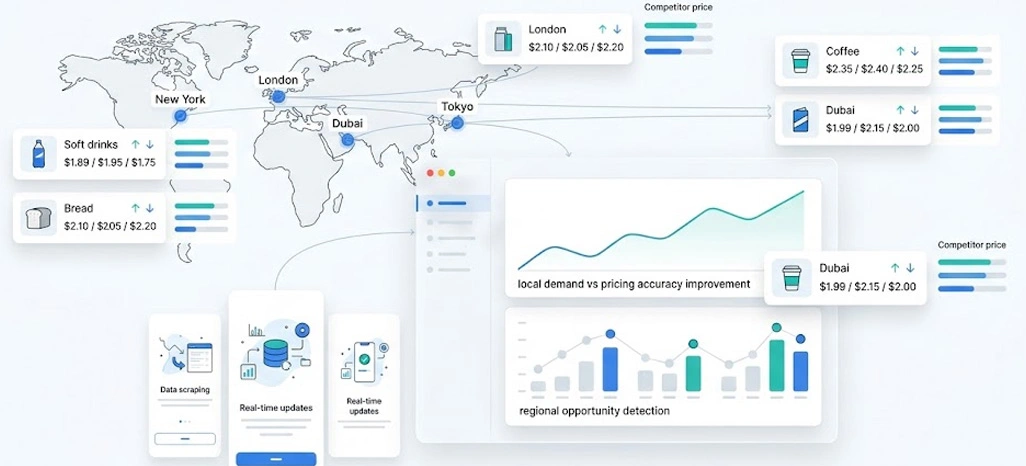
City-level pricing intelligence plays an important role in identifying micro-market opportunities. Local neighborhoods often reveal stronger purchasing patterns than broad regional reports. Businesses evaluating Location Based Pricing Data Scraping alongside regional app trends often uncover market opportunities not visible in national reports. This improves campaign precision and supports better stock allocation.
Industry studies show businesses using location-driven pricing datasets improve pricing accuracy by nearly 37%. They respond faster to local competitor activity and identify profitable zones with higher purchasing demand. Structured datasets support operational planning and reduce mismatches between regional campaigns and actual market behavior.
Organizations that rely on Scrape Pricing Data From Mobile Apps can compare historical and live pricing across multiple locations. This improves forecasting and reveals how different consumer clusters respond to changing app prices. Using Location Based Product Pricing Trends, companies identify where promotions succeed and where pricing requires adjustment.
| Regional Segment | Pricing Behavior |
|---|---|
| Metro center | Frequent updates |
| Suburban area | Stable trends |
| Premium district | Higher margins |
| Growth region | Promotional shifts |
Combined with Competitor Price Monitoring Using Mobile App Data Scraping, these datasets reveal pricing gaps, competitor actions, and high-value zones. As a result, businesses strengthen pricing strategy, improve regional market positioning, and make informed decisions using accurate app-based pricing intelligence collected from real consumer environments.
How Retail Scrape Can Help You?
Businesses aiming to improve regional pricing intelligence often require scalable systems that capture real-time app data efficiently. With Mobile App Price Tracking by Location for Market Analysis, companies can monitor pricing differences across cities and understand local buying behaviors without manual tracking.
- Track city-level product price fluctuations
- Compare identical products across zones
- Monitor competitor app pricing changes
- Analyze regional promotions instantly
- Detect high-demand pricing patterns
- Build market reports with live data
Advanced Live Price Crawler Services help businesses capture dynamic updates from multiple apps continuously. Combined with Location Based Pricing Data Scraping, these solutions deliver structured datasets that support stronger regional decisions and long-term pricing analysis.
Conclusion
City-based app pricing analysis reveals how consumer demand, local competition, and operational conditions influence retail pricing. Businesses using Mobile App Price Tracking by Location for Market Analysis improve market visibility and create stronger regional pricing strategies.
Regional insights from Location Based Product Pricing Trends support smarter decisions for expansion, pricing optimization, and competitor benchmarking. Connect with Retail Scrape to transform city-level pricing intelligence into actionable market growth strategies today.
Effortlessly managing intricacies with customized strategies.
Mitigating risks, navigating regulations, and cultivating trust.
Leveraging expertise from our internationally acclaimed team of developers
Reliable guidance and assistance for your business's advancement