
What Makes Reverse Engineering Mobile App APIs for Data Extraction Insights Valuable for Modern Brands?

Introduction
Modern brands increasingly rely on app-based ecosystems to understand customer behavior, pricing shifts, inventory movement, and engagement trends. Mobile apps often expose richer datasets than public websites because they communicate through structured APIs, delivering product metadata, reviews, location signals, and transactional events. This is why Reverse Engineering Mobile App APIs for Data Extraction Insights has become a practical approach for companies seeking competitive intelligence in real time.
As app ecosystems evolve, brands are moving beyond browser-only collection and integrating Web Scraping Services with mobile intelligence pipelines. This combination captures hidden app-layer interactions that standard browser crawlers may miss. Businesses in retail, travel, finance, and delivery sectors often depend on mobile-specific endpoints to track customer actions and supply chain fluctuations.
With the rapid rise of app-first commerce, Android App API Extraction, iOS API Data Extraction, and Mobile API Scraping help analysts uncover patterns that are otherwise inaccessible through public pages. According to Statista, mobile commerce is expected to represent over 63% of digital sales globally, making app-originated data central to strategy.
Building Better Visibility Through Mobile Data Sources
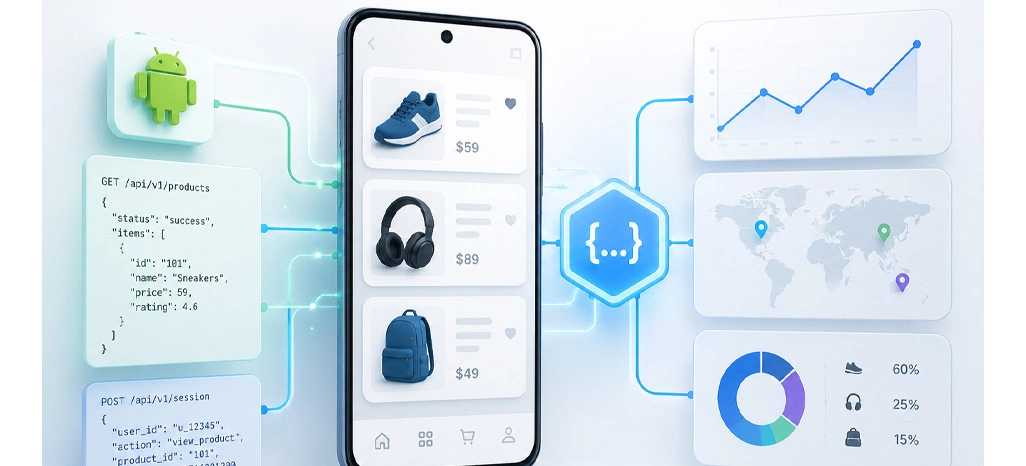
Mobile-first platforms have changed how brands observe customer behavior. To address this, companies increasingly use Mobile App Data Scraping to capture transactional signals directly from app communication layers. These hidden streams often contain product metadata, recommendation feeds, pricing experiments, and regional availability details.
Through Android App API Extraction, enterprises access endpoint payloads that reveal product rankings, in-app promotions, and personalized offers. At the same time, Reverse Engineering Mobile App APIs support deeper interpretation of session-level interactions, helping teams understand how users browse and purchase within app ecosystems.
Data from app environments is especially useful for demand forecasting. Since app interactions often happen in real time, the signals are more current than browser snapshots. Combined with Web Scraping Services, app-layer intelligence enables a wider market picture. Businesses use these datasets to monitor competitors, track launches, and measure pricing shifts before they appear publicly.
| App Data Type | Business Value |
|---|---|
| Search APIs | Demand trends |
| Product feeds | SKU monitoring |
| Cart APIs | Purchase intent |
| Review APIs | Consumer sentiment |
Studies show over 72% of eCommerce sessions begin in mobile apps, making Mobile API Scraping essential for competitive intelligence. Businesses combining app extraction with Mobile Application API Analysis can identify hidden customer behaviors and improve decision-making with more accurate digital signals.
Accessing Competitive Signals Across Android Ecosystems
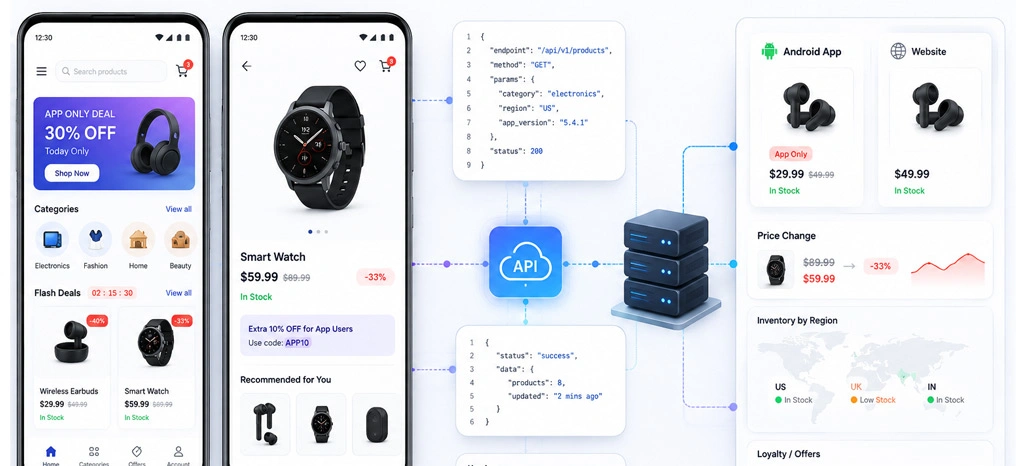
Android-based applications provide one of the most accessible ecosystems for structured mobile intelligence. Because many Android apps use observable request-response patterns, businesses often adopt Android App Scraping to monitor search results, promotions, and catalog updates. These app interactions often reveal more frequent product changes than websites, especially during flash campaigns or app-only launches.
Through Mobile API Monitoring and Extraction, organizations inspect backend communication and identify changes in pricing, inventory, and recommendation logic. Android traffic can expose request headers, API parameters, and session tokens that support large-scale collection workflows. These datasets are useful for tracking assortment changes and regional availability trends.
Many retail and delivery platforms prioritize app interfaces for feature rollouts. This means competitor offers, personalized discounts, and loyalty campaigns often appear in Android apps before browser versions. By applying Mobile Application Data Scraping Services, businesses can capture these updates and align product strategy accordingly.
| Android Signal | Strategic Use |
|---|---|
| Product ranking | Competitor tracking |
| Search terms | Demand analysis |
| Promotions | Campaign visibility |
| Inventory feed | Stock changes |
Android represents more than 70% of the global smartphone market, making it critical for large-scale intelligence programs. Through Reverse Engineering Mobile App APIs, brands can map hidden API structures and retrieve structured payloads from app interactions. Combined with Mobile Application API Analysis, these insights allow enterprises to refine forecasting, improve assortment planning, and react faster to competitor actions in fast-moving digital sectors.
Tracking Consumer Behavior Through iOS Systems
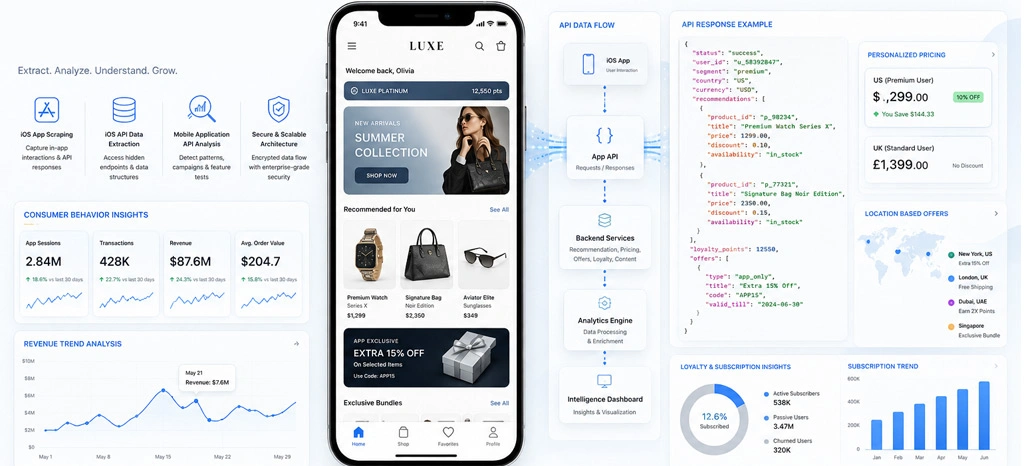
iOS applications often represent high-value customer segments, making their data especially valuable for market intelligence. Premium consumers frequently complete purchases through app sessions, meaning critical signals remain inside native application APIs. Businesses use iOS App Scraping to collect these interactions and monitor premium product demand, subscription patterns, and loyalty behavior.
The structured backend communication in iOS apps often includes recommendation engines, personalized pricing, and location-based offers. With iOS API Data Extraction, companies can capture hidden endpoint responses and identify shifts in product visibility across regions. These datasets reveal strategic signals that public websites often do not expose.
Brands use iOS-based intelligence to monitor high-margin product launches, exclusive bundles, and app-only promotions. Because iOS users typically spend more per transaction, this ecosystem provides a strong source for revenue trend analysis. Through Mobile Application API Analysis, enterprises can detect feature tests and campaign segmentation strategies across customer groups.
| iOS Data Source | Business Insight |
|---|---|
| Recommendation API | Purchase interest |
| Payment endpoints | Conversion trends |
| Loyalty APIs | Retention behavior |
| Catalog feeds | Launch tracking |
Industry reports show iOS users generate significantly higher average order values than Android users. By combining Mobile API Scraping with app-layer endpoint monitoring, companies identify premium demand patterns faster. These insights help improve category planning and campaign timing. Businesses also pair iOS intelligence with Mobile Application Data Scraping Services to unify cross-platform visibility.
How Retail Scrape Can Help You?
Many brands struggle to collect structured app intelligence while maintaining data consistency. Through Reverse Engineering Mobile App APIs for Data Extraction Insights, companies can build accurate competitive monitoring frameworks.
Our solutions support:
- Track app-based pricing changes continuously
- Monitor stock movement across categories
- Capture app-exclusive product listings
- Observe recommendation ranking patterns
- Collect customer review updates
- Analyze regional assortment changes
Organizations needing cross-platform coverage can combine app extraction with Enterprise Web Crawling to create unified market datasets. Our systems integrate backend analysis, automated delivery pipelines, and Mobile Application Data Scraping Services for enterprise intelligence programs.
Conclusion
As mobile commerce continues to dominate digital transactions, businesses that understand hidden app-layer behavior gain a measurable advantage. Reverse Engineering Mobile App APIs for Data Extraction Insights supports deeper visibility into product movement, campaign testing, and customer trends that shape market outcomes.
Long-term growth depends on structured intelligence from apps and connected platforms. By combining these insights with Mobile Application API Analysis, brands can improve forecasting, optimize pricing decisions, and identify opportunities earlier. Connect with Retail Scrape to build app-driven intelligence pipelines tailored to your business goals.
Effortlessly managing intricacies with customized strategies.
Mitigating risks, navigating regulations, and cultivating trust.
Leveraging expertise from our internationally acclaimed team of developers
Reliable guidance and assistance for your business's advancement