
How does Hyperlocal Retail Intelligence With Location Data help brands predict local buying behavior?
Introduction
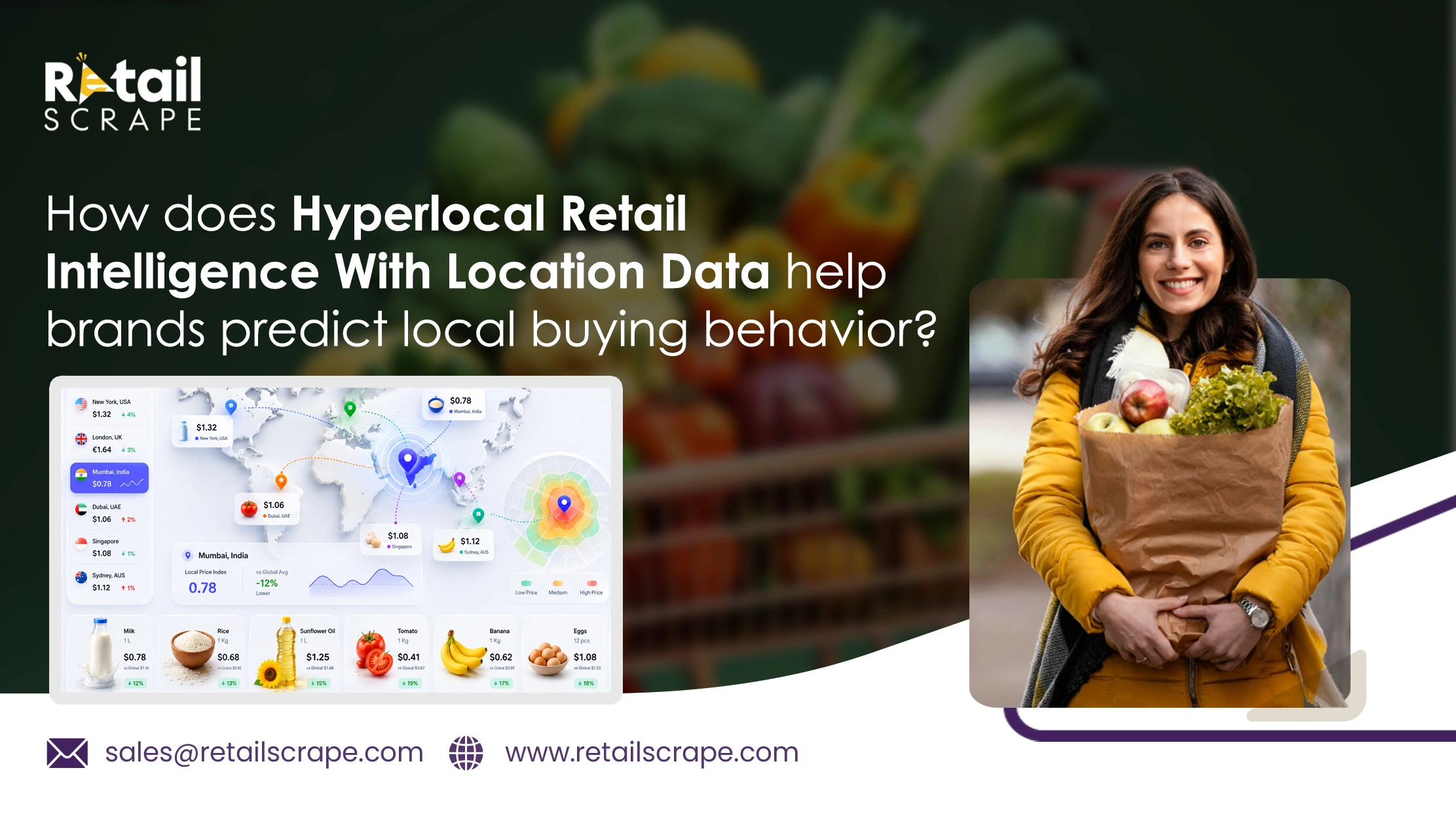
Retail markets no longer operate on broad regional assumptions. Consumer preferences can vary significantly from one neighborhood to another, making localized insights essential for brands aiming to improve product availability, pricing strategies, and promotional effectiveness. By collecting and analyzing geographic, demographic, and mobility data, businesses can identify buying trends at a much more detailed level.
This allows organizations to respond quickly to changing customer expectations while reducing inventory risks and improving operational efficiency. As competition intensifies across physical and digital channels, data-driven decision-making has become a necessity rather than an advantage. The emergence of Web Scraping Services has further strengthened retail intelligence initiatives by helping businesses gather market information from multiple sources in real time.
Brands that invest in Hyperlocal Retail Intelligence With Location Data can better understand purchasing patterns across specific locations, helping them deliver more personalized customer experiences. With precise insights into local markets, retailers can improve forecasting accuracy, optimize inventory planning, and make strategic decisions that directly align with consumer demand.
Understanding Local Demand Signals Across Diverse Consumer Markets
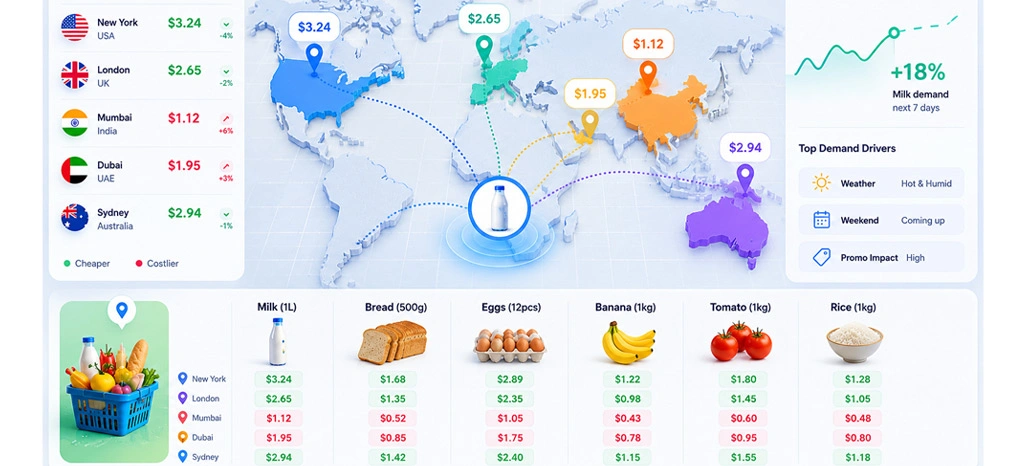
Retailers seeking stronger market performance must understand how consumer demand varies from one locality to another. Shopping behavior is influenced by demographics, mobility patterns, economic conditions, seasonal events, and regional preferences. Traditional sales reports often provide historical performance metrics, but they rarely explain the underlying reasons behind purchasing fluctuations.
Businesses using Location Data for Retail Intelligence can pinpoint product categories that perform well in specific neighborhoods and adjust inventory accordingly. This helps reduce stock shortages in high-demand locations while minimizing overstock situations in slower-moving markets. Better demand visibility also supports efficient replenishment planning and improved resource allocation.
The growing adoption of Enterprise Web Crawling allows retailers to gather extensive market information from multiple digital channels. This information helps organizations understand product trends, monitor availability, and evaluate regional demand signals. Localized insights enable companies to make data-backed decisions that improve customer satisfaction and operational efficiency.
| Demand Indicator | Business Benefit |
|---|---|
| Population Movement | Improves demand forecasting |
| Seasonal Purchasing Trends | Supports inventory planning |
| Local Shopping Preferences | Enhances assortment decisions |
| Regional Consumption Patterns | Reduces stock imbalances |
| Neighborhood Growth Data | Identifies expansion potential |
Organizations that invest in Retail Location Intelligence gain deeper visibility into local consumer behavior, helping them align inventory, merchandising, and operational strategies with real market demand.
Building Smarter Pricing Strategies Through Regional Market Insights
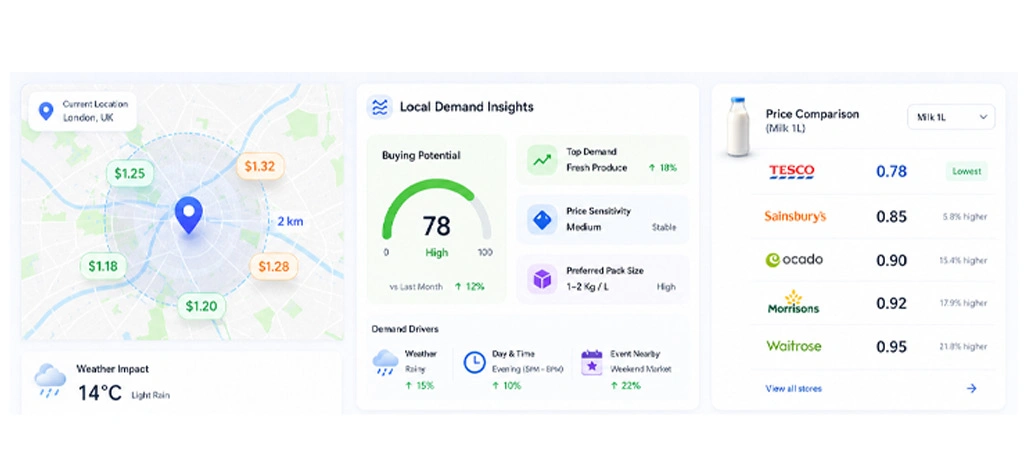
Pricing decisions become significantly more effective when retailers understand how consumers respond to products within specific geographic markets. Applying identical pricing structures across all locations often overlooks differences in income levels, competition, consumer preferences, and purchasing power. Geographic intelligence provides the context needed to create more targeted and profitable pricing strategies.
Businesses utilizing Retail Intelligence Using Location Data can identify areas where shoppers are highly price-sensitive and locations where premium pricing may perform successfully. This level of precision allows organizations to optimize promotions, improve conversion rates, and maximize revenue opportunities while maintaining customer loyalty.
An important advantage comes from Competitive Benchmarking, which enables retailers to compare pricing approaches across different markets and evaluate how competitors position similar products. Studies suggest that localized pricing initiatives can improve promotional effectiveness by up to 25% and increase gross margins by approximately 15%.
| Pricing Intelligence Area | Strategic Outcome |
|---|---|
| Local Price Sensitivity | Better promotional planning |
| Regional Demand Patterns | Supports dynamic pricing |
| Store-Level Performance | Improves revenue optimization |
| Market Competition Trends | Identifies pricing opportunities |
| Promotion Effectiveness | Enhances campaign results |
Organizations adopting Retail Intelligence Solutions can transform regional market information into actionable pricing strategies. This enables retailers to deliver relevant offers, strengthen customer engagement, and improve overall business performance across diverse local markets.
Detecting Consumer Preference Shifts Before Market Changes Accelerate
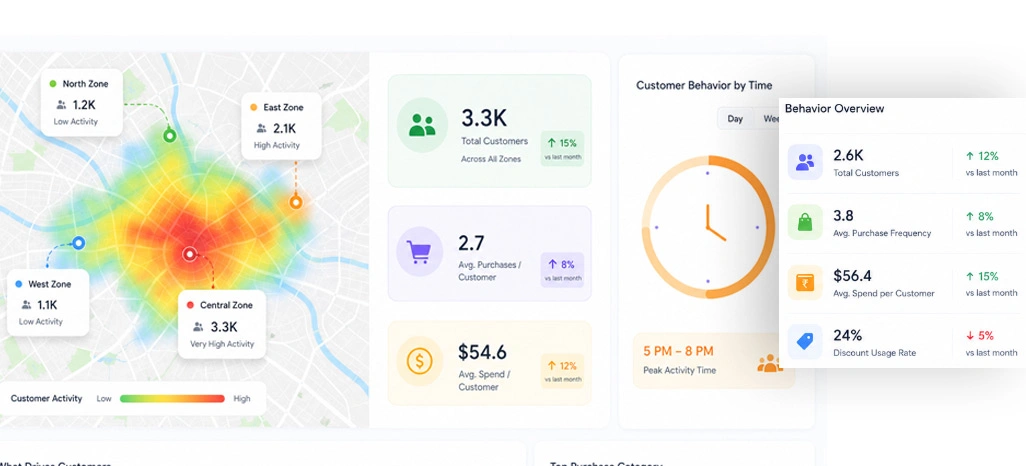
Consumer preferences evolve continuously, creating challenges for retailers attempting to maintain relevance in changing markets. Early identification of emerging buying patterns allows businesses to adapt product offerings, marketing strategies, and operational plans before competitors react. Geographic insights provide valuable visibility into these behavioral shifts.
Through Customer Behavior Analysis Using Location Data, organizations can track changing shopping habits, monitor store visitation trends, and identify growing product categories across specific locations. These insights help businesses align product selections with consumer expectations while improving customer engagement efforts.
A critical component of trend monitoring is Competitor Analysis, which helps retailers evaluate how rival brands perform across different geographic markets. Understanding competitor performance enables organizations to identify strengths, uncover opportunities, and respond proactively to market developments.
| Trend Detection Metric | Business Impact |
|---|---|
| Store Traffic Changes | Improves targeting efforts |
| Product Demand Growth | Supports assortment planning |
| Consumer Mobility Patterns | Enhances location strategies |
| Market Expansion Signals | Identifies growth opportunities |
| Category Development Trends | Enables proactive planning |
A modern Retail Location Intelligence Platform converts large volumes of geographic information into meaningful business intelligence. Combined with Retail Market Intelligence Services, retailers can better anticipate market changes, adapt strategies quickly, and strengthen long-term competitiveness in increasingly dynamic retail environments.
With scalable infrastructure in place, organizations can expand their pricing initiatives confidently while maintaining accuracy, speed, and operational efficiency.
How Retail Scrape Can Help You?
Modern retail success depends on having access to accurate, timely, and actionable market intelligence. Through Hyperlocal Retail Intelligence With Location Data, brands can access deeper market insights that support smarter merchandising, pricing, and expansion decisions.
Our Capabilities:
- Collect localized pricing information across multiple markets
- Monitor product availability and assortment changes
- Track regional demand fluctuations in real time
- Analyze customer purchasing patterns across locations
- Support market expansion and store planning decisions
- Deliver actionable retail intelligence for strategic growth
Businesses can also benefit from our Web Scraping API for automated data collection and integration into existing analytics systems. Combined with Retail Market Intelligence Services, organizations can build a stronger foundation for data-driven retail decision-making and competitive growth.
Conclusion
Retail success increasingly depends on understanding how consumer behavior varies across individual markets. Businesses that adopt Hyperlocal Retail Intelligence With Location Data can improve forecasting accuracy, optimize pricing strategies, and respond more effectively to local demand patterns.
The combination of geographic insights and Retail Intelligence Solutions enables organizations to make smarter decisions that strengthen profitability and customer satisfaction. Ready to transform local retail insights into measurable business growth? Contact Retail Scrape today to build a customized retail intelligence strategy for your brand.
Effortlessly managing intricacies with customized strategies.
Mitigating risks, navigating regulations, and cultivating trust.
Leveraging expertise from our internationally acclaimed team of developers
Reliable guidance and assistance for your business's advancement