What Makes GeM Tender Data Scraping: Government Procurement Data Essential for Smarter Bidding?
Introduction
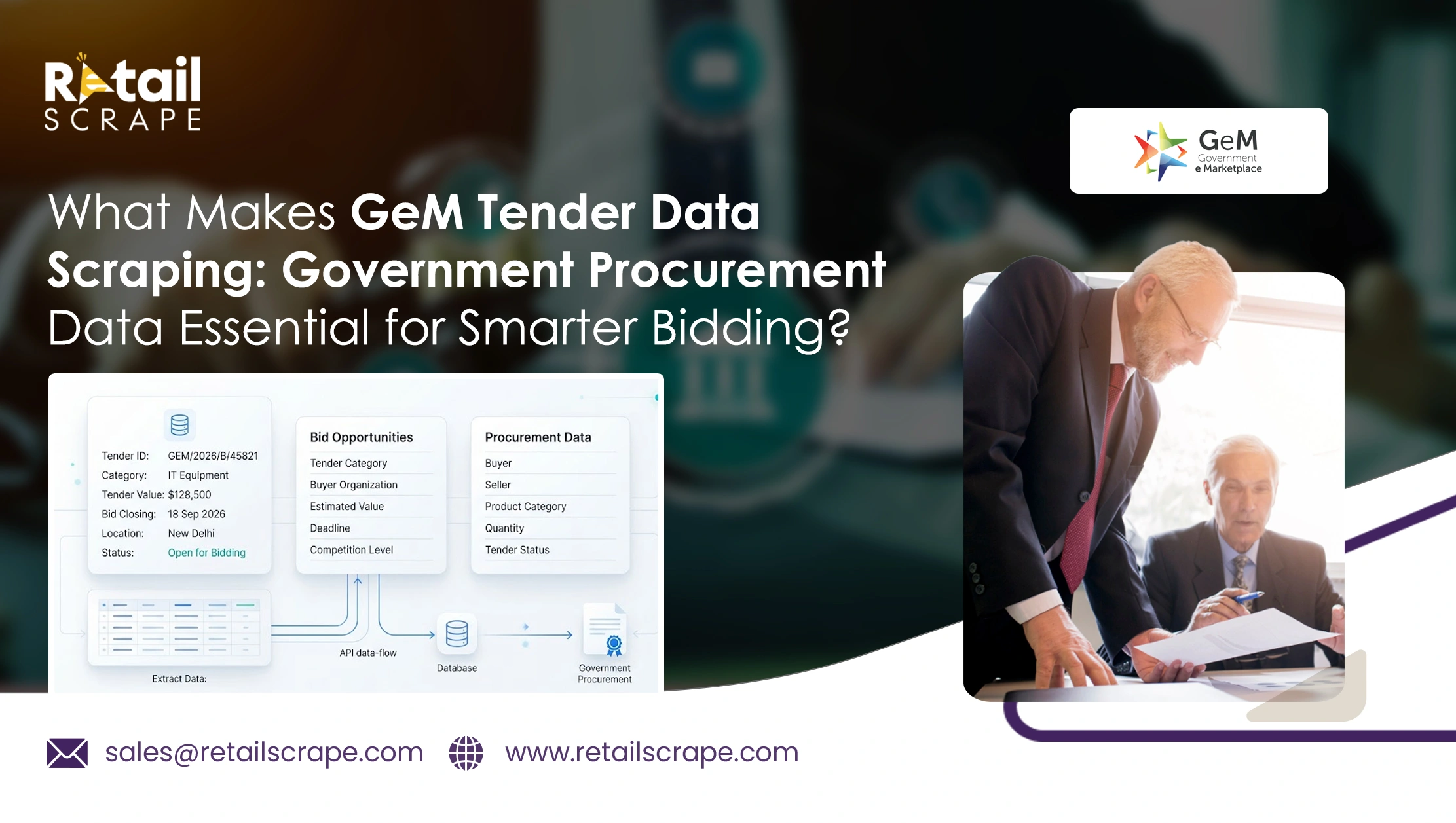
Government procurement generates extensive information across tender notices, product categories, departments, suppliers, contract values, submission deadlines, and award outcomes. GeM Tender Data Scraping: Government Procurement Data brings these elements into a structured format, helping businesses evaluate procurement activity, identify relevant opportunities, and improve bidding decisions through organized market information.
Manual procurement research can consume substantial time, particularly when organizations monitor hundreds or thousands of notices across categories. Competitor Analysis becomes more practical when historical tender activity, supplier participation, pricing patterns, and award information can be reviewed through consistent datasets rather than scattered records.
With structured information, businesses can compare procurement trends, prioritize relevant opportunities, and identify recurring demand patterns. The combination of Tender Data Scraping Services and automated processing can support faster research while reducing repetitive monitoring work. This creates a stronger foundation for procurement intelligence, supplier evaluation, and strategic bidding.
Essential Procurement Signals Guiding More Informed Bidding Strategies
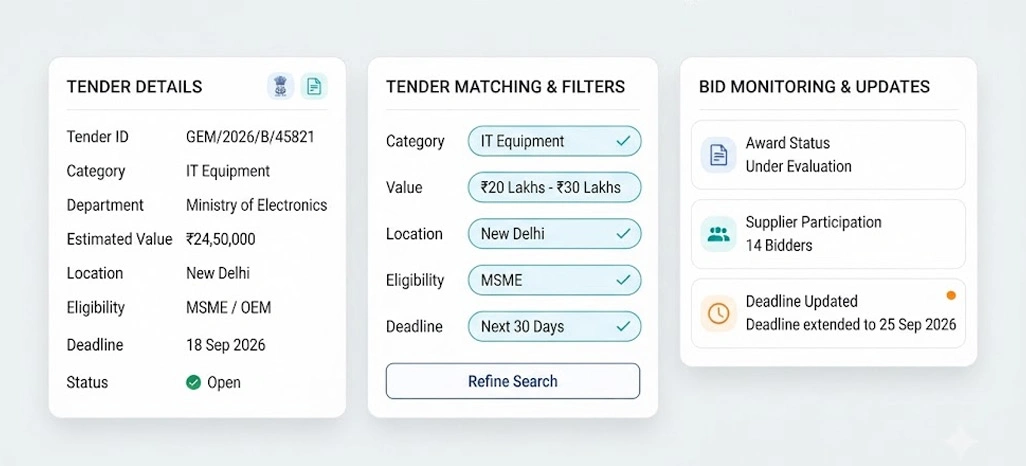
Government tender records contain several data points that can influence how businesses evaluate procurement opportunities. Information such as tender category, issuing department, estimated value, location, eligibility requirements, submission deadline, and award status provides a broader view of individual opportunities. Organizing these elements together allows procurement teams to assess opportunities based on consistent criteria rather than manually reviewing isolated notices.
Using Web Scraping GeM Tender Data can help businesses consolidate frequently changing procurement information into structured datasets. Instead of maintaining scattered spreadsheets, organizations can arrange records according to fields that support filtering, comparison, and historical analysis. This makes it easier to identify relevant tenders and remove opportunities that do not match predefined business requirements.
A GeM Tender Data Scraper can further support recurring collection by gathering selected information according to an established schedule. Businesses can use this approach to monitor new opportunities, changes in deadlines, supplier participation, and award information while reducing repetitive data-checking activities. Consistent records also make historical comparisons more practical for procurement teams.
Key information that can strengthen bidding research includes:
- Tender reference and publication details
- Procuring department and location
- Product or service classification
- Estimated contract value
- Submission and closing timelines
- Supplier and award information
| Procurement Attribute | Analytical Purpose | Practical Application |
|---|---|---|
| Tender Category | Demand classification | Opportunity filtering |
| Contract Value | Opportunity assessment | Bid prioritization |
| Submission Deadline | Timeline planning | Resource scheduling |
| Supplier Information | Competition assessment | Vendor comparison |
| Award Status | Outcome review | Historical evaluation |
When these signals are maintained consistently, organizations can create a more reliable foundation for evaluating procurement activity and planning bidding resources.
Structured Procurement Records Supporting Stronger Market Planning
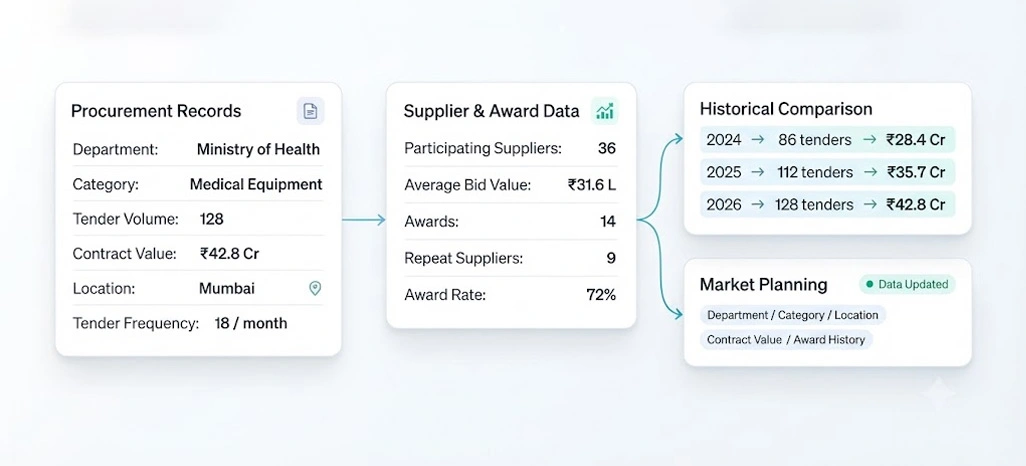
Procurement information becomes more valuable when businesses can connect individual tender records with broader market planning. Department-level activity, product demand, contract values, participating suppliers, and historical awards can reveal patterns that may otherwise remain difficult to identify. Structured records allow teams to compare opportunities across periods, categories, and locations while maintaining a consistent analytical framework.
Businesses can review procurement volumes, supplier participation, bid values, and award activity to understand where demand is concentrated. Government Tender Data Scraping can organize these records into datasets suitable for recurring business analysis. These observations can contribute to Retail Performance Analytics when procurement activity is assessed alongside category movement, product planning, or commercial performance indicators.
Reliable GeM Tender Data Collection also makes historical comparisons easier. When records are retained over time, analysts can identify recurring departments, frequently purchased categories, changes in tender frequency, and variations in contract values. Such comparisons can help businesses determine which opportunities deserve closer attention and where additional resources may be appropriate.
Useful planning activities can include:
- Comparing procurement activity across categories
- Tracking changes in tender frequency
- Reviewing supplier participation patterns
- Evaluating historical contract values
- Identifying locations with recurring demand
- Monitoring award outcomes over time
| Planning Area | Information Reviewed | Decision Support |
|---|---|---|
| Category Planning | Tender volumes | Priority setting |
| Supplier Review | Participation levels | Market assessment |
| Value Monitoring | Contract estimates | Resource planning |
| Geographic Review | Tender locations | Regional targeting |
| Historical Review | Past awards | Trend evaluation |
A structured approach therefore helps transform individual procurement records into broader market signals that can support planning, prioritization, and more informed business decisions.
Scalable Infrastructure Creating Reliable Procurement Intelligence
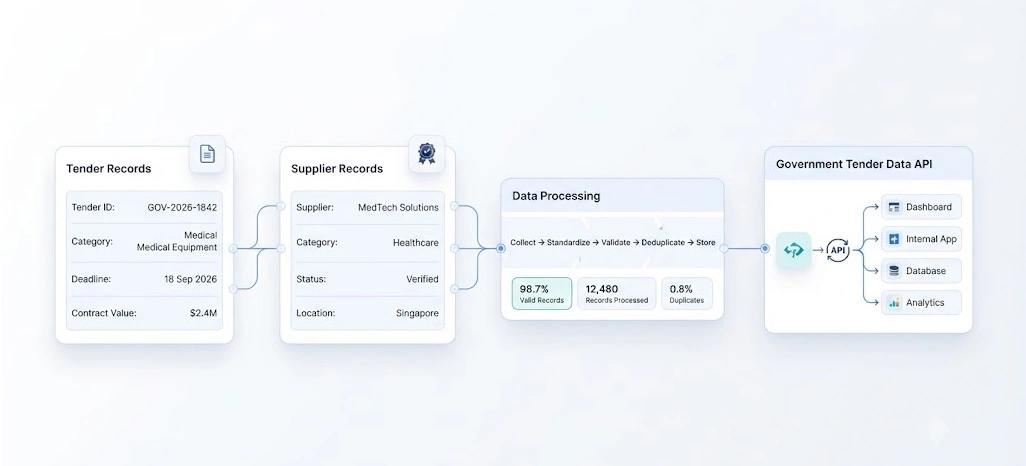
Large-scale procurement monitoring requires a collection framework capable of handling frequent updates, expanding datasets, and multiple information fields. Organizations may need to process tender notices, supplier records, category information, deadlines, contract values, and award details while maintaining consistency across historical records. A scalable infrastructure helps reduce duplication and improves the usability of collected information.
This creates a structured repository that analysts can use for reporting, comparisons, and procurement research. Enterprise Web Crawling can support high-volume collection environments where procurement records need to be gathered repeatedly and processed through defined workflows. Data can be standardized, validated, deduplicated, and stored according to business requirements.
A Government Tender Data API can further simplify access to processed information across dashboards, internal applications, databases, and analytical environments. Instead of requiring teams to repeatedly collect and organize records manually, structured data can be delivered into systems where business users can filter, analyze, and monitor procurement information more efficiently.
A dependable infrastructure can include:
- Scheduled collection workflows
- Automated data validation
- Duplicate record identification
- Historical dataset maintenance
- Structured database storage
- Flexible data delivery formats
| Infrastructure Component | Core Function | Expected Benefit |
|---|---|---|
| Collection Layer | Record acquisition | Regular updates |
| Processing Layer | Data standardization | Consistent records |
| Storage Layer | Historical retention | Trend analysis |
| Validation Layer | Quality checking | Better reliability |
| Delivery Layer | Data distribution | Easier accessibility |
When these components operate together, businesses can maintain procurement datasets that remain usable as tender volumes increase. This supports recurring analysis, reporting, supplier research, and opportunity monitoring without making manual collection the central part of the workflow.
How Retail Scrape Can Help You?
Modern procurement analysis requires more than collecting individual tender notices. GeM Tender Data Scraping: Government Procurement Data can be integrated into structured workflows that organize tender information according to business requirements. We can help businesses establish automated collection pipelines covering tender details, categories, suppliers, deadlines, award information, and other relevant attributes.
Key capabilities can include:
- Automated monitoring of newly published procurement opportunities
- Structured organization of tender records across selected categories
- Historical storage for trend and comparison analysis
- Data cleaning and normalization for consistent reporting
- Flexible delivery through databases, files, or connected systems
- Scheduled workflows designed around changing business requirements
The collected information can also support How to Extract Government Tender Data workflows by providing businesses with organized records rather than requiring repeated manual research. We can configure collection frequency, fields, validation rules, and delivery formats according to specific procurement intelligence needs.
Businesses can also use structured procurement information for opportunity identification, supplier evaluation, category monitoring, and strategic planning through a suitable Retail Scraping API. For organizations managing large datasets, the approach can support faster analysis, improved monitoring consistency, and easier integration with internal reporting environments.
Conclusion
Effective procurement decisions depend on timely, structured, and comparable information. GeM Tender Data Scraping: Government Procurement Data helps transform dispersed tender records into organized datasets that can support opportunity evaluation, supplier research, category analysis, deadline monitoring, and historical comparisons. This creates a more systematic foundation for businesses involved in government procurement.
With GeM Tender Data for Business Intelligence, organizations can connect procurement records with analytical workflows and reporting systems to support more informed planning. A scalable collection framework can reduce repetitive research while keeping important procurement signals accessible for analysis. Connect with Retail Scrape to build a structured government procurement data solution tailored to your business intelligence and bidding requirements.