How Can FMCG Retail Pricing Data Scraping Across Global Markets Simplify Regional Price Tracking?
Introduction
Global FMCG brands operate across regions where product prices, promotions, pack sizes, taxes, and consumer preferences can differ considerably. Manually comparing these changes makes regional tracking slower and more difficult. FMCG Retail Pricing Data Scraping Across Global Markets provides structured pricing information that supports faster comparisons across multiple retail markets.
Retailers and brands can collect product names, prices, discounts, availability, pack sizes, and promotional details from diverse online grocery channels. Combining these records with Grocery Store Datasets helps teams evaluate pricing movements across countries while maintaining consistent formats. This creates a stronger foundation for regional pricing decisions.
A structured collection process also helps businesses identify price gaps and competitive movements without repeatedly checking individual websites. Regional teams can use standardized records to compare products, monitor changes, and evaluate market differences. The result is a more organized approach to pricing intelligence that supports timely commercial planning.
Establishing Consistent Regional FMCG Price Comparison Frameworks
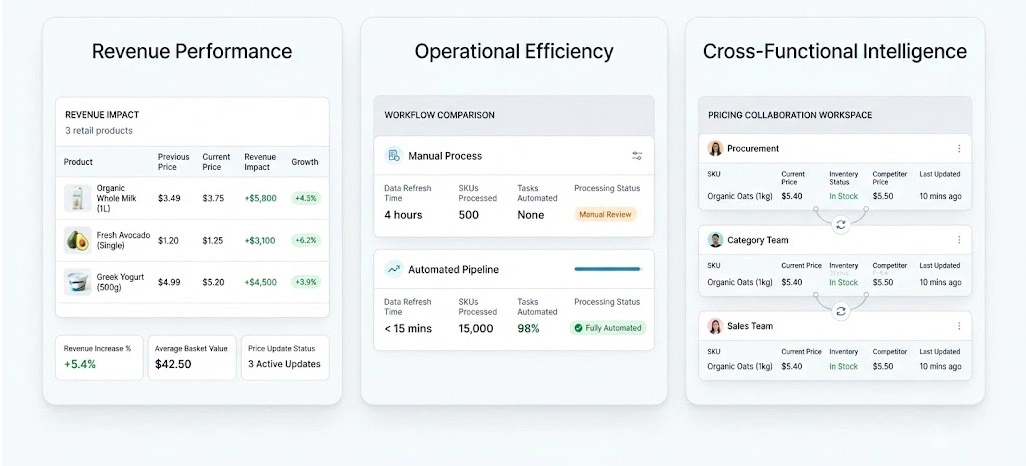
FMCG brands operating across several countries often encounter considerable differences in product prices, package sizes, currencies, promotional structures, and retailer positioning. Comparing these variables manually can create fragmented records and make regional benchmarking difficult. It can also provide a clearer view of how similar products are positioned across different retail environments.
Using FMCG Price Data Scraping within a recurring workflow can help businesses collect product names, listed prices, discounts, pack information, availability, and other relevant attributes from selected digital retail sources. Once standardized, these records can be compared by country, retailer, category, or SKU. This approach helps analysts identify meaningful price differences instead of spending excessive time gathering information manually.
Regional teams can also use collected information to evaluate competitive movements and identify pricing patterns that may require further investigation. FMCG Competitor Price Monitoring provides a structured way to observe how competing products change over time, particularly when promotions or market-specific pricing strategies influence consumer-facing prices. Historical records can further support benchmarking and recurring regional reviews.
Key information that can be tracked includes:
- Product-level pricing and pack information
- Promotional changes across selected retailers
- Availability and assortment movements
- Regional differences in comparable products
| Pricing Factor | Typical Tracking Value |
|---|---|
| Regional price variation | 12–28% |
| Promotional frequency | 4–7 monthly changes |
| Availability variation | 8–19% |
| Discount depth | 10–35% |
This structured approach creates a dependable foundation for regional price comparison while helping businesses organize large volumes of changing FMCG information more efficiently. A structured collection framework allows pricing teams to bring information from multiple markets into a consistent format, making product-level comparisons easier and reducing unnecessary reconciliation work.
Improving Regional Pricing Accuracy Through Continuous Data Collection
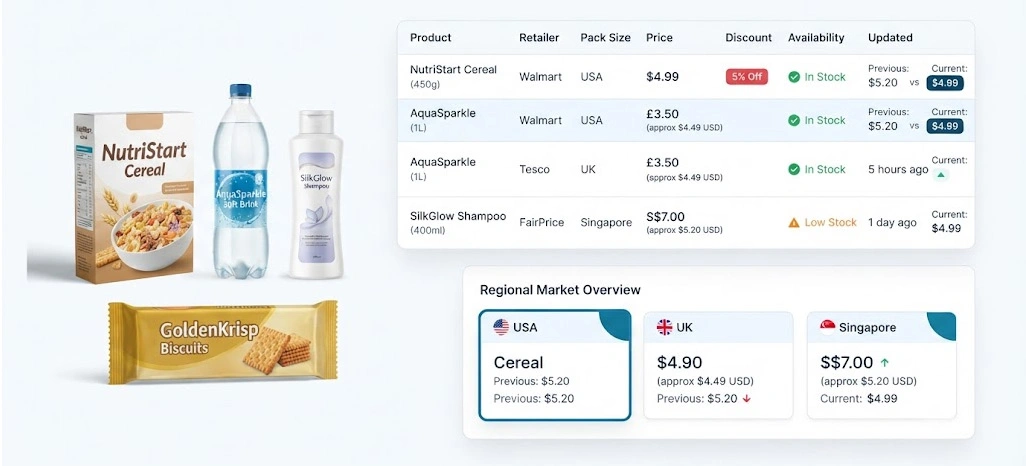
Online FMCG pricing can change frequently because of promotions, seasonal campaigns, inventory conditions, demand fluctuations, and retailer-specific decisions. When teams depend on manual checks, important changes may be missed between review periods. A recurring data collection process can provide more consistent visibility into these movements while maintaining historical records for comparison and evaluation.
Through FMCG Pricing Data Extraction, businesses can collect defined product attributes at scheduled intervals and arrange them into standardized datasets. Price, discount, availability, product title, pack size, and promotional information can be organized according to business requirements. Standardization also makes it easier to compare records collected from retailers that present information in different formats.
Businesses can combine these records with Web Scraping FMCG Market Data workflows to observe market-level movements across multiple sources. This can help analysts identify repeated price changes, promotional cycles, availability shifts, and differences between retailers. Historical datasets provide additional context by showing whether a movement is temporary or part of a recurring pattern.
Important collection areas may include:
- Current product prices
- Promotional and discount information
- Stock and availability status
- Product and pack-size attributes
- Historical pricing records
| Data Element | Suggested Frequency |
|---|---|
| Product price | Daily |
| Discount status | Daily |
| Stock availability | Several times weekly |
| Promotions | 4–8 monthly |
| Pack-size information | Monthly |
A continuously refreshed structure can therefore improve pricing data consistency and provide regional teams with timely information for analysis, benchmarking, and commercial planning. This becomes particularly valuable for brands managing products across numerous digital retail channels.
Strengthening Competitive Decisions With Regional Pricing Intelligence
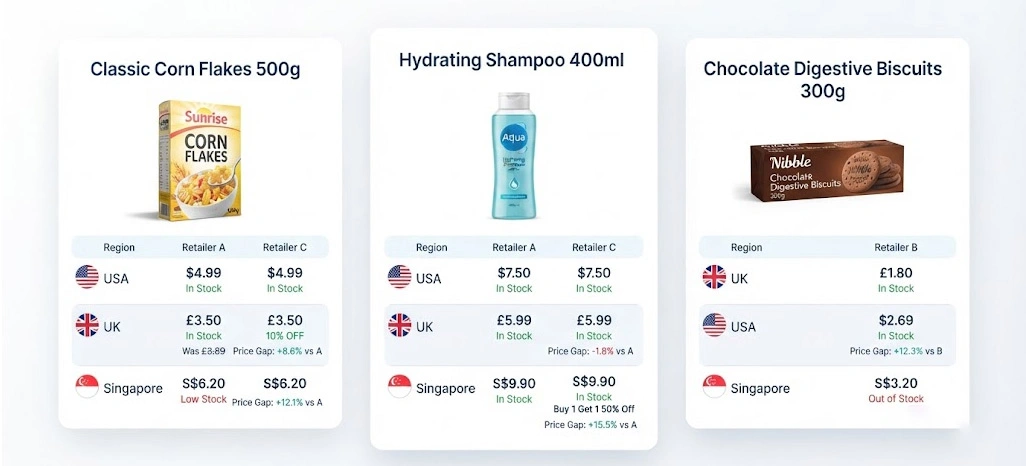
Competitive pricing decisions require a clear understanding of how comparable FMCG products are positioned across different retailers and geographical markets. Differences in pricing, promotions, assortment, and availability can influence consumer choices and retailer performance. Consistent records can also support comparisons between individual SKUs and broader product categories.
Businesses can use FMCG Pricing Analysis Using Scraped Data to examine recurring price movements, promotional patterns, and differences between competing retailers. Instead of reviewing isolated observations, analysts can work with historical records that reveal broader pricing behavior. This can support category-level benchmarking and help teams distinguish short-term promotional activity from longer-term market positioning.
Collected information can further contribute to FMCG Pricing Data for Competitive Analysis by providing comparable records across selected regions and competitors. Teams can evaluate price gaps, discount depth, assortment differences, and availability patterns while considering regional market conditions. Such comparisons can help commercial teams prioritize areas requiring deeper investigation.
Competitive tracking can focus on:
- Comparable products across different retailers
- Regional price differences
- Promotional frequency and discount depth
- Product availability changes
- Category-level pricing movements
| Competitive Indicator | Indicative Observation |
|---|---|
| Average price difference | 15–24% |
| Discount variation | 8–30% |
| Weekly SKU changes | 5–12 |
| Assortment gaps | 10–22% |
With consistent regional records, businesses can build a stronger basis for pricing reviews, promotional planning, assortment decisions, and competitor benchmarking across diverse FMCG markets. Bringing these variables together enables businesses to assess market conditions more systematically and identify areas where pricing strategies may need adjustment.
How Retail Scrape Can Help You?
Our FMCG Retail Pricing Data Scraping Across Global Markets can help businesses create a structured pricing intelligence workflow across multiple countries, retailers, and product categories. We can collect relevant product information from online retail sources and organize it into usable datasets for comparison and analysis.
Key capabilities include:
- Collecting product prices from multiple regional retail sources
- Tracking discounts and promotional movements over defined intervals
- Standardizing currencies, product attributes, and pack-size information
- Organizing historical records for regional price comparisons
- Identifying changes in product availability and assortment
- Delivering structured datasets suitable for business analysis
A scalable workflow can also support FMCG Price Monitoring System requirements by maintaining recurring collection schedules and standardized outputs. Businesses can use the resulting information for pricing reviews, competitor benchmarking, assortment decisions, and regional market evaluation.
We can further provide FMCG Pricing Data Scraping Guide support to help teams define relevant sources, fields, frequency, and output structures according to their analytical objectives.
Conclusion
Regional FMCG pricing becomes easier to evaluate when product information is collected consistently across markets. FMCG Retail Pricing Data Scraping Across Global Markets helps organize changing prices, promotions, availability, and product attributes into comparable records, supporting more efficient regional pricing analysis and commercial planning.
A structured data workflow can also help teams understand How to Monitor FMCG Prices Across Regions while reducing repetitive manual checks and fragmented records. Businesses can apply these insights to competitor reviews, pricing adjustments, promotional planning, and market evaluation. Connect with Retail Scrape today to build a scalable FMCG pricing data solution tailored to your global market tracking needs.