Why Is Daily E-Commerce Pricing Data Essential for Monitoring Product Prices and Discount Changes?
Introduction
E-commerce prices change frequently because of competitor actions, promotional campaigns, seasonal demand, and inventory fluctuations. Businesses that monitor these changes regularly can make informed pricing decisions and respond to market movements more effectively. Daily E-Commerce Pricing Data helps retailers understand price variations, evaluate discount strategies, and maintain consistent product pricing across different online marketplaces.
Customers often compare multiple stores before purchasing a product, making competitive pricing an important factor in conversion rates. Tracking listed prices, maximum retail prices (MRP), and promotional offers helps businesses identify discrepancies and evaluate their market position. Without consistent monitoring, retailers may overlook competitor discounts or continue offering prices that reduce profitability.
A structured pricing process also supports better planning for sales events, inventory management, and promotional activities. By collecting and analyzing product information at regular intervals, businesses can identify recurring pricing patterns and adjust their strategies accordingly. This approach improves visibility into market conditions while helping retailers balance customer expectations, competitive positioning, and profit margins.
Understanding Daily Price Changes Across E-Commerce Platforms
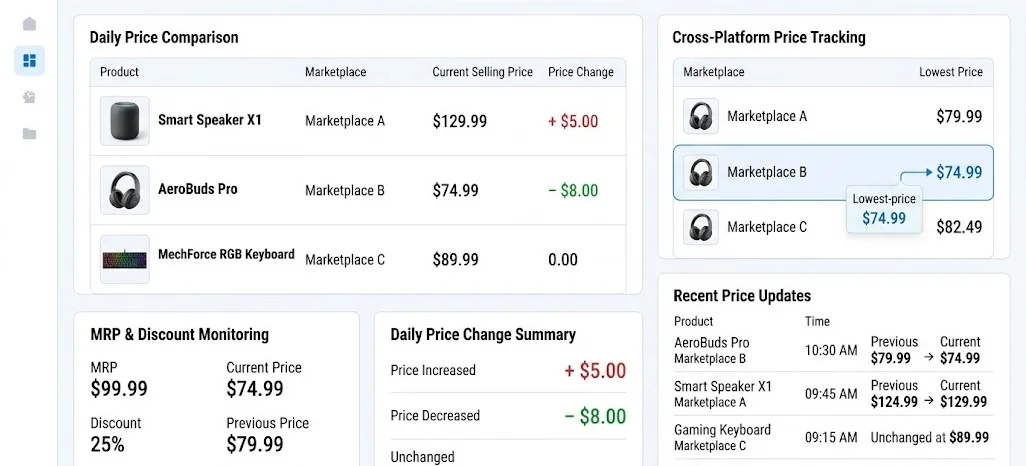
Retailers need consistent product information to evaluate how prices change across online marketplaces. Daily Product Price Monitoring helps businesses identify price increases, markdowns, promotional offers, and differences between listed prices and MRP. By reviewing these changes regularly, pricing teams can make adjustments based on market conditions rather than relying on outdated information.
Regular collection also makes it easier to compare the same products across different sellers and categories. Retailers can identify where their prices are higher or lower and determine whether a change requires action. E-Commerce Price Tracking Across Platforms provides a structured way to review product prices across online stores, helping businesses evaluate differences between sellers and identify variations that may affect their pricing strategies.
Accurate reference prices are equally important when evaluating promotional offers. MRP and Discount Tracking Across Platforms helps businesses examine changes in listed MRP, selling prices, and advertised discount percentages. Comparing these details over time can help retailers assess promotional consistency and identify unusual price movements that require further review. This information also supports better planning for seasonal sales and special offers.
Useful monitoring activities include:
- Recording daily selling prices and reference prices.
- Comparing identical products across multiple sellers.
- Reviewing discount percentages and promotional periods.
- Maintaining historical records for future analysis.
| Pricing element | Monitoring purpose |
|---|---|
| Listed product price | Identify daily price fluctuations |
| Maximum retail price | Check changes in reference prices |
| Discount percentage | Compare promotional offers |
| Product availability | Review pricing alongside stock status |
A well-organized monitoring process enables pricing teams to review essential information without depending entirely on manual comparisons. Businesses can prioritize products with frequent price fluctuations, maintain historical records, and establish clear procedures for evaluating changes.
Evaluating Competitor Offers and Promotional Pricing Strategies
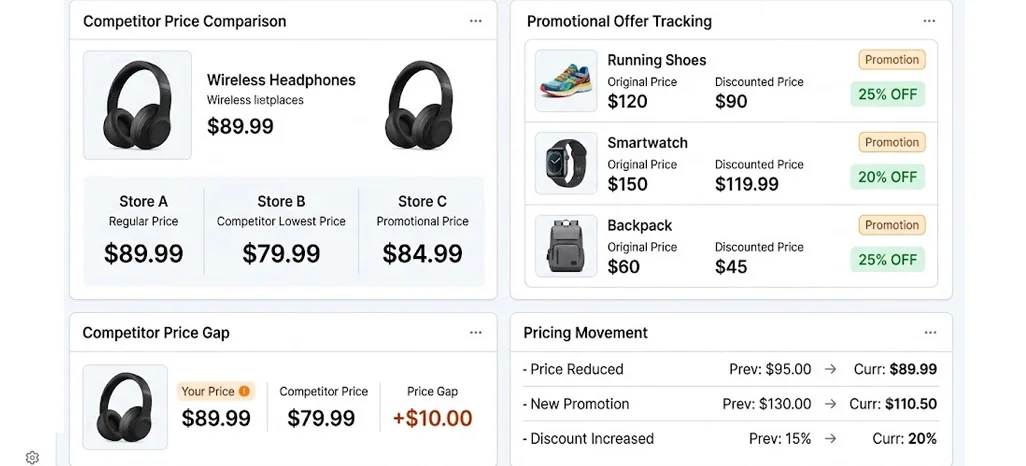
Retailers need to understand how competing businesses adjust their prices to attract customers and respond to changing demand. Regular price comparisons help teams assess whether their products remain competitively positioned and whether promotional changes are justified. Daily Retail Price Intelligence supports these decisions by organizing information about selling prices, discount levels, and pricing movements across relevant product categories.
Comparing multiple marketplaces gives retailers a broader understanding of pricing differences and promotional activity. Multi-Platform Price Monitoring enables teams to evaluate similar products across different online stores, identify unusual price gaps, and recognize recurring patterns. These comparisons can inform decisions about price adjustments, campaign timing, and product positioning without requiring businesses to react to every competitor change immediately.
A structured evaluation process makes competitor analysis more consistent and actionable. Instead of reviewing every product manually, teams can establish comparison criteria and prioritize important categories.
Useful activities include:
- Comparing equivalent products across competing sellers.
- Reviewing promotional periods and discount patterns.
- Identifying significant differences in selling prices.
- Evaluating pricing changes before adjusting campaigns.
| Pricing indicator | Strategic application |
|---|---|
| Competitor selling price | Evaluate market positioning |
| Promotional frequency | Review campaign timing |
| Price differences | Identify comparison opportunities |
| Historical price movements | Recognize recurring patterns |
Competitor Pricing Data for E-Commerce can support the evaluation of competing offers, product variations, and market positioning. Retailers can use these findings to identify products that require closer attention, assess the potential impact of promotional campaigns, and determine whether their current prices align with their commercial objectives.
Improving Pricing Decisions Through Consistent Market Analysis
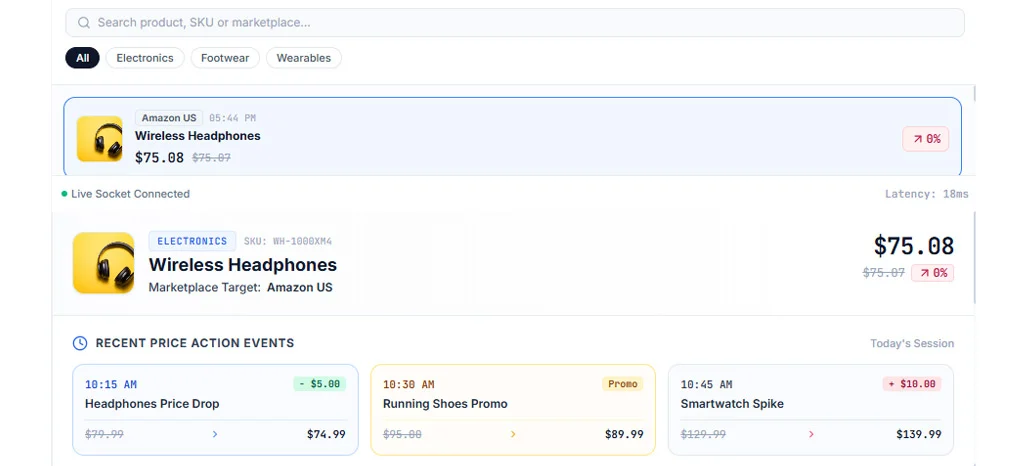
Frequent price changes can make manual comparisons time-consuming and inconsistent, particularly when retailers manage extensive product catalogs. A structured monitoring process helps teams collect comparable information, identify significant movements, and prioritize products that need attention. Reviewing price changes consistently also creates a clearer record of market activity, supporting more informed decisions about pricing adjustments and promotional planning.
When businesses need faster visibility into changing offers, Real-Time Price Tracking can complement scheduled data collection by highlighting relevant updates as they occur, where supported by the collection system. This helps pricing teams assess market developments more promptly while maintaining historical records for context. The value comes from combining timely observations with careful analysis rather than reacting automatically to every change.
Reliable analysis depends on clear processes for validating and reviewing collected information. Businesses can define monitoring priorities, establish thresholds for significant price movements, and organize reports for relevant teams.
Practical activities include:
- Prioritizing products with frequent price fluctuations.
- Reviewing significant changes before adjusting prices.
- Comparing discount periods across product categories.
- Maintaining historical records for performance evaluation.
| Monitoring metric | Business application |
|---|---|
| Price movement frequency | Identify volatile products |
| Discount duration | Evaluate promotional timing |
| Price variation | Assess market differences |
| Historical selling prices | Support future planning |
Promotional analysis is another important part of pricing management. E-Commerce Discount Tracking Data helps retailers review advertised discounts, compare promotional activity, and assess how offers differ across product categories. When these records are maintained consistently, businesses can examine discount duration, identify recurring campaigns, and evaluate whether promotional decisions align with their pricing objectives and expected margins.
How Retail Scrape Can Help You?
Retailers need dependable pricing information to manage product catalogs, evaluate competitors, and plan promotions efficiently. By collecting Daily E-Commerce Pricing Data from selected online platforms, we help businesses organize product prices, reference prices, and discount information for regular analysis. Its approach to E-Commerce Intelligence supports structured reporting and informed commercial decisions.
We can support your pricing workflow through these capabilities:
- Collect product pricing information from selected e-commerce platforms.
- Track changes in selling prices and displayed MRP.
- Compare competitor offers across product categories.
- Monitor promotional discounts and changing deals.
- Organize collected information into structured datasets.
- Schedule recurring data collection for ongoing analysis.
With organized Retail Price Intelligence, businesses can review pricing trends, identify meaningful market changes, and improve internal reporting. These insights support promotional planning, competitor analysis, and product-level pricing reviews. Retailers can use collected information to make decisions that reflect market conditions while considering profit margins, inventory levels, and commercial objectives.
Conclusion
Consistent pricing information helps retailers understand market movements, review promotional performance, and make informed decisions across digital sales channels. Daily E-Commerce Pricing Data provides a foundation for comparing product prices, evaluating discount changes, and identifying opportunities to improve pricing accuracy. A structured monitoring process helps businesses assess competitive positioning while balancing customer expectations and profitability.
Regular analysis also helps teams organize pricing information and reduce repetitive manual work. Automated Daily Retail Price Monitoring supports recurring reviews of product prices, MRP variations, and promotional activity, helping businesses respond more consistently to market changes. Contact Retail Scrape today to discuss your pricing data requirements and build a monitoring solution tailored to your business goals.